
How to Choose Casual Wedding Dresses That Feel True to Your Vision
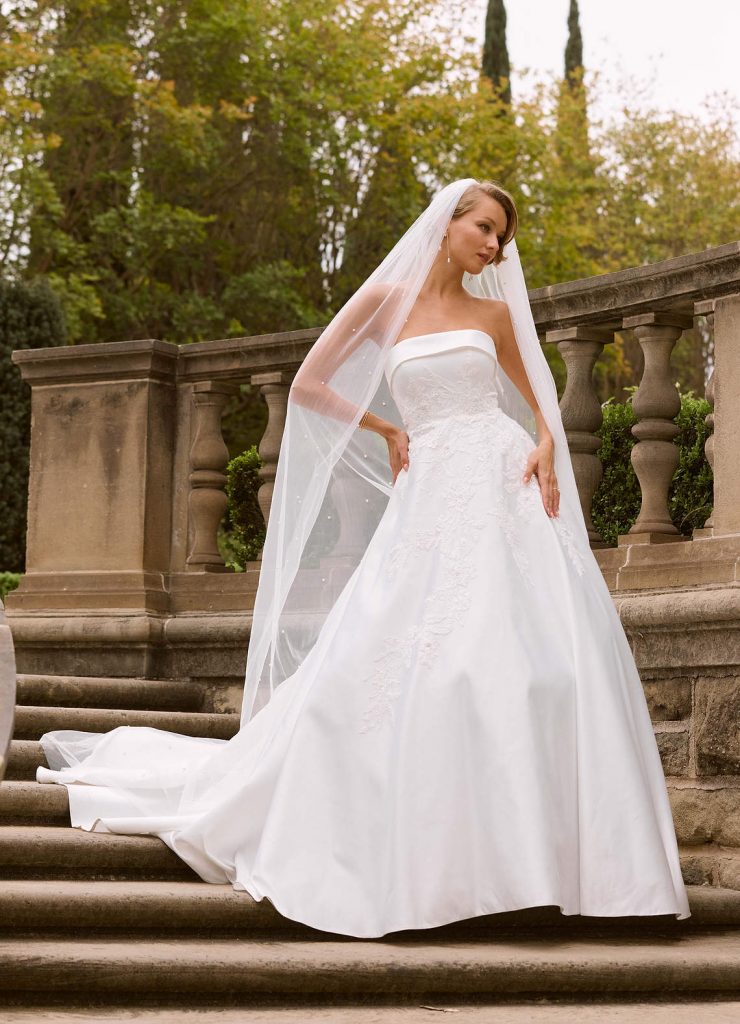
Nobody warns you that finding casual wedding dresses is actually harder than finding a formal one. With a traditional ballgown, the structure does the work. With a casual dress, you do. Every single choice — the fabric, the fit, the hemline — is visible. There’s nothing to hide behind.
And a lot of brides get this wrong. They choose something that feels relaxed in the shop, but looks like a sundress in the photos. Or they go too formal, trying to compensate, and end up miserable in a structured gown at an outdoor August ceremony. Here’s what actually matters — and what you can skip.
| THE REAL DEFINITION ‘Casual’ in wedding dresses means relaxed silhouette, lighter fabric, and less built-in structure — not less beautiful. A flowing chiffon A-line can look completely bridal. The venue and the ceremony type are what make casual the right call. Not the dress code level. |
|---|
What Actually Makes a Wedding Dress Casual?
No boning. No heavy underlining. No cathedral train, you have to manage all evening.
That’s the practical definition. A casual wedding dress holds its shape because of the fabric and cut, not because of what’s built inside it. That sounds like a small thing. It’s actually everything. When you sit at your reception dinner, dance, hug your grandmother, and run to the bathroom in heels, the dress either works with you or against you.
Traditional gowns are architecturally impressive. And they’re not really built for the kind of wedding where you’re barefoot in photos by 8 pm.
Who Should Actually Choose a Casual Dress?
Brides having outdoor ceremonies. Backyard weddings. Beach elopements. Destination weddings where packing light matters.
Also, brides who know themselves well enough to know they won’t be comfortable in a stiff gown all day, regardless of the venue. If you’ve tried on traditional wedding dresses and felt vaguely like you were in costume, that’s useful information.
The dress should feel like an elevated version of you. Not a character you’re playing for six hours.
Which Silhouettes Work for Casual Wedding Dresses
A-Line Is the Most Forgiving Option
A-line is the right default. I’ve yet to see a body type that doesn’t look good in a well-fitted A-line, and for casual weddings specifically, it’s the silhouette that reads as bridal without requiring any structure.
Brides who love clean lines often choose an ivory wedding dress in a soft A-line — and that combination just works. The color is warm enough to read as bridal outdoors. The shape is easy to move in. You can dance in it.
Slip Dresses — High Reward, Higher Risk
The slip dress looks effortless. It is not effortless to wear.
A spaghetti strap wedding dress in satin or crepe can be genuinely stunning for a casual wedding. But because there’s no structure holding it in place, the fit has to be near-perfect. A slip dress that’s slightly too big just looks like a slip. No amount of styling fixes that.
If you want a slip style, get the measurements exactly right. Custom sizing matters more here than with almost any other silhouette.
| Silhouette | Casual Level | Best Setting | Watch Out For |
|---|---|---|---|
| A-line | ★★★★★ | Any outdoor or casual venue | Choose fabric carefully — carries the look |
| Slip/column | ★★★★ | Intimate, indoor, or outdoor | Near-perfect fit required |
| Empire waist | ★★★★ | Garden, beach, warm settings | Needs to flow below the bust |
| Fit-and-flare | ★★★ | Works with stretch fabric | Tight at the hip = can’t dance |
| Ball gown | ★ — not really | Doesn’t suit casual venues | Needs a formal setting to work |
Fabric Is Where Casual Happens
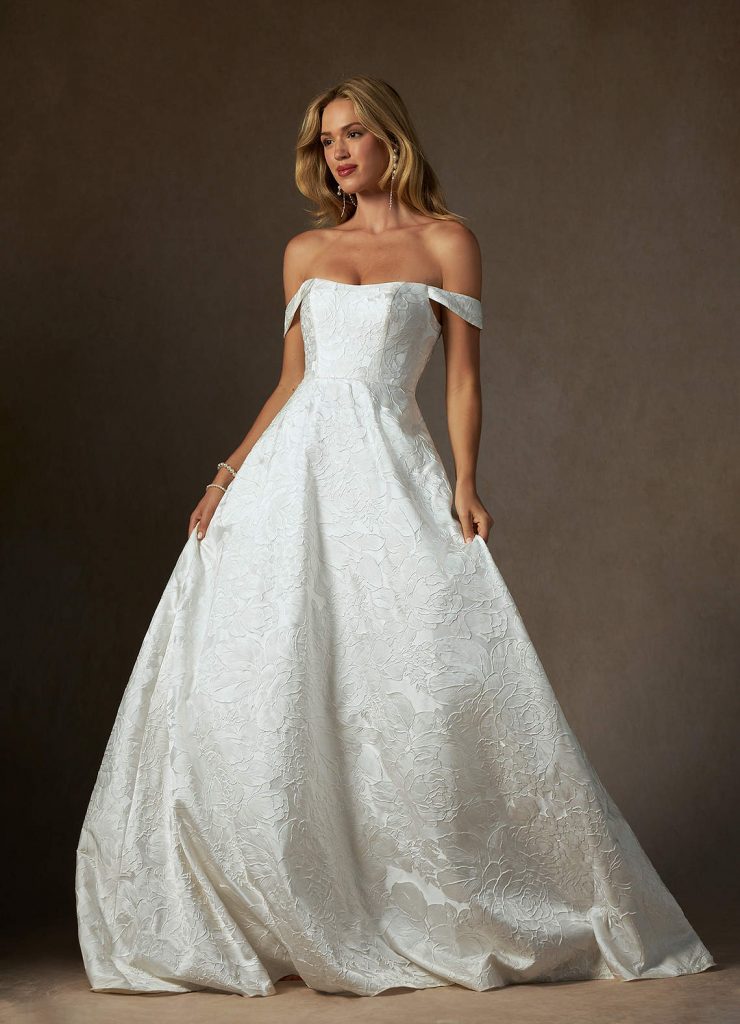
Chiffon reads casual. Heavy satin reads formal. Crepe sits somewhere useful in the middle.
That’s the shortcut version. But here’s why it matters — if you choose a beautiful A-line silhouette in stiff duchess satin, you haven’t really chosen a casual dress. The fabric overrules the shape. The weight, the drape, the way it moves when you walk — all of that signals formality more than the cut does.
| ~ CHIFFON Feel: Light, airy, flows in the wind Best for: Beach, garden, summer outdoor Honest note: Needs lining — sheer alone is tricky Verdict: Best casual fabric for warm venues |
◻ CREPE Feel: Smooth, structured but not stiff Best for: Literally any venue Honest note: Holds shape without being restrictive Verdict: Most reliable all-season choice |
◆ LACE Feel: Romantic, textured, inherently bridal Best for: Garden, barn, rustic settings Honest note: Quality varies a lot — feel it first Verdict: Great for unique casual looks |
○ SOFT SATIN Feel: Smooth surface, slight weight Best for: Indoor intimate ceremonies Honest note: Matte satin reads less formal than glossy Verdict: Works for slip and column styles |
|---|
About Linen — the Honest Version
Linen is often recommended for casual bridal looks. And I do understand the appeal — it’s natural, it breathes, and it has that relaxed texture that fits perfectly with the whole vibe.
But. Linen wrinkles. Dramatically. You’ll look great walking to the altar. By the reception dinner, you’ll look like you’ve been wearing it since Tuesday.
Linen-blend fabrics — ones that mix in a bit of cotton or synthetic — hold up better throughout the day. If you’re having a 20-minute ceremony followed by photos, and that’s it, pure linen is fine. If there’s a full day of events, look for the blend.
Color Options Beyond Classic White
Warmer Whites Photograph Better Outside
Pure white under the afternoon sun can look harsh in photos. It reflects differently than it does under boutique lighting. Most photographers will tell you that brides in ivory or cream almost always photograph better outdoors than brides in stark white.
A cream colored wedding dresses option in chiffon for a garden ceremony — that’s the combination that works on camera and in person. A champagne wedding dress does the same thing with a little more warmth in the tone.
Non-White Isn’t as Controversial as It Used to Be
An ecru color wedding dress is genuinely beautiful for casual and outdoor weddings. Ecru is warm-toned and natural — it looks intentional in a way that clearly says bridal without relying on white to do that work.
Blush and nude also work for casual ceremonies. The key is that the silhouette and fabric quality carry the bridal quality, not the color. A blush in a cheap fabric looks like a prom dress. Blush in a well-cut, A-line chiffon looks like a wedding.
Fit and Comfort — the Part That Actually Matters on the Day
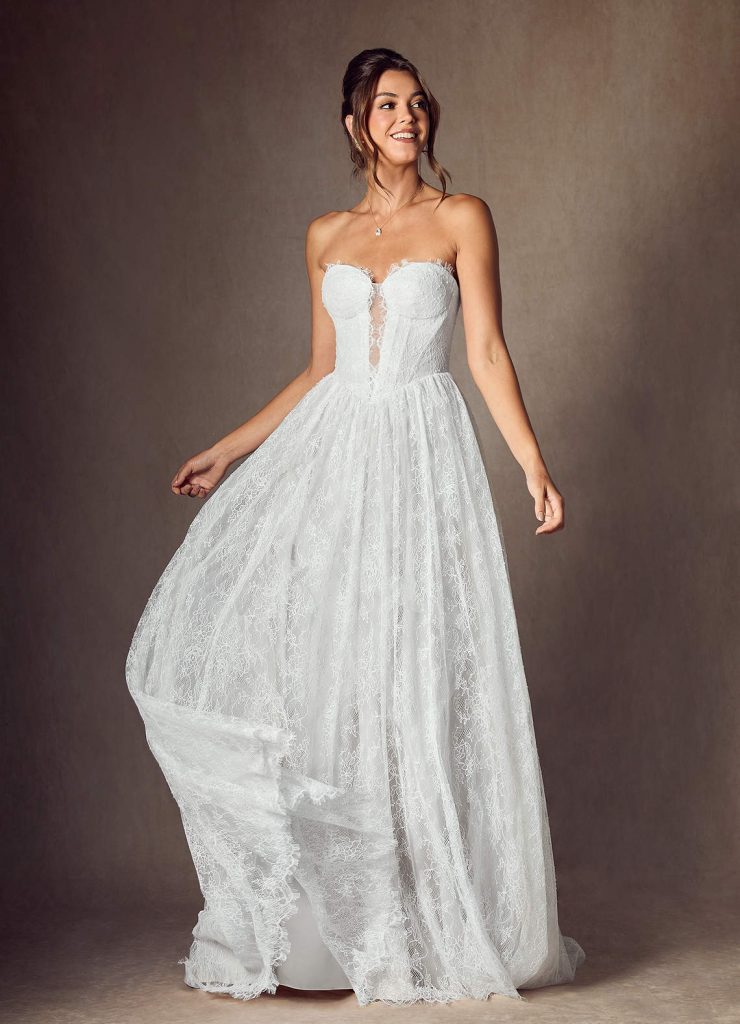
The Movement Test — Do This Before You Say Yes
Don’t decide while standing still.
According to Bridebook’s wedding dress style guide, the most common fit mistake brides make is choosing based on how the dress looks standing upright — and then discovering on the wedding day that the waist pulls when seated, the neckline shifts when leaning, or the hem rides up when walking up stairs. None of that shows in a standing pose.
Sit in it. In a regular chair, not the boutique sofa. Raise your arms. Walk ten steps. Hug someone. If anything pulls, pinches, or shifts during those movements, that’s the dress telling you something.
Sizing and Why It’s Weirder in Bridal
Wedding dress sizing doesn’t match regular clothing sizing. This is genuinely not intuitive, and it trips up many first-time bridal shoppers. What fits in the shoulders and bust in a standard bridal size might be completely wrong at the waist. It’s common to go up two sizes from your regular clothing size.
Made-to-order wedding dresses — which is what Azazie offers across sizes 0–30 — sidestep this problem. Your measurements go in, the dress comes out sized to your body. For a casual slip or A-line where fit does all the structural work, this matters more than it would for a heavily boned ballgown.
At-Home Try-On — Use It
Azazie’s at-home try-on is available for wedding dresses. Try the dress at home in the shoes you’re planning to wear. Walk around your actual house. Sit in your actual chair. That’s more useful than any boutique fitting.
Matching the Dress to the Venue
| Setting | Silhouette | Fabric | Color |
|---|---|---|---|
| Beach/destination | A-line or empire | Chiffon or linen-blend | White, ivory, champagne |
| Garden / outdoor | A-line or fit-and-flare | Chiffon, crepe, or lace | Cream, ivory, blush |
| Backyard wedding | A-line or slip | Crepe, soft satin | Personal choice |
| Courthouse | Slip or column | Crepe or matte satin | White, ivory, or nude |
| Barn / rustic venue | A-line or empire | Lace, chiffon, crepe | Ivory, cream, ecru |
Three Decisions to Make Before You Start Shopping
| 1 | Write down three words that describe your wedding’s feeling — not its style. Not ‘rustic’ or ‘boho’ — those are aesthetics. I mean the feeling. ‘Relaxed.’ ‘Personal.’ ‘Low-key.’ ‘Joyful.’ Those words filter dresses better than any style category. When you’re in a dressing room, and something feels slightly off, but you can’t say why, go back to those three words. If the dress doesn’t match them, it’s not the right dress, regardless of how beautiful it is. |
|---|
| 2 | Choose the shoes first. Your shoe changes the hemline, your posture, your gait, and how the fabric falls. A flat sandal and a 3-inch heel create completely different versions of the same dress. Don’t try the dress barefoot and assume it’ll work. If you don’t know the shoes yet—figure that out before dress shopping starts, not after. |
|---|
| 3 | Do the movement test before you say yes. Sit down in a regular chair. Raise both arms overhead. Take ten full steps. Try to hug someone — ask the person in the shop if no one else is there. A casual dress has no structure to compensate for fit issues, so everything shows when you move. If anything pulls, bunches, gaps, or rides up — that’s the dress telling you the fit isn’t right yet. It can often be fixed. But you need to know it first. |
|---|
Accessories — Keep Them in the Same Language as the Dress
Jewelry — Proportionate, Not Absent
You don’t have to go minimal just because the dress is casual. But the jewelry and the dress need to match in energy.
A flowing chiffon A-line with an open neckline looks strongest with delicate gold pieces — a simple chain, small earrings, maybe a thin bracelet. Something that catches light without demanding attention. Bold statement jewelry tends to compete rather than complement a relaxed silhouette.
Footwear — More Flexible Than Formal
A sleeveless wedding dresses option in chiffon with flat sandals for a beach ceremony — that’s a complete, intentional look—no apologies needed. For garden or backyard settings, a low wedge or block heel adds height without the instability of stilettos on grass. The dress, the venue, and the shoes need to make sense together. That’s all.
Veils — Optional, Not Expected
Short blusher veil, shoulder-length, or fingertip — all work with casual dresses. Cathedral length generally doesn’t, because it creates a formality that the rest of the look can’t match.
And honestly, no veil is completely fine.
Closing Thoughts
Get the fabric right. Get the fit right. Do the movement test. And choose a dress that feels like an elevated version of who you already are — not a costume you’re renting for the day.
wedding dresses at Azazie include over 200 options in sizes 0–30, with made-to-order construction and custom sizing. At-home try-on is available for wedding dresses, which matters more for a casual dress, where fit is everything.
Frequently Asked Questions
What defines a casual wedding dress?
Less structure, lighter fabric, easier silhouette. No boning, no heavy train, no need for multiple layers of underlining to hold the shape. A casual dress relies on the fabric and cut to do what a traditional gown’s architecture usually does. It’s not a less important dress — just one built differently.
Are casual wedding dresses suitable for formal ceremonies?
Generally no. If the ceremony is black-tie or takes place in a grand ballroom, a casual dress will feel out of place in the setting. Casual dresses are designed for relaxed environments — outdoors, intimate settings, and destination settings. The venue should guide the formality of the dress, not just the style.
What are the best fabrics for a casual wedding dress?
Chiffon for warmth and outdoor venues. Crepe for versatility and any season. Lace for romantic, casual looks, especially in garden or rustic settings. Soft matte satin for indoor intimate ceremonies. Avoid heavy structured fabrics like duchess satin, mikado, or thick brocade — those fabrics signal formal, regardless of the silhouette.
What’s the difference between a casual and boho wedding dress?
Boho is a specific aesthetic — natural fabrics, floral lace, flowy silhouette, earthy tones. Casual is broader. A minimalist white crepe slip dress is casual but not particularly boho. You can have both, one, or neither. They’re different axes.
How do I make sure the dress fits comfortably?
Accurate measurements and the movement test. Sit, stand, raise your arms, take ten steps. Do all of that in the shoes you’ll wear. If anything pulls or shifts during movement, that’s the fit telling you something needs to be adjusted. Custom sizing or made-to-order options eliminate a lot of the guesswork that comes with standard bridal sizing.
What works for a courthouse wedding?
A slip dress or column in crepe. Clean, simple, clearly bridal without needing structure to get there. A satin strapless wedding dress in a simple silhouette with minimal detail also works — especially for a ceremony that moves directly into dinner afterward.
What if I find the casual dress I love, but the fit is off?
That’s what alterations are for. Hemline, waist, bust — all adjustable. With casual dresses, especially, getting the fit right is worth the additional step. The dress has less structure to compensate, which means a proper fit makes more difference here than almost anywhere else in bridal.