
How to Choose Appropriate Graduation Dresses That Look Polished and Graduation-Ready
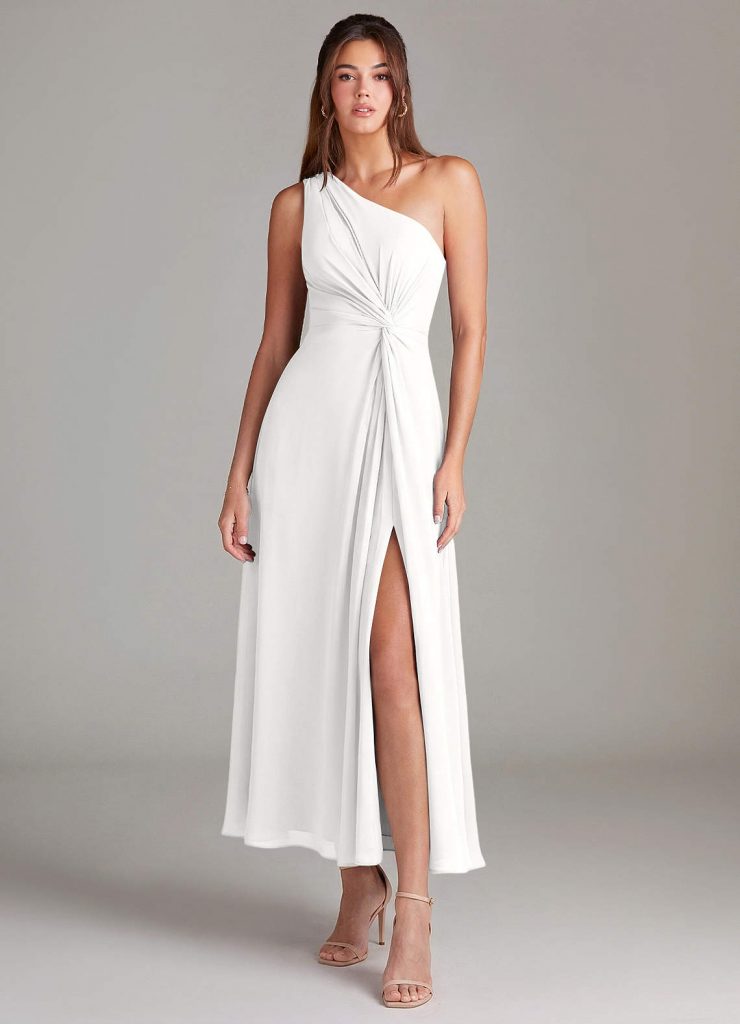
Appropriate graduation dresses sit in a specific zone that can feel weirdly hard to nail. Too formal, and you’ve gone full prom. Too casual and the ceremony photos feel off. The actual target is semi-formal — polished, ceremony-ready, and comfortable enough to wear for six to eight hours without ever thinking about the dress.
White and cream keep showing up as the default choice because they work, not just because of tradition. Under stage lighting, outdoor afternoon sun, evening restaurant photos — white just doesn’t shift or wash out the way other colors can. Midi is usually the right length. Visible at the gown hem, polished in portraits, and you don’t have to change for dinner. That combination handles most graduation scenarios without any coordination.
Browse appropriate graduation dresses — 100+ styles in white, cream, and soft neutrals across mini, midi, and maxi lengths, with custom sizing so the fit is actually right.
What Makes a Graduation Dress Actually Appropriate
‘Appropriate’ is a weird word when it comes to graduation dresses because it sounds like a restriction, when it’s really just a matter of context. Graduation ceremonies are formal academic occasions — not nights out, not brunches, not summer parties. The gown itself is centuries-old academic regalia. What goes under it should at least not fight that context.
A quick test that actually helps: picture the outfit at a business lunch or an upscale family dinner. Too casual for that? Jeans, beachwear, very short party dresses — probably too casual for graduation, too. Too dressy? Full ballgown territory doesn’t fit a daytime commencement either. The in-between is what you’re looking for.
The graduation portraits that age well have one thing in common — the dress isn’t competing with anything. Not the regalia, not the cap, not the moment. Simple tends to win in graduation photos, and not because simple is boring. It’s because ten years from now, nobody’s looking at the dress.
| Too Casual | Just Right ✓ | Too Formal |
|---|---|---|
| Jeans, denim shorts | White midi or A-line dress | Full ballgown or gala dress |
| Sundress, flip flops | Lace graduation dress | Heavy beaded eveningwear |
| Graphic tees, athleisure | Simple knee-length dress | Very long train styles |
| Club-style mini dress | Modest graduation dress | Black tie formal gown |
Is There a Dress Code for Graduation?
There’s rarely a physical document. No dress code handout at most US graduation ceremonies. But there’s absolutely an implied standard — business casual at minimum, semi-formal for university settings. When schools do publish guidance, it’s usually focused on the same three things: modest length, nothing too distracting, and nothing that makes the ceremony photos look disjointed.
College and university ceremonies are more formal than high school ones. Doctoral hooding ceremonies are the most formal of all. Official guidance, such as universities’ guidance on what to wear to commencement ceremonies, typically specifies business casual as the minimum — jeans, t-shirts, flip-flops, and shorts are consistently called out as inappropriate. If you’re uncertain about your specific school’s expectations, it’s worth checking your department’s graduation information before you order.
What High School Girls Wear to Graduation
High school graduation has a slightly more relaxed vibe than university commencement, but it’s still a formal academic event. High school graduation dresses in white or cream, midi or mini length, with breathable fabric, are the most common and appropriate choices. Gymnasium settings tend to run warm, and the gown is often thin synthetic material, so lightweight, non-transparent fabric matters.
What to Wear to a College Graduation as a Female
College commencement is longer and more formal. College graduation dresses can lean slightly more polished — midi or floor-length, structured A-line, clean lace style. The graduation hood and honors regalia are more prominent at the university level, so a simple neckline that allows regalia to sit flat and photograph cleanly matters more.
| Ceremony Type | Appropriate Length | Best Fabric |
|---|---|---|
| High School | Mini or midi — either works | Chiffon, cotton blend — breathable for warm venues |
| College / University | Midi most appropriate | Matte crepe, lace (lined), stretch satin |
| Doctoral Hooding | Midi or floor-length | Structured crepe, clean lace — most formal |
| Outdoor Ceremony | Midi or knee-length | Lightweight chiffon or cotton — prioritize breathability |
| Indoor (AC Venue) | Any appropriate length | Slightly more structured fabric, okay — bring a wrap |
Appropriate Dress Styles for Graduation Ceremony
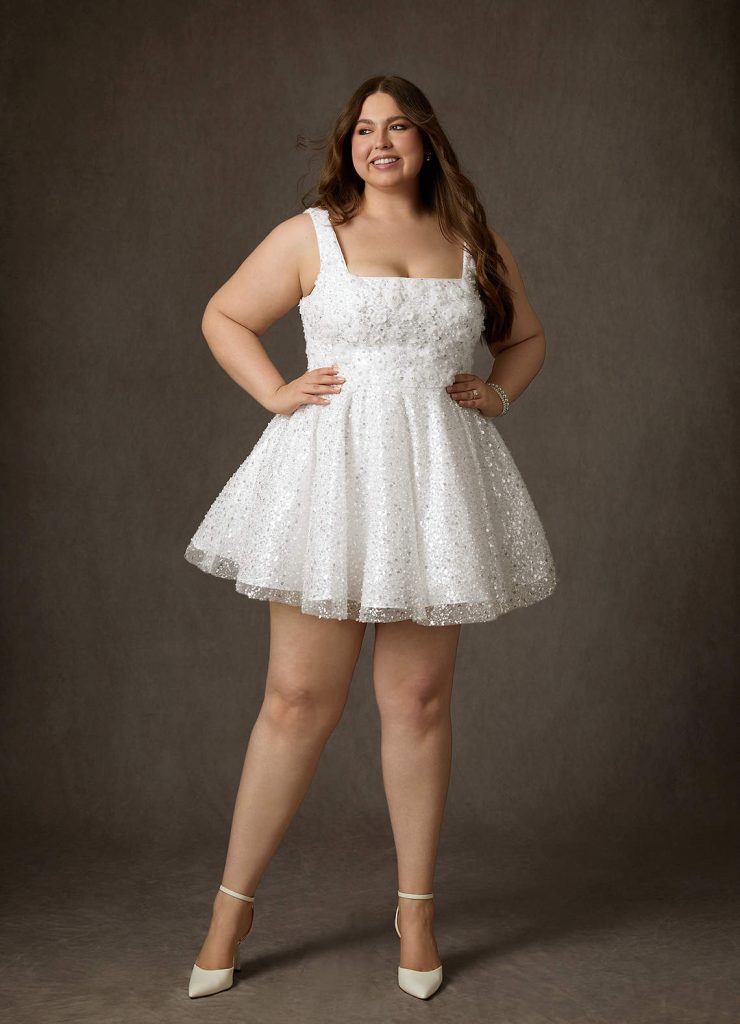
The gown interaction is the part that changes everything about silhouette choice. Some styles sit cleanly under a graduation robe. Other bunches, shift, or create visible lumps through the thin polyester. The styles below consistently handle all three requirements — gown, photos, six hours of wearing — without requiring any thought.
A-Line — The Go-To
An a line white graduation dress is the most reliably appropriate graduation silhouette. Fitted at the waist, gentle flare at the hem — the shape defines your figure without adding shoulder bulk where the gown sits heaviest. Holds visible shape at ceremony distance, photographs cleanly from every angle, sits flat under the robe without bunching. As specified in guidance on attire under your graduation gown from major universities, clean and non-voluminous silhouettes that sit smoothly under academic regalia are the consistent recommendation.
Modest Styles — Appropriate for Any Setting
If your ceremony setting is more conservative, or if you personally prefer more coverage, modest graduation dresses with higher necklines or longer sleeves are a completely appropriate and practical choice. They tend to photograph very cleanly in close-up cap-and-gown portraits — no neckline competing with the graduation cap.
Lace — Texture and Refinement
A lace graduation dress is one of the most consistently appropriate graduation choices because lace inherently reads as formal without being heavy. Adds visible texture and depth to ceremony photos without requiring bold colors or elaborate styling. The one requirement: proper lining. Unlined lace under stage spotlights becomes transparent in a way that’s very visible on camera.
Minimal Sheath or Shift
Sheath or shift dresses don’t get enough credit for graduation. Nothing to bunch. Nothing to flare out strangely under the robe. The gown just drapes over it cleanly, the stoles and honors cords sit flat in portraits, and you spend zero mental energy on the dress throughout the day. That’s the version of appropriate that’s also genuinely practical.
| A-Line | Modest | Lace | Minimal Sheath |
|---|---|---|---|
| Most universally appropriate Sits flat under the gown Photographs in all formats Works for all school types |
More coverage, more formal Clean portrait neckline Conservative settings Comfortable for full-day wear |
Formal without being heavy Depth in ceremony photos Must be properly lined Ceremony to celebration fabric |
Simplest, most polished Gown drapes cleanly Stoles and cords are the focal point Never dates in photos |
What Colors Look Best at Graduation
Color choice at graduation is weirdly consequential — not because of fashion rules but because the dress is worn alongside academic regalia that has its own visual weight. The gown, the hood, the stoles. Whatever color you pick needs to work in that context and in outdoor portraits, where the lighting is completely different.
White — The Standard
White continues to dominate graduation for reasons unrelated to traditional pressure. It’s genuinely the most photographically consistent color across all the lighting scenarios graduation day throws at you — stage spotlights, harsh outdoor noon sun, indoor reception flash, evening candids. It doesn’t shift. It doesn’t wash out. It works under any gown color without any coordination.
Cream, Ivory, and Soft Neutrals
Cream and ivory are honestly underrated. Same practical photography benefits as white, but they add warmth that reads better across a wider range of skin tones — especially in outdoor afternoon light, where bright white can feel harsh. If you’ve ever looked slightly washed out in pure white photos, ivory is almost always the fix. Champagne adds the faintest shimmer that you barely see in the ceremony but catches nicely in evening photos.
Soft Pastels
Blush, sage, lavender, soft blue — genuinely good options for spring and summer ceremonies, especially outdoor ones. More personally distinctive than white and no practical downsides. Soft pastel photographs with a warmth in natural light that white sometimes doesn’t have.
Can I Wear a Black Dress to Graduation?
Black works. It’s sophisticated, features clean lines, and goes directly from ceremony to evening with no styling adjustments. The one thing worth knowing before committing: if your school’s graduation gown is dark-colored, the dress and gown can merge visually in ceremony photos at a distance. Under a light or medium-colored gown, black creates a sharp, excellent contrast.
| ⬜ White | 🟡 Cream | 🌿 Sage | 🌸 Blush | ⬛ Black |
|---|---|---|---|---|
| Classic & timeless | Warm & versatile | Fresh & modern | Soft & romantic | Sleek & formal |
How to Look Pretty on Graduation Day — Practical Style Tips
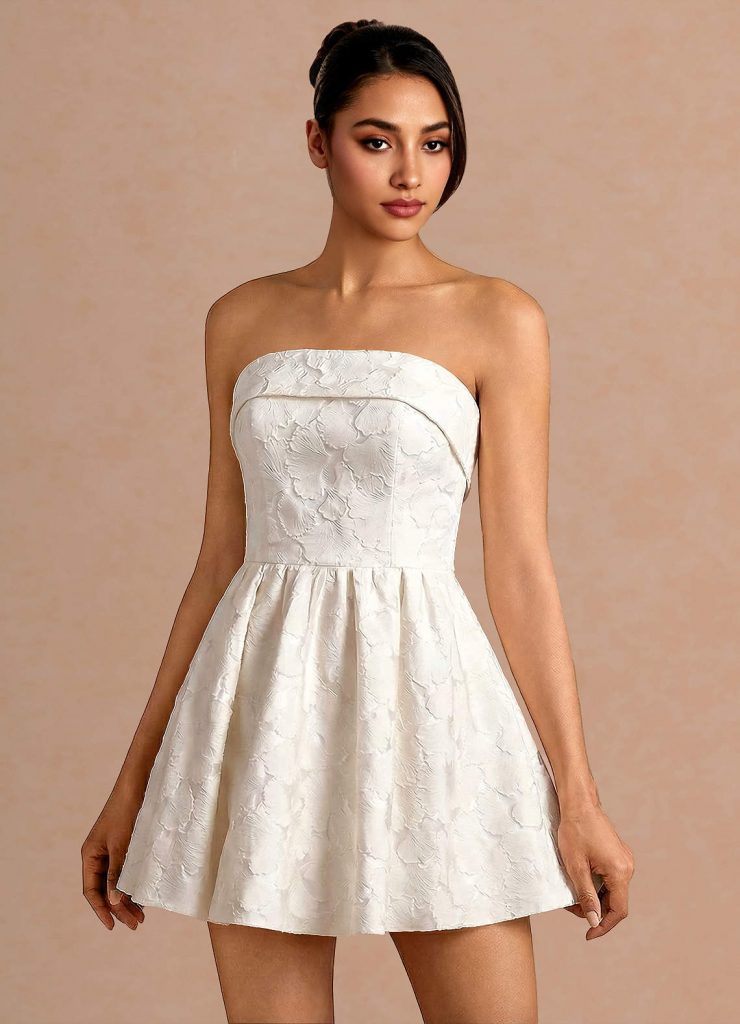
Feeling good on graduation day is mostly a logistics problem, not a fashion one. The dress is one part. The preparation the night before is the other part that nobody plans for until they’re running late on the morning of. These are the things that actually change how the day goes.
| Step 1 — Steam Everything the Night Before |
|---|
| Cameras pick up wrinkles in close-up portraits in ways that aren’t visible in person Both the dress AND the graduation gown need steaming Low heat on the polyester gown to avoid damage Do this the night before, not the morning of — less stress, better result |
| Step 2 — Test the Full Combination |
|---|
| Put on the dress, add the graduation gown, and check the hem relationship Sit down and stand up quickly — check for riding up or bunching Walk up and down actual stairs with your ceremony shoes Take a test photo in natural outdoor light to check for transparency |
| Step 3 — Choose the Right Shoes |
|---|
| Graduation involves more walking than most people plan for Block heels, low wedges, or dressy flats are the most practical choices Never wear brand-new, untested heels on a stage for the first time Stilettos sink into grass at outdoor ceremonies — factor this in |
| Step 4 — Keep Accessories Simple |
|---|
| Your graduation stoles, cords, and honors regalia are the visual focal point Competing jewelry clutters close-up portraits Pearl studs, a delicate gold chain, or a simple watch are appropriate Post-ceremony: swap to bolder jewelry for the celebration — same dress, different feel |
| Step 5 — Plan the Hair Around the Cap |
|---|
| The graduation cap changes everything about hairstyle planning Loose waves, a low bun, or a sleek half-up style work under a cap Elaborate updos tend to sit awkwardly with the mortarboard The cap needs bobby pins — plan how many and where before the day |
What Not to Wear to Graduation
The permanence of graduation photos is underrated. Not just social media — actual framed photos in actual houses for actual decades. The things that make a graduation dress inappropriate tend to show up very clearly in camera, which is why this matters more than it seems to on the day of.
| ✓ Appropriate | ✗ Not Appropriate |
|---|---|
| ✓ White, cream, or soft neutral dresses in breathable fabric | ✗ Neon colors or very loud prints that fragment in wide ceremony shots |
| ✓ Midi or knee-length that sits at or above the gown hem | ✗ Hemlines that extend unevenly below the graduation gown |
| ✓ Simple, clean neckline so regalia sits flat in portraits | ✗ Heavy ornate necklines with bows or hardware that compete with stoles |
| ✓ Breathable fabric — chiffon, crepe, stretch satin | ✗ Heavy velvet or unlined white fabric that becomes transparent under lights |
| ✓ Block heels or dressy flats you’ve actually worn before | ✗ Brand-new stilettos or any heel that hasn’t been tested on stairs |
| ✓ Understated jewelry that supports regalia as a focal point | ✗ Dramatic statement jewelry that competes with graduation honors |
Is It Better to Wear a Short or Long Dress for Graduation?
Neither is categorically better. The answer depends on the type of ceremony, your school’s specific vibe, and what you’re doing afterward. Here’s how each one actually plays out.
Short (Mini) Dresses
A white mini dress graduation style, stays completely hidden under the graduation gown during the ceremony, creating the cleanest possible stage silhouette. Once the robe comes off, the short length transitions naturally to the celebration. The one consideration: make sure the length is tasteful and that you’re comfortable climbing stage stairs in it.
Long Dresses
A graduation long white dress is appropriate for formal university commencements and evening ceremonies. Universities outlining appropriate business clothing under graduation regalia consistently recommend testing the full combination on actual stairs — the dress hem should not extend past the gown hem in a way that looks uneven or creates a tripping risk. Test it before the day, not just in front of a mirror.
Midi — Why It’s the Middle Ground
Midi is the most forgiving length because it doesn’t require the ceremony to be a specific type. High school gymnasium or outdoor university commencement — it reads the same. The gown hem hits the dress hem in a way that looks deliberate in stage photos. Then dinner or the party after, and you haven’t changed a thing.
| ✓ | Before You Order — Quick Checklist Check your school’s graduation guidelines · Confirm the dress in natural light (transparency test) · Size based on actual measurements, not guessing · Plan to steam both dress and gown the night before · Test with ceremony shoes before the day |
|---|
The Short Version
Semi-formal, breathable, simple silhouette, right length. That’s the checklist. White and cream perform the most reliably across all photography conditions. Midi is the safest length. Within those parameters, A-line, lace, and modest styles all handle different graduation settings without requiring you to think about the dress again after you order it.
Azazie has 100+ graduation dresses in white, cream, and soft neutrals with custom sizing — so the fit and length work for your specific gown and ceremony context.
Frequently Asked Questions
What is an acceptable dress to wear for graduation?
A semi-formal dress in white, cream, or a soft neutral is the most universally acceptable choice. Midi and knee-length are the most appropriate lengths for most graduation ceremonies. As noted in the appropriate attire suggestions for commencement, day dresses and structured blouses in business-casual styles are the consistent recommendation across institutions. Clean silhouettes — A-line, sheath, or lace — in breathable fabric are the standard. Avoid very short club-style dresses, very casual fabrics, or anything very revealing.
Is there a dress code for graduation?
No formal handout in most cases. The implied standard is semi-formal to business casual, and that’s usually all that’s published. When schools do give explicit guidance, it tends to focus on hemline length and avoiding very casual or very revealing clothing. The doctoral level is a different situation — hooding ceremonies are considerably more formal than high school or standard college commencement ceremonies. Worth checking your specific program’s information before ordering.
What do high school girls wear to graduation?
For high school graduation, the dominant choice is white or cream in mini or midi length — and has been for long enough that it’s become a collective tradition rather than anyone actually requiring it. A-line, sheath, or lace in breathable fabric handles the gymnasium heat and the gown interaction without any planning effort. Mini is especially popular because the gown hides everything during the ceremony, and then the dress is a party dress the moment the robe comes off.
How to look pretty on graduation?
Steam everything the night before — both the dress and the gown, because cameras catch wrinkles in close-up portraits in ways mirrors don’t show. Try on the full combination on actual stairs before the day. Keep jewelry simple enough that the stoles and cords are still the focal point in portraits. Plan the hairstyle around the cap, not the other way around — a low bun or loose waves works; an elaborate updo usually doesn’t. The day genuinely photographs itself when nothing about the outfit requires active management.
What not to wear to graduation?
Club-style mini dresses — the very short, very tight kind — are the most common version of the wrong call at graduation. Neon or very loud prints that look fun in casual photos become fragmented and chaotic in wide ceremony group shots. Unlined white fabric that looked opaque in the fitting room becomes transparent under stage spotlights — check for this before ordering. Brand-new heels worn for the first time on an elevated stage are something people regret. Structural back bows and thick back details create a visible lump through the thin polyester graduation gown.
What colors look best at graduation?
White is the most photogenically reliable across all lighting conditions for graduation. Cream and ivory add warmth without any practical downside. Soft pastels — blush, sage, lavender — work beautifully for outdoor spring ceremonies and feel more personally distinctive than straight white. Black is sleek and formal, especially for university ceremonies. What doesn’t work well: very bright neons, heavily saturated dark colors under lighter robes, and loud prints.
Is it better to wear a short or long dress for graduation?
Midi is the all-situations answer — works for high school, works for university, works for indoor and outdoor settings without any adjustment. Mini is appropriate specifically where the gown covers it during the ceremony, and the party after is the priority. Floor-length works for formal university commencements, but only after being tested on actual stairs with the ceremony shoes — this is the version most likely to cause stage problems if untested. The only length that genuinely doesn’t work for the ceremony: very short club-style mini.
Can I wear a black dress to my graduation?
Absolutely fine. Black is formal, sophisticated, photographs cleanly, and the ceremony-to-evening transition requires no effort. One thing worth checking before committing: what color is your school’s graduation gown? Under a light or medium gown, black creates an excellent, sharp contrast that photographs well. Under a very dark gown — navy, dark maroon, black — the visual separation can disappear at ceremony distance, and the dress essentially vanishes in group photos.