
White Lace Graduation Dresses:What Nobody Tells You About the Fabric
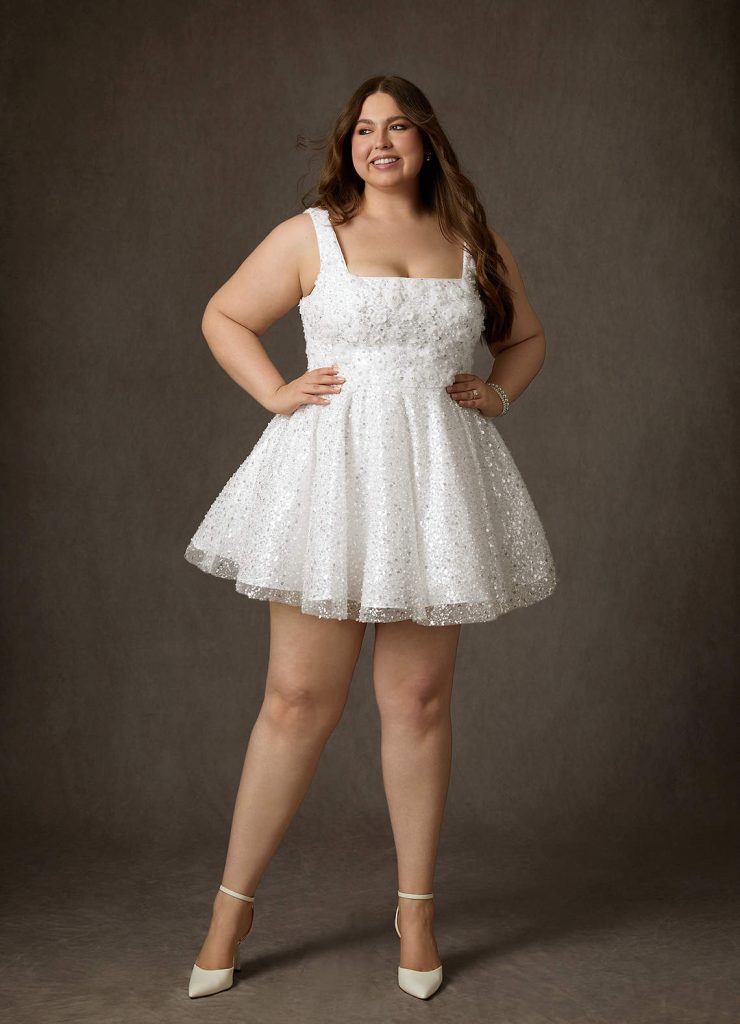
White lace is probably the most-searched graduation dress detail right now — and it’s genuinely one of the best choices if you understand a few things about how lace behaves in a graduation context. A lace graduation dress adds depth and texture, photographing with warmth at every camera distance, from close-up portraits to wide stage shots. Plain white fabric can look flat at a distance. Lace doesn’t.
The part most style guides skip: not all white lace is the same fabric, and the differences matter specifically for graduation. Unlined lace under stage spotlights is highly visible. Heavy lace adds bulk under a robe. Stiff lace can wrinkle in ways that show clearly in close-up photos. None of this is obvious in a fitting room.
This guide covers what each lace type actually does on graduation day, why lining is non-negotiable, and what to check before you finalize your order.
Five Lace Types — How Each One Photographs
You might not think the type of lace matters specifically for graduation. It does. Different lace constructions behave very differently under stage lighting, in outdoor sun, and in close-up portrait photography. Knowing which type you’re choosing changes the result.
| FLORAL LACE ★ Photo Impact: HIGH Shadow patterns from the floral design add depth visible at any distance. The most photogenic lace for graduation. |
CHANTILLY LACE ★ Photo Impact: HIGH Very fine weave with elegant drape. Photographs with warmth and softness. Delicate — needs careful handling. |
GUIPURE LACE ☆ Photo Impact: MEDIUM Heavy and structured. Less photography depth than the floral, but holds its shape very well. Good for A-line silhouettes. |
EYELET ★ Photo Impact: MEDIUM Technically not lace, but often grouped with it. Clean, modern, and breathable. Very good for outdoor warm-weather ceremonies. |
GEOMETRIC / STRETCH ☆ Photo Impact: LOW Flat pattern, less visual depth than floral. Reads as textured in person but can appear flat in wider camera shots. |
|---|
Floral and Chantilly lace are the two that perform best in graduation photography. The open weave creates shadow patterns that register at every camera distance — which is why they look warmer and more interesting in photos than solid white fabric. Guipure is the most durable but also the heaviest, which matters under a robe.
The Lining Rule — This Is the Most Important Thing
Here’s the thing that catches the most people off guard: stage lighting at graduation ceremonies is significantly more intense than any fitting room, dressing area, or outdoor photo test. Unlined lace that looks opaque in a mirror becomes transparent under direct overhead spotlights. This is the biggest mistake people make with white lace graduation dresses, and it shows up in every ceremony photo.
| Non-negotiable: White lace graduation dresses must be fully lined. No exceptions. |
|---|
| ✓ Fully Lined Lace | ✗ Unlined or Sheer Lace |
|---|---|
| Opaque under all lighting conditions | Transparent under stage spotlights and outdoor sun |
| Photographs are clean and polished at every camera distance | Creates visible underdress or skin show-through in photos |
| Comfortable against the skin all day | Can feel scratchy directly against the skin without a slip beneath |
| Safe for outdoor summer ceremonies in full sun | Risky for any well-lit ceremony environment |
| Holds its shape and structure through long events | Loses structure more easily under robust pressure |
| ⚠ THE TRANSPARENCY TEST — DO THIS BEFORE THE DAY Put the dress on and hold your arm under the brightest overhead light in your home. If you can see the skin underneath the lace, it will show under stage spotlights. Even partially lined styles — where only the bodice is lined, and the skirt is not — can show transparency through the skirt under strong overhead lighting. Full lining from the neckline to the hem is what you want. |
|---|
Lace Weight — Heavy vs. Light Under a Graduation Robe
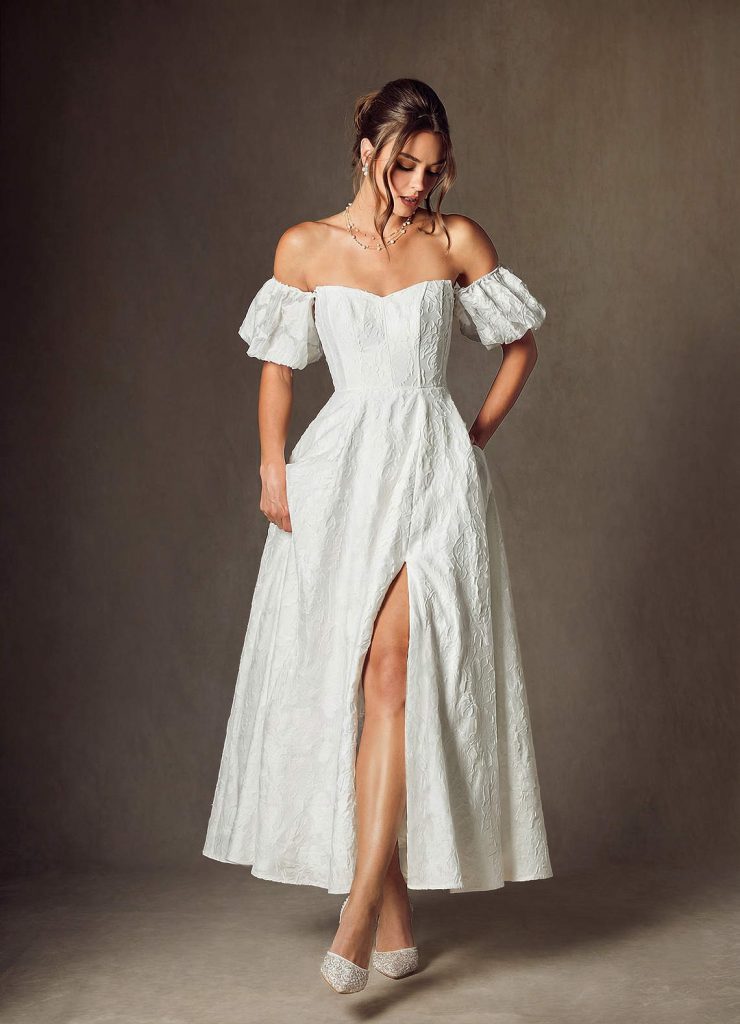
The weight of the lace determines how it behaves under the robe for two-plus hours. Heavy lace adds visible bulk under the gown and traps heat. Very lightweight lace wrinkles easily and can shift inside the robe. Medium-weight structured lace is the sweet spot for graduation.
| Lightweight Lace (chiffon-backed, fine floral). Soft and drapes beautifully. Minimal heat trapping under the robe. The most comfortable lace for outdoor summer ceremonies. Prone to wrinkling if not handled carefully before the day. |
|---|
| Medium-Weight Lace (structured floral, lined cotton) The graduation sweet spot. Holds its shape, photographs well, comfortable under a robe for extended periods. Not as breathable as lightweight, but significantly more wrinkle-resistant. |
| Heavy Lace (guipure, thick embroidered). Very structured and dramatic. Adds visible bulk under the robe and traps heat in warm venues. Best for short-ceremony indoor settings where comfort is less of a factor. |
| Stretch Lace (knit-backed, jersey base) Comfortable and flexible, but flat in photos. Not recommended if visual texture and depth are priorities for graduation portraits. Works better for casual post-ceremony events. |
For college graduation dresses in formal indoor settings, a medium-weight, lined, floral lace is the most reliable choice for the ceremony. Light enough to be comfortable through a long commencement, structured enough to photograph well from a distance, and heavy enough to hold its shape for hours.
Which Lace Works for Which Ceremony Setting
A lace choice that’s perfect for an outdoor spring ceremony can be wrong for a formal indoor auditorium. The venue and ceremony type genuinely change what lace type makes sense.
| ☀️ OUTDOOR SPRING / SUMMER Lightweight Floral Lace Breathable, moves naturally, photographs with depth in natural outdoor light |
🏫 INDOOR AUDITORIUM Structured Floral Lace Holds shape under robe pressure, photographs clean under stage lighting |
⛪ RELIGIOUS / FORMAL Chantilly or Guipure Elegant and conservative — heavier constructions suit formal ceremony settings |
🌙 EVENING CEREMONY Satin-backed Lace Adds a subtle sheen that reads beautifully under evening ceremony lighting |
|---|
For high school graduation dresses, lightweight floral lace in a short or midi length is the most versatile choice — it photographs well, stays comfortable during longer outdoor ceremonies, and transitions naturally into post-ceremony celebrations.
Lace and Silhouette — What Works Together
Not every lace type works with every silhouette, and the combination affects how the dress reads under a graduation robe. Heavy guipure lace and a very full A-line create a lot of visual bulk. Lightweight floral lace in a sheath lies completely flat.
| Silhouette | Best Lace Match | Why | Avoid |
|---|---|---|---|
| A-Line [MOST POPULAR] | Floral or Chantilly | Natural volume in the skirt absorbs lace weight without bulk | Heavy guipure — too much visual volume under the robe |
| Sheath | Stretch or lightweight floral | Narrow profile needs flat, light lace | Thick guipure — adds visible hip bulk in close-up portraits |
| Fit-and-Flare | Structured floral or eyelet | Full skirt supports heavier lace well, photographs beautifully | Very lightweight lace — loses the flare structure |
| Midi Wrap | Lightweight or Chantilly | Soft drape works with delicate lace constructions | Stiff guipure — fights the natural wrap movement |
An a line white graduation dress with floral lace is probably the most versatile graduation lace combination there is. The A-line skirt creates enough volume to naturally absorb the lace’s weight, while the floral pattern adds visual depth that photographs well at any camera distance.
Caring for a Lace Graduation Dress — Before and After
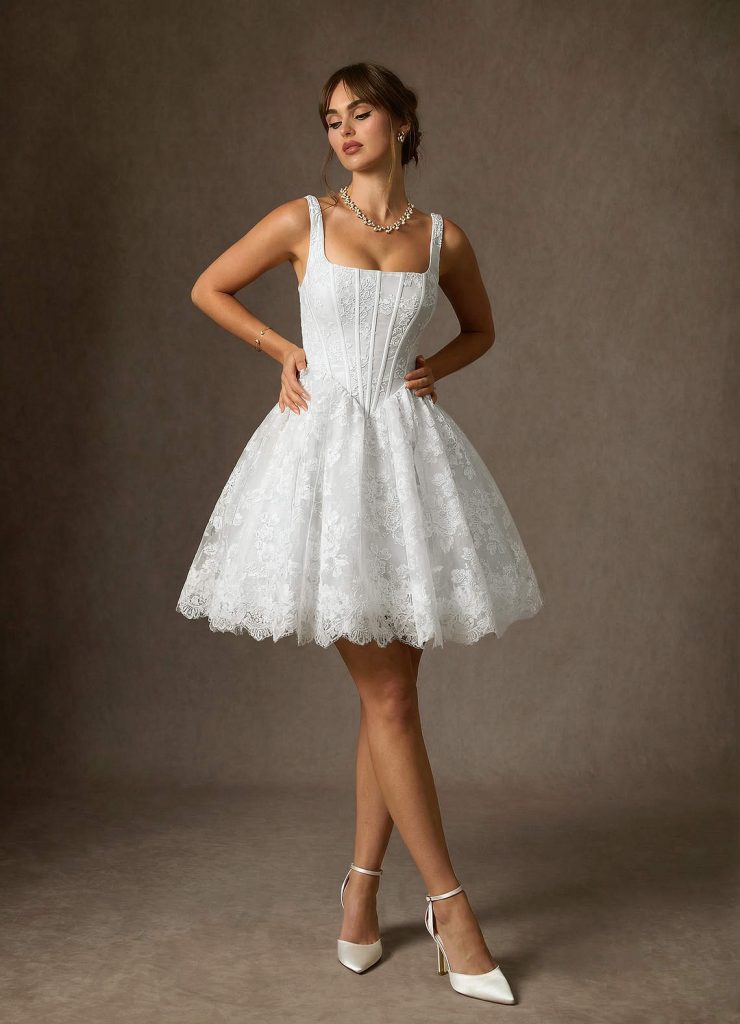
Lace has specific care requirements that regular dress guides don’t address. Getting this wrong can damage the dress before the ceremony or ruin it permanently afterward.
| BEFORE THE CEREMONY ▸ Steam — don’t iron. Direct iron contact flattens and can melt lace fibers ▸ Hang vertically after steaming — don’t fold. Lace holds crease patterns easily ▸ Store in a garment bag to prevent snags from other fabric surfaces ▸ Check for loose threads at the lace seams before the day — tuck or trim carefully |
AFTER THE CEREMONY ▸ Check the care label before washing. Most white lace needs a cold hand wash or dry cleaning ▸ Never wring or twist lace fabric — roll it in a clean towel to remove excess water ▸ Lay flat on a clean towel to dry. Hanging wet lace distorts the fabric structure ▸ Treat stains immediately — white lace absorbs color transfer very quickly |
|---|
What Shoes Work with White Lace
White lace has a specific visual quality — it’s delicate and textural, which changes what shoe choices enhance it versus compete with it. This matters more than for plain fabric dresses.
| 👡 Nude / Blush Heels The most photographically clean choice. Elongates the leg without adding a competing color element. Works for every lace type. |
🌟 Metallic Gold or Silver Adds warmth next to white lace without competing with the texture. Gold reads especially well in outdoor afternoon light. |
👜 White Heels or Flats Creates a monochromatic look that’s very clean in photos. Works best with intricate lace that needs a simple backdrop. |
👠 Block Heel The practical graduation choice. Stable on stage stairs, comfortable for outdoor venues on grass or turf. Photographs as a heel in portraits. |
|---|
Skip black shoes with white lace graduation dresses. The contrast reads well in person but creates a heavy, bottom-weighted look in full-body ceremony photos that most grads don’t love when they see the results.
Five Lace-Specific Day-Before Checks
A few things specific to lace that aren’t in general graduation dress guides.
| 1 | Lining confirmation: hold the dress up to your brightest overhead light while wearing it. If you can see skin through the lace, even slightly, it will show under stage spotlights. This is the most important lace-specific check. |
|---|
| 2 | Lace snag inspection: run your hands carefully over the entire lace surface. Any loose threads should be trimmed or tucked carefully. Graduation robes have zipper pulls and edges that can catch on loose lace fibers. |
|---|
| 3 | Steam — don’t iron. Set your steamer to the appropriate heat for delicate fabric and hold it a few inches away. Direct contact with iron can flatten or permanently damage lace. |
|---|
| 4 | Robe fabric test: put both the dress and graduation robe on and move around. Does the robe fabric catch on or snag the lace? Some robe fabrics are rough enough to create pull marks on delicate lace. |
|---|
| 5 | Post-ceremony care kit: pack a small zip-top bag with a stain pen, safety pins, and a lint roller. White lace shows everything and picks up lint easily throughout a long celebration day. |
|---|
Browse the full graduation dresses collection to compare lace styles across different silhouettes. Azazie offers 100+ styles in white, cream, and soft neutrals with custom sizing — especially useful for lace, since fit affects how the lace sits and whether it stays smooth under a robe.
The Short Version
White lace graduation dresses photograph with more depth and warmth than plain white fabric. Floral and Chantilly lace are the most photogenic choices. The lining is non-negotiable — unlined lace under stage spotlights is a visible problem. Medium-weight lace in an A-line or fit-and-flare silhouette is the most reliable for ceremonies. Steam before, check the lining, and inspect for snags.
Azazie has 100+ white graduation dresses in white, cream, and soft neutrals with custom sizing. Browse the lace collection to find a style designed for the ceremony, the portraits, and every photo taken afterward.
Frequently Asked Questions
Is a white dress appropriate for graduation?
White is the expected choice at most US graduation ceremonies — not always written into the dress code, but very much the norm. Lace, in particular, is a traditional and timeless graduation choice.
Check your school’s specific guidelines first, but a white lace graduation dress is appropriate for essentially every type of commencement.
What does wearing white lace mean at graduation?
White has been associated with new beginnings and fresh starts in graduation contexts since the early 20th century. Lace adds a layer of ceremony-appropriate formality — it’s a fabric associated with important occasions. In simple terms, it signals that you made an effort and understand the significance of the day.
Whether or not you read into the symbolism, it looks polished in photos, which is the practical win.
How do you actually look good at graduation?
Fit and fabric do most of the work. A well-fitting white lace dress of the right weight photographs consistently better than a more elaborate dress in the wrong size or lace type.
Steam the night before. Make sure the lining is complete. Wear shoes you’ve walked in before. Keep accessories minimal — lace already provides visual texture, so you don’t need jewelry to add it.
What color grad dress is most popular?
White, and it’s not particularly close. White lace specifically has been one of the most-searched graduation dress styles for several years now. The photographic argument is the practical reason: white and white lace photographs consistently perform well under all types of graduation lighting, while other colors require more careful consideration of the gown color and the lighting conditions.
Why do most girls wear white dresses for graduation?
A combination of tradition and practical photography logic. White became the graduation standard in the early 20th century as a visual symbol of transition and new beginnings. It stuck because white actually performs better in photos across all graduation lighting scenarios than most other colors.
Lace photographs with greater depth and warmth than plain white, which is why it’s become increasingly popular.
What are the top three graduates called?
The highest-ranked graduate is the Valedictorian — typically the highest GPA, often the commencement speaker. Second is the Salutatorian, who may also have a speaking role.
The third position varies significantly by institution — some schools recognize a Class Historian, others use a Latin honors hierarchy (Summa Cum Laude being the top tier), and others don’t separately recognize a third individual.
What should you not wear to a graduation ceremony?
For lace specifically: unlined white lace that goes transparent under stage lighting. Any lace that hasn’t been checked for transparency before the day. Very heavy guipure lace at the waist in a closed-robe ceremony — it creates visible bulk.
And skip the very casual stretch lace that doesn’t read as a formal choice in ceremony photos. The broader rule applies too: avoid anything that competes visually with the graduation regalia rather than supporting it.