
White Graduation Dresses with Pockets:What Actually Works on the Day
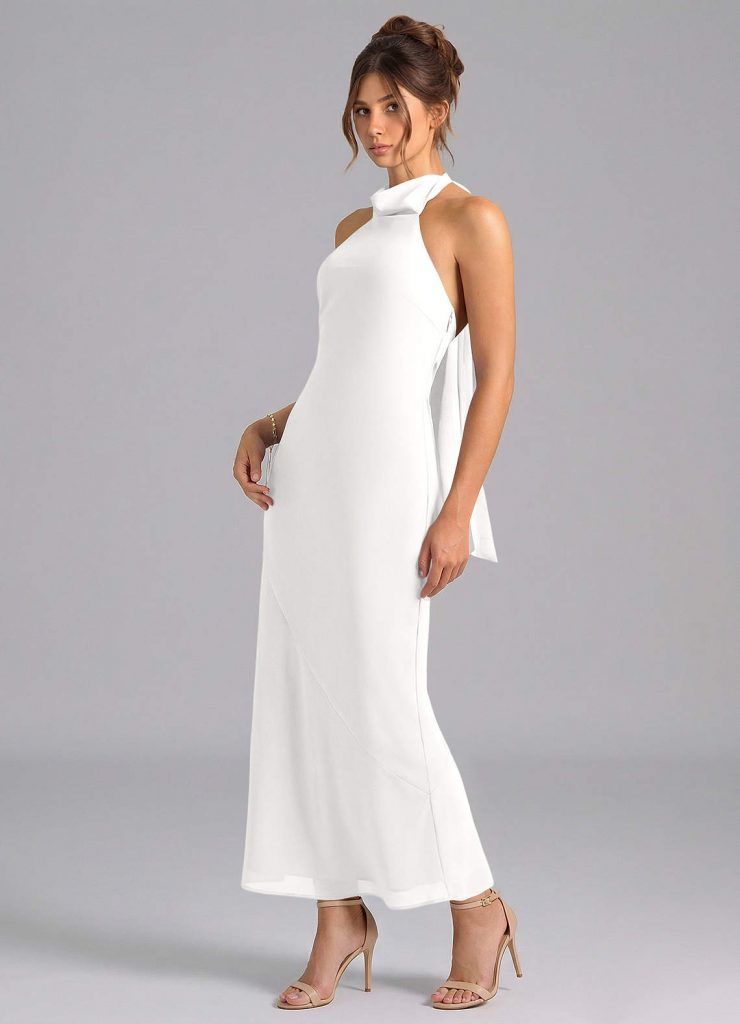
The demand for white graduation dresses with pockets has gone from a niche preference to a genuine shopping priority over the last few years. And honestly, makes sense. You’re carrying a phone, a card, lip gloss, and maybe a stain pen. Graduation gowns notoriously don’t have functional pockets. A dress with pockets changes that.
But pockets in dresses are not created equal — and graduation adds a variable that regular pocket tests miss. A pocket that looks flat and invisible in a fitting room can create a visible lump when it’s inside a graduation robe. Fill it with a phone and a heavy fabric will sag at the hip in every ceremony photo.
This guide covers which pocket types actually work, which silhouettes hide them best, what you can realistically carry without the dress looking overloaded, and a few things that most pocket-dress articles skip entirely.
Three Pocket Types — Only Two Actually Work for Graduation
Not all dress pockets are the same construction. The type of pocket determines whether it reads as flat and invisible or as a visible, awkward bulge — especially relevant when you’re wearing a robe over the dress for two hours.
| □ SEAM POCKET Best Choice Hidden in the side seam. Flat when empty, low profile when loaded. The standard for graduation-appropriate pocket dresses. |
▢ WELT POCKET Good for Fitted Invisible when closed — a small horizontal slit in the skirt fabric. Less carrying capacity but completely flat. Works well on sheath styles. |
▣ PATCH POCKET Skip for Graduation Sits on top of the fabric rather than inside it. Creates visible bulk under a robe and is easy to see in ceremony photos from a distance. |
|---|
Seam pockets are the standard for most graduation dress pockets you’ll find. They’re built into the skirt’s side seam, which means they sit naturally against the hip when empty. The key variable is the fabric — lightweight fabric with a seam pocket will sag when loaded, while structured crepe or cotton holds its shape.
What You Can Actually Carry — and What Will Show
Here’s the honest version. A lot of graduation dress pocket guides skip the weight reality. A heavy phone in a chiffon pocket will sag the hemline and create an uneven line in photos. Knowing what to put in and what to hand off makes a big difference.
| What You Want to Pocket | Honest Verdict |
|---|---|
| 📱 Phone (flat, no case) | ✓ Works. Fits in most seam pockets. Use a slim card in the same pocket, and the weight becomes noticeable in lightweight fabric. |
| 💄 Lip gloss/lip tint | ✓ Works Light, slim, low profile. This is what pockets in graduation dresses are genuinely perfect for. |
| 💳 Slim card or ID only | ✓ Works completely flat, no visible bulk. Better than a full wallet by a significant margin. |
| 📱 Phone in a bulky case | ✗ Skip creates a visible rectangular lump. Remove the case for the ceremony, carry it separately afterward. |
| 🔑 Keys with keyring | ✗ Skip Metal keys jangle and create visible bulk. They also scratch anything else in the pocket. Give them to a family member. |
| 👛 Full wallet | ✗ Skip too thick. Creates a clear lump at the hip that’s visible in wide ceremony shots from the audience. |
| 📸 Stain pen | ✓ Works Slim and light. The most underrated graduation pocket item — white fabric and post-ceremony celebrations are a risky combination. |
The general rule: one light flat item per pocket, two if they’re both slim. Anything heavier than a phone in both pockets simultaneously will pull the dress out of balance and show in photos.
Pocket Load Weight Guide — What Your Dress Fabric Can Handle
Fabric matters as much as pocket type. A structured crepe or cotton-sateen holds heavier items without sagging. Lightweight chiffon shows every gram. Here’s a practical weight rating for common graduation pocket items.
| Pocket Weight Guide — █████ = Heavy (sagging risk) · ███ = Medium · █ = Light (safe for most fabrics) |
|---|
| Lip gloss ████░░░░░░░░░░░░░░░░ ✓ Safe on any fabric |
|---|
| Slim card / ID ████░░░░░░░░░░░░░░░░ ✓ Safe in any fabric |
| Phone (no case) ████████░░░░░░░░░░░░ ✓ Safe in crepe, ponte, cotton |
| Stain pen ████████░░░░░░░░░░░░ ✓ Safe in most fabrics |
| Phone (heavy case) ████████████░░░░░░░░ ⚠ Visible in lightweight fabric |
| Small keys ████████████░░░░░░░░ ⚠ Jangle and create bulk |
| A full wallet ████████████████░░░░ ✗ will sag visibly in photos |
| Keys + wallet ████████████████████ ✗ Significant visible bulk |
Which Silhouettes Actually Hide Pockets Well
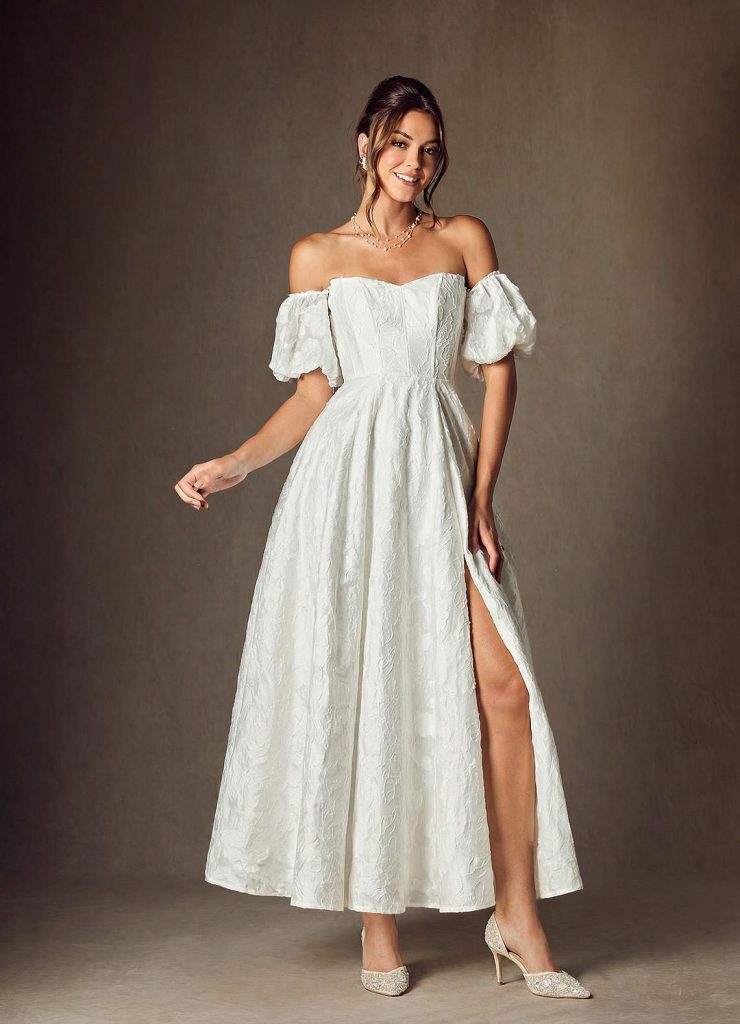
The silhouette determines how much room the skirt has to absorb a pocket. A-line and fit-and-flare have natural volume that makes seam pockets disappear. Tight sheath styles have less room, so welt pockets are used instead of seam pockets on those cuts.
| A-Line: The most forgiving pocket silhouette. The flared skirt creates natural volume that completely absorbs seam pockets. Even a loaded phone doesn’t create obvious bulk. Best all-around choice for graduation pockets. |
|---|
| Fit-and-Flare Similar to A-line for pocket hiding. The structured bodice-and-full-skirt combination leaves plenty of room for seam pockets. One of the most photogenic silhouettes for graduation and handles pockets well. |
| Midi / Skater The extra skirt length and volume work in your favor. A midi with seam pockets is one of the cleanest pocket combinations for graduation — the flare absorbs the weight, and the longer hem keeps everything proportionate. |
| Wrap Style: Wrap dresses can have seam pockets, but the overlapping front creates a risk: the pocket opening can shift if the dress gaps. Worth testing the pocket placement before the day. Not the most reliable pocket option. |
| Sheath: The most challenging silhouette for pockets. The narrow skirt leaves little room. Look specifically for welt pockets rather than seam pockets in sheath styles — they sit flat and don’t create hip bulk. Avoid loading them heavily. |
An a line white graduation dress with seam pockets is the most reliable graduation pocket combination. The math is simple: more skirt volume = more room to absorb pocket weight = less visible bulk. If pockets are a priority and you’re not sure which silhouette to go with, start there.
Pockets During the Ceremony vs. After — Two Different Use Cases
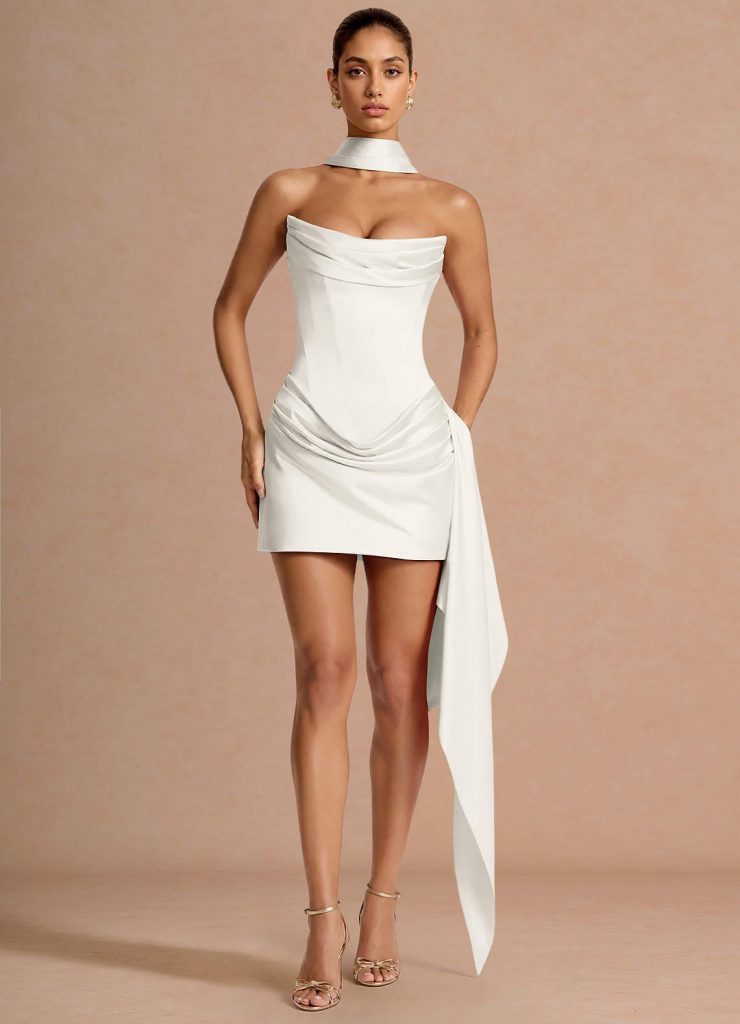
Worth thinking about separately. What goes in the pockets during the processional is different from what you want access to during portraits and the party. The ceremony is about invisibility. After is about convenience.
| 🏛 DURING THE CEREMONY • Keep pockets near-empty or light — lip tint and a slim card only • The robe covers everything, but pocket bulk shows through the fabric • Heavier items create a visible uneven hemline in stage photos • Phone is safest with a family member or in the graduation gown’s slit if it has one |
🎉 AFTER THE CEREMONY • Pockets are fully useful once the gown is off for portrait sessions • Phone fits comfortably in a seam pocket for candid outdoor shots • Stain pen is genuinely useful at the reception — white fabric shows everything • Slim card + phone is the ideal pocket load for the celebration |
|---|
| ⚠ THE ROBE SLIT TEST — WORTH DOING Most graduation gowns have a vertical slit at the hip to let you access a pocket in the dress underneath. Put both pieces on and find out whether the slit aligns with the opening of your dress pocket before graduation day. If they don’t align, you can’t actually use the pocket during the ceremony without opening the robe — which is worth knowing before you depend on it. |
|---|
How Pockets Interact with the Graduation Gown
This is the piece graduation dress pocket guides almost always skip. The gown changes things. A pocket that looks flat and perfect on its own can behave differently inside a robe — especially if you’re sitting for two hours with items in the pockets.
| Scenario | What Happens | What to Do |
|---|---|---|
| Sitting with loaded pockets | Items shift toward the front, creating a visible lump at the hip seam | Empty pockets before sitting for long processional stretches |
| Standing with a heavy pocket | Fabric pulls down on one side, creating an uneven hemline visible in stage shots | Keep one pocket significantly lighter than the other |
| The slit in the robe doesn’t align with the pocket | Can’t access the pocket during the ceremony without opening the robe | Test alignment at home, plan accordingly |
| Lightweight fabric + phone | Sagging hemline on the loaded side, visible in full-body photos | Switch to a structured crepe or move your phone to a clutch for photos |
For high school graduation dresses, the ceremony is usually shorter, so pockets get more use afterward. For longer university commencements, the gown covers everything for 90+ minutes anyway — having a family member hold the heavy items until the ceremony ends is genuinely more practical than depending on pockets during the processional.
Five Pre-Graduation Pocket Checks
Quick ones. Each exists because something goes wrong on graduation day when it’s not checked.
| 1 | Full pocket load test: Put exactly what you plan to carry into the pockets. Walk around, sit down, look in a mirror at a distance. Does the hemline look even? Is there visible bulk at the hip? |
|---|
| 2 | Robe alignment check: put on both the dress and the graduation gown. Find the gown’s hip slit and see if it lines up with the dress pocket opening. If not, decide now whether the pocket is useful during the ceremony at all. |
|---|
| 3 | Sit test with pockets loaded: sit for five minutes with items in the pockets. Do they shift? Does the fabric pull? This is what happens after two hours in a ceremony seat. |
|---|
| 4 | Photo test at a distance: fill pockets, stand at least 10 feet from a mirror, and look. What reads fine up close can create visible hip bulk in wide ceremony shots from the audience. |
|---|
| 5 | Hand off anything that doesn’t pass these tests. Keys, full wallets, heavy phone cases — give them to a family member or leave them in a bag until the ceremony is over. Pockets are most useful after the robe comes off. |
|---|
Browse the full graduation dress collection to compare pocket vs. no-pocket styles side by side. Sometimes a small clutch is genuinely the more practical graduation day solution, and it’s worth seeing both options before deciding.
Frequently Asked Questions
Why do Americans wear white for graduation?
The tradition picked up momentum in the early 1900s as a way to create a unified, clean look across graduating classes. White was associated with new chapters and optimism — the same symbolism that made it popular for weddings and other milestone events.
The practical reason it stuck: it photographs consistently across every lighting condition graduation involves, from stage spotlights to outdoor afternoon sun.
What’s with the white dresses for graduation?
Partly tradition, partly practicality. White doesn’t clash with any gown color or honor cord combination. It reads bright and polished in photos at every distance — wide ceremony shots, close portraits, group family photos.
And it creates a cohesive look across a large graduating class without being identical. The symbolism (new beginning, blank slate) layers on top of what’s already a very practical choice.
Do graduation gowns have pockets?
Most standard academic gowns don’t have functional pockets — at most, a vertical hip slit that lets you reach into the pockets of whatever you’re wearing underneath. Which is actually the practical argument for wearing a dress with seam pockets.
The slit alignment has to be checked, though: if the gown slit and the dress pocket opening don’t match, the pocket won’t be accessible during the ceremony.
When did white dresses for graduation become a thing?
The broader tradition has roots in the 19th century, but it gained momentum in the US in the 1910s and 1920s as women were increasingly represented in graduating classes. White attire for major ceremonies — confirmations, weddings, graduations — shared the same cultural thread of marking a transition. It never really went away and has been consistently popular since.
What is the white dress theory?
In fashion psychology, it’s the idea that white conveys clarity, confidence, and a fresh start — which makes it a psychologically fitting choice for a milestone transition like graduation. Whether you subscribe to fashion psychology or not, the practical argument holds: white photographs better than most colors under the specific combination of stage lighting, outdoor sun, and flash photography that a graduation day involves.
Is it inappropriate to wear white to a graduation?
No — it’s basically the expected choice at most US graduation ceremonies. The only situations where it might feel out of place: some religious or very traditional institutions with specific attire guidelines, or a ceremony where the school uses white graduation gowns (wearing the same color as the gown creates a less intentional look). Worth a quick check of your school’s guidelines if you’re unsure.
Why do Americans wear white generally?
In American culture, white is associated with new beginnings, celebration, and milestone moments — weddings, graduations, christenings, and similar events. It’s a color that reads as intentional and celebratory without competing with decorations, other people’s outfits, or event colors.
For graduation specifically, the “new beginning” angle resonates directly with the transition from student to whatever comes next.
What are the top three graduates called?
The highest-ranked graduate is the Valedictorian, typically the student with the highest GPA who gives the commencement address. Second is the Salutatorian, who often speaks at the ceremony as well.
Thirds vary by institution — some schools have a Class Historian, some use a ranking system with Latin honors (Summa Cum Laude for the highest tier), and others don’t formally recognize a third individual.