
White Graduation Dresses Long Sleeve:What Works, What Doesn’t, and How to Stay Comfortable
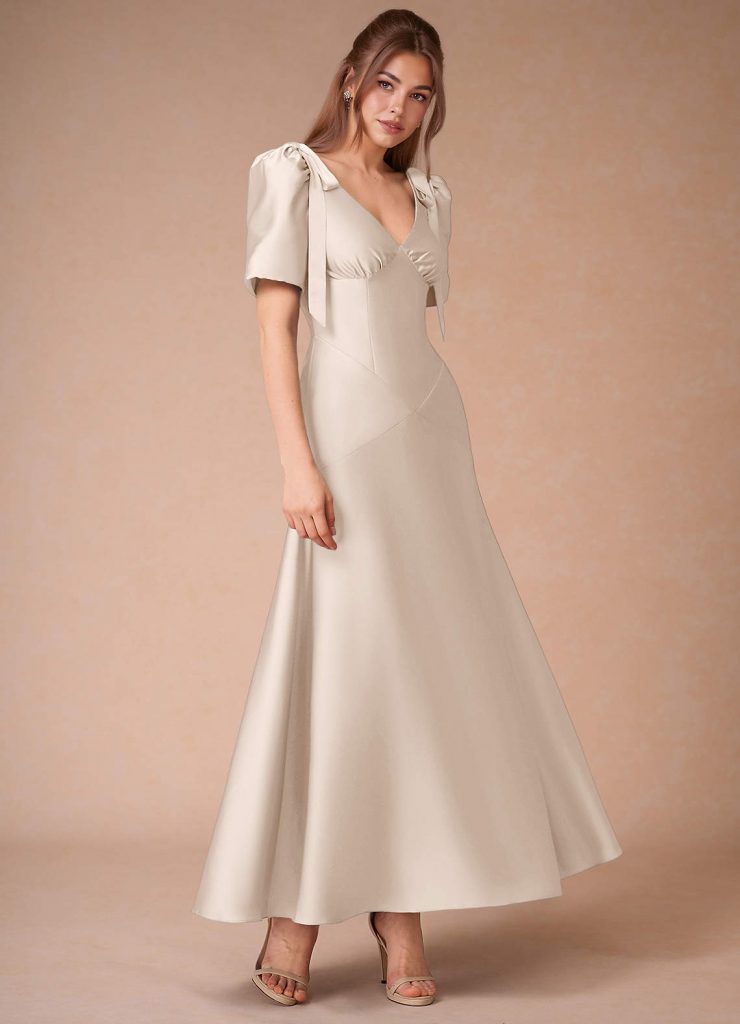
Long sleeves and graduation gowns have a compatibility problem that nobody usually mentions until the dress is already bought. Graduation gown sleeves are wide and not tapered. Anything bulky under them creates visible bunching at the elbow — looks untidy in ceremony photos, feels uncomfortable by hour two. A sheer lace long sleeve lies flat under a robe. A wide bishop sleeve doesn’t.
The reason people specifically search for long-sleeve white graduation dresses comes down to a handful of situations: modest coverage for religious or conservative ceremonies, cool weather in early spring or fall, personal preference for the more formal look, or practical warmth for an outdoor stadium ceremony on a cold day. These are valid reasons, and long sleeves work well for graduation — when the sleeve type is right.
Browse white graduation dresses — 100+ styles including sleeved options with custom sizing across midi, long, and modest cuts.
Which Long Sleeve Type Actually Works Under a Graduation Gown
Not all long sleeve styles behave the same under a robe. The gown’s sleeve opening is the constraint that eliminates several types entirely.
| Sleeve Type | Gown Fit | Heat | Verdict |
|---|---|---|---|
| Sheer Long Sleeve | Flat, no bulk | Near zero | ✓ Best option for graduation |
| Fitted Jersey | Stays in place | Moderate | ✓ Works — best indoors |
| Fitted Lace | Flat when thin | Moderate | ✓ Works — must be thin lace |
| Three-Quarter Sleeve | No interaction | Low | ✓ Best — no sleeve overlap |
| Bishop / Puff Sleeve | Creates bulk | High | ✗ Creates visible gown lumps |
| Bell / Flared Cuff | Shows below the gown | Varies | ✗ Shows below gown opening |
The three-quarter sleeve is the most practical graduation sleeve choice if you want coverage without gown interaction. It ends before the gown’s sleeve area, so the two never conflict. Sheer long sleeves are the second-best — full arm coverage without any meaningful bulk.
What Actually Happens Under the Robe
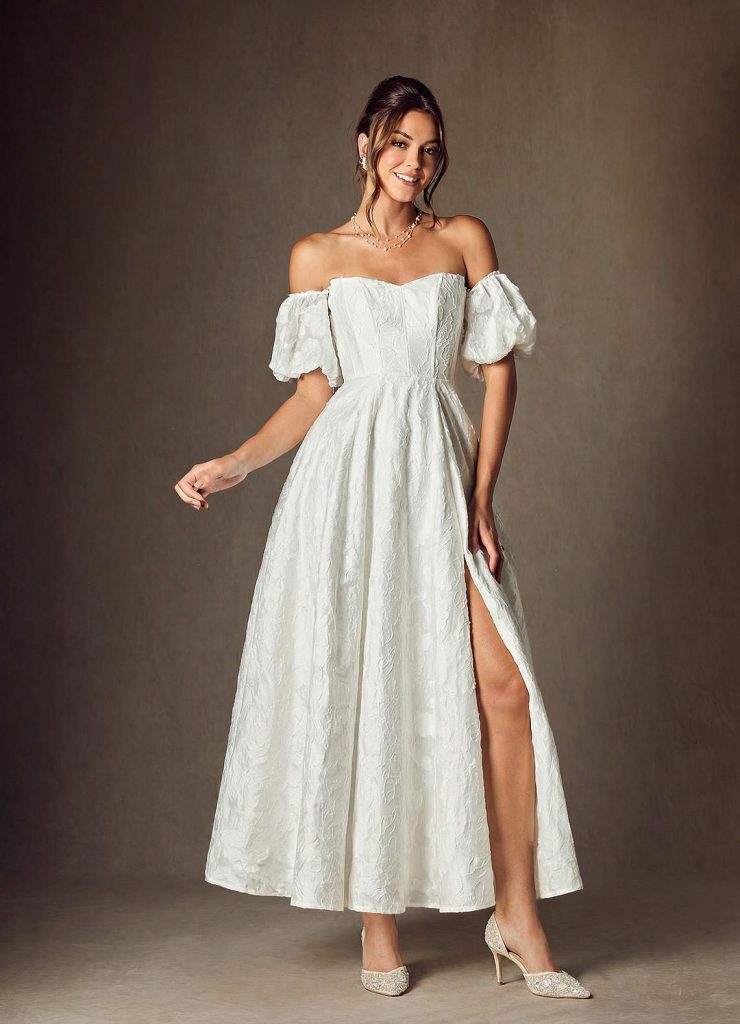
Most people buying long sleeve graduation dresses don’t test the full combination before the day. That’s how people end up on stage with visible bunching at the elbow in every ceremony photo.
The test is one minute: put on the long-sleeved dress and the graduation gown together. Raise both arms to the position you’d be in accepting your diploma. Check whether the sleeve fabric bunches at the elbow or pokes below the gown’s sleeve opening. If it does in your living room, it does on stage.
| ✓ What Works Under the Gown | ✗ What Creates Problems |
|---|---|
| Fitted long sleeves in thin jersey or chiffon — stay in place Sheer long sleeves barely add any bulk under the robe Three-quarter sleeves — end before the gown cuff area Fine lace long sleeves — flat when the fabric is thin and flexible |
Puffed or bishop sleeves — visible lumps under the robe Wide bell sleeves — bunch up and create awkward elbow bulk Heavy, thick fabric sleeves — bunch around the forearm Oversized cuffs — ride up and show from the gown opening |
When Long Sleeves Are the Right Choice for Graduation
Long sleeves aren’t the default for most graduation ceremonies, but there are specific settings where they’re genuinely the better option.
| Ceremony Setting | Why Long Sleeves Work (or Don’t) | |
|---|---|---|
| ⛪ | Religious/conservative school | Many religious schools and conservative universities expect sleeve coverage. Long sleeves are appropriate, expected, and genuinely the right choice — not a workaround. |
| 🌫 | Cool weather ceremony (early spring/fall) | Outdoor ceremonies in April or October can be genuinely cold, especially in stadium settings with no shelter. Long sleeves are a practical comfort choice, not a formal one. |
| 🏛 | Indoor air-conditioned venue | Large university auditoriums are often aggressively cold. A long-sleeve dress is comfortable rather than a heat concern in this setting. |
| 🙏 | Personal modesty preference | Choosing long sleeves that align with your values is completely valid. The key is the sleeve type — sheer or fitted lace works with the gown; voluminous sleeves don’t. |
| ☀ | Outdoor warm-weather ceremony | The most challenging setting for long sleeves. Sheer or ultra-lightweight fabric is essential, and heat preparation matters more than in any other setting. |
For religious institution ceremonies specifically, formal graduation attire rules including white dresses and modest dress expectations from universities explicitly require modest white attire, making long sleeves not just appropriate but required in some contexts. Modest graduation dresses with long sleeves are designed with this in mind.
How to Stay Comfortable in Long Sleeves All Day
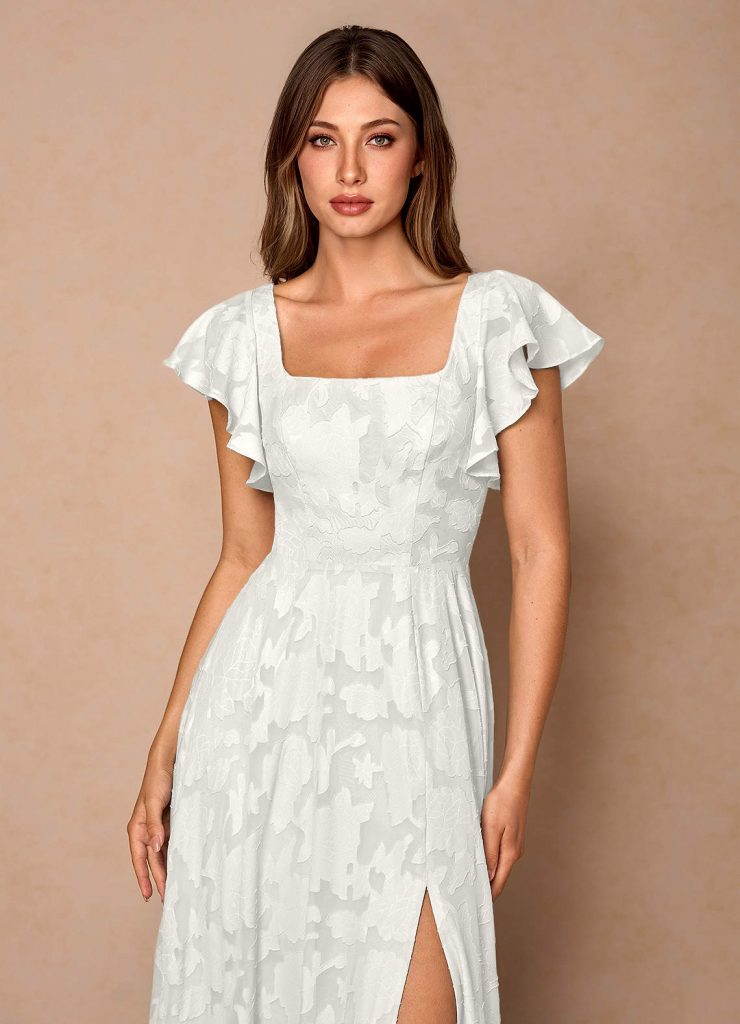
The honest challenge: graduation robes are heavy polyester, and even a standard ceremony creates real heat. A long-sleeve dress adds another layer of fabric against the arm. For warm settings, preparation matters more than the choice of sleeve alone.
| Factor | What to Actually Do | |
|---|---|---|
| 🧵 | Fabric | Sheer chiffon or thin lace sleeves add near-zero heat. Heavy jersey or lined sleeves add significant warmth. Fabric is the most important heat management decision you’ll make. |
| 🌬 | Venue | Indoor air-conditioned venues make long sleeves comfortable. Outdoor ceremonies in hot weather are the most challenging. Know this before finalizing the sleeve choice. |
| 😌 | Neckline | If sleeves are covering the arms, at least choose a neckline that isn’t restrictive. A scoop or V-neck improves air circulation meaningfully. |
| 🌪 | Pre-test | Wear the full combination (dress and gown) at home for 30 minutes. If you’re uncomfortable in a cool room, the heat of an outdoor ceremony makes it considerably worse. |
| 💧 | Hydration | Drink water before the ceremony. Heat stress under a graduation robe is real and manageable if you prepare ahead, not after you’re already uncomfortable. |
| 💡 | The Sheer Sleeve Solution Sheer chiffon or fine lace long sleeves solve three problems simultaneously: full visual coverage for modest or conservative ceremonies, essentially zero added warmth, and a flat fit under any graduation gown sleeve. They also photograph beautifully — the arm is covered, but the sleeve reads as elegant rather than heavy. If you’re unsure which long sleeve type to choose, this is the answer. |
|---|
Length and Silhouette for a Long Sleeve Graduation Dress
Long sleeves change the visual weight of a graduation dress. A covered arm affects how the full length and silhouette read in photos — and the combination needs to be balanced.
| Length | With Long Sleeves | Best Sleeve Type | Key Note |
|---|---|---|---|
| Mini / Knee | Balances covered arms with a lighter hemline | Sheer or fitted lace | Clean contrast of covered arms and shorter hem — photographs well in portraits |
| Midi | Maximum formality and coverage | Any fitted or sheer sleeve | Most polished long-sleeve graduation combination — works for every ceremony type |
| Short Midi | Conservative and practical | Fitted or sheer | Falls below the knee without touching the gown hem — good balance of coverage and proportion |
| Floor Length | Highest formality | Fitted or sheer only | Works for formal evening or religious ceremonies — ensure hem doesn’t catch on the stage stairs |
A white midi graduation dress with sheer long sleeves is the most consistently ceremony-appropriate long sleeve graduation combination. Midi provides formality and coverage; the sheer sleeve adds full arm coverage without bulk or significant heat. If you’re looking for a single combination that works in most settings, that’s it.
Pre-Graduation Checks Specific to Long Sleeve Styles
These take five minutes and genuinely matter for long sleeve dresses specifically.
| 1 | Full gown combination test: wear the dress and graduation robe together and raise both arms. Check for sleeve bunching at the elbow, sleeves showing below the gown cuff opening, and restricted movement. Do this before the day of the ceremony, not the morning of. |
|---|---|
| 2 | Heat test: wear the combination for 20 minutes at room temperature. If you’re already warm in a cool room, a hot outdoor ceremony will be significantly more uncomfortable. Choose a lighter sleeve type if the test reveals a problem. |
| 3 | Transparency check: Take the dress outside in direct sunlight. Long sheer sleeves should look like coverage, not like nothing at all. Some very fine sheers become nearly invisible in strong direct light. |
| 4 | Movement test specific to sleeves: reach forward, to the sides, and behind you. Fitted sleeves should extend and return without pulling. If the sleeve restricts arm movement in testing, it will be noticeable during the stage walk and diploma handshake. |
| 5 | Steam lace and chiffon with care: long sheer or lace sleeves wrinkle differently from the dress body. Steam the full dress, including the sleeves, the night before, hang immediately, and avoid refolding. |
Browse graduation dresses in white long-sleeve and sleeveless styles across all silhouettes and lengths. Azazie has 100+ options with custom sizing — especially useful for long-sleeve styles, since sleeve length needs to be proportional to your arm length.
FAQs
Is a white dress appropriate for graduation?
White is the expected choice at US graduation ceremonies across every level, going back to women’s colleges in the 1880s. Long-sleeve white is appropriate, and in some settings — religious institutions, conservative schools, cool-weather ceremonies — it’s specifically the right choice. Per official graduation ceremony dress code including white dresses for women, some institutions formally require modest white attire for female graduates. The sleeve type matters more for under-gown comfort than for appropriateness: sheer or fitted long sleeves are appropriate everywhere; very voluminous sleeves create practical problems under the gown.
Is a long dress okay for graduation?
For formal ceremonies — university and graduate school commencements, especially — yes. The specific thing to watch: the dress hemline should be shorter than the graduation gown hem, or at minimum the same length, to avoid an awkward longer-dress-below-the-robe situation in ceremony photos. High school graduation generally suits knee-to-midi better than floor length, though it’s not a rule. For university graduation, longer lengths work and look elegant in portraits.
How do you look good at graduation in a long-sleeved dress?
Sleeve type determines most of it. Per official graduation attire guidance (smart personal clothing under regalia), tailored and well-fitting dresses that photograph cleanly are the consistent recommendation. For long sleeves specifically — sheer or fitted, tested under the gown, comfortable for several hours of wearing. The cap and gown handle a lot of the visual work. A long-sleeve dress that stays in place and doesn’t require any adjustments throughout the ceremony is what actually looks good in every photo.
Why do girls wear white dresses on graduation day?
The tradition started at women’s colleges in the 1880s — white attire created a unified, dignified look for graduating classes. It persisted because white photographs consistently well in any lighting and with any gown color. Long-sleeved white, in particular, has roots in the traditional modest dress code of formal academic ceremonies, and that connection remains relevant today for graduates choosing this style.
Can a non-virgin wear a white dress?
Absolutely. The question of the white dress comes up because of wedding associations, but graduation is a different occasion entirely. A white graduation dress is a style choice and a nod to academic tradition — nothing else attached to it.
What color grad dress is most popular?
White, across every US graduation level. Long-sleeve styles are a subset of the white category, popular for modest dressing preferences, religious institution requirements, and cooler-weather ceremonies. Per formal graduation attire guidance (smart personal attire under regalia), smart, polished attire under the gown is the standard — white and light colors are consistently the most appropriate across ceremony types.
What are the top three graduates called?
Valedictorian (highest academic ranking, typically delivers the commencement address), Salutatorian (second-highest, often with a speaking role), then the Latin honor system: Summa Cum Laude, Magna Cum Laude, Cum Laude. The specific criteria and titles vary between institutions — some schools don’t use the Latin system at all.
When did people start wearing white dresses to graduation?
The 1880s and 1890s, at women’s colleges in the US. Long-sleeved white was part of the original tradition; early graduation dresses typically had sleeves and higher necklines, reflecting the formal academic occasion. The modern range is broader, but the white tradition and modest coverage have genuine historical roots that still inform why many students reach for long-sleeve white today.