
White Formal Graduation Dresses:What Actually Makes Them Formal
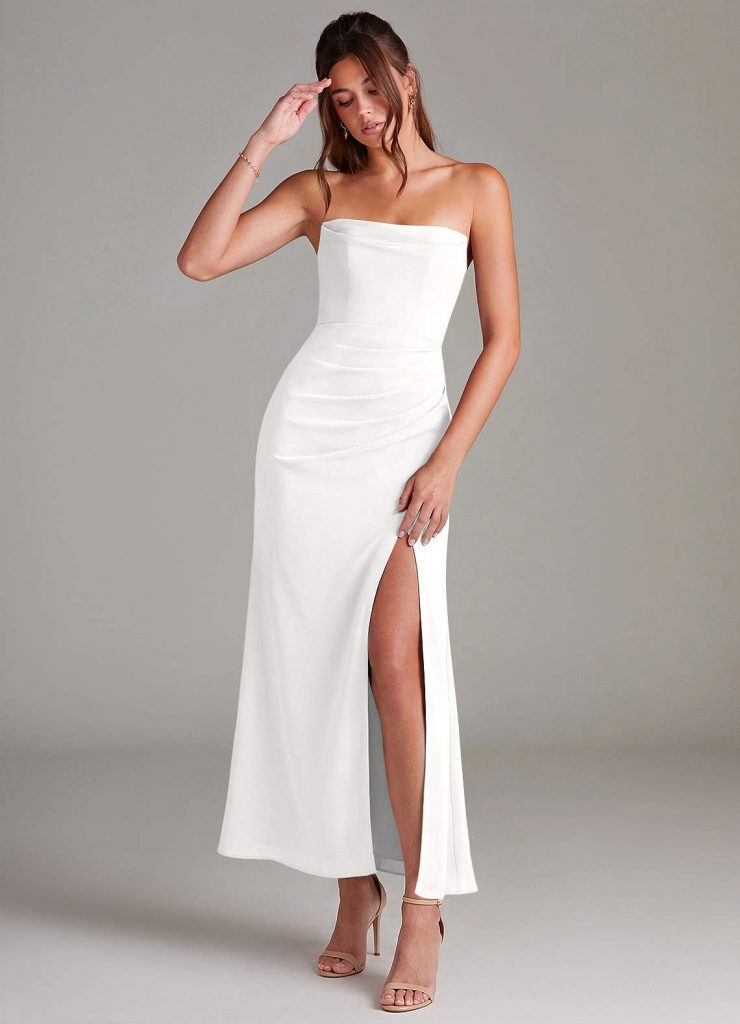
The word “formal” is used loosely when referring to graduation dresses. Most search results for white formal graduation dresses return the same styles that appear when you search for general graduation dresses, which isn’t entirely wrong — but it misses the distinction. A formal graduation dress isn’t just any dress that looks nice. It’s a dress that reads appropriately formal in a specific context: a university convocation, a doctoral hooding, a religious ceremony, a multi-generational family dinner afterward.
Formality in a graduation dress comes from three things: fabric weight and finish, silhouette structure, and how the dress behaves under and alongside formal academic regalia. A sheath in structured crepe reads formal. The same sheath in jersey does not. Understanding what creates formality means you can choose for the actual event you’re attending, not just a generic “graduation dress.
This is a guide to what makes a dress formally appropriate for graduation — not just ceremonially polished, but formally polished.
What Makes a White Graduation Dress Actually Formal
Formality isn’t one thing — it’s a combination of fabric, silhouette, and construction. Here’s how common graduation dress styles actually rank on the formality scale.
| SHEATH / COLUMN ★★★★★ Most Formal Structured fabric, narrow silhouette, professional profile. Reads well next to doctoral and university regalia. |
MIDI A-LINE ★★★★☆ Very Formal Balanced and elegant. The formal sweet spot for most university and college commencements. |
FIT-AND-FLARE MIDI ★★★☆☆ Semi-Formal Celebratory but still polished. Works better for college graduation than postgrad. |
MINI A-LINE ★★☆☆☆ Casual-Formal Appropriate for high school and casual college ceremonies. Less so for formal university commencements. |
FLOWY MAXI ★★☆☆☆ Situational Formal in outdoor portrait settings, but can feel overdressed or awkward under a short graduation robe. |
|---|
You might notice that the formality of the setting significantly affects this scale. A structured-crepe sheath midi is the right dress for a university doctoral hooding ceremony. That same sheath is probably more formal than necessary for a casual outdoor high school ceremony in May.
Graduation Day Has Three Distinct Acts
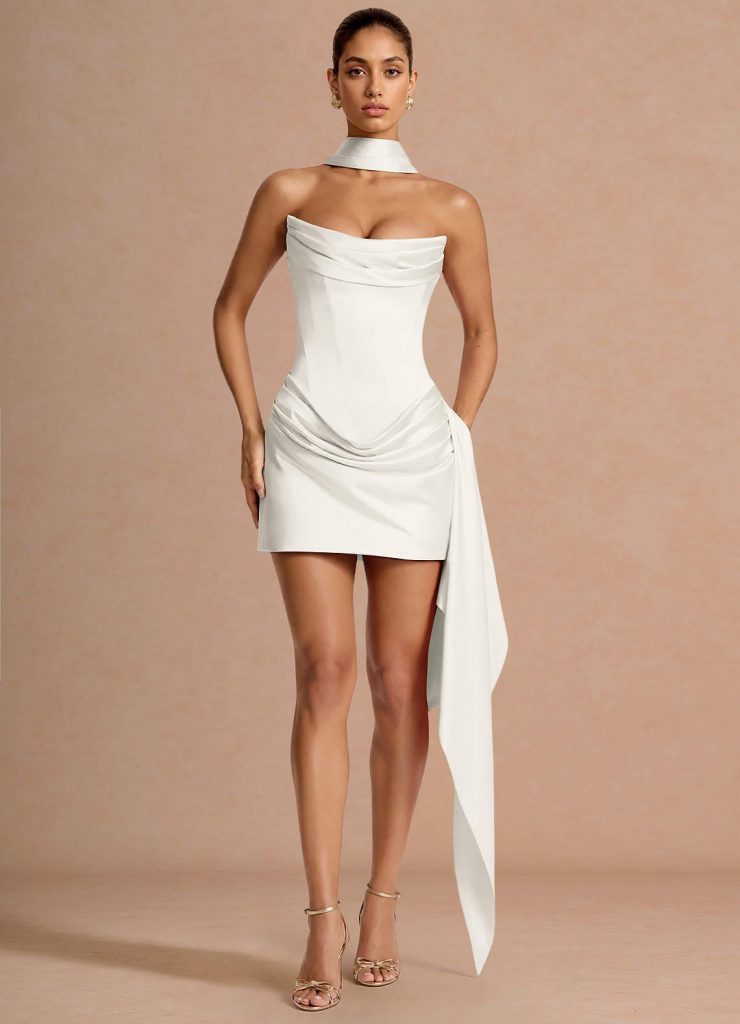
A formal graduation dress has to work across multiple very different photo scenarios on the same day. The ceremony has different requirements from the outdoor portrait session, which has different requirements from the family dinner afterward. Most dress guides treat it as one event. It’s three.
| 🏛 ACT 1: THE CEREMONY Clean + Modest Formal neckline, smooth silhouette, no heavy embellishment that creates bulk under the robe. Wide shots from the audience. |
📸 ACT 2: THE PORTRAITS Structured + Elegant Full dress visible in natural light. Defined waist, quality fabric, clean hem. The primary formal moment for the dress. |
🍽 ACT 3: THE DINNER Polished + Comfortable Dinner table length matters. A midi that looked perfect at the ceremony should still look appropriate seated across from a grandmother. |
|---|
The ceremony is actually the easiest act for the dress — the robe covers most of it. The portrait session is where formality matters most visually. And the dinner or celebration is where comfort becomes a real factor. A truly formal graduation dress handles all three.
The Fabric Formality Ladder
Fabric is the single biggest thing that separates a formal white graduation dress from a casual white dress worn to graduation. The fabric determines how the dress drapes, how it holds its shape throughout the day, and how it reads in photographs at every distance.
| Most Formal Structured Crepe — Matte finish, holds its shape all day, photographs clean under stage lighting without glare. The most ceremony-reliable formal fabric. |
|---|
| Very Formal Stretch Crepe — Similar to structured crepe but with more movement. Slightly more comfortable over a long day while maintaining a formal profile. |
| Formal Quality Satin (matte) — Soft sheen that reads elegantly in photos without the glare problem of mirror-finish satin. Formal in both feel and appearance. |
| Semi-Formal Lined Lace — Adds texture and warmth that photographs well, but reads slightly less structured than crepe. Very popular for college graduation. |
| Semi-Formal Chiffon — Lightweight and fluid. Reads formal in longer silhouettes. In a mini, it tips toward casual. Excellent for outdoor portrait sessions. |
| Casual Jersey / Stretch Knit — Comfortable but reads casual regardless of silhouette. Fine for high school ceremonies. Typically too informal for university commencements. |
For formal university and postgraduate ceremonies, structured crepe or stretch crepe in a midi or column silhouette is the most consistently appropriate choice. Browse college graduation dresses to see styles designed for the formality level that university commencements typically require.
What “Formal” Looks Like at Different Camera Distances
Here’s something specific to graduation photography that most dress guides skip: formality reads differently depending on how far the camera is. A dress that reads polished in a close-up portrait can look casual in a wide ceremony shot. Understanding this changes what details actually matter.
| Photo Distance | What’s Visible | What Reads Formal | What to Avoid |
|---|---|---|---|
| Wide stage shot (audience or ceremony cameras) | Silhouette, hem, and overall shape | Clean, consistent hem, defined silhouette, structured fabric | Anything shapeless or too casual in cut — reads flat at a distance |
| Mid-range (processional or campus photos) | Dress profile and neckline | Smooth neckline, structured bodice, minimal bulk under the robe | Heavy embellishment that creates visible texture at this distance |
| Close-up portrait | Fabric quality, neckline, details | Quality fabric finish, intentional neckline, clean seams | Wrinkled fabric, visible bra straps, over-busy details |
| Group/family photo | How does dress read among multiple people | Clean and simple reads clearly — lets the graduate stand out | Very loud patterns or details that compete in a multi-person frame |
| ⚠ THE FORMALITY CHECK NOBODY DOES Put the dress on and photograph yourself from across the room. The close-up mirror test shows you a very different dress from the wide-angle camera test. Stand 15 feet away from a mirror and look. Does it still read polished at that distance? Ceremony photographers are often positioned far back in an auditorium. The wide-shot version of your dress is what appears in the official ceremony photos. |
|---|
Formality Expectations by Graduation Level
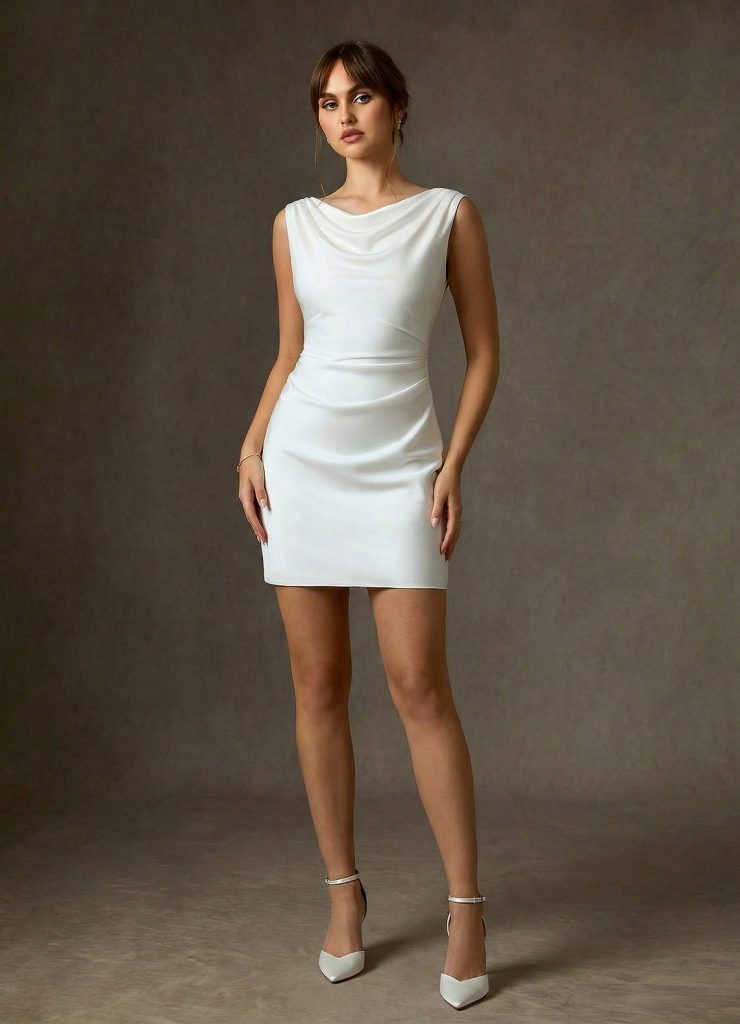
This is genuinely the most useful filter. A high school ceremony has different formality expectations than a doctoral hooding. Dressing “too formal” for high school graduation reads as stiff. Dressing “not formal enough” for a university convocation can look unintentional next to academic robes and hoods.
| Graduation Level | Expected Formality | Dress That Works | Dress to Skip |
|---|---|---|---|
| High School | Celebratory semi-formal | Short A-line or mini in chiffon or lace | Very stiff column styles — reads as overdressed |
| College / University | Polished and transitional | Midi A-line or sheath in crepe | Casual jersey or bodycon — reads as underdressed |
| Master’s | Professional-adjacent formal | Sheath or clean A-line midi in structured crepe | Overly playful details or casual fabrics |
| Doctoral / Hooding | Highest formality | Column or sheath in crepe or structured satin | Anything with heavy embellishment or casual construction |
For high school graduation dresses, the formality bar is lower than for university commencements — and dressing slightly more casually there is actually appropriate. The celebratory energy of a high school ceremony suits a lighter, more playful approach than a doctoral hooding.
What a Formal Graduation Dress Is Not
Worth saying directly, because the line gets blurry. Some things that look formally adjacent are not actually formal in a graduation context. Others look casual in a dressing room but read formally at a ceremony.
| READS FORMAL AT GRADUATION ▸ A-line or column in structured crepe — always formal regardless of length ▸ Quality satin with soft sheen and clean construction ▸ Lined lace with a modest or clean neckline and defined waist ▸ Any length in a well-fitted, wrinkle-resistant, matte fabric ▸ Simple accessories that don’t compete with academic regalia |
DOESN’T READ FORMAL DESPITE APPEARANCES ▸ Jersey or stretch knit in any silhouette — construction reads casual ▸ Heavy mirror-finish satin — too shiny, creates glare, reads nightclub-adjacent ▸ Very large statement embellishments competing with stoles and hoods ▸ Bodycon styles — too fitted to read formally in a ceremony context ▸ Extremely casual fabrics styled with formal accessories — doesn’t fix the fabric |
|---|
Day Before Prep for a Formal Graduation Dress
A few things specific to formal dresses that general graduation prep guides often miss.
| 1 | Steam rather than iron on formal fabrics. Crepe, satin, and structured fabrics respond better to steam. Direct iron contact at the wrong temperature can leave permanent marks or flatten fabric structure. |
|---|
| 2 | Do the wide-angle formality test. Take a photo from across the room, not just a close-up mirror check. The ceremony shot is usually from a distance. Confirm the dress reads polished at that range. |
|---|
| 3 | Full regalia combination test. Gown on, stoles and cords layered. Do the formal accessories and the dress work together visually, or does anything look mismatched? Formal necklines should complement rather than compete with regalia. |
|---|
| 4 | Sit for five minutes in the dress. Formal fabrics can feel very different seated versus standing. A structured bodice that’s perfect for standing may feel restrictive after an hour of sitting through formal speeches. |
|---|
| 5 | Confirm the shoes are stable for the venue. Formal footwear that’s appropriate for an indoor auditorium stage is different from what works for an outdoor stadium grass ceremony. Know the surface before choosing the heel. |
|---|
Browse the full graduation dresses collection to compare formal versus casual silhouette options side by side. Azazie offers 100+ styles in white, cream, and soft neutrals with custom sizing — which matters for formal styles specifically, since fit is a core component of what makes a dress read as formal.
The Short Version
White formal graduation dresses get their formality from structured fabric and a clean silhouette, not from heavy embellishment or dramatic details. A crepe in a midi or column silhouette is the most consistently formal combination. Match the formality level to the specific ceremony you’re attending — doctoral hooding vs. high school is a real distinction. Steam the dress, do the distance test, and check the shoes for the actual venue surface.
Azazie offers 100+ white graduation dresses in white, cream, and soft neutrals with custom sizing. Browse the collection to find a formal style suited to the level of ceremony you’re dressing for.
Frequently Asked Questions
Do Americans wear white to graduation?
White is the de facto standard for US graduation ceremonies — not usually a written rule, but a very strong convention. For formal university and doctoral ceremonies specifically, white in a structured fabric reads most appropriately. Most American schools either recommend or implicitly expect it, especially for formal commencement ceremonies.
Are white dresses appropriate for all graduations?
White is appropriate for virtually every type of graduation. The formality of the dress — not the color — is what needs to match the specific ceremony. A white jersey mini at a doctoral hooding is a mismatch. A white crepe midi at the same ceremony is exactly right. The color is always appropriate; the style’s level of formality is what needs thought.
Why do some graduates wear white graduation gowns?
Some schools use white academic robes rather than the more common black or dark-colored gowns — often for nursing, allied health, or specific departmental traditions. In those cases, graduates often choose ivory or cream dresses rather than stark white to avoid blending into the robe. If your gown is white or near-white, check its undertone against it before ordering.
How do you actually look good on graduation day?
The combination of fit and formality-appropriate fabric does most of the work. A well-fitted, structured crepe dress in the right length photographs significantly better than a more elaborate dress in the wrong construction. Steam the night before, do the distance photo test, wear shoes you can move in confidently, and keep jewelry minimal because formal academic regalia already adds a lot to the look.
What color grad dress is most popular?
White is dominant across all graduation types and levels, particularly for formal ceremonies. Ivory and cream are close alternatives that photograph similarly well. At the postgraduate and doctoral levels, especially, white or ivory in a formal fabric reads correctly in ceremony photos. Other colors appear more at casual high school ceremonies or for grads intentionally departing from convention.
What not to wear to a graduation as a guest?
Guests should avoid white entirely at graduation ceremonies — it directly competes with the graduate’s expected attire. Beyond that, anything too casual (jeans, shorts, very casual fabrics) or too formally competitive (dramatic floor-length evening gowns) is a mismatch. Graduation ceremony guest attire is typically smart casual to semi-formal, depending on the venue and ceremony level.
What shoes look best with a white formal graduation dress?
Nude, metallic, or white shoes are the most consistently clean choices for formal graduation dresses. They don’t create a color contrast that pulls attention away from the dress. For formal indoor ceremonies, kitten heels or pointed-toe flats photograph well at every distance. For outdoor venues, block heels or wedges over stilettos — thin heels on grass or stage stairs is a real stability issue at formal ceremonies.
Should you smile in your graduation photos?
Yes — and the difference between a stiff formal expression and a genuine one shows clearly in graduation photos. The formal dress and formal setting are already doing the ceremony work. A natural expression — even a real laugh caught in a candid shot — almost always looks better than a posed non-smile in portrait photography. The dress should read formal. The person in it doesn’t have to.