
White Graduation Dresses for Kids:The Parent’s Practical Buying Guide
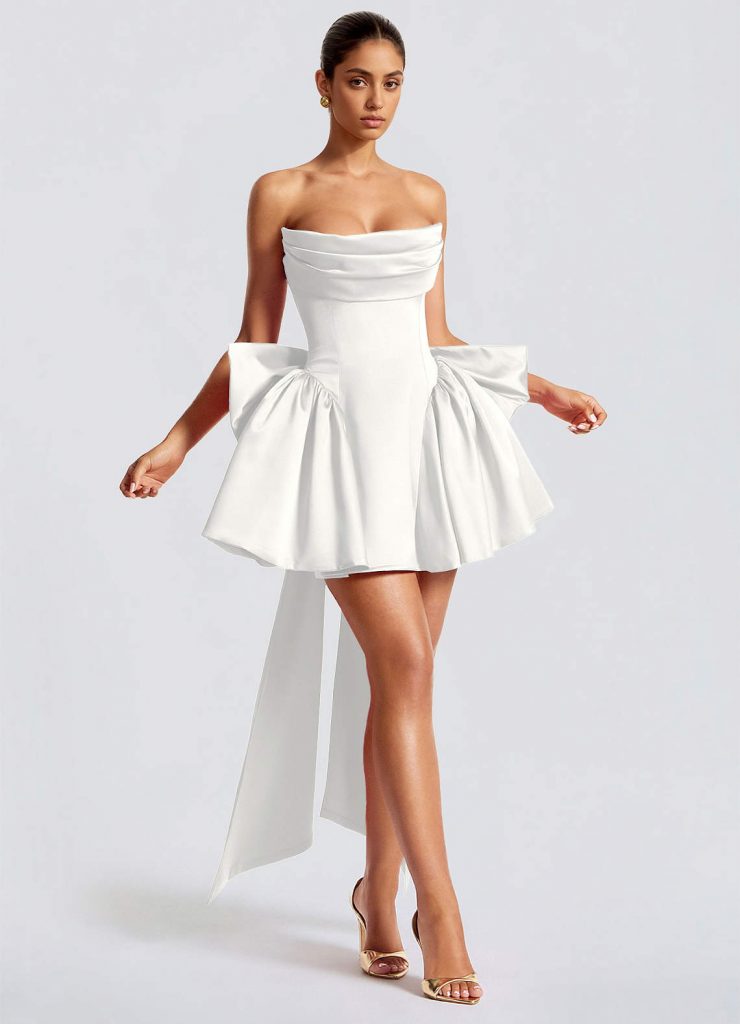
Shopping for white graduation dresses for kids is a different task from shopping for your own graduation dress. You’re choosing for someone else, which means comfort and fit take priority over trends, and the “what looks good on camera” consideration is completely filtered through whether your kid is actually comfortable wearing it. A dress a child hates wearing will show in every single photo.
This is a parent-focused guide. It covers what to look for by grade level, how to think about fabric comfort for younger kids, what to genuinely avoid (and why), and the practical prep steps that save real day-of stress. Because graduation days are already a lot.
Kids’ graduation ceremonies span a wide age range — kindergarten, elementary school, 8th grade. The dress decisions are different at each level, and this guide addresses them separately.
What to Look For by Grade Level
The most important filter is age-appropriateness. A dress that looks lovely on a high school senior is wrong for an 8-year-old elementary graduation. The level of formality, the style energy, and the priority between comfort and style all change with age.
| Kindergarten / PreK — Sweet A-line or simple tier in cotton The ceremony is short, the child is young, and comfort is everything. A soft cotton A-line with smocking or a simple sash looks adorable in photos without being uncomfortable to wear. Nothing fussy. |
|---|
| Elementary (Grades 1–5) — A-line or fit-and-flare, knee length Old enough for slightly more shape but still needs to feel completely natural to move in. Eyelet and light cotton work well. Avoid anything with a structured or stiff bodice. |
| Middle School (6th–8th) — Knee to midi A-line, more style latitude More personality is appropriate here. Lace overlay, eyelet, or a simple tiered style all work. Fabric still needs to be comfortable for a longer ceremony and family photos after. |
| 8th Grade Ceremony — Knee to midi, approaching HS style range The closest to high school graduation in tone. More fashion choices open up while still keeping the look ceremony-appropriate. Check whether the school expects specific coverage. |
For 8th grade graduation dresses specifically, the ceremony formality is usually between elementary and high school. A knee-length A-line in quality cotton or lined eyelet is the most reliable choice — appropriate without being overly formal, and comfortable enough for a full day of photos and family celebration.
Fabric Matters More for Kids Than for Adults
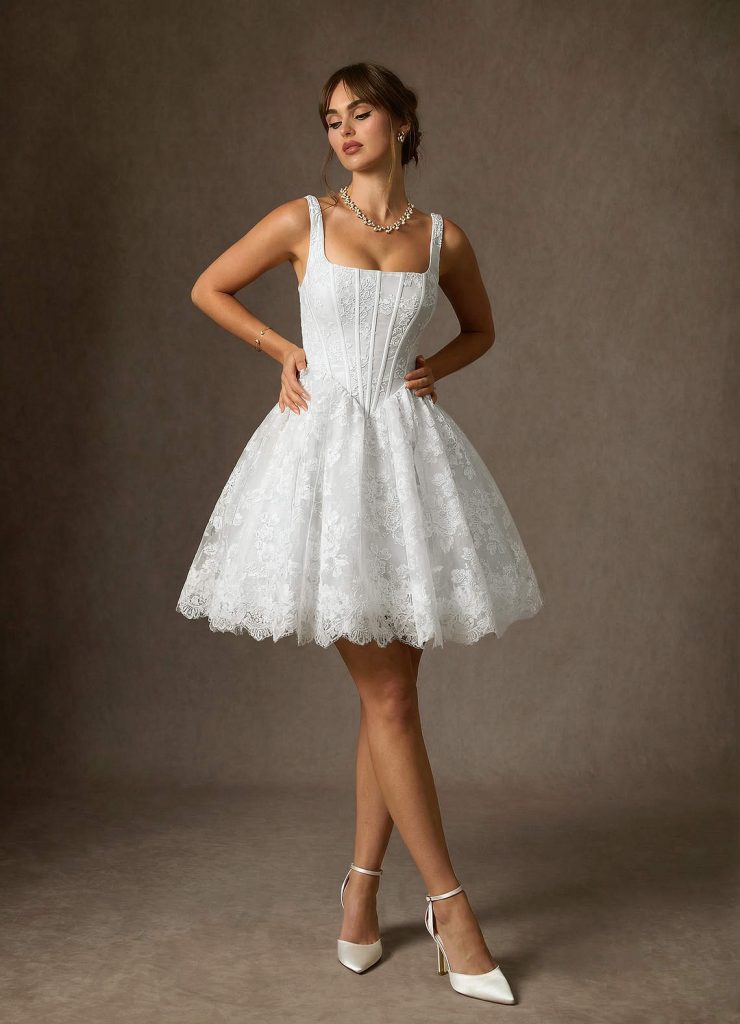
Here’s the thing most graduation dress guides skip: for younger kids, fabric comfort is the single biggest factor in whether the day goes smoothly. A child who’s uncomfortable in their dress will fidget, pull at the hem, and make unhappy faces in every photo. The dress has to feel good to wear, not just look good on a hanger.
| COTTON BLEND ★★★★★ comfort ★★★★☆ photos Breathable, natural, washes easily. Best for younger kids at any ceremony type. |
LINED EYELET ★★★★☆ comfort ★★★★★ photos Classic white with beautiful texture in photos. Feels fine to wear, fully lined. |
CHIFFON ★★★★☆ comfort ★★★★★ photos Lightweight and floaty. Needs full lining. Good for outdoor warm ceremonies. |
STRETCH CREPE ★★★☆☆ comfort ★★★★★ photos More polished look but slightly more formal feel. Better for older kids (8th grade+). |
STIFF POLYESTER ★☆☆☆☆ comfort ★★☆☆☆ photos Common in lower-quality styles. Scratchy, hot, uncomfortable. Avoid. |
|---|
| 💡 THE COMFORT TEST BEFORE YOU BUY If ordering online, have your child do the “movement test” when the dress arrives: sit down, stand up, raise both arms above their head, and walk around. If any of these movements cause visible discomfort or restriction, return it and try a different style. Kids communicate discomfort in graduation photos. A child who’s comfortable in their dress looks confident and happy. That’s what you actually want in the photos. |
|---|
What to Avoid — And Why It Matters for Kids
Some common dress mistakes for adult graduation look different at the kids’ level. These are the ones that consistently cause problems.
| What to Avoid | Why It’s a Problem | Better Alternative |
|---|---|---|
| Too many layers/petticoats | Creates visible bulk under a small graduation gown and restricts movement | A-line or fit-and-flare without crinoline underneath |
| Strapless or very low neckline | Not ceremony-appropriate for younger kids; also falls down during movement | Cap sleeve, square neck, or scoop neck with secure fit |
| Unlined lace or chiffon | Semi-transparent in outdoor light or under spotlights | Same style but fully lined from the neckline to the hem seam |
| Very long floor-length style | Trips hazard for younger kids, especially on stage stairs | Knee to midi is the practical kids’ range |
| Too tight or bodycon | Restricts walking and sitting; not age-appropriate for younger kids | A-line or slightly fitted with stretch gives room to move |
| Cheap synthetic satin | Hot, uncomfortable, doesn’t move naturally; shows every mark | Cotton, quality crepe, or lined chiffon all photograph better |
| Kids’ graduation dress rule: comfortable first, photogenic second, trendy never |
|---|
What Graduation Photos Actually Capture — A Parent’s Perspective
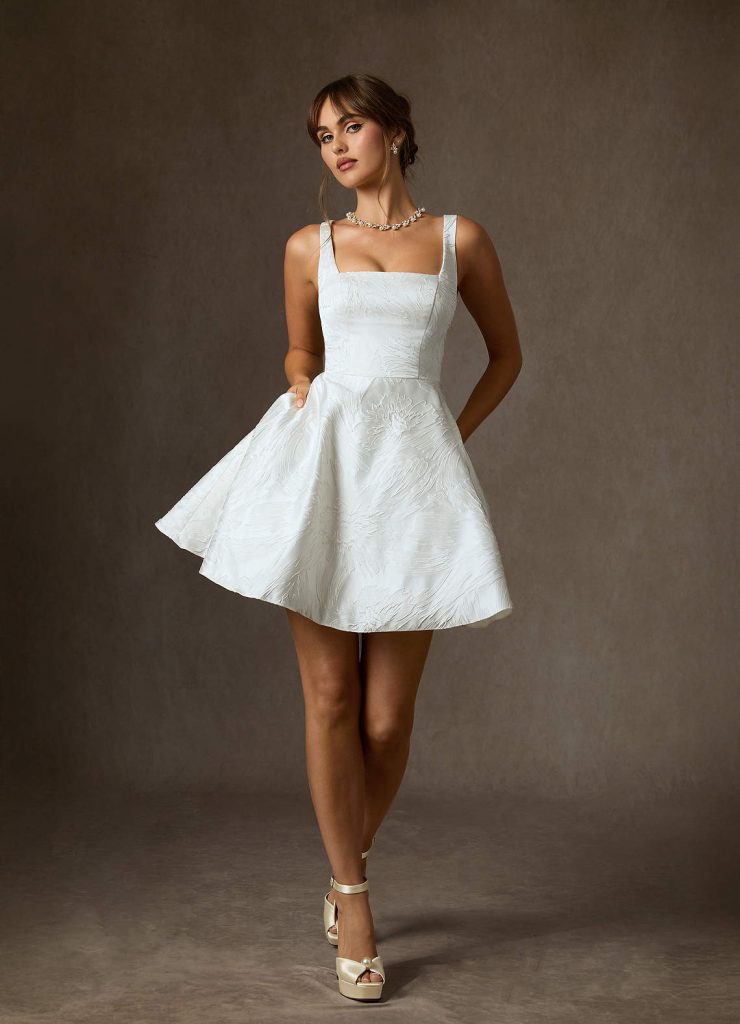
The photos from a kids’ graduation ceremony are different from adult graduation photos in one key way: the emotional expression in the child’s face is almost always the main subject. The dress is the backdrop. Understanding this actually changes which dress is the right choice.
| Photo Type | What It Captures | Dress Priority | Common Issue |
|---|---|---|---|
| Stage walk (audience) | Wide shot, child small in frame | Clean silhouette under gown | Gown sitting awkwardly over a too-full skirt |
| Close-up with diploma | Face + upper body primarily | Neckline and top of dress | Strapless style that’s visibly being held up |
| Family group photo | Full body, multiple people | Color and length proportion | Dress too casually or too formally compared to family attire |
| Candid post-ceremony | Child’s expression and movement | Comfort shows here most clearly | Child fidgeting, pulling at dress, looking uncomfortable |
For junior high graduation dresses, the candid post-ceremony photo is usually the most treasured image. Kids move, laugh, interact. The dress needs to stay in place and look good during genuine movement, not just in a posed shot.
The Parent’s Practical Before-the-Day Checklist
Kids’ graduation day has a different set of practical concerns than adult graduation. Most of these take five minutes to verify and save real stress on the actual day.
| ✓ Order early with an exchange buffer. Kids grow fast. Order several weeks ahead so there’s time to exchange if the size is off. Graduation is the worst time to discover a size issue. |
|---|
| ✓ Try on the actual graduation gown. Some dress silhouettes create visible bulk under a small graduation robe. Try the combination before the day, so there are no surprises. |
| ✓ Do the outdoor light test. Take the dress outside in direct sunlight. Unlined or thin fabrics can be semi-transparent. This matters especially for white dresses in outdoor ceremonies. |
| ✓ Do the movement test. Have your child sit, stand, and raise their arms. If any movement causes obvious discomfort or restriction, it’s the wrong dress. |
| ✓ Steam and hang the night before. White fabric wrinkles show clearly in close-up photos. Two minutes of steaming the night before makes a visible difference. |
| ✓ Pack a stain pen White dress, + excited kid + refreshments after the ceremony. Bring a stain pen. This one saves real anguish. |
Browse graduation dresses for styles that cover the full range of kids’ graduation contexts. With custom sizing available, it’s easier to get the right fit even when ordering online for a child whose measurements don’t fall neatly into standard size categories.
The Short Version
For younger kids’ graduation ceremonies, comfort is the priority. Cotton or lined eyelet in an A-line or fit-and-flare silhouette, knee-length, is the most reliable choice across every age group. Avoid unlined fabrics, too-stiff synthetics, and any style that restricts movement. Order early, try on the full combination with the graduation gown, do the outdoor light test, and pack a stain pen.
Azazie has 100+ white graduation dresses in white, cream, and soft neutrals with custom sizing. Browse the collection for styles appropriate for every kid’s graduation ceremony level, from moving-up ceremonies to 8th-grade commencements.
Frequently Asked Questions
Why do Americans wear white for graduation?
The tradition goes back to the 1880s at women’s colleges, where white attire created a dignified, unified look for graduating classes. It spread through high school and eventually to younger graduation ceremonies.
For kids’ graduations specifically, white carries the same symbolism of new beginnings — moving up to the next level, starting a new chapter — while also photographing consistently well in every ceremony environment.
Is a white dress appropriate for graduation?
White is essentially the expected choice across every level of US graduation ceremony, including kids’ ceremonies. At the younger grade levels, simple, age-appropriate white styles are entirely appropriate.
The main consideration isn’t whether white is appropriate but whether the specific style is age-appropriate for the child and comfortable enough for them to wear through a full ceremony and family celebration.
What color graduation dress is most popular for kids?
White is overwhelmingly the most common choice for kids’ graduation ceremonies, just as it is for high school and college. Ivory and cream photographs are similar to white and appear occasionally.
Soft pastels are sometimes seen at younger elementary ceremonies where dress codes are looser. For middle school and 8th-grade ceremonies, white is the strong expectation. Check your specific school’s guidelines if you’re unsure.
What do high school girls wear to graduation?
High school graduation generally favors mini to knee-length A-line or fit-and-flare styles in white, cream, or ivory. Fabric breathability matters because most HS ceremonies are outdoors.
More style personality is appropriate at the HS level than at the younger ceremony levels. Tiered styles, lace overlays, and back details are popular. The full-length midi is more of a college graduation style than HS, though it works at both.
What fabric is best for a white graduation dress for kids?
Cotton blend is the most practical choice for younger kids because it breathes, doesn’t scratch, and washes easily. Lined eyelet is beautiful in photos and comfortable to wear — a genuinely good pick for kids’ ceremonies.
Lined chiffon works for warm outdoor ceremonies. Avoid stiff polyester or unlined fabrics at any age. For 8th grade and up, stretch crepe becomes more appropriate as comfort requirements and style expectations shift.
What is the white dress theory?
It’s a fashion psychology concept connecting white clothing with feelings of clarity, fresh starts, and readiness for change. For graduation specifically, the “new beginning” connection maps naturally onto what graduation represents at every age — including kids’ ceremonies.
Whether you’re consciously thinking about fashion psychology or just following the tradition, the practical argument (white photographs well, works with any gown color) is strong enough on its own.
What do white dresses symbolize?
In the context of graduation, white symbolizes new beginnings and the open-ended potential of what comes next. For kids specifically, it marks the transition from one school phase to the next — from elementary to middle, from middle to high school.
The simplicity of white also lets the child be the main subject of the photos rather than the dress, which is particularly right for younger graduations where the celebration is about the milestone, not the outfit.
What is the psychology behind white clothes?
White is associated with clarity, cleanliness, and a blank slate. Psychologically, it conveys openness and readiness for change. In a ceremonial context, white creates visual distinction — graduates stand out from the audience, foster cohesion as a class, and read as the focus of the event in photographs.
For kids’ ceremonies, there’s also something genuinely sweet about the innocence and freshness that white carries at younger ages.