
White Dresses for Graduation Pictures:What the Camera Actually Sees
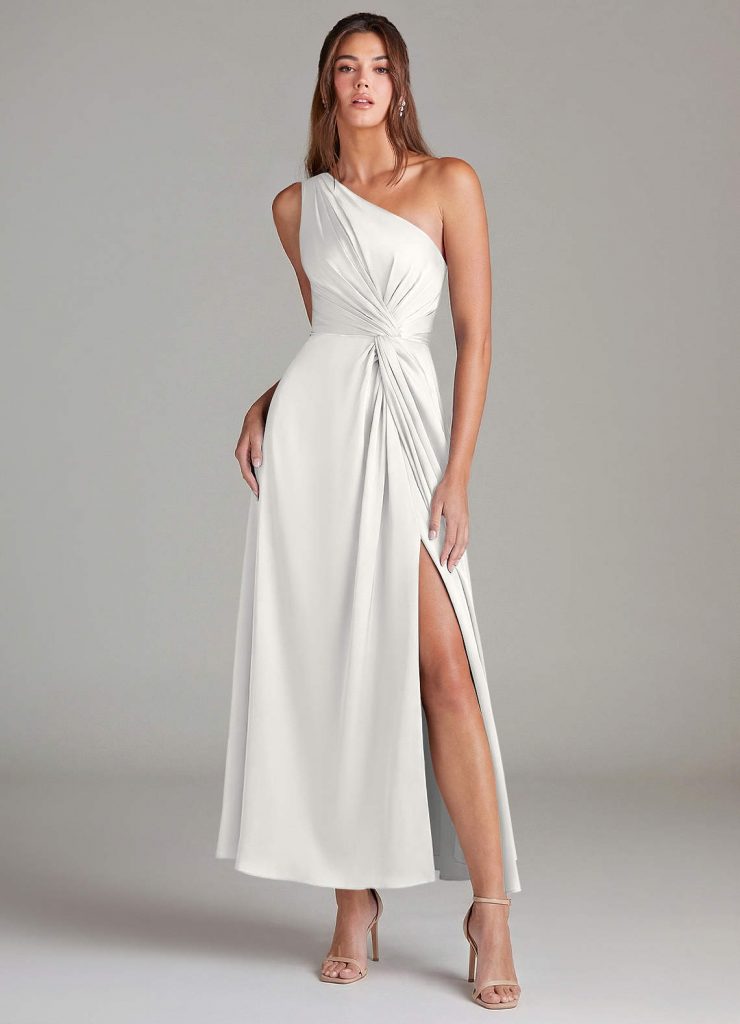
Choosing white dresses for graduation pictures is a different problem from choosing a graduation dress generally. The ceremony compatibility questions still apply — gown fit, hem length, comfort over hours. But graduation pictures have their own variables that most style guides completely skip: how white fabric responds to different lighting, what looks polished at 30 feet vs. in a close-up portrait, and what the camera sees that your mirror doesn’t.
White is the most photographically consistent graduation color, but not all white dresses photograph the same way. A thin polyester dress in direct afternoon sun can develop a halo effect or show through in ways a structured crepe won’t. Mirror-finish satin creates glare patches under flash that matte satin doesn’t. These differences matter specifically for pictures, not just for the ceremony.
This guide is about the photography angle specifically — what each dress quality and silhouette does across the five distinct photo scenarios that graduation day creates.
Five Graduation Photo Scenarios — What Each One Needs
Graduation day isn’t one photo session. It’s five separate photography contexts happening within a few hours of each other. The dress has to work in all of them.
| 🏛 STAGE WALK Clean Silhouette Wide shot at 30+ feet from the audience. Structure and proportion register. Embellishment detail disappears. |
📸 PORTRAIT SESSION Quality Fabric Close up. The camera sees the fabric finish and fit. This is where quality crepe vs. cheap polyester shows most clearly. |
🍃 OUTDOOR CAMPUS Natural Movement Full natural light. Best moment for white dress photography. Flowy or A-line silhouettes photograph most naturally here. |
|---|
| 👨👩👧 FAMILY GROUP PHOTO Defined Waist Multi-person frame. Simple dresses with a defined waist read most clearly without competing with others. |
🎓 CAP TOSS Movement-Friendly Motion shot. Flared or A-line skirts create visual movement. Very tight silhouettes can look awkward mid-air. |
|---|
The outdoor campus portrait session is where white dresses perform most distinctively. Natural light is the most flattering photography condition for white — it creates warm, even illumination that adds a genuine glow to the photos rather than the flat brightness of indoor stage lighting.
What You See in the Mirror vs. What the Camera Sees
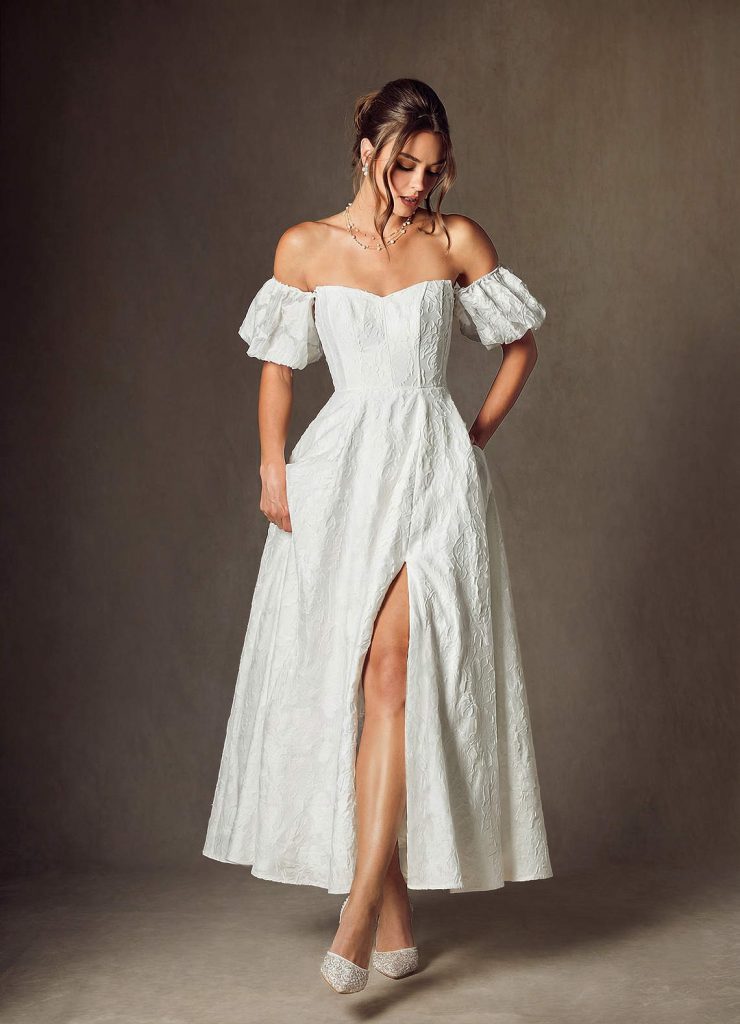
This is the section that saves actual graduation day regret. A lot of dress choices that look fine in a home mirror or fitting room behave differently under graduation photography conditions. Here’s the honest comparison.
| Mirrors show the dress in ambient light · Cameras show it in direct flash and stage spotlights |
|---|
| 🔍 In Your Mirror | 📸 On Camera at Graduation |
|---|---|
| Thin polyester — looks clean and white | Can develop a halo effect in bright outdoor sun. May show through in direct overhead stage lighting. |
| Mirror-finish satin — looks elegant | Creates white-out glare patches under the camera flash. Blown-out sections in close-up portraits. |
| Heavily embellished neckline — detailed and beautiful | Creates visual noise in portraits, competing with the graduation cap and academic regalia. |
| Bodycon fit — flattering in 3D | Reads very differently in 2D photography. Can emphasize areas that the 3D eye contextualizes more charitably. |
| Structured crepe — looks formal | Photographs consistently clean under all lighting conditions. What you see in the mirror is what you get on camera. |
| Matte satin or stretch crepe — subtle sheen | Catches light elegantly without creating glare. Adds warmth to white in photography without over-brightening. |
The practical test before the day: take a photo of yourself in the dress with the flash on your phone. If any part of the dress is blown out (completely white with no visible fabric texture), it will do the same thing under graduation flash photography. For college graduation dresses, portrait sessions often involve professional photographers with strong flash setups where this matters most.
How Different Lighting Conditions Affect White Dresses
The photography conditions change throughout graduation day. What looks perfect in morning indoor ceremony lighting can photograph differently in afternoon outdoor portrait sessions. Understanding this helps you choose a fabric that works all day.
| 🏛 Stage Spotlights (Ceremony) High-intensity overhead. Reveals thin fabrics, creates glare on mirror-finish surfaces. Matte or low-sheen fabrics photograph cleanest here. |
|---|
| 📸 Camera Flash (Portraits) Direct burst lighting. Most forgiving for well-fitted structured dresses. Reveals fabric quality issues very clearly. Matte foundation essential. |
| ☀️ Outdoor Afternoon Sun: The most flattering graduation photography condition for white. Natural light adds warmth without glare. Any quality white dress looks good here. |
| 🏫 Indoor Fluorescent (Venue) Cooler, flatter light. Some white fabrics read slightly blue-white under fluorescent light. Warm ivory or cream can photograph more cleanly. |
| 💡 THE GOLDEN HOUR WINDOW The 30–60 minutes before sunset on graduation day creates the most flattering outdoor portrait light of the entire day. If you can schedule any family or friend photo session for late afternoon rather than right after the ceremony, the photographs will look noticeably better. White dresses in late afternoon natural light, photographed with a warmth that neither flash nor fluorescent can replicate. |
|---|
How Each Fabric Photographs in Real Graduation Conditions
This is more specific than general fabric guides. These are photography-specific ratings for the fabrics most commonly found in white graduation dresses.
| MATTE CREPE 📸 ★ Best for photos Photographs clean in every condition. No glare, no transparency, holds shape. The most consistently photo-ready fabric. |
STRETCH CREPE 📸 ★ Excellent Same properties as matte crepe with more movement. Very forgiving under flash and stage lighting. |
MATTE SATIN 📸 ★ Very Good Adds a warm sheen that photographs beautifully. Key: matte not mirror. Mirror-finish satin creates blown-out patches. |
|---|---|---|
| LINED LACE 📸 ★ Warm in portraits Adds depth, photographing with warmth at close range. Especially good for outdoor natural-light portrait sessions. |
MIRROR SATIN 📸 ✗ Creates glare High-gloss finish catches flash and stage lights in blown-out patches. Avoid for photos regardless of other qualities. |
THIN POLYESTER 📸 ⚠ Variable Looks fine in soft light, problematic in direct flash or overhead stage spots. Very dependent on the ceremony conditions. |
An a line white graduation dress in matte crepe is probably the single most photo-reliable graduation combination. The A-line creates a defined waist that reads at every camera distance, and matte crepe photographs cleanly in every lighting condition graduation day involves.
Which Dress Silhouettes Work Best for Each Photo Type
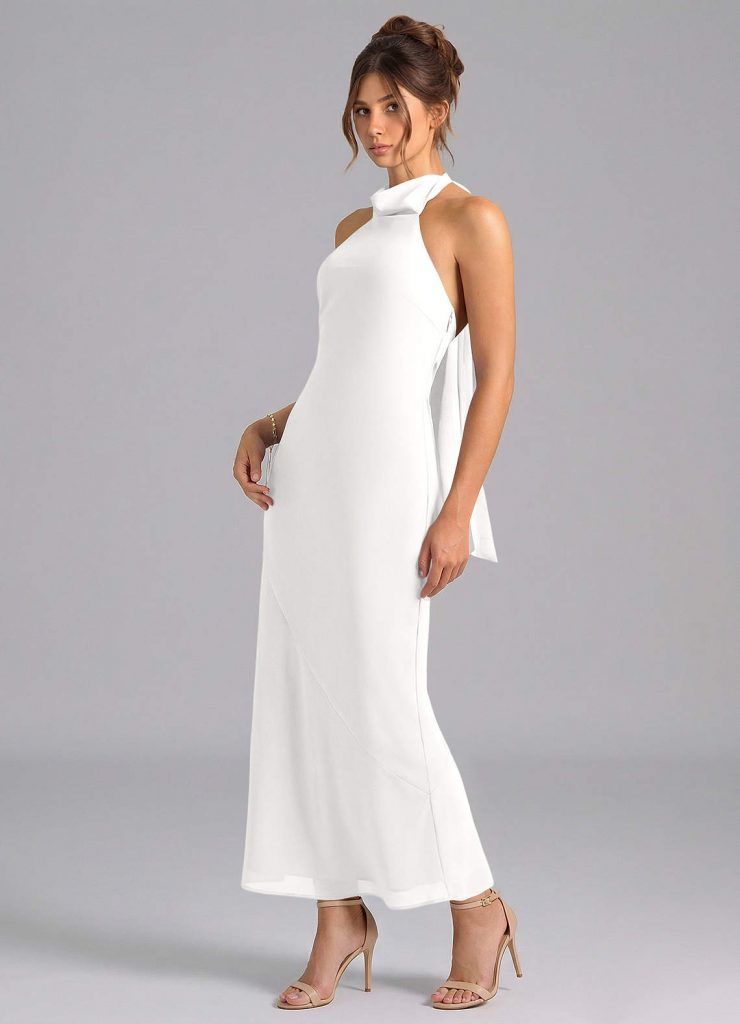
Different dress silhouettes photograph differently depending on the pose and distance. Understanding this helps you match the dress to the photo types you care most about.
| Silhouette | Stage Walk Photo | Full-Body Portrait | Cap Toss | Group Photo |
|---|---|---|---|---|
| A-Line [MOST VERSATILE] | Clean, structured | Balanced proportions | Natural skirt movement | ✓ Clean in frames |
| Fit-and-Flare | Waist visible through gown | Most photogenic | Dramatic skirt in motion | Good if a definition is wanted |
| Sheath / Column | Narrow, professional | Sleek modern look | Can look stiff mid-air | Clean, minimal |
| Midi A-Line [BEST FOR PORTRAITS] | Partially visible below the gown | Most polished full-body | Good movement | Balanced height |
| Mini / Short | Hidden under the gown | Youthful, energetic | Great movement | Works at all distances |
For high school graduation dresses, a fit-and-flare or mini A-line in matte crepe or chiffon gets the most photogenic results. The movement shots — cap toss, especially — are where flared silhouettes create the most visually dynamic images.
Pre-Photo Day Prep — The Checks That Actually Matter
A few are graduation standards. A few are specific to the photography angle.
| 1 | Flash test at home: put on the full look, turn off the overhead light, and take a photo with your phone flash on. Any fabric area that becomes completely white with no visible texture under flash will do the same in professional portraits. Matte fabric and full lining prevent this. |
|---|
| 2 | Outdoor light test: take a photo of yourself in the dress in direct afternoon sunlight. This is the condition of your campus outdoor portrait session. Does the dress look the same as in your mirror, or does it lose shape, look transparent, or develop glare? |
|---|
| 3 | Mattifying makeup prep: white reflects light toward the face, which amplifies any skin shine. Mattifying primer, translucent setting powder, and blotting papers in your bag. This is more important for graduation photos than most other events, specifically because of the white dress. |
|---|
| 4 | Posture practice: This sounds odd, but it genuinely helps. A well-fitted dress with good posture in photos looks completely different from the same dress with slouched posture. Practice your stage-walk posture and portrait stance in the actual dress at home. |
|---|
| 5 | Steam the dress and hang it immediately the night before. Wrinkles in white are very visible in close-up portrait photography in a way they might not be in a dark dress. Crepe holds shape after steaming; other fabrics may need repeated attention. |
|---|
Browse the full graduation dresses collection for photo-ready styles across every silhouette and length. Azazie has 100+ options in white, cream, and soft neutrals with custom sizing — custom sizing matters for photos specifically because fit affects how a dress reads at every camera distance and angle.
The Short Version
Matte crepe or stretch crepe in an A-line or fit-and-flare silhouette is the most photo-consistent graduation combination. Avoid mirror-finish satin and thin unlined polyester — both create glare or transparency issues under graduation photography conditions. Do the home flash test before the day. Take the outdoor afternoon light test. Steam and hang the night before. Mattify your makeup.
Azazie has 100+ white graduation dresses in white, cream, and soft neutrals with custom sizing. Browse the collection for photo-ready styles designed to look polished at the ceremony, in portraits, in outdoor campus sessions, and in every family photo that follows.
Frequently Asked Questions
Is a white dress appropriate for graduation pictures?
White is the single most photographically consistent graduation dress color. It creates high contrast against dark graduation gowns, reflects light evenly, and reads as celebratory and polished in every type of graduation photo, from wide ceremony shots to close-up portraits. Both the tradition and the photography logic align perfectly with white for graduation.
Why do Americans wear white for graduation?
The tradition has roots in the women’s colleges of the 1880s and 1890s, which created a uniform, dignified look for graduating classes. It became associated with new beginnings and academic achievement.
The reason photography stayed dominant: white is the color that photographs most consistently under the combination of stage lighting, outdoor sun, and flash that graduation day involves. Harder to achieve that consistency with most other colors.
How do you actually look good in graduation photos?
Dress fit, fabric quality, and posture. A well-fitted dress in a non-reflective fabric with good posture photographs consistently better than any combination of accessories or elaborate styling. Practice your posture in the dress beforehand.
Take the flash photo test at home. Steam the dress and hang it the night before. These three things change graduation photos more than the specific style choice does.
How do you style a plain white dress for graduation pictures?
One accessory at a time. Earrings that frame the face under the graduation cap. Shoes that don’t create a heavy color contrast at the bottom of full-body photos. Hair that works with the cap rather than being covered by it.
The styling goal for graduation pictures, specifically, is to make the graduate’s face and academic regalia the main visual elements, with the dress serving as a clean, polished backdrop.
What color is best for graduation photos?
White is the most consistently photogenic graduation color for technical reasons: it reflects light evenly, creates clear contrast against dark gowns, and reads crisply at every camera distance. Ivory and warm cream photograph similarly well in outdoor natural light. Very pale champagne works for evening ceremonies.
Darker colors require more careful consideration of the gown color to avoid blending or clashing in ceremony photos.
Why is white popular for graduation?
Tradition and practicality, in about equal measure. The tradition is 130+ years old. The practical argument is that white photographs better than most other colors under the specific combination of graduation lighting conditions.
Stage spotlights, outdoor afternoon sun, family phone cameras, and professional portrait flash all render white consistently. Getting the same consistency from most other colors is more difficult.
How do you avoid shiny skin in graduation pictures?
Two steps: before-ceremony prep and during-ceremony maintenance. Mattifying primer under foundation helps significantly. Set the foundation with a light translucent or matte setting powder, especially on the T-zone. Pack blotting papers for the gap between ceremony and portrait session. The white dress reflects light toward the face, which amplifies any oil. A brief face blot before portraits makes a visible difference in the photos.