
What Shoes, Jewelry, and Fabrics Pair Best with Champagne Formal Dresses for a Clean, Formal Look
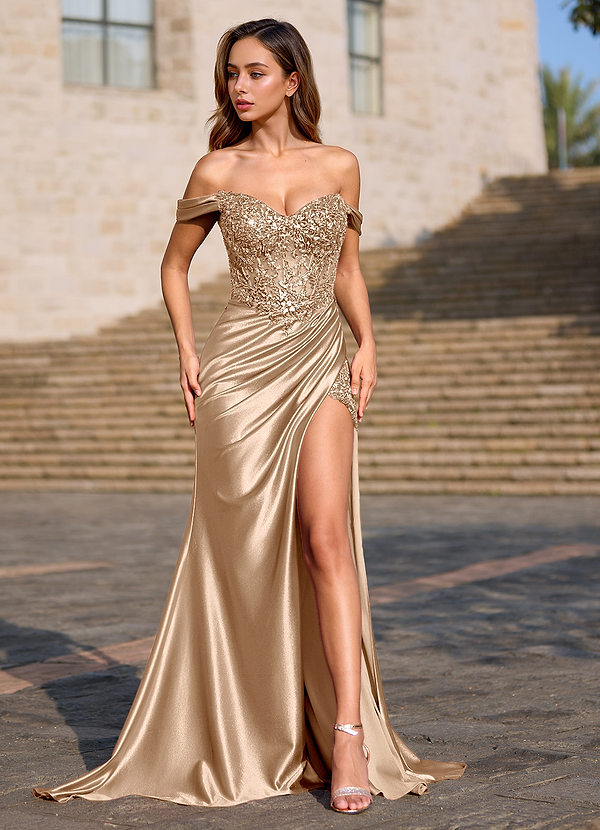
Champagne is the formal color that works with every accessory. It pairs with gold and pearl for warmth, with silver and crystal for crispness, and it flatters almost every skin tone without requiring adjustment. Champagne formal dresses are among the few formal colors where accessories can do genuine creative work rather than just avoid clashes.
The main decisions: shade (beige-champagne vs golden vs blush), fabric (satin for evening, chiffon for day), and whether you lean warm (gold and rose gold) or neutral (pearl and crystal) in the accessories.
| QUICK TIP: Gold and rose gold first. Champagne’s warm undertones make these metals the most cohesive starting point — especially for golden and blush champagne shades. Pearl is the second option that works across the entire champagne spectrum. |
|---|
The Elegance of Champagne Formal Dresses
Why Champagne Is a Timeless and Sophisticated Choice
Champagne sits in a specific sweet spot in the formal palette — warm enough to feel celebratory, pale enough to read as refined rather than flashy. It shares the warmth of gold without gold’s visual weight, which is why it photographs differently from both white and metallic at events.
Under warm venue lighting — candles, chandeliers — golden champagne develops a luminosity that pale colors usually don’t. The warm ambient light enriches the color rather than washing it out. That specific behavior is one reason champagne keeps appearing at galas and evening events.
Choosing the Right Shade of Champagne
Beige-champagne, golden champagne, blush champagne, dark champagne — these are meaningfully different colors. Beige-champagne is the coolest and most professional; golden champagne has the most warmth and reads most festive; blush champagne has a pink lean that’s specifically good for spring weddings and garden events.
Skin tone is the first filter. Fair and cool complexions: beige-champagne or blush champagne—medium and olive: golden champagne, which adds visible warmth. Deep skin tones: any champagne shade works, but golden and dark champagne create a particularly striking contrast.
| ☁ BEIGE / SOFT Tone: Cooler — most neutral Best for: Fair to cool skin tones Events: Daytime, professional galas Pair with: Pearl + silver + nude heels |
★ GOLDEN Tone: Warmest — celebratory Best for: Medium to deep tones Events: Evening galas, black-tie Pair with: Gold jewelry + gold heels |
◇ BLUSH CHAMPAGNE Tone: Pink-tinted — romantic Best for: All skin tones Events: Weddings, spring events Pair with: Rose gold + pearl + nude |
▪ DARK CHAMPAGNE Tone: Deep amber — dramatic Best for: Medium to deep tones Events: Winter formals, evening Pair with: Deep gold + dark heels |
|---|
Choosing the Right Fabrics for Champagne Formal Dresses
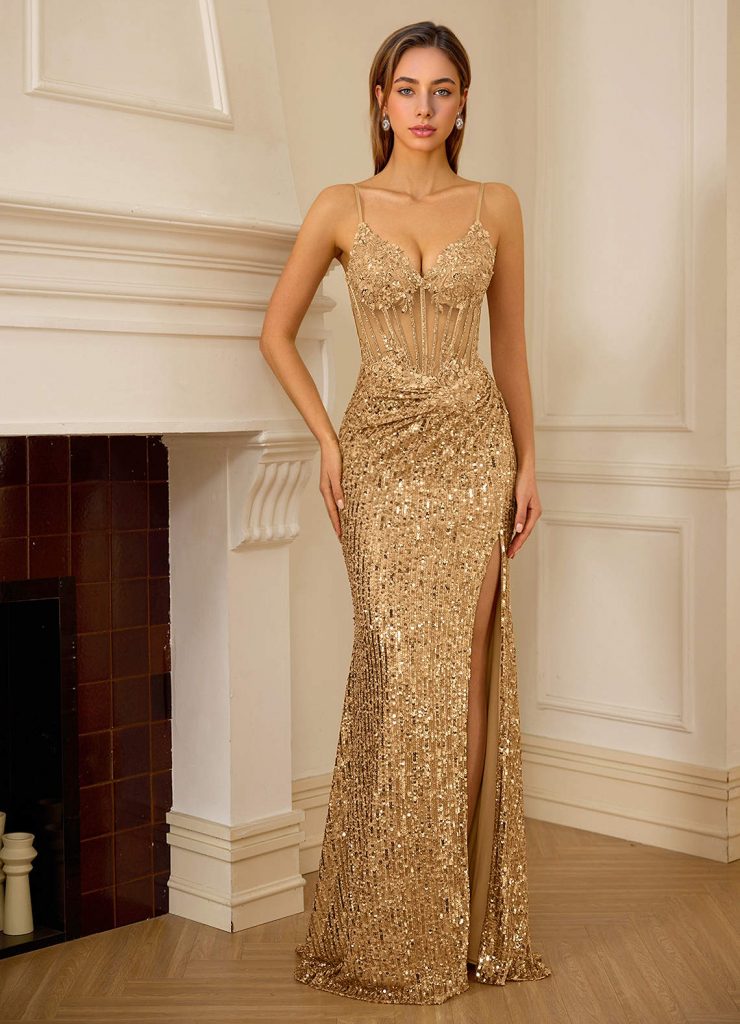
Champagne and fabric quality have a direct relationship that darker colors mask. In a thin or cheap material, champagne looks washed out or flat. In satin, silk, or quality chiffon, the color takes on depth and warmth. The fabric here is doing part of the color’s work.
Satin and Silk — The Evening Standard
A satin formal dress in champagne has a surface behavior worth understanding: its sheen reflects the venue’s warm ambient light, enriching the color and creating a liquid-gold appearance that makes champagne gowns look genuinely expensive. According to Jovani’s evening dress fabrics guide, satin and silk are the most effective fabrics for formal evening events, specifically because of how they interact with lighting, and champagne benefits from this more than most colors.
Chiffon and Georgette — For Movement and Daytime
Chiffon in champagne creates a layered, diffused look where the color shifts slightly through the fabric — lighter where it catches light, warmer at the hem, and in the folds. For long formal dresses at outdoor or daytime events, champagne chiffon is the cleaner option. The color reads as fresh rather than heavy, and the movement in the fabric creates an effect that static satin can’t replicate.
Velvet and Crepe — Fall, Winter, and Depth
Velvet formal dresses in champagne for fall and winter formal dresses is a specific combination worth knowing about. Champagne velvet absorbs light rather than reflecting it, which deepens the color, making it look richer and more amber than the same shade would in satin. This is the fabric that makes champagne look least like a pale neutral and most like a genuine, saturated color.
| Fabric | Event Context | Effect on Champagne | Season |
|---|---|---|---|
| Satin / Silk | Evening events, galas, black-tie | Liquid warmth — enriches the color under lighting | Year-round |
| Chiffon | Daytime, outdoor, warm-weather | Diffused and layered — fresh and light | Spring, summer |
| Velvet | Fall and winter formal events | Absorbs light — deepens to amber | Fall, winter |
| Crepe | Any formal — minimalist styles | Matte, structured, modern | Any season |
| Lace overlay | Weddings, daytime events | Adds texture — less bridal than plain satin | Spring, summer |
Best Shoe Choices for Champagne Formal Dresses
Gold heels are the starting point for champagne. The shared warm undertone creates a cohesive, tonal look that reads as intentional rather than safe. According to Toast Weddings’ champagne dress shoe pairing guide, rose gold is especially well-suited to blush champagne variations because the pink undertones in both the metal and the dress create a romantic, layered palette that yellow gold and silver can’t replicate.
Nude heels for elongating — they extend the visual leg line and keep the champagne gown as the full focal point. Silver heels work particularly well with beige-champagne, where the shade’s cooler undertone accommodates the crispness of silver without creating a temperature conflict.
Full monochromatic — champagne shoes with a champagne dress — is a bold yet viable choice when the silhouette is clean enough to carry it off. Worth considering for floor-length gowns with a simple neckline.
| Shoe Choice | When It Works Best | Best Champagne Shade Match |
|---|---|---|
| Gold metallic heels | Evening events, galas — the warm default | Golden, dark, and blush champagne |
| Rose gold heels | Romantic events, spring weddings | Blush champagne specifically — perfect temperature match |
| Nude heels | Elongating effect — let the dress dominate | All champagne shades — universally safe |
| Silver heels | Modern contrast for cooler shades | Beige-champagne with cool undertone |
| Champagne/ivory heels | Full monochromatic — clean silhouette needed | Any shade — requires a clean dress design |
| Deep jewel-tone heels | Evening contrast — navy, emerald, burgundy | Golden champagne specifically |
Jewelry Pairings for Champagne Formal Dresses
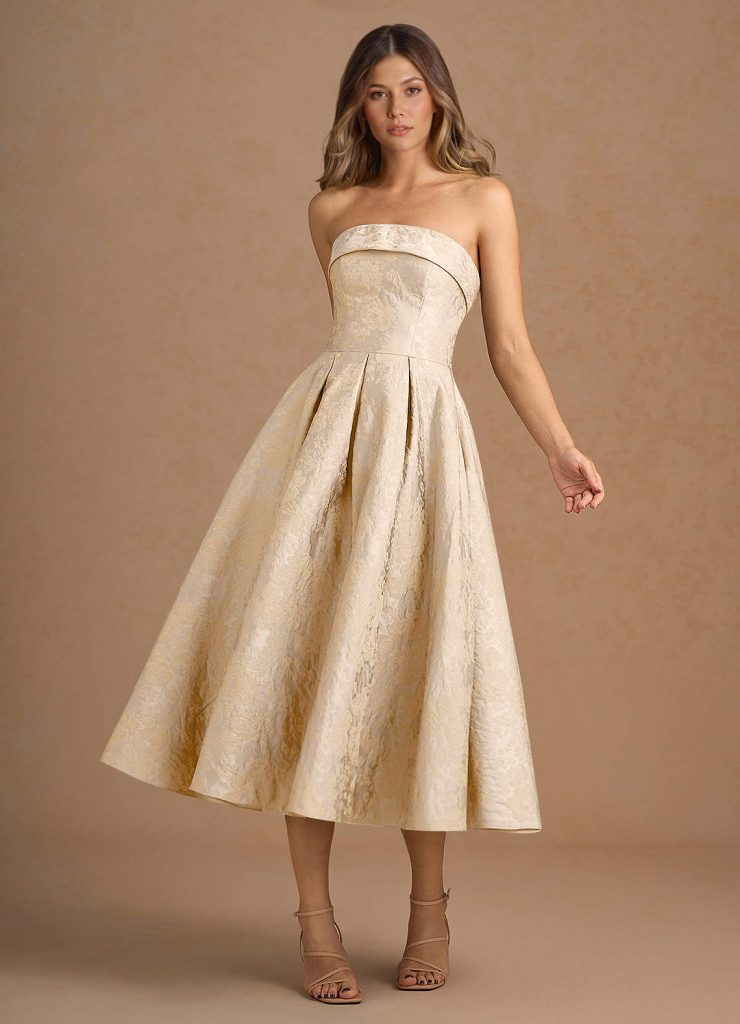
According to Grandiani’s guide on champagne dress jewelry combinations, gold is the most cohesive choice for warm champagne shades. Still, pearl is the option that works across the entire champagne spectrum — beige, golden, blush, and dark — because its iridescence adapts to whatever undertone the dress carries. This makes pearl the ‘always safe’ choice when you’re unsure which direction the shade is leaning.
Rose gold is worth considering specifically for blush champagne — the shared pink undertone in both creates a romantic palette that standard yellow gold and silver can’t replicate. And for dark champagne at evening events, deep yellow gold or antique-style settings look genuinely expensive rather than generic.
| Metal / Stone | Champagne Shade | Effect |
|---|---|---|
| Gold | Golden, dark, any warm shade | Cohesive warmth — luxury and celebration |
| Rose Gold | Blush champagne specifically | Pink-tinted tonal match — romantic and layered |
| Silver / Platinum | Beige-champagne (cooler shades) | Clean modern contrast — contemporary finish |
| Pearls | All champagne shades | Iridescent adaptation — the universal choice |
| Citrine / Topaz | Golden and dark champagne | Tonal warm stones — adds color without fighting |
| Crystal / Diamond | Any shade | Neutral sparkle — temperature-flexible |
Styling Champagne Formal Dresses for Different Occasions
Champagne shifts significantly in appearance under different lighting conditions. Under warm candlelight or chandeliers, golden champagne develops a rich, luminous glow — it can look like liquid gold. In bright outdoor light or fluorescent light, the same dress can look much paler and beige-tinged. The shade choice needs to account for the event’s actual lighting environment.
| Event | Best Shade | Best Fabric | Accessory Note |
|---|---|---|---|
| Wedding — daytime | Blush or beige-champagne | Chiffon, lace, crepe | Matte over satin — less bridal |
| Wedding — evening | Beige or soft golden | Crepe or light satin | Pearl + gold — guest not bride |
| Gala / Black-tie | Golden or dark champagne | Satin, sequin | Crystal earrings + gold heels |
| Semi-formal party | Any champagne | Crepe or soft satin | Gold hoops — easy and warm |
| Daytime formal | Beige or blush | Chiffon, georgette | Pearl studs + nude heels |
| Winter formal | Dark champagne | Velvet or heavy crepe | Deep gold + dark heels |
Champagne Dresses for Weddings
Champagne at weddings is genuinely complicated because it sits close to bridal territory — specifically ivory and off-white. The styling approach determines whether the dress reads as ‘polished wedding guest’ or ‘accidentally near-bridal.’ For a formal dress for wedding guest in champagne, matte or semi-matte fabrics (chiffon, lace overlay, crepe) are safer than satin, and colorful or distinctly non-bridal accessories create the necessary visual distinction.
According to Azazie’s champagne wedding guest style guide, gold or rose gold accessories are what shift champagne from bridal territory into ‘celebrated guest’ territory — the metal’s warmth signals a formal occasion rather than participation in a ceremony.
Champagne Dresses for Galas and Formal Events
Black-tie galas are where golden champagne makes its strongest argument. Long formal dresses in golden champagne satin or sequin under ballroom chandelier lighting develop a luminosity that photographs compellingly from almost every angle. Crystal or rhinestone earrings, a structured gold clutch, and gold heels — that’s the formula.
Champagne Dresses for Daytime Formal Events
Midi formal dresses in beige or blush champagne for daytime formal events — brunches, garden weddings, afternoon ceremonies — work best in matte or semi-matte fabric. Chiffon or georgette with pearl jewelry and nude heels. The goal is for the color to read as fresh and considered rather than evening-heavy. Clean and proportionate to the occasion.
Common Mistakes When Styling Champagne Formal Dresses
The most champagne-specific mistake: choosing a shade that reads too close to ivory or white at a wedding, or a fabric (satin) that gives the dress bridal associations when you’re attending as a guest. This is not so much a champagne problem as a styling-approach problem — matte fabric and warm accessories solve it.
| ✓ DO | ✗ AVOID |
|---|---|
| Match metal temperature to shade (warm = gold, cool = silver) | Satin champagne gown to a wedding as a guest — reads too bridal |
| Use matte fabric at weddings to distinguish from the bridal look | White or ivory shoes — complement the champagne tone |
| Test the shade near your face in natural light before buying | Too many warm accessories — all-gold can look unbalanced |
| Choose a fabric weight appropriate for the event’s formality | Thin chiffon at a winter black-tie event — reads underdressed |
| Tailor the dress — champagne shows fit issues clearly | Cool-toned silver with warm golden champagne — temperature mismatch |
| Champagne is a pale color that amplifies every fit problem. Excess fabric that sags, a waistline that sits slightly off — all of it is more visible in champagne than in darker colors. Professional tailoring is the highest-impact single change you can make to how the dress looks. |
|---|
Hair and Makeup for Champagne Formal Dresses
Champagne is a warm color. The makeup should sit within the same warm family rather than fight it, but there’s also room for a deliberate cool contrast if that’s the direction you want to go.
| 1 | Warm makeup tones match champagne’s warmth — start there. Peachy or warm-nude lip, bronzed eye, golden tones throughout the makeup. The same temperature as the dress is the starting point. A cool-toned or purple-based lip with golden champagne creates visual discord that’s subtle but consistent across photos. If you want a cool contrast, commit to it fully — a bold berry or deep plum against champagne is a deliberate high-fashion move. The middle ground (accidentally warm with a cool accessory) is where the mismatch is most apparent. |
|---|
| 2 | Gold highlighter specifically extends the champagne effect. Champagne reflects warm light toward the face. A gold or warm highlighter at the cheekbones and brow bone extends this from the dress onto the skin, creating cohesion — the dress and the face are lit from the same warm source. A cooler silver highlighter creates a temperature split. Small detail, but it reads clearly in photos under event lighting. |
|---|
| 3 | Hair up for embellished or detailed bodices — waves for clean ones. Champagne is specifically good with soft romantic waves when the dress has a simple neckline and clean silhouette — the softness of the hair matches the softness of the color. For heavily embellished or structured bodices, a sleek updo or low bun lets the dress construction be the visual focus. The neckline of the dress is the deciding factor, just as with any formal look. |
|---|
| 4 | Satin or dewy foundation — not a matter. Champagne has a surface luminosity that a flat matte finish works against. A dewy or satin-finish base lets the dress’s warmth carry through to the face rather than creating a visible break between the glowing fabric and a flat complexion. This is a small choice that changes the overall cohesion of the look noticeably in photos. |
|---|
Conclusion
Fabric, shade, accessories, and occasion calibration — those four decisions determine whether champagne formal dresses look luminous and intentional or pale and slightly underdressed. The shade needs to match the warmth of your skin tone. The fabric determines how the color responds to the venue’s lighting. The accessories confirm the occasion type. And the tailoring determines whether the dress looks like a deliberate choice.
Azazie offers a wide selection of gold formal dresses and champagne tones in sizes 0–30, with made-to-order options and custom sizing available. The formal dresses collection spans pale beige-champagne to rich golden amber — worth exploring if champagne is confirmed as the direction.
Frequently Asked Questions
What shade of champagne is best for my skin tone?
Fair and cool skin: beige-champagne or blush champagne — both work with cool undertones without creating warmth conflict. Medium and olive skin: golden champagne adds visible warmth and complements naturally. Deep skin tones: any champagne shade works, but golden and dark champagne create a particularly striking contrast. Blush champagne is the most universally flattering option across all complexions.
Can I wear champagne to a formal wedding as a guest?
Yes, with care. The main issue is that champagne sits close to bridal territory — especially ivory and off-white satin. Choose matte or semi-matte fabrics (chiffon, lace, crepe) over satin, and use gold or rose gold accessories that read ‘celebratory guest’ rather than ‘ceremony participant.’ Beige-champagne with colorful accessories is the safest distance from bridal territory.
What shoes go best with a formal, champagne dress?
Gold heels for most situations — the shared warmth creates a cohesive, intentional look. Rose gold specifically for blush champagne — the pink undertones match. Nude heels for elongating effect, keeping the dress as the focal point. Silver for beige-champagne with cooler undertones. Avoid white or ivory shoes — they compete rather than complement.
How do I accessorize champagne without overdoing it?
Gold or pearl first — one focal area, not both ears and neck. Match the metal to the shade undertone (warm = gold or rose gold, cool = silver). A small metallic clutch and clean heels complete the look. Champagne is already warm and celebratory — the accessories should reinforce that tone, not add competing elements on top of it.
Are formal dresses suitable for all seasons?
Yes. Chiffon or georgette in beige or blush champagne for spring and summer. Satin or crepe in golden champagne year-round for indoor events. Velvet or heavy crepe in dark champagne for fall and winter. The shade and fabric carry the seasonal signal — champagne as a color is appropriate in every season.
How do I choose the right champagne dress for my body type?
A-line silhouettes balance pear shapes by adding visual weight to the upper body while the skirt falls away from the hips. Fitted sheaths and mermaid styles flatter hourglass figures. Petite frames benefit from shorter hemlines or high slits. Taller frames can carry floor-length dramatic silhouettes with the most ease. Champagne’s pale tone means the silhouette choice is more visible than with darker colors.
What accessories should I avoid with a formal champagne dress?
White or ivory shoes — they compete rather than complement. Cool-toned silver with warm golden champagne — the temperature mismatch is subtle but real. Over-stacking warm gold accessories to the point where the dress disappears behind the jewelry. And avoid high-shine bridal satin at a wedding as a guest — the fabric reads too close to the bride’s attire, regardless of the color.