
What shoes, hemming, and proportion rules make elegant short evening dresses look polished in motion
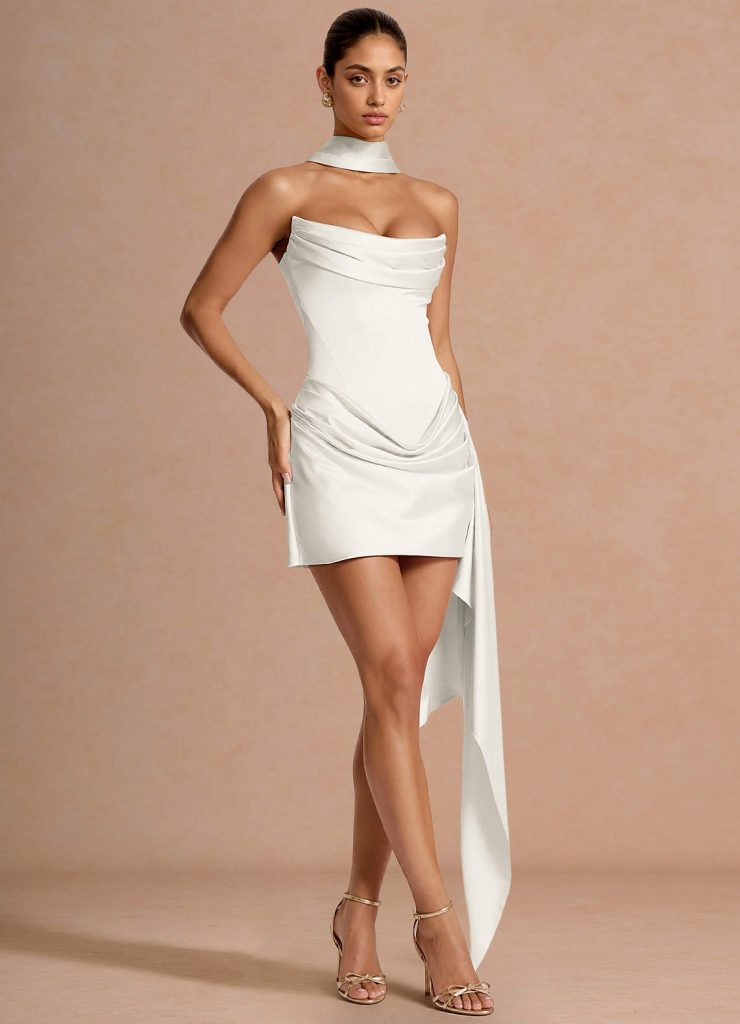
There’s a specific visual problem that comes up with elegant short evening dresses that doesn’t get discussed enough: they often look polished standing still and slightly undone in motion—the fabric shifts. The hemline moves unevenly. The shoe creates a visual break that reads as incomplete rather than intentional. All of that is a styling problem, not a dress problem. And most of it is solvable.
I’ll be honest — I paid almost no attention to how a short dress moved until I saw someone at a gallery opening in Los Angeles last March whose A-line knee-length dress in structured satin looked genuinely extraordinary in motion. Every step created this clean visual arc. It looked choreographed. It wasn’t the dress alone doing that — it was the shoe heel height, the hemline cut, and the bodice fit working as a system.
| The movement principle for short evening dresses: a dress that looks elegant when you’re standing still should also look elegant when you’re turning, sitting, and walking across a room. If the hemline shifts unevenly when you move, or the fabric pulls at the waist, those are construction and styling problems — not acceptable features of a short dress. |
|---|
Shoes — the Most Visible Element in a Short Dress Look
Why Heel Height Affects the Hemline
Here’s something that surprises people: the height of your heel changes the visual position of the hemline on your leg. A knee-length dress worn with 3-inch heels occupies a different visual plane than the same dress worn with 1-inch heels or flats. The dress length is identical. The visual impression is not.
Higher heels elongate the calf below the hem, which makes the hemline appear to sit higher. Lower heels shorten the visible calf, which visually drops the hemline. Neither is wrong — but you need to know which hemline position you’re creating when you choose your shoe, and you need to test the actual combination before the event.
Pointed Toe vs. Round Toe — It’s Not Just Aesthetics
A pointed-toe shoe creates a continuous visual line that extends naturally from the ankle toward the floor. For a short dress, that extension is genuinely important — it pulls the eye downward and creates the impression of a longer leg line below the hem.
A round or square-toe shoe creates a horizontal visual stop at the toe. That horizontal stop reads as a break in the leg line. Not wrong, but more visually abrupt. If you’re working to create elegance in motion with a short dress, pointed or almond-toe silhouettes are doing more work for you than rounded ones.
The Block Heel vs. Stiletto Question
Stilettos are the most elongating. They’re also the most unstable for extended events — and instability shows in how you walk, which shows in how the dress moves. A block heel at 2 to 2.5 inches provides similar visual height with meaningfully more stability, which means more natural movement and, in turn, the dress looks better in motion.
This one actually surprised me when I first thought it through carefully: a stable stride with a moderate heel photographs as more elegant than an unsteady stride with a higher heel. The shoe’s job is to create movement that the dress can travel with, not movement the dress has to compensate for. Petite evening dresses in short silhouettes benefit most from this — a stable 2-inch block heel with a correctly hemmed short dress is one of the strongest combinations for creating reliable elegance in motion.
| Heel Type | Visual Effect | Movement Quality | Best For |
|---|---|---|---|
| Stiletto (3+ in) | Maximum elongation | Unstable on uneven surfaces | Short-standing events |
| Block heel (2-2.5 in) | Strong elongation | Very stable — moves well | Long events, dancing |
| Kitten heel (1-1.5 in) | Modest elongation | Most stable option | Outdoor events, all-day |
| Strappy flat sandal | No elongation | Excellent | Warm-weather semi-formal |
| Classic pump (2 in) | Good elongation | Good | Most cocktail events |
Hemline — Where the Dress Ends Matters More Than Length
The Cut of the Hem — Straight vs. Shaped
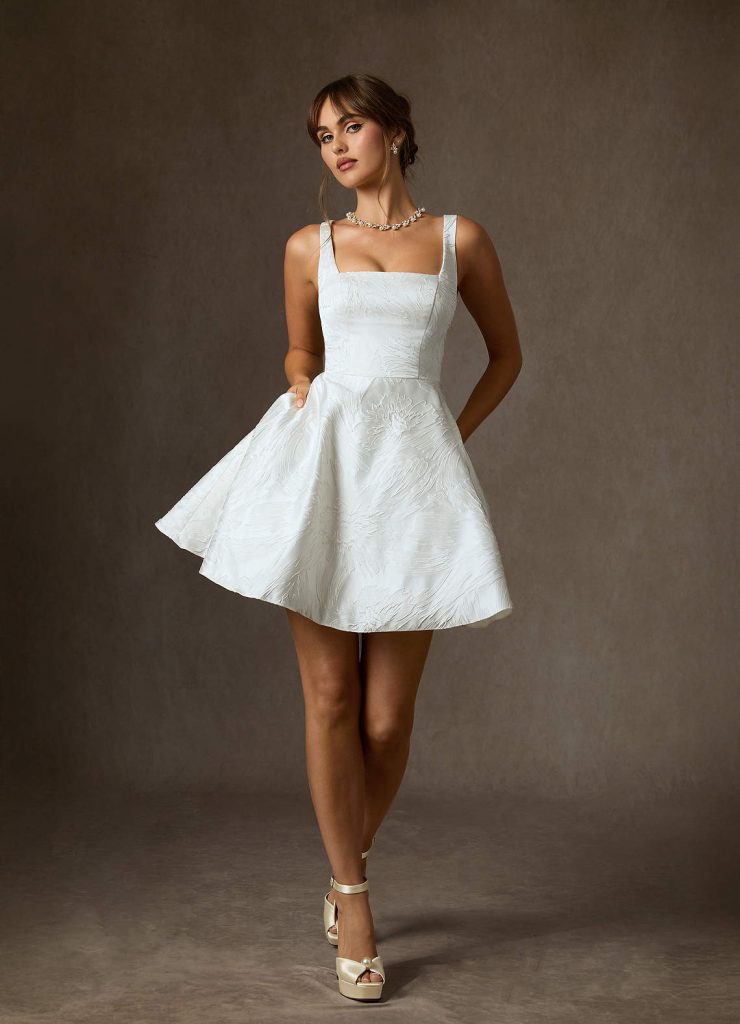
A straight hemline cut runs parallel to the floor — consistent all the way around. When you walk, it rises and falls as a unit. This is the cleanest, most architectural option: it reads as very deliberate when the dress fits correctly, and the hem is level.
A shaped or curved hem (flared, A-line, or asymmetric) creates movement as you walk because different parts of the hem are at different distances from the floor. The hem moves in waves. This looks graceful with the right fabric and bizarre with a stiff one. Match the cut to the fabric.
The Hemline Position — Where It Falls on Your Leg
Wait — this is actually the more important question than the cut. Above-knee hemlines have two distinct sweet spots: right at the knee (which reads as classic and restrained) and two to three inches above the knee (which reads as youthful and contemporary). Mid-thigh and higher require progressively more careful styling to avoid reading as casual.
My opinion: for cocktail and semi-formal events where you want unambiguous elegance, the knee-to-two-inches-above zone is the reliable range. Going shorter is a choice that requires everything else — the fabric, the shoe, the neckline — to work harder to signal formality.
The Seated Hemline — Often Forgotten
A short dress typically rises when you sit. How much it depends on the silhouette: A-line rises less because the skirt has volume. Bodycon or fitted rises more. Test the seated hemline position before the event. If the seated position reads as significantly shorter than the standing position, it will require management throughout the evening.
Proportions — How the Bodice, Waist, and Hem Relate
The Waistline Position
A defined waist — either through seaming, a belt, or an empire construction — creates a visual anchor that the eye finds before it notices the hemline length. Evening dresses empire waist in short silhouettes are particularly strong because the high waist seam creates the longest possible visual leg proportion. It doesn’t just elongate — it changes the apparent center of gravity of the entire look.
Conversely, a short dress without any waist definition — a straight shift or boxy cut — places greater visual emphasis on the exposed leg, with no counterbalancing structure in the bodice. That can look deliberately minimal and elegant, or it can read as the dress not fitting correctly. The difference usually lies in the quality and structure of the bodice fabric.
Neckline Balance — The Upper-Body Counterweight
With a shorter hemline, the neckline takes on more responsibility as a balancing element. A V-neckline draws the eye upward through the torso, creating visual length and reducing the dominant impression of leg exposure. An off-the-shoulder or boat-neck creates horizontal breadth that balances the vertical of the leg line.
Actually, scratch that framing — it’s less about balance and more about where you want the eye to go first. V-neck sends the eye downward to the hem. A boat neck holds the eye at the shoulders and chest. Off-the-shoulder moves the eye outward to the shoulder line: a short dress, same length, creates very different visual impressions depending on the neckline.
The Proportion Check
A reliable test: stand in the dress and look at the ratio between the visible leg length and the bodice length. For most formal short looks, the bodice (from shoulder to hemline) reads as substantially longer than the exposed leg. When the exposed leg is longer than the bodice reading, the dress reads as more casual.
This is — I want to say — the most specific and useful proportion check for short evening dresses. Measure it with your eye. If the leg is longer, choose a longer hem or a higher heel to shift the balance.
Four Things to Check Before Wearing a Short Evening Dress to a Formal Event
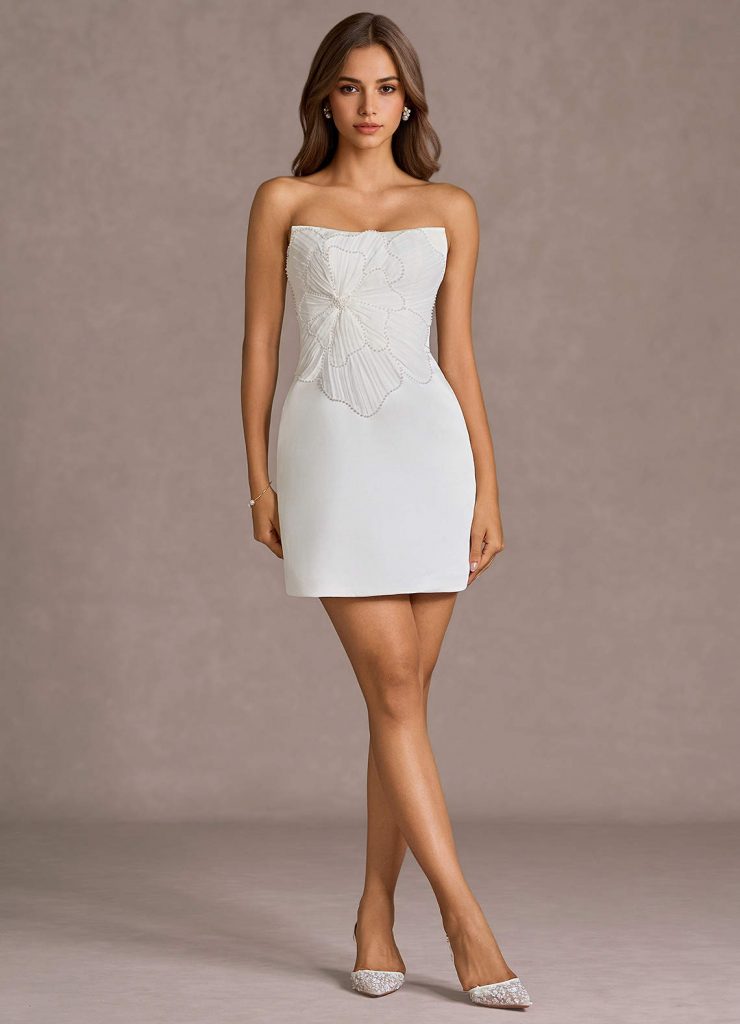
| 1 | Test the hemline while wearing the actual shoes you plan to wear. Not similar shoes. The actual shoes. The hemline position changes with heel height, and a 3-inch difference in heel changes where the hem appears to sit on the leg by roughly that amount visually. If you order a dress online and plan to wear it with a specific pair of heels, check the hemline with those shoes on before the event. Hemming the dress to the wrong heel height is one of the most common and most invisible sources of an off-looking short dress. |
|---|
| 2 | Walk across the room and watch the hemline in a mirror. Not the bodice. The hemline. Does it move evenly? Does one side rise more than the other when you stride? Does it shift significantly from how it falls when you’re standing still? Uneven hemline movement is almost always a fit issue at the hip or waist — the hem is pulled down on one side because the fabric is creating tension there. This needs tailoring, not adjusting. |
|---|
| 3 | Sit in the dress and evaluate the seated hemline. How much does the hemline rise when you sit? More than two to three inches above the standing position: you’ll be managing it all evening. For cocktail events: acceptable if the seated position still reads as intentional. For more formal settings, consider a slightly longer hemline or a skirt with more volume (which doesn’t ride up as dramatically when seated). |
|---|
| 4 | Check the bodice-to-leg ratio. From the front, is the visual impression led by the bodice or the leg? A short dress in which the leg is the dominant visual element reads as more casual than one in which the bodice holds the visual attention. Structured bodices, defined waistlines, and neckline detailing all shift the visual emphasis upward. If the leg is reading as the dominant element and that’s not what you want, add a statement neckline or a defined belt to rebalance. |
|---|
Closing Thoughts
The three elements — shoes, hemline cut and position, and bodice proportion — need to work as a system. Any one of them being wrong undermines the others.
According to Jovani’s guide on matching shoes and accessories with evening dresses, the shoe-dress relationship is more structural than stylistic — the heel height and shoe silhouette actually change the visual geometry of the entire look. Which is why testing the full assembled outfit in motion, in a full-length mirror, in the actual shoes you’ll be wearing, is — I can’t overstate this — not optional for a short evening dress. The dress that looks right standing still may look completely different when taking three steps across a room.
Frequently Asked Questions
What shoes make a short evening dress look most elegant?
Pointed or almond-toe heels in a neutral or matching color create the strongest elongation effect. Block heels at two to two and a half inches provide height and stability, producing better movement quality than stilettos for most events. The shoe color should either disappear into the leg line (nude) or match the dress, unless you’re making a deliberate color-contrast statement.
How high above the knee should an elegant short evening dress be?
Knee to two or three inches above is the reliable zone for most cocktail and semi-formal events. Higher requires everything else to carry more formal weight. The specific position depends on how you want the bodice-to-leg proportion to read — knee-length reads as restrained and classic, two to three inches above reads as contemporary and confident.
What silhouette looks best in motion for short evening dresses?
A-line and fit-and-flare silhouettes move the most gracefully because the flare creates a trailing wave of fabric that follows the stride. Evening dresses empire waist in short constructions are also strong because the high seam creates the longest possible visual leg proportion and allows the skirt to move freely. Straight hemlines in structured fabric look clean but static — they read as elegant, standing still, and require a perfect fit to avoid looking stiff in motion.
Does the neckline affect how a short dress reads?
Yes, significantly. A V-neckline draws the eye downward through the torso and creates visual elongation, reducing the visual emphasis on leg exposure. A boat or bateau neckline creates horizontal breadth that balances the vertical of the leg line. High necklines on short dresses create a modesty counterbalance that keeps the look in formal territory even with a shorter hem.
What fabrics look best for elegant short evening dresses in motion?
Quality satin moves with its own structural weight — the hem stays level and the fabric swings cleanly. Chiffon in an A-line or flared short dress creates movement that looks genuinely graceful. Elegant black evening dresses in heavy crepe hold their structure in motion without stiffness — they drape rather than swing, which reads as composed rather than playful. Avoid a lightweight jersey for formal short evening contexts — it moves attractively but doesn’t carry enough of a formality signal.
How do I stop a short dress from riding up when I walk?
This is primarily a fit problem in the hip and thigh. When the fabric is too narrow in that area, every stride pulls the hem upward. Letting the dress out at the hip seam or choosing a larger size are the construction solutions. In terms of choice, A-line and flared silhouettes don’t have this problem because the fabric has room to move. Fitted or bodycon styles always ride up when walking unless the fabric has significant stretch.
Can elegant short evening dresses work for plus-size frames?
Yes. The same proportion rules apply: a defined waistline, a neckline that draws the eye upward, and a hemline tested in actual event shoes. Plus size evening dresses in A-line short silhouettes with empire or defined-waist construction consistently read as polished and elegant in motion. The bodice proportion, quality, and the shoe choice matter more than the hemline length.