
Tea Length Formal Dresses: When to Wear and How to Balance Hemline, Movement, and Formality
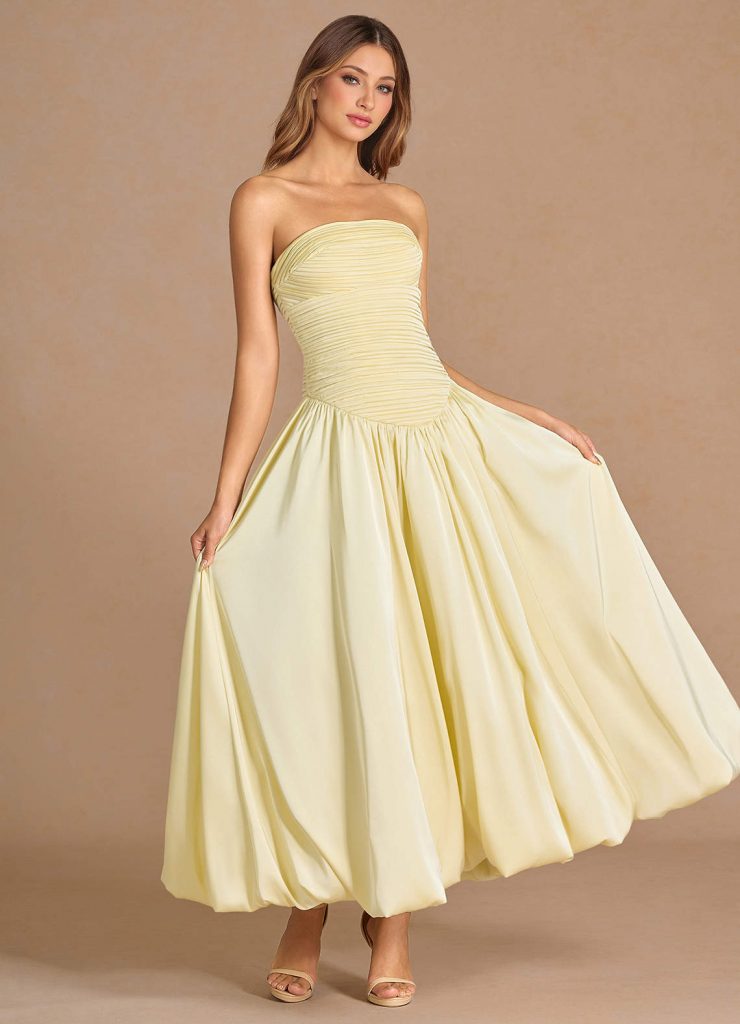
Honestly? Tea length formal dresses are the most underestimated length in formal wear. People default to floor-length for anything that reads as formally formal — or they drop down to cocktail length — and the tea length just gets bypassed. I think that’s a mistake.
Here’s what tea length actually offers: you can walk normally in it. The shoes are visible enough to be part of the look. And it reads as formal without needing a train or floor-sweeping skirt to signal that. Those aren’t small advantages.
| THE DEFINITION: Tea length sits between the knee and the ankle — specifically, mid-calf. Not right below the knee (that’s cocktail or midi). Not at the ankle (that’s maxi). The mid-calf zone is specific, and the exact hemline point within that zone affects how the length photographs and how it reads against your height. |
|---|
When Are Tea-Length Formal Dresses the Best Option?
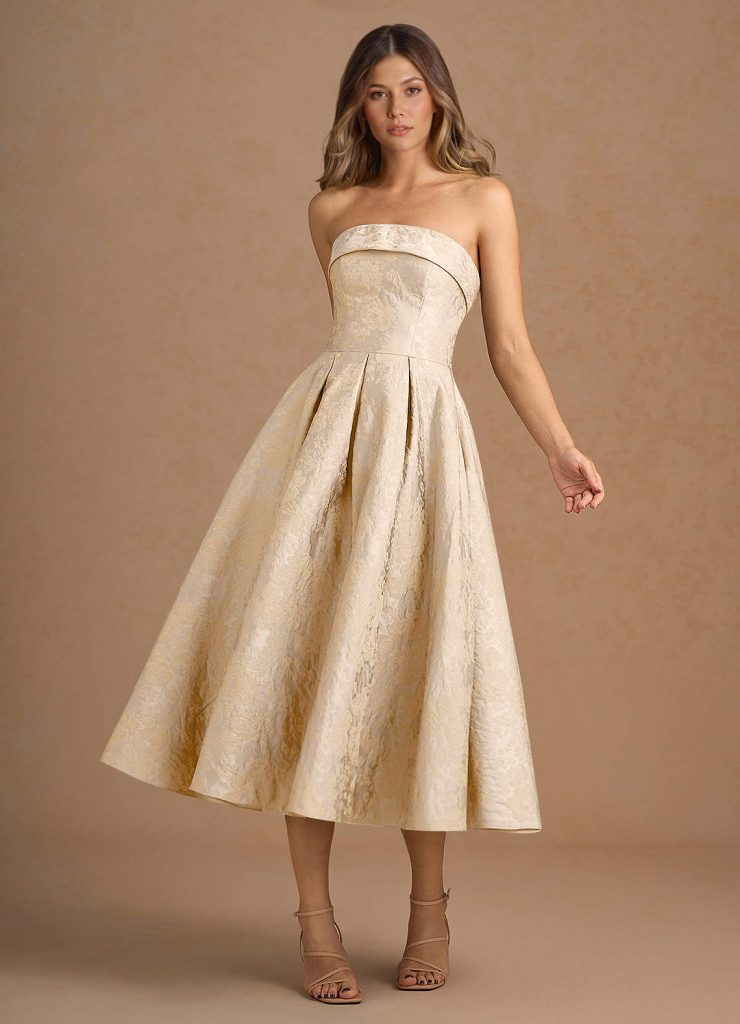
Outdoor and Garden Formal Venues
Look — floor-length gowns drag on grass. If you’ve ever watched someone hike up a floor-length dress while walking across a lawn at a June wedding in Connecticut or a vineyard ceremony in Napa, you know what I mean. Tea length sidesteps all of that. It reads as formal, provides coverage, and doesn’t collect damp from the ground or catch on garden paths.
According to DressMeUpNY’s guide on tea length dresses, tea length is one of the most consistently recommended hemlines for outdoor formal events precisely because it offers the coverage of a long gown without the practical challenges of floor-length fabric at outdoor venues. That’s a real advantage, not just a styling preference.
Events With Dancing or Extended Movement
Here’s the thing — cocktail parties, gala receptions, birthday milestones, anniversary dinners. Events where you’re not just standing for photographs. Tea length gives you a full stride and a more natural movement than floor-length gowns sometimes do. And it reads more formal than knee-length options at those same events.
I’ve seen it at charity galas in particular — tea length works because it’s dressy enough to clear the room’s formality standard but comfortable enough that you’re not managing the dress all evening.
| Event Type | Tea Length Advantage | Floor-Length Comparison |
|---|---|---|
| Outdoor / garden weddings | Doesn’t drag on grass or paths | Floor-length can snag and collect damp |
| Reception with dancing | Full stride — easy movement | Floor-length can restrict the stride |
| Indoor cocktail/gala | Formal but not overdressed | Floor-length can feel heavy for cocktail-level |
| Conservative venues | Good coverage — shows shoes | Floor-length is better for extremely formal codes |
| Semi-formal celebrations | Perfect middle ground | Floor-length may be overdressed |
How to Balance Hemline, Movement, and Formality
Where the Hem Actually Falls
You might think once you’re in the ‘tea length zone’, the specific point doesn’t matter much. Actually, scratch that — it matters quite a bit. A hem that lands at the upper calf, just below the knee, reads closer to midi. One that hits the lower calf, a few inches above the ankle, reads closer to proper tea length.
The lower calf point is usually more flattering on most frames. It shows more leg without approaching ankle length, and it creates cleaner proportions with the ankle and shoe.
Height and the Tea Length Problem
I’m not going to pretend this is a one-size-fits-all situation. For petite frames, tea length can be genuinely tricky — if the hem hits too high on the calf, it can shorten the visual leg line. For taller women, the same dress hits lower, often landing at the more flattering lower-calf point naturally.
Petite option: look for tea-length dresses that include petite sizing or allow hem adjustment. The goal is to get the hem into the lower-calf range, not just somewhere between the knee and the ankle.
And for plus size formal dresses in tea length, the same lower-calf logic applies. A full A-line skirt in tea length that lands at the lower calf creates a balanced proportion that higher hemlines in the same length category don’t.
The Shoe Factor — More Visible Than Any Other Length
Here’s the thing nobody says directly: your shoes are on display with tea length in a way they aren’t with floor-length gowns. Pointed-toe heels elongate the visible portion of the leg. Chunky casual footwear reads as mismatched. Even a modest embellished flat — the right one — works.
Don’t finalize a tea-length dress without knowing what shoes you’re wearing with it. That’s not typical advice for floor-length shopping. But the length actually changes whether the look succeeds.
Fabric and Fit — Where the Formality Lives
Fabric and Fit — Where the Formality Live
Because the tea length is shorter than a floor-length gown, the fabric is what does the formal signaling. Light polyester or thin cotton in tea length reads as casual. Heavy satin, structured velvet, lace — these are the fabrics that keep the dress firmly in formal territory despite the shorter hemline.
| ◆ SATIN Best for: Evening formal events, galas Why: Surface sheen signals a special occasion Silhouette: A-line or sheath in tea length Note: Heavier satin looks most formal |
~ VELVET Best for: Fall/winter formal events Why: Richness and weight signal formality Silhouette: A-line — adds elegant volume Note: Deep colors work best — navy, wine, emerald |
* LACE Best for: Spring/summer weddings, garden events Why: Texture and pattern do formal work Silhouette: A-line or overlay on lining Note: Works at most formal levels |
◻ CHIFFON Best for: Summer events, outdoor venues Why: Lightweight elegance — moves well Silhouette: Layered or tiered — adds visual fullness Note: Needs quality lining for a formal look |
|---|
A-Line vs. Sheath — the Two Shapes Worth Knowing
An a line formal dress in tea length is the most traditional shape for this hemline — it’s where the length originally appeared in 1950s fashion — and it’s still the most consistently flattering. The flare starts at the waist and creates enough volume that the tea-length hem can swing when you walk, which reads as graceful rather than stiff.
A tea-length sheath, on the other hand, is a more modern interpretation. Sleek and form-fitted, it removes the vintage-adjacent quality and reads as contemporary formal. Both work. It’s a question of whether you want the classic silhouette or a more minimal one.
How Tea Length Dresses Work for Different Body Types

| Body Type | Best Tea Length Approach | Key Detail |
|---|---|---|
| Petite | Aim for lower calf — avoid upper calf hem | Nude heels elongate the visible leg |
| Tall | Both lower and upper calf work well | Can experiment with more dramatic shoe choices |
| Hourglass | A-line cinched at waist — flatters naturally | A defined waist is the key feature |
| Pear-shaped | A-line skirt — adds volume over the hips | Attention to upper body detail balances |
| Apple / rectangular | Structured bodice with defined waistline | Belt or seaming creates waist definition |
Tea Length Formal Dresses for Different Events
Wedding Guest Dresses in Tea Length
Tea length is genuinely one of the best choices for wedding guests. For a formal dress for wedding guest, the mid-calf hemline avoids the practical complications of floor-length at outdoor ceremonies, reads as formally appropriate at indoor settings, and still shows enough of the shoe to complete the look. It’s also — and I think this matters — harder to accidentally overshadow the bride with a tea-length than with a dramatic floor-length gown.
According to FMag’s tea-length style guide, the tea-length dress is particularly recommended for semi-formal and formal wedding settings because it respects the occasion’s formality while allowing guests to participate fully in the event.
Galas, Charity Events, and Formal Dinners
For black-tie or formal galas, I’d lean toward long formal dresses as the safer choice. Tea length can work — a heavy satin formal dress or velvet formal dresses in a deep jewel tone will hold up in a ballroom — but it reads as slightly more modern or ‘cocktail black-tie’ than traditional floor-length gown choices. That distinction is fine for many events and might read as overdressed in the wrong direction for others.
Cocktail Parties and Semi-Formal Celebrations
Honestly, tea length in a cocktail party context might be where it shines most. It’s more formal than a knee-length cocktail dress — which I find often reads as slightly underdressed for what’s billed as a ‘formal’ cocktail event — but more relaxed and movement-friendly than a floor-length gown. The mid-ground is the point.
Floral formal dresses in chiffon at tea length are a strong spring and summer cocktail event choice. The pattern works with the movement of the tea-length hem, and the length adds enough formality that floral doesn’t read as too casual.
Three Decisions to Make Before Choosing a Tea-Length Formal Dress
| 1 | Confirm the dress code level — tea length doesn’t work at every formality tier. Tea length is appropriate for formal, semi-formal, cocktail, and most wedding guest dress codes. It’s a less standard choice for black-tie, where floor-length has a stronger tradition. If the invitation says ‘black-tie required,’ floor-length is the safer option. If it says ‘formal’ or ‘cocktail attire,’ tea length is a strong choice. When you’re genuinely uncertain, err toward the length that’s harder to be overdressed at, which at most events is tea length over cocktail length. |
|---|
| 2 | Sort the shoes before finalizing the dress. Unlike floor-length gowns, where shoes are barely visible, tea-length gowns put your footwear fully on display. Pointed-toe heels are the most consistent choice for elongating the visible leg section. Strappy heeled sandals work for summer events. An embellished flat can work — but the style has to match the fabric’s formality. Decide on the shoe first. Then check that the hem length works with that shoe’s height. Block heels and lower heels shift where the hem should fall slightly. |
|---|
| 3 | Check where the hem actually lands on your calf — not on the model. Every tea-length dress looks different on different frames. Order or try on the shoes you plan to wear. The hem should land in the lower calf — closer to the ankle than the knee — for the most flattering proportion. If it’s landing in the upper calf, it reads as midi territory and loses the specific quality that makes tea length work. Alterations to hem length are relatively straightforward and usually worth it for a dress you’ll wear to a major event. |
|---|
The Last Word on Tea Length
Tea length gets bypassed because people think of it as a compromise — not long enough for a proper gala gown, not short enough to be modern and easy. That framing misses what it actually does well. Outdoor venues. Dancing. Events that run four or five hours. Any context where floor-length fabric becomes a practical problem.
It’s not a compromise. It’s a specific solution for a specific set of formal-event conditions. Choose it when those conditions match — and choose the fabric and shoe carefully, because those decisions carry more weight here than with any other formal length.
Azazie’s collection of formal dresses includes tea-length options in satin, velvet, lace, and chiffon across A-line and sheath silhouettes — in sizes 0–30, with made-to-order and custom sizing available. If the shoe and hemline decisions above are settled, browsing the tea length formal dresses range makes the rest of the decision much simpler.
Frequently Asked Quesitons:
What exactly is tea-length, and how does it differ from midi?
Tea length sits in the mid-calf zone — closer to the ankle than the knee. Midi is a broader category that covers any hemline from just below the knee all the way down to near the ankle, so tea length technically falls within it. But in practice, when people say midi they usually mean the upper or mid-calf range, while tea length specifically implies that lower-calf position that’s 3 to 4 inches above the ankle. It’s a subtle distinction and the terms get used interchangeably sometimes — but the vintage connotation of tea length is specific to that lower landing point.
Is tea length appropriate for a black-tie event?
It depends on how strictly the event is enforcing the code. At a traditional formal black-tie gala, floor-length is the expected standard and tea length reads as a step down from that — not wrong, exactly, but noticeably different from the room. For black-tie optional, creative black-tie, or any formal event where the code has some flexibility, tea length in a heavy satin or velvet works well. When the invitation says ‘black-tie required,’ I’d go floor-length. When it says ‘formal’ or ‘black-tie optional,’ tea length is a genuinely strong choice.
What shoes actually work with tea-length formal dresses?
Pointed-toe heels are the most reliable option — they extend the visual leg line from the hem downward without interruption. Strappy heeled sandals work well for summer and outdoor events. An embellished flat can work, but it has to be of formal quality and the hemline has to be tailored specifically for that heel height. The thing worth knowing: your shoes are on full display with tea length in a way they aren’t with floor-length gowns. A casual or mismatched shoe at tea length is visible in every photo.
Can petite women wear tea-length formal dresses?
Yes, with one specific adjustment: the hem needs to land in the lower calf, not the upper calf. On a shorter frame, a tea-length hem can land too high and read as a slightly awkward midi rather than an intentional tea length. Look for petite-specific sizing or be prepared to hem down. Nude or same-tone pointed-toe heels extend the visible leg length below the hem. Monochromatic dressing — same color family for both dress and shoe — removes the color break at the ankle that can make shorter legs look shorter.
What fabrics make tea-length formal dresses read as genuinely formal?
Heavy satin, structured velvet, quality lace, and layered chiffon. Because the tea-length hemline is shorter than a floor-length gown, the fabric carries the formality signal that the length alone doesn’t fully provide. A tea-length dress in casual cotton or thin polyester reads as daywear regardless of the silhouette. The same length in quality satin reads as event-appropriate before you’ve added a single accessory. The fabric is doing more proportional work here than at other formal lengths — which is why it’s worth prioritizing.
Is tea length good for plus-size formal dresses?
Yes — specifically an A-line tea-length silhouette that lands at the lower calf. The A-line creates volume from the waist downward, which balances proportions without a tight fit through the hip. The lower-calf hemline position creates better proportion than the upper-calf landing does on most frames. The same principles apply as for any body type: lower hem, quality fabric, shoe that extends the visible leg line. Tea length in an A-line with a defined waist is consistently flattering across a wide range of plus sizes.
What’s the difference between tea length and fit for different events?
The formality of the event determines the fabric, not whether you choose tea length. For a semi-formal wedding or cocktail event: chiffon or lace in tea length is appropriate. For an indoor formal dinner: heavy satin or velvet in tea length. For a garden or outdoor wedding: chiffon or lace again, and the practical advantage of not dragging the hem matters. The length itself is versatile across formality levels from semi-formal through formal. It’s a less standard choice at strict black-tie — but at everything below that, tea length is a legitimate call.