
Midi Cocktail Dresses for Wedding Guests: What Actually Fits the Dress Code
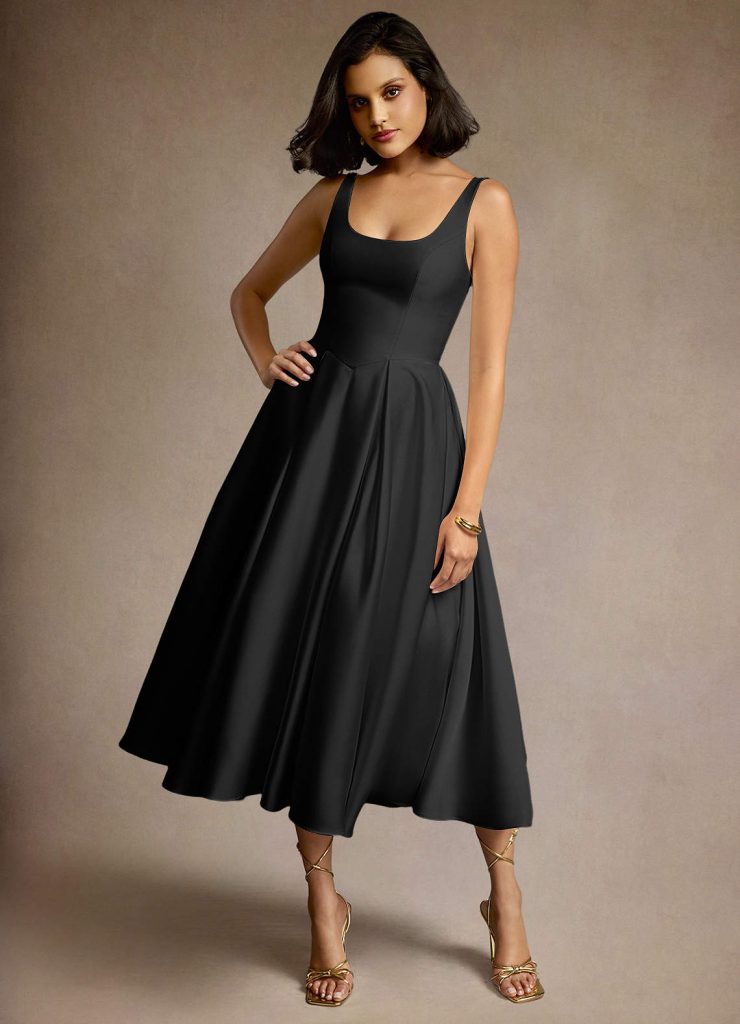
I went to seven weddings last year. Different dress codes, different venues, different seasons. Of those seven, I wore a midi cocktail dress for a wedding guest to five of them. Not because I only own midi dresses — because the midi kept being the correct answer. Garden ceremony in June: midi. Hotel ballroom in September: midi. Outdoor vineyard cocktail hour in October: midi. Indoor semi-formal December reception: midi. The only events I reached for something different were a strict black-tie gala and a casual backyard party where jeans were genuinely fine.
There’s a reason the midi keeps showing up as the answer. It sits in a formality zone that covers most of the weddings you’ll actually attend — cocktail attire, semi-formal, garden weddings, most indoor receptions — without looking like you’re trying too hard or not trying at all. The length is generous without committing to floor-length. It photographs well. It’s comfortable across a six-hour event in a way shorter dresses with more specific undergarment requirements sometimes aren’t. Here’s what actually matters when you’re choosing between them.
| The reliable combination before getting into specifics: A-line or wrap midi in satin or chiffon, jewel tone or soft neutral. That handles most cocktail and semi-formal weddings without deliberation. The rest of this is the reasoning behind that recommendation, and the exceptions that apply when that combination is wrong for the specific event. |
|---|
Why Midi Length Works Better Than Most Options for Wedding Guests
The Formality Range the Midi Covers
Cocktail attire. Semi-formal. Most garden weddings. Most indoor receptions. Anything short of strict black tie where a floor-length gown is specifically expected. That’s — I want to say — the majority of weddings most people attend across their twenties and thirties. Maybe not every single one, but most of them.
The length works because it’s not committing hard in either direction. Not so short that it reads as casual in the wrong venue. Not so long that it reads as overdressed at a casual garden party. It sits in a middle zone that the fabric and silhouette can move within. Satin midi at a formal reception: reads up toward formal. Chiffon midi at a garden ceremony: reads comfortably within the event.
The Practical Argument — Photos, Comfort, Terrain
Midi dresses photograph well from most angles and in most lighting conditions. The hemline creates a clean visual frame — you’re not worrying about a floor-length hem in grass or a short dress that looks different in every photo depending on how you’re standing.
And they’re comfortable for the full duration of an event. Six hours of ceremony, cocktail hour, dinner, and dancing in a well-fitted midi is fine. Six hours in the same event in something shorter with specific undergarment requirements, or in a floor-length gown on uneven terrain, is a different experience.
Fabric — This Is Where the Formality Signal Actually Lives
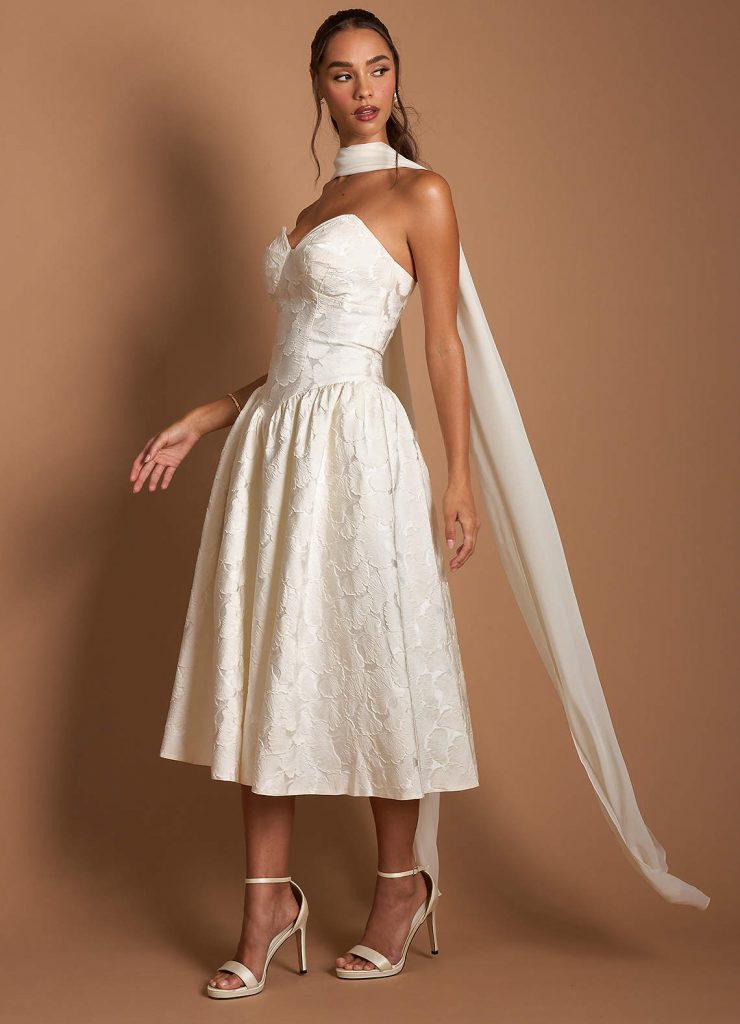
Satin — The Default Answer for Cocktail-Code Events
Satin midi is my default recommendation when I’m not sure which direction to suggest. The sheen reads as polished even in a simple A-line cut, and it drapes without clinging at the wrong places. In deep sapphire or burgundy at a cocktail wedding, it’s genuinely difficult to style wrong. The fabric does the formality work before you’ve touched an accessory.
One specific thing about satin at midi length: the hem behavior. Quality satin hangs cleanly without pulling or bunching at the knee. Cheaper satin can have a stiffness that creates a visual break at the hemline rather than a clean drape. Worth checking the fabric weight before buying ‘satin’ covers a wide quality range.
Chiffon — Romantic, Warm-Weather, Specifically Good Outdoors
Layered chiffon in a soft jewel tone or pastel photographs beautifully in natural light. For June garden weddings, outdoor vineyard ceremonies, spring receptions — chiffon at midi length is one of the most consistently flattering choices you can make. It moves with you, which creates the kind of fluid visual effect in photos that heavier fabrics don’t.
The single caveat with chiffon midi dresses: make sure the lining is adequate for the venue’s lighting. Single-layer light chiffon in a backlit outdoor setting can be semi-transparent in photos in a way indoor shopping doesn’t reveal. Double-lined chiffon avoids this entirely. Ask specifically if it’s not clear from the description.
Velvet — For Fall and Winter Events Specifically
Velvet midi in fall or winter reads with a visual warmth that satin doesn’t quite replicate under warm ambient lighting. A velvet A-line midi in deep plum or forest green for a November cocktail wedding is doing several things simultaneously: it photographs richly, it’s genuinely warm, and it reads as specifically seasonal rather than generically formal. Save it for October through February. Summer velvet midi is a physical discomfort problem.
Lace — With Some Specific Caveats
| Lace overlay on a midi dress works beautifully for garden weddings and semi-formal receptions. Full all-over lace in a very structured or high-neckline cut can read as costume-y in certain settings — particularly very modern or contemporary venues. Lace panels, lace trim, lace overlay over a lining: yes. Think carefully before wearing Victorian-construction all-over lace to a casual summer garden wedding. |
|---|
Crepe — The Most Reliable Across a Long Event
Structured, matte, wrinkle-resistant. Quality crepe looks at hour six the way it looked at hour one. It doesn’t have satin’s sheen or chiffon’s movement, but for a formal evening reception where you’ll be sitting at dinner for two hours followed by dancing — crepe holds its structure and reads as clean and deliberate in a way that other fabrics sometimes don’t manage across that many hours.
Fabric × Season × Venue Type
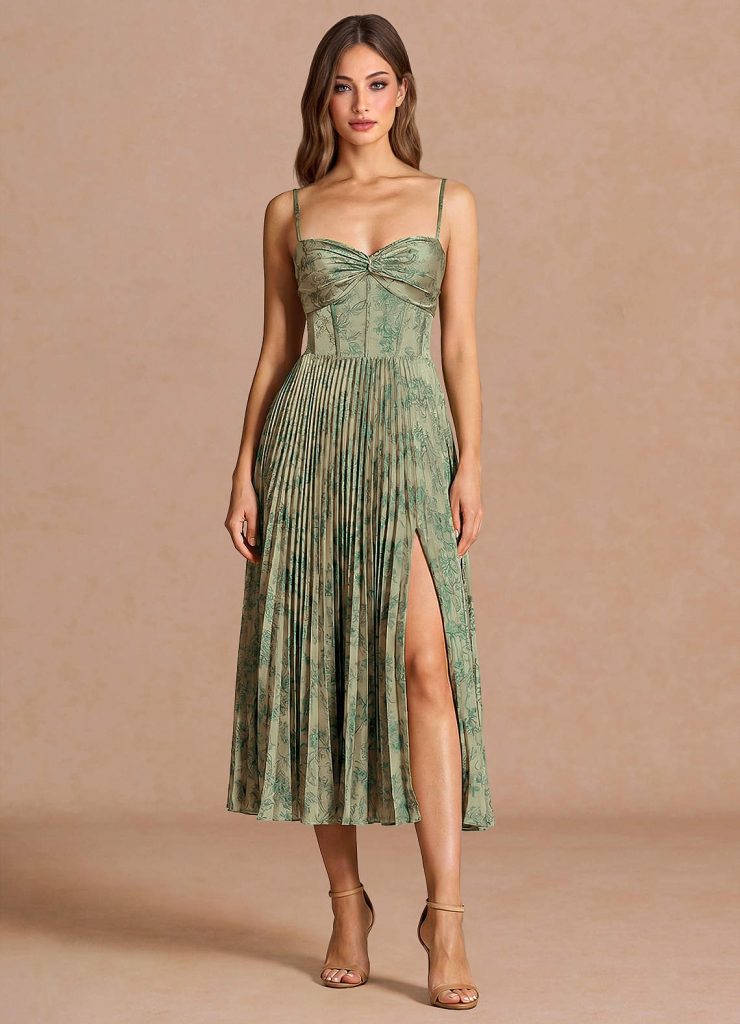
| Fabric | Best Season | Best Venue Type | One Specific Note |
|---|---|---|---|
| Satin | Year-round | Cocktail, semi-formal, evening | Quality matters — cheaper satin bunches at the hem |
| Chiffon | Spring / Summer | Garden, outdoor, daytime’, | Check lining for outdoor transparency in photos |
| Velvet | Fall / Winter only | Barn, vineyard, indoor evening’, | Physically warm — uncomfortable in summer heat’, |
| Crepe | Year-round’, | Any formal or semi-formal venue’, | Most durable across a long event — wrinkle-resistant’, |
| Lace overlay’, | Spring / Fall’, | Garden, semi-formal, outdoor’, | All-over lace in structured cuts can read costume-y’, |
Hemline Variations — Knee-Length vs Mid-Calf vs Tea-Length
Knee-Length Midi — The Cocktail-Code Sweet Spot
Knee-length is technically the shorter end of ‘midi’ but it’s the most cocktail-appropriate variation of the range. A midi wedding guest dress that hits at or just below the knee reads as clearly cocktail-appropriate for both afternoon and evening events. It moves best for dancing. It reads correctly for a range of venue types from garden to hotel ballroom. And if I had to pick one hemline length as the default for ‘cocktail attire’ on an invitation, it’s this one.
Mid-Calf — More Coverage, Slightly Different Formality Register
Mid-calf midi reads as slightly more elegant and less strictly cocktail. For garden party weddings, outdoor estate settings, vineyard receptions — the longer midi length has a romantic quality that works really well. For a strict cocktail-code event at a hotel ballroom: you’re technically in the right zone, but the shorter midi reads as more specifically cocktail-correct.
Tea-Length — Vintage Quality, Right in Certain Settings
Tea-length — hitting just above the ankle — has an inherent vintage quality that’s genuinely beautiful at the right wedding. Garden party, outdoor estate, outdoor ceremony with a bohemian or romantic theme. Not the right call for a modern city hotel reception or a contemporary venue with a young crowd. But at the right venue, tea-length in quality chiffon or lace is one of the most specifically beautiful wedding guest options.
Silhouette — Start With A-Line and Move From There
A-Line — The One With the Highest Fault Tolerance
An a line wedding guest dress at midi length is where I’d tell anyone to start. Cinches at the waist, fans gently outward — creates balance, works across most body types, doesn’t require precision tailoring to look right. In satin at a cocktail wedding, it’s the combination with the highest fault tolerance of anything on this list. You can buy it online, hope for the best on the proportions, and it’ll likely be fine.
That ‘fault tolerance’ framing sounds like damning with faint praise. It’s not. When you’re shopping for a dress you’ll wear to someone else’s wedding and you’re doing it mostly online without being able to try it on — fault tolerance is genuinely valuable.
Fit-and-Flare — When You Want More Definition
Fit-and-flare midi has more waist definition than an A-line. The bodice and hips fit close, then the skirt flares. It reads as more structured — specifically good for formal events and evening receptions where you want to look deliberate. It also photographs well: the defined waist and flared skirt create a silhouette that reads clearly in photos even at a distance.
The one thing to check: fabric that allows enough movement. A structured fabric in a fit-and-flare can feel restrictive after a few hours of sitting and dancing in a way a more fluid fabric doesn’t.
Sheath or Column — Sleek, Demanding, Worth It When Done Right
A sheath midi is clean lines, no flare, entirely dependent on the fabric and fit doing the work. It reads as genuinely polished for formal evening receptions. The caveat: a poorly fitted sheath reads as underdressed even in expensive fabric. It’s a silhouette that needs the fit to be precise. If you can buy made-to-order or get it properly altered, the sheath is one of the most elegant midi options at formal cocktail events.
Wrap Midi — Adjustable, Forgiving, Specifically Good in Heat
The wrap neckline adjusts — both the V depth and the waist fit are variable based on how you tie it. For warmer venues or events where you’re not certain about the proportions: a wrap midi solves multiple fit uncertainty problems simultaneously. And the V-neckline creates a vertical line that reads as flattering across most body types.
Accessories — The Upper Body Carries More Weight With Midi Length
Jewelry — Midi Draws Attention Up
Midi length draws visual attention toward the upper body — the neckline, shoulders, and face. Which means the jewelry decision carries more visual weight with a midi than it does at other hemlines. One focal point: statement earrings or a necklace, not both simultaneously.
Simple open neckline with no detail: this is the window for a bold pendant or a chunky chain. Dress with neckline embellishment or lace detail: earrings only — keep them bold but not competing with what the dress is already doing at the neckline.
Shoes — The Midi-Specific Proportions Problem
Block heels are the consistent answer for midi cocktail dresses at weddings — they add height, they’re stable, and they photograph well at midi length specifically because the shoe and the hem are both visible. Very low flats at midi length can read as slightly off proportionally — the shoe doesn’t have enough visual height to balance the coverage of the hemline. Off the shoulder wedding guest dresses at midi length with pointed-toe block heels is one of the cleaner silhouettes in this category.
For outdoor venues: wedges over stilettos. Grass and soft terrain eat stiletto heels. For the ‘no heels tonight’ decision: pointed-toe flats specifically, not round-toe. The pointed shape creates a more elongated foot line that works better with the midi hemline’s proportions.
Bag — Small, Proportional, Don’t Overthink It
Clutch or minaudière. Nothing larger than what holds phone, card, and lipstick. A large structured bag interrupts the clean visual line of a midi dress in a way it doesn’t at other lengths — the midi already has significant visual mass from the hemline, and a large bag competes with that rather than complementing it.
Outerwear — Cropped or Structured
A cropped blazer or fitted jacket hits at the natural waist and maintains the dress’s silhouette underneath. A pashmina or silk wrap for romantic warmth. Long sleeve wedding guest dresses at midi length solve the outerwear problem entirely by building coverage into the dress itself — cleaner than any separate layer for fall and winter events.
Before You Buy: Three Checks That Matter Most
| 1 | Identify the specific dress code and venue before choosing between hemline variations. Strict cocktail attire at a hotel ballroom: knee-length midi in satin or chiffon. Semi-formal garden wedding: mid-calf in chiffon or lace overlay. Outdoor estate with a romantic theme: tea-length in quality chiffon. The venue and dress code together tell you which part of the midi spectrum you’re working within. All three are midi. They read differently. |
|---|
| 2 | Check where the actual hem length falls relative to your body — not the model’s. A dress described as ‘midi’ can hit anywhere from knee to ankle. Find the specific measurement in centimeters or inches in the product listing and compare it to where that length falls on your body. Models in photos are typically 5’9″ to 5’11”. A midi that hits mid-calf on the model may hit closer to knee-length on a shorter frame, or closer to ankle on a taller one. The measurement is what matters. |
|---|
| 3 | Decide on shoes before finalizing whether the hem needs alteration. A 2-inch heel changes where the hem visually falls. For cocktail midi dresses especially — where the hemline is doing active work at the formality level — a half-inch difference in where the hem hits is visible. Lock in the shoes, then confirm the hem sits where you want it with those shoes. This is the step that prevents the most common midi fit disappointment: a dress that looks right on a model with heels but hits awkwardly on your frame in flats. |
|---|
Closing Thoughts
Of those seven weddings last year: the midi got five of them right. The one time I wore a floor-length gown was a black-tie event where it was specifically required. The one casual backyard party, jeans. But for everything in between — the garden ceremonies, the hotel ballrooms, the vineyard receptions — the midi handled it.
That consistent answer is why the midi is worth owning rather than renting or buying for a single occasion. Get the fabric right for the season, the silhouette right for your body, and the hemline right for the specific event. Azazie’s midi wedding guest dress collection covers satin A-lines, chiffon fit-and-flare, lace-overlay midis, wrap styles, and velvet options across sizes 0 to 30 with made-to-order options available.
Frequently Asked Questions
What fabrics work best for midi cocktail dresses at weddings?
Satin for the most formal-reading finish — sheen that reads cocktail-appropriate even in a simple cut. Chiffon for warm weather, outdoor, or romantic settings — check the lining. Crepe for a reliable matte option that holds its shape across a long evening. Velvet specifically for fall and winter occasions. Lace overlay for garden and semi-formal events — be careful with all-over structural lace in contemporary venues.
Can I wear a midi dress to a cocktail wedding?
Yes — and it’s probably the strongest all-around choice for cocktail-code weddings. The key is the fabric and silhouette doing the formality signaling. A satin A-line midi reads polished cocktail attire. A casual jersey midi in the same event does not. The length is the framework; the fabric and cut are where the dress code appropriateness lives.
What shoes should I wear with a midi cocktail dress for a wedding?
Block heels for stable height that photographs well at midi length. Wedges for outdoor venues. Pointed-toe flats for the ‘no heels tonight’ decision — the pointed shape creates a longer leg line that round-toe flats don’t. Avoid very low flats at midi length; the shoe needs enough visual height to balance the coverage of the hemline.
How do I accessorize a midi cocktail dress for a wedding?
One statement jewelry piece: earrings or necklace, not both. Midi length draws attention to the upper body, so jewelry choice matters more here than at other hemlines. Small clutch or minaudière. Block heels or pointed-toe shoes that balance the hemline proportionally. Cropped blazer or wrap if outerwear is needed. That’s the complete formula.
What silhouette works best for midi cocktail dresses at weddings?
A-line has the highest fault tolerance for online shopping — works across most body types and doesn’t require precision tailoring. Fit-and-flare for more waist definition at formal events. Sheath for sleek, polished evening receptions — but it requires good fit to read correctly. Wrap for adjustability and heat. A-line first; revisit others based on specific preference and event formality.
Can I wear a black midi dress to a cocktail wedding?
Yes — and black is one of the stronger choices specifically. It never reads as underdressed at cocktail attire events. Add surface interest through lace overlay, subtle sequins, or textured embellishment to make it feel deliberate. Statement earrings in gold or crystal. Metallic heels. Black satin A-line midi with drop earrings is a very specific, polished look that works at almost any cocktail wedding.
What colors work for midi cocktail wedding guest dresses?
Jewel tones are the most consistently successful: sapphire, emerald, burgundy, deep plum. They photograph well and read as clearly event-appropriate in most lighting. Pastels for spring and summer daytime events. Rich metallics for evening receptions. Neutral champagne or nude if the silhouette is interesting enough that the color doesn’t need to do the formality work.