
Long White Graduation Dresses That Look Polished Under a Gown
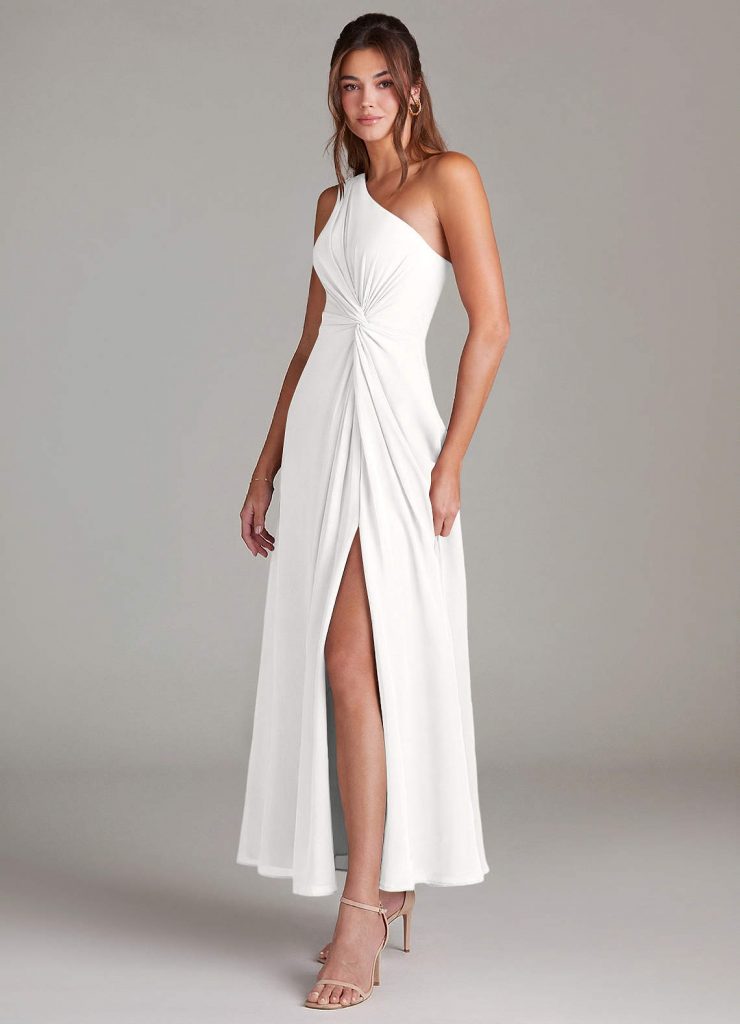
A long white graduation dress works when the silhouette is clean, the fabric doesn’t bunch under a robe, and the hem is clearly either above or below the gown’s hem, not accidentally in between. A-line and sheath cuts are the safest bets. Floor-length photographs best outdoors, after the ceremony. Midi is the everyday winner.
Why Long Dresses Actually Work Under a Gown
Most people assume long dresses and graduation gowns are a nightmare combination. Too much fabric. Too many layers. Too much that can go sideways on stage stairs. But here’s the thing — when the silhouette is right, a graduation long white dress does something shorter styles can’t: it creates a continuous, polished line from the neckline down once the robe comes off.
Stage photos tell the real story. Graduates who look most intentional in ceremony shots are often wearing longer styles under their gowns — not shorter ones that disappear entirely beneath the robe. That visible hem peeked below the gown? It reads styled, not accidental.
One thing worth saying early: long doesn’t mean complicated. Empire waist styles are loose through the skirt. A-line is forgiving in movement. Sheath silhouettes don’t bunch under a robe the way most people expect. The cut does most of the work.
Silhouettes That Actually Photograph Well
Not every long silhouette handles a graduation robe gracefully. Some add bulk. Others bunch when you sit through a two-hour commencement. These four consistently work — and it’s worth understanding why.
| Silhouette | Under the Gown | Best For | Photo Strength |
|---|---|---|---|
| A-Line [MOST POPULAR] | Flares gently — no added bulk, moves naturally | Most body types, all venues | Strong at every distance |
| Sheath | Narrow and sleek — zero extra volume under the robe | Minimalist look, formal ceremonies | Very clean in close-up portraits |
| Empire Waist | High waist with flowing skirt — comfortable all day | Outdoor ceremonies, warm weather | Great movement in outdoor shots |
| Wrap Style | Adjustable fit, walks and sits naturally | Comfort-focused grads | Flattering from every camera angle |
An a line white graduation dress is the safest long-silhouette choice, full stop. The waist definition reads clearly even through a heavy robe, and the flared skirt moves naturally without catching or pulling. That matters more than people think when you’re climbing stage stairs in front of a room.
The Fabric Reality Check
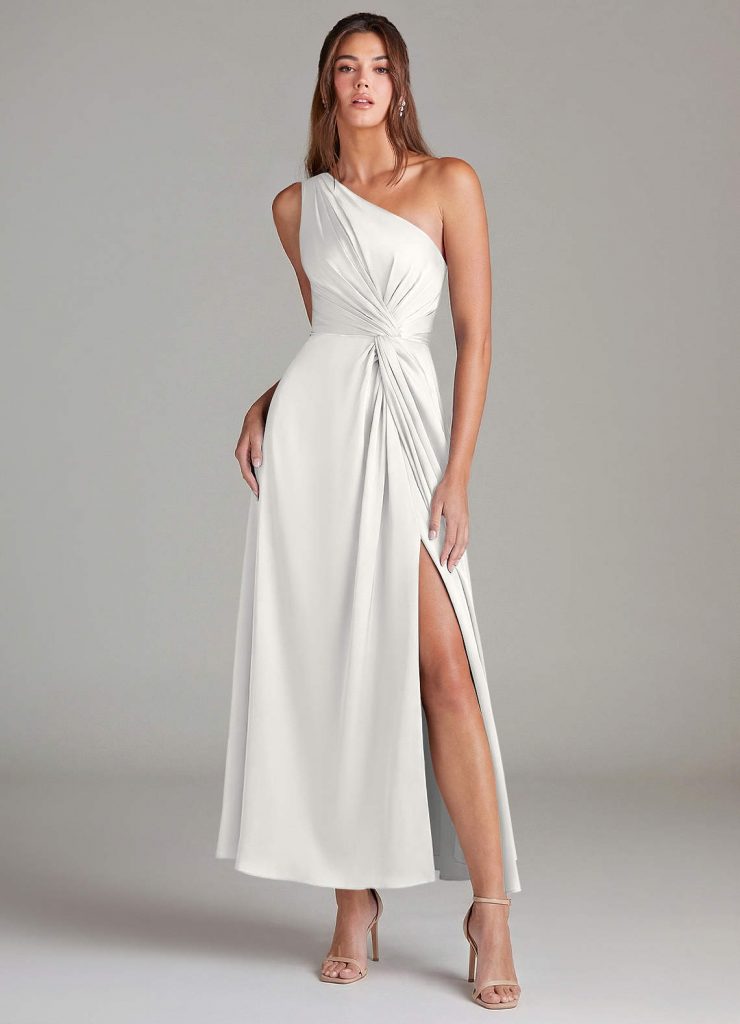
Fabric is the detail most grads skip when shopping. It’s also the one that causes the most visible problems — because a dress that feels fine in a dressing room can photograph completely differently under stage lighting.
| ✓ Reach For These ■ Chiffon — lightweight, flows naturally, excellent for long hems that need movement ■ Crepe — matte finish, resists wrinkles, photographs clean in any lighting ■ Cotton-poplin blends — breathable for outdoor ceremonies, holds its shape ■ Lined lace — adds texture that reads beautifully at any camera distance |
✗ Skip These ■ Heavy satin with strong shine — creates blown-out patches in flash photography ■ Unlined white fabric — goes transparent under overhead stage lighting ■ Very stiff materials — looks rigid in action shots, catches under the robe ■ Thick layered fabric — adds visual bulk you don’t want under a graduation gown |
|---|
A lace graduation dress is worth considering for one specific reason: stage photos are usually taken from a distance, and plain white fabric can look flat at that range. Lace creates subtle shadow patterns that give depth, at close range in a portrait, and at a distance in a ceremony wide shot.
| ⚠ BEFORE THE DAY: TRANSPARENCY TEST Hold the dress up to a bright overhead light while wearing it. If it’s transparent there, it’ll be transparent under ceremony spotlights — stage lighting is significantly more intense than anything in a fitting room. Five minutes of testing now saves a lot of regret later. |
|---|
Long vs. Floor-Length — What’s the Real Difference?
“Long” is a loose term in fashion. Here’s what each length actually looks like in a graduation context — and where each one performs best on camera.
| Length | Where It Falls | Photo Strength | Practical Note |
|---|---|---|---|
| Midi [MOST POPULAR] | Mid-calf | Partially visible below the gown — reads intentional | Most popular graduation length overall |
| Maxi | Ankle-length | Elegant movement in portraits, visible in stage shots | Works best with the right heel height |
| Floor-Length [BEST OUTDOORS] | Grazes the floor | Stunning in outdoor post-ceremony sessions | Requires stairs test + proper footwear before the day |
Floor-length shines most in post-ceremony outdoor portrait sessions — that’s where the fabric movement, the length, and the hem all show up together. During the actual ceremony, most of the floor-length dress is hidden under the robe. So you’re really dressing for the photos afterward as much as the stage walk itself.
How to Style It on the Day
Styling decisions for a long white dress differ slightly from those for shorter graduation looks. A few things that actually make a real difference — not in a rules-first way, just practically speaking.
DAY-BEFORE PREP — STEP BY STEP
| 1 | Steam the dress the night before, not the morning of. You need time for it to settle and hang smoothly after steaming. |
|---|
| 2 | Hang it immediately after steaming. Folding it back into a bag or box brings every crease right back. |
|---|
| 3 | Do a full combination test — dress + shoes + gown + actual stairs. Anything awkward at home will be awkward on stage. |
|---|
| 4 | Get dressed after hair and makeup are done. Product transfer on white fabric is extremely visible. |
|---|
| 5 | Keep a small stain pen accessible for the reception part of the day — not in your gown pocket, with a friend. |
|---|
STYLING DETAILS
| Shoes Block heels or wedges for outdoor venues — thin heels sink into grass. Kitten heels or dressy flats for long indoor auditoriums. Skip stilettos; a long hem catches on narrow heels differently than you’d expect. |
Jewelry Keep it minimal. Stoles, cords, and medals fill the neckline area fast. A small gold pendant or pearl studs reads polished without competing with academic regalia. |
|---|---|
| Hair The graduation cap sits low on the forehead. Low buns and side-swept styles stay in place for hours. Loose waves sound nice but tend to shift under the cap — soft curls gathered to one side are more practical. |
Makeup Long-wear matte foundation holds up better in outdoor lighting than dewy finishes. Soft natural tones keep focus on the dress and the moment — not the makeup. |
High School vs. College — Does the Dress Change?
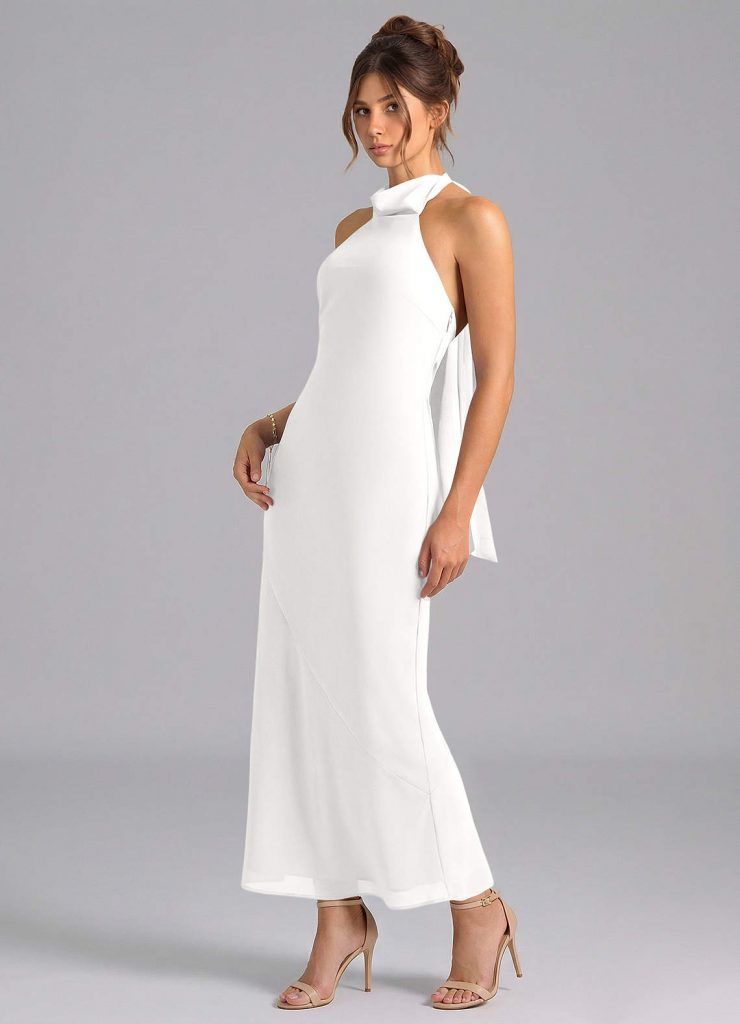
Honestly, a little. It’s less about rules and more about tone. Both are totally valid — the ceremony just calls for something slightly different depending on the milestone.
| Ceremony | Dress Tone | Long Styles That Work | Avoid |
|---|---|---|---|
| High School | Celebratory, youthful | Tiered chiffon, eyelet lace, flutter sleeves, soft pleating | Very structured column dresses — can read too mature |
| College / University | Transitional, polished | Clean A-line, sheath, or wrap in crepe with minimal embellishment | Heavy ruffles or dramatic skirts — read as too casual for university regalia |
For college graduation dresses, most grads lean toward a cleaner look. Less embellishment, more structure. It’s a different kind of moment — transitional rather than purely celebratory. Neither tone is wrong. It just comes down to what ceremony you’re dressing for and what you’ll want to look back on.
Quick Do’s and Don’ts
| ✓ Do This | ✗ Skip This |
|---|---|
| Test fabric under bright light for transparency before buying | Trust the fitting room — stage lighting is significantly more intense |
| Steam the dress the night before the ceremony | Iron directly — can damage lace or delicate fabrics |
| Try the full combination (dress + shoes + gown) on stairs | Wear a floor-length hem on stage for the very first time |
| Keep neckline jewelry minimal — cap + stoles + cords fill that space fast | Layer heavy accessories over stoles and honor cords |
| Check your school’s dress code for hem length or color rules | Purchase before confirming your ceremony’s guidelines |
| Choose a matte or lightly textured fabric | Opt for very shiny satin — it glares badly in flash photography |
Frequently Asked Questions
What makes a long white graduation dress different from just a white maxi dress?
Ceremony-specific styles are designed around how they interact with graduation robes. In simple terms, they avoid excessive volume, overly structured boning, or fabrics that bundle under a heavy gown. A standard maxi dress might look beautiful on its own, but create a bulky, unintentional silhouette during the actual processional.
How do I know if my hem length will look right with the graduation gown?
The safest rule: the dress hem is either clearly shorter than the gown (hidden), clearly longer (peeks out intentionally), or exactly the same length. The awkward zone is when they’re only slightly different — that reads as accidental in ceremony photos. Try both pieces together before the day if you can.
Can I wear a floor-length dress to high school graduation?
Yes — there’s no length rule that applies only to college. The main thing to check is your school’s ceremony guidelines. Some have requirements around hemline visibility or silhouette during the processional. Outside of those, floor-length is completely appropriate for high school graduation.
Does white always photograph well in outdoor settings?
Generally yes. White reflects light evenly, which works across most outdoor lighting conditions. The material matters more than the shade, though. Matte whites photograph cleanly; very shiny fabrics create glare in direct sun. For warm outdoor settings, ivory or cream can sometimes be softer on camera than stark white.
How do I stop the dress from bunching under the robe?
Choose a silhouette with minimal volume at the waist and hip — A-line, sheath, and empire waist all sit comfortably under a graduation robe. Avoid very full skirts, heavy pleating, or large bows near the waist. These create visible bulk that shows in ceremony photos, even from a distance.
What neckline works best for cap-and-gown portrait shots?
Clean, simple necklines — V-neck, square neck, scoop neck — frame the face well in close-up portraits. They don’t compete with the graduation cap in the portrait frame. Ornate necklines with a lot of hardware or dramatic draping can feel visually crowded in tight shots where the cap is also in frame. You might notice this more than you’d expect when you see the actual photos.
Is custom sizing worth it for a floor-length dress?
For long styles specifically, it makes a bigger difference than with shorter dresses. A floor-length dress that’s slightly too long is a real issue on stairs, and it changes how the hem photographs. The Graduation collection offers 100+ styles with custom sizing in white, cream, and soft neutrals. For a floor-length look, the extra step is worth it.
What should I do if I can’t find a long dress in exactly the right shade of white?
Cream and ivory both photograph beautifully alongside white graduation regalia — they’re warmer, softer, and genuinely flattering in outdoor portrait sessions. Pure white is crisp and creates high contrast against dark gowns. Champagne has a subtle shimmer that reads elegantly in evening or indoor lighting. All of them work. The shade matters less than the silhouette and fabric quality.