
Midi White Graduation Dresses:The Balanced Choice That Photographs Well at Every Distance
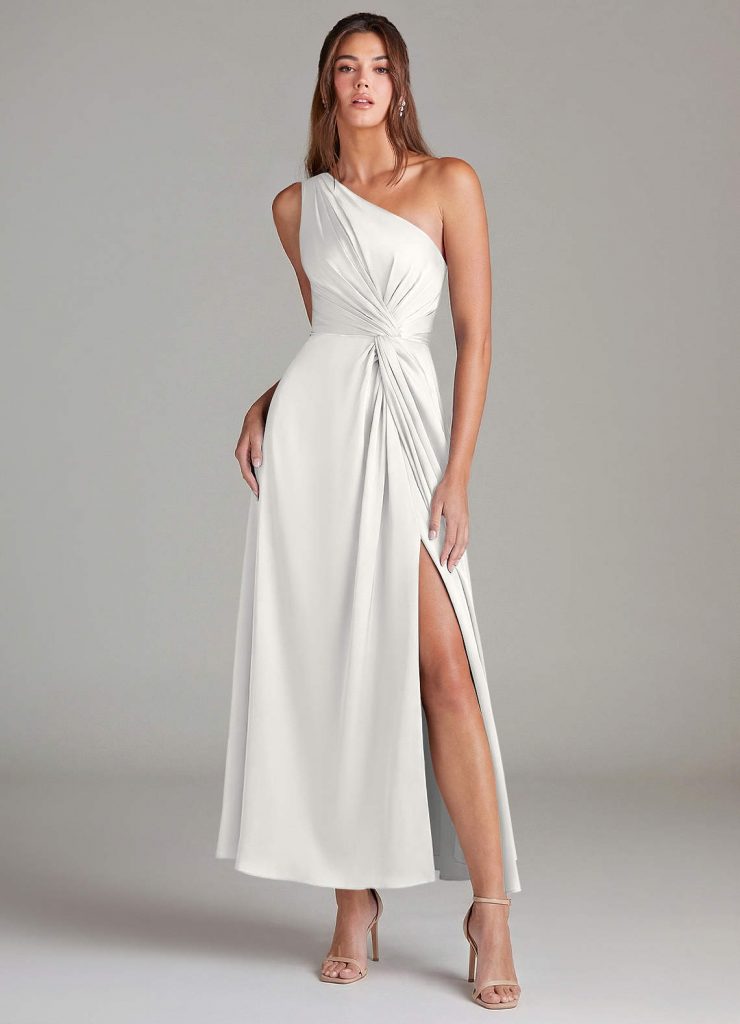
You’ve probably heard that midi is the “safe” graduation length. And fine, that’s somewhat true — but only if you pick the right one. A midi that bunches under your robe, or hits in that weird zone where it’s slightly longer than the gown, will look just as off as any other dress. The length isn’t magic on its own.
What actually works about midi for graduation is that it’s the only length that does something interesting in ceremony photos. Mini disappears under the robe. Maxi peeks out dramatically. But white midi graduation dresses show just enough — a few inches below the gown hem — to make the whole look appear intentional without being loud about it.
That said, the silhouette and fabric matter just as much as the length. This guide covers what actually works, including a few things most graduation dress guides get wrong.
| A-LINE Photography ●●●●● Comfort ●●●●● Formality ●●●●○ Most forgiving. Works under a robe without any fuss. |
FIT-AND-FLARE [Most Popular] Photography ●●●●● Comfort ●●●●○ Formality ●●●●○ Most photogenic. Waist definition shows even in wide shots. |
SHEATH Photography ●●●●○ Comfort ●●●○○ Formality ●●●●● Best for formal indoor settings. Sits flat and clean. |
WRAP MIDI Photography ●●●●○ Comfort ●●●●● Formality ●●●○○ Adjustable fit. Good for sizing between standard options. |
|---|
What a Midi Actually Looks Like During a Graduation
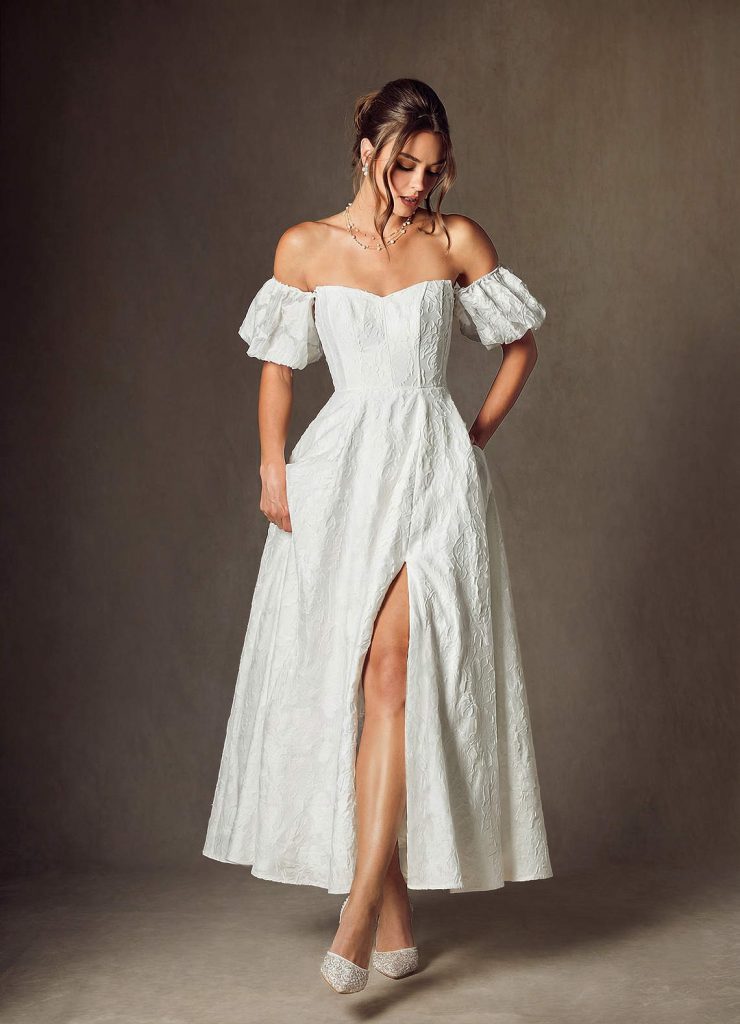
There’s the ceremony version and the after-ceremony version. They’re genuinely different photo scenarios, and a good midi needs to handle both.
| 🏛 DURING THE CEREMONY • Hem shows 2–4 inches below the gown — enough to look styled • Creates that intentional layered look in stage photos • Fabric should be smooth so it doesn’t bunch under the robe • A-line and wrap styles sit the most naturally here |
📸 AFTER THE CEREMONY • Full silhouette is visible for the first time in portraits • Midi length creates balanced proportions in full-body shots • Moves naturally for cap-toss and candid celebration photos • Easy to take campus photos straight to dinner after |
|---|
That peek below the gown — a lot of grads worry about it and try to avoid it. But honestly, when it’s deliberate, it’s one of the better-looking graduation photo outcomes. Browse graduation dresses in different lengths if you’re still comparing before deciding. Seeing them side by side helps.
Which Silhouette to Actually Pick
The gown changes everything — that’s the part people don’t fully account for when they’re shopping. A silhouette that’s beautiful on its own can create odd bulk or bunching when it’s underneath a heavy polyester robe for three hours.
| Silhouette | Under the Gown | In Photos | Best For |
|---|---|---|---|
| A-Line [MOST VERSATILE] | Flares gently, no added bulk | Balanced at every camera distance | All venues, all body types |
| Fit-and-Flare [MOST PHOTOGENIC] | Structured flare, crisp if fabric holds | Outstanding in movement and candid shots | Outdoor spring and summer ceremonies |
| Sheath | Narrow, completely flat under the robe | Sleek and modern in close-up portraits | Formal indoor commencements |
| Wrap Midi | Adjustable, sits naturally | Flattering in full-body outdoor portraits | Comfort-first grads, in-between sizing |
| Pleated / Tiered | Medium volume — needs structured fabric | Lovely texture in outdoor light | High school ceremonies, casual venues |
Personally, an a line white graduation dress in midi length is the one I’d recommend to basically anyone who isn’t sure what they want. It’s not the most exciting answer, but it consistently works. Fit-and-flare if you want more visual interest — just make sure the fabric is structured enough to hold the flare shape after hours of sitting.
Fabric Myths vs. What Actually Happens on Stage
There’s a lot of fabric advice out there for graduation dresses. Some of it is genuinely useful. Some of it ignores what graduation actually involves — stage lighting that’s far brighter than any dressing room, two-plus hours of sitting in a hot robe, and a lot of flash photography right after.
| ✗ Common Myth | ✔ Reality |
|---|---|
| Satin always looks elegant in photos | Heavy mirror-finish satin creates blown-out white patches under stage flash. Matte or soft-sheen satin is fine. It’s the overly shiny kind that causes problems. |
| Lace is too delicate for an all-day event | Lined lace is actually one of the most durable and photogenic graduation fabrics. Unlined lace is the issue — stage lighting makes it transparent in ways a dressing room never reveals. |
| Chiffon wrinkles too badly for a long day | Chiffon doesn’t hold crease wrinkles the way structured fabrics do. It’s one of the better choices for a midi that needs to look good after hours of wear. |
| White is too hot for summer outdoor ceremonies | White reflects heat rather than absorbing it. In matte or chiffon fabrics, it’s actually one of the cooler color options for an outdoor summer graduation. |
| Heavier fabric looks more formal | Heavy fabric adds visible bulk under a graduation robe. Crepe and lightweight structured fabrics look just as formal and sit flat against the body without the extra heat. |
| ⚠ DO THIS QUICK CHECK BEFORE THE DAY Put the dress on and hold it up under the brightest overhead light in your home. If it’s see-through there, it’ll be see-through under ceremony spotlights. Seriously — stage lighting is a completely different intensity than any dressing room or bedroom mirror. Two minutes of checking can save you from a problem you can’t fix on graduation morning. |
|---|
Where the Hem Lands — Three Scenarios
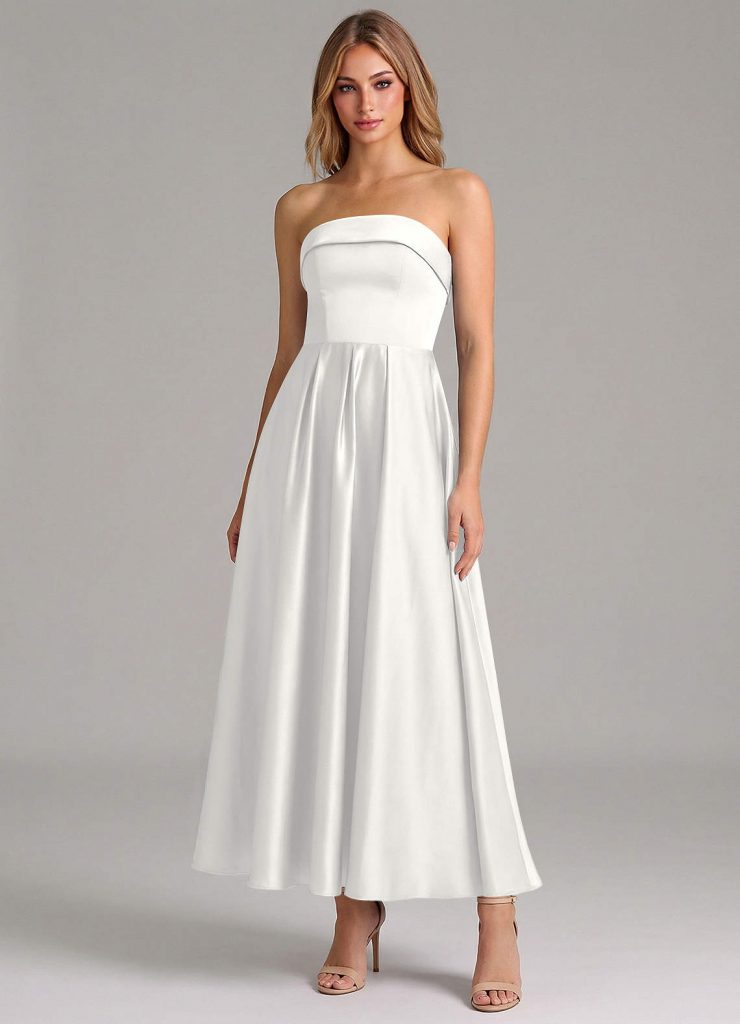
This is what catches people off guard the most. The relationship between the dress hem and the gown hem is visible in almost every ceremony photo, and there’s really only one zone to avoid.
| ✓ Intentional Peek Hem clearly below the gown by 2–4 inches. Reads as styled in ceremony photos. |
✓ Fully Hidden The dress sits completely under the gown. Clean stage look, full reveal after. |
✗ The Awkward Zone Slightly longer than the gown. Looks accidental and uneven in photos. |
|---|
Simple version: decide which one you want and then check before graduation day, not during. Put both pieces on, look in a mirror, and confirm the hem relationship is intentional. You’d be surprised how many people don’t do this until they’re in the processional.
Five Things That Actually Affect How the Look Comes Together
Not all of these are about the dress itself. Some are about how the dress interacts with everything else you’re wearing. Graduation is a layered event in the literal sense.
| 1 | Neckline matters under a robe more than people think Square, V-neck, and scoop necklines sit flat against the chest without bunching. Highly structured necklines can create visible awkward layering where the dress collar meets the inside of the gown. The neckline you barely notice in a mirror becomes more noticeable under a robe. |
|---|
| 2 | Your shoe height changes, where the hem appears to fall A 2-inch heel raises the visible hem length. Try the dress with the actual shoes you’re wearing — not similar ones, those specific shoes. The hem position in photos varies with heel height. |
|---|
| 3 | Jewelry competes more here than in most contexts The graduation neckline area already includes a cap, tassel, robe collar, stoles, and possibly honor cords. Small gold studs or pearl earrings with a delicate pendant is usually all that’s needed. Anything bolder reads as competing rather than complementing. |
|---|
| 4 | The graduation cap affects hairstyle more than grads expect The mortarboard sits low on the forehead. Loose styles shift beneath it and look messy by the time portraits are taken. A low bun, French twist, or curls pinned to one side stay in place for hours and still look intentional once the cap comes off. |
|---|
| 5 | Steaming the night before makes a visible difference in photos Midi dresses have more fabric surface area than shorter styles. More surface area means more room for wrinkles to show up in close-up portrait shots. Steam it the night before, hang it immediately after. Don’t leave it in the bag until graduation morning. |
|---|
High School, College, and Postgrad — The Tone Shifts
A midi dress works at every graduation level, but the midi style within that category changes depending on the ceremony. It’s not about strict rules — it’s that the same dress reads differently at a high school auditorium versus a university convocation hall.
| High School → Fun + celebratory | College → Clean + transitional | Postgrad → Professional-adjacent |
|---|
| Ceremony | Midi Style That Works | What Reads Wrong |
|---|---|---|
| High School | Fit-and-flare, lace, pleated or ruffled hem, playful details in the skirt | Very severe column styles — come across as stiff at a celebratory event |
| College | Clean A-line or wrap, minimal embellishment, structured crepe or chiffon | Heavy embellishments or very casual jersey knit |
| Postgrad | Simple sheath or column, professional-adjacent fabric like ponte | Overly playful details like large statement bows or tiered ruffles |
For college graduation dresses, the cleaner the midi the better — especially if you’re wearing heavy formal regalia like a hood, multiple stoles, or medallions. The dress should be a clean backdrop for all of that, not a visual competitor.
Night-Before Prep — Five Checks That Matter
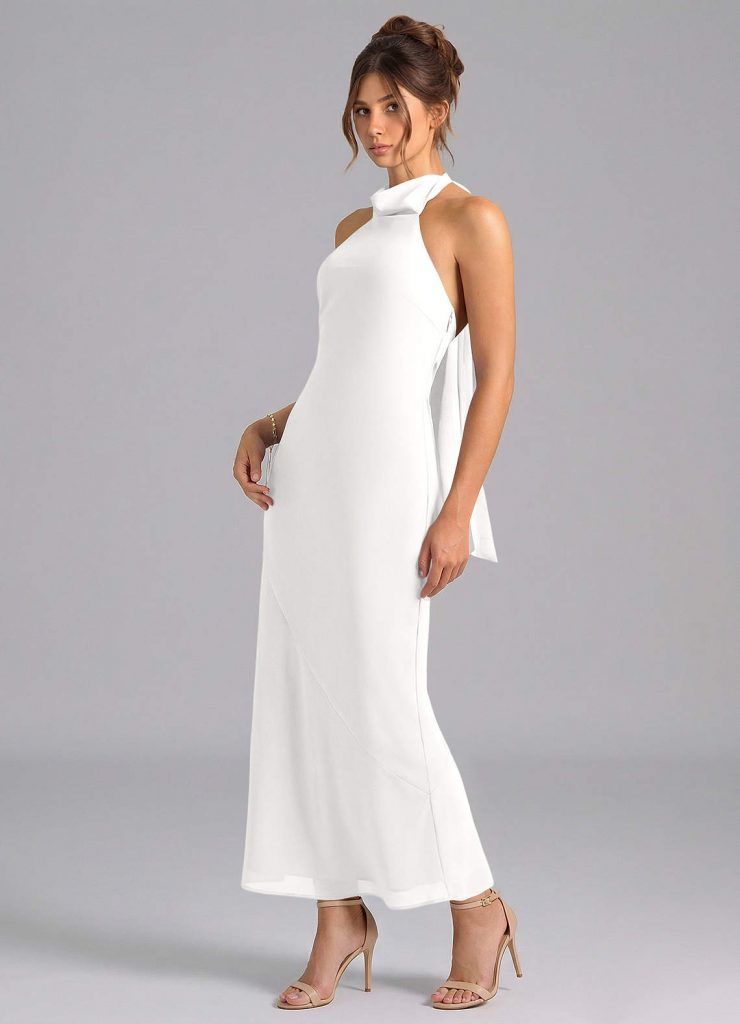
Every one of these is on the list because something goes wrong when it gets skipped. None of them takes long.
| 1 | Steam the dress the night before and hang it straight away. Don’t fold it back into a bag. Wrinkles in midi-length fabric show up clearly in close-up portrait shots. |
|---|
| 2 | Transparency check — bright overhead light, dress on. If you can see through it there, you’ll see through it under stage spotlights. Two minutes, do it now. |
|---|
| 3 | Full combination run: dress, shoes, gown, actual stairs. Not similar stairs somewhere else. The actual stairs you’ll walk. If anything feels off, you still have time to fix it. |
|---|
| 4 | Get dressed after hair and makeup are completely finished. Product transfer shows very clearly on white fabric in photos, and it’s one of those things that’s obvious in hindsight. |
|---|
| 5 | Stand in both pieces — dress and gown — and check the hem relationship. Is it clearly peeking, clearly hidden, or accidentally in-between? Find out now, not in the processional line. |
|---|
If the ceremony setting is more conservative, modest graduation dresses in midi length cover more of the neckline and arm area without sacrificing what makes a midi work for graduation. Worth looking at for indoor university or religious ceremony settings.
The Short Version
A midi works for graduation when the silhouette doesn’t add bulk under the robe, the fabric handles stage lighting without going transparent or glaring, and the hem has a clear, intentional relationship with the gown, not accidentally in-between.
A-line and fit-and-flare are the most reliable options. Chiffon and crepe are the most ceremonial and practical fabrics. Steam the night before. Check the transparency. Do the stairs test. Confirm the hem relationship while there’s still time to adjust.
Azazie has 100+ graduation dresses in white, cream, and soft neutrals with custom sizing. Browse the white graduation dress collection for styles designed to work at the ceremony, in portraits, and at every celebration after it.
Frequently Asked Questions
Can I wear a midi dress for graduation?
Yes — and honestly, it’s one of the better options. Midi length shows below most graduation gown hems just enough to look intentional, which is something shorter styles don’t do. In full-body portraits, mid-calf-length photographs are proportionate from most angles. It’s not the flashiest choice, but it works consistently.
Is a white dress appropriate for graduation?
White is pretty much the standard choice at US graduation ceremonies, so yes. It reflects light evenly under different lighting conditions — indoor stage lights, outdoor afternoon sun, family flash photos — which is why it photographs so consistently. Check your school’s specific guidelines just in case, but most schools actively recommend it.
Is a midi dress actually elegant, or does it just look safe?
Both, kind of. In crepe, lace, or chiffon, a midi reads as genuinely elegant — it has that tea-length formality that longer styles have without the floor-length drama. The “safe” reputation comes from how forgiving it is, not from it being boring. A well-fitted midi in a quality fabric looks much more intentional than it gets credit for.
How do you actually look good on graduation day?
Fit is most of it. A well-fitted dress in the right fabric does more than any accessory. Steam the dress the night before, wear shoes you can walk comfortably in, and keep jewelry minimal because the regalia is already doing a lot of visual work. Confidence in how you’re moving comes from a dress that isn’t restrictive or constantly making you adjust it.
What color is genuinely best for graduation?
White is the most consistent choice across lighting conditions, gown colors, and photography settings. Ivory and cream are warmer alternatives that can be more flattering in outdoor afternoon light. Pastels work at some ceremonies. Highly saturated or dark colors can clash with academic regalia in photos in ways that aren’t always obvious until the photos come back.
Is a midi dress okay for prom too?
It works, especially if you like vintage or tea-length aesthetics. For prom, you’d usually want something more embellished or dramatic in the fabric than a graduation midi. The length itself is fine — midi and tea-length styles have been popular for prom for a while now. It’s more about the embellishment level than the hem.
What should you avoid wearing to a graduation ceremony?
Overly shiny satin that creates glare under stage flash. Unlined white fabric that goes transparent under ceremony spotlights. A hemline that lands in that awkward slightly-longer-than-the-gown zone. Heavy neckline embellishments — between the cap, tassel, stoles, and cords, that area doesn’t need more. And very casual fabrics like jersey knit, which look out of place in formal ceremony photos.
What bra actually works under a white midi dress?
A seamless, nude-toned strapless or convertible bra is the most practical option. Stage lighting and outdoor sunlight both reveal bra lines and colors through lighter white fabrics more than most people expect. If the dress has a V-neck, a low-plunge style prevents visible edges in close-up portrait shots. Try both pieces together under actual bright light before the day, not in normal room lighting.
Can a midi dress count as formal?
Yes, when it’s the right fabric. A midi in crepe, structured lace, or quality satin is appropriate for semi-formal and formal events, including university commencements. The formality reads through the fabric and silhouette more than the length. A jersey-knit midi at the same length reads as casual. Same hem, completely different context.
What is a midi dress, technically?
It’s any dress with a hem between the knee and the ankle — roughly mid-calf. Sometimes called tea-length when it hits closer to the ankle. For graduation, mid-calf is typically the most practical placement because it creates a clear visual relationship with the graduation gown hem rather than landing ambiguously close to it.