
Long Sleeve Evening Dresses: Coverage Without Losing Shape or Elegance
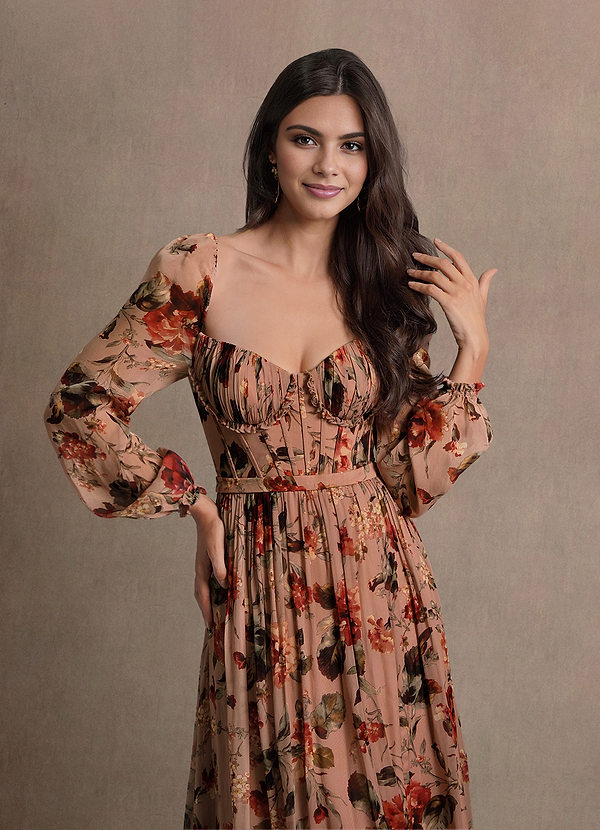
I spent years assuming that long sleeve evening dresses were a compromise. Coverage at the expense of silhouette. Then I attended a charity gala at the Art Institute of Chicago in December 2023 and watched three women in long-sleeved gowns completely own the room. None of them looked conservative. None of them looked like they’d chosen coverage over style. They looked — and I kept trying to figure out why — more deliberately put together than most of the sleeveless looks at the same event.
I worked out what was different eventually. Illusion mesh rather than opaque jersey on two of them. V-necklines on all three. Waist seams that sat exactly where waist seams are supposed to sit. Each of these is a specific construction decision, not an accident.
So. The real question about long sleeve evening dresses isn’t ‘how do I not look covered up.’ It’s which construction choices prevent the sleeves from reading as coverage and make them read as intentional design instead.
| The core principle before the details: sleeves add visual weight to the upper body. Everything else in the dress has to counterbalance that weight — a defined waist, an open or elongated neckline, a skirt silhouette that creates visual movement below. Get these three right and the sleeve reads as elegant. Get them wrong and it reads as coverage for coverage’s sake. |
|---|
Sleeve Types — What Each One Does and When Each One Belongs
Illusion and Sheer Sleeves — The One I’d Recommend First
An illusion sleeve — sheer mesh or lace with a skin-tone lining — provides full visual coverage while adding almost no visual weight. The architectural completeness of a sleeved dress without the density. For anyone who wants long sleeves but is concerned about the dress reading as heavy: this is specifically the sleeve type designed to solve that problem.
The version that doesn’t work: cheap illusion mesh that bunches at the elbow and shifts at the wrist. Quality illusion mesh has a structured weave that stays in position and a properly bonded lining that doesn’t move independently of the outer layer. These are not the same product. The difference is immediately visible under event lighting.
Fitted Opaque Sleeves — Clean Lines, Strict Fit Requirements
A close-fitting opaque sleeve in quality crepe or satin creates a streamlined architectural line from shoulder to wrist. Clean, linear, no visual noise. This works well specifically with column and sheath silhouettes where the whole dress is defined by that same linear geometry. The sleeves extend the logic of the dress rather than adding a different visual element.
The fit requirement is strict. Any imprecision — pulling at the elbow, bunching at the wrist, gaping at the armhole — is immediately visible because nothing in the sleeve design distracts from it. Fitted opaque sleeves reward custom sizing in a way that looser sleeve styles don’t.
Lace Sleeves — Texture and Formality at Once
Lace sleeves add texture and visual detail that reads as inherently formal. A lace sleeve over a skin-tone lining is essentially a more elaborate version of the illusion sleeve. Modest evening dresses with lace sleeves are consistently among the strongest formal options available — the lace adds visual interest while the coverage is complete. The lace also does something fitted crepe sleeves can’t: it breaks up the visual mass of the arm into texture and pattern, which reads as light rather than heavy.
Bishop and Volume Sleeves — Deliberate Drama, Not Default Coverage
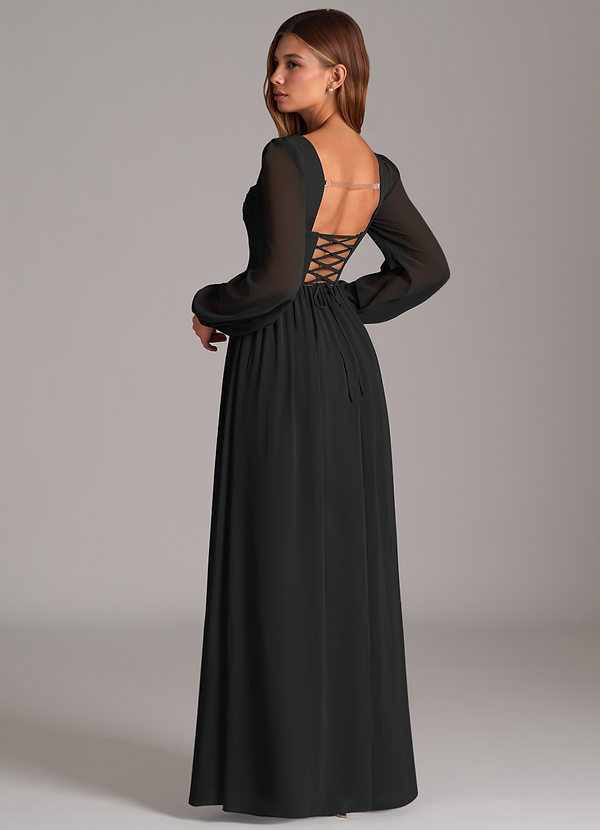
A bishop sleeve — full through the forearm, gathered at the wrist — reads as editorial and fashion-forward rather than covered. It works with a clearly defined waist and an A-line or fit-and-flare silhouette where the skirt volume balances the sleeve volume.
Actually, let me be more specific: it requires a silhouette that clearly contrasts with the sleeve volume. A bishop sleeve on a column dress looks structurally wrong — there’s nothing for the volume to push against. A bishop sleeve on an A-line with a cinched waist makes design sense because the visual relationship between the full arm and the narrow waist creates deliberate contrast.
Sleeve Type Quick Reference
| Sleeve Type | Visual Weight | Best Silhouette | Key Note |
|---|---|---|---|
| Illusion/mesh | Very light | Any silhouette | Quality mesh only — cheap versions shift and bunch |
| Fitted opaque | Moderate | Column, sheath, A-line | Strict fit required — any imprecision is visible |
| Lace overlay | Light-moderate | A-line, mermaid, column | Breaks up visual mass — reads lighter than opaque |
| Bishop/volume | Heavy — intentional | A-line with cinched waist only | Needs silhouette contrast — wrong on column or sheath |
| Three-quarter | Moderate | Most silhouettes | Good transitional option between sleeved and sleeveless |
Necklines — The Most Important Balance Element
V-Neckline — The Most Reliable Counterbalance to Sleeves
A V-neckline creates a vertical visual line through the center of the torso, drawing the eye downward from the face. On a long-sleeved dress, that downward draw counterbalances the visual weight the sleeves add to the sides of the body. This is why most of the strongest long-sleeve formal gowns tend to have V-necklines.
The depth of the V matters less than the direction. A moderate V and a deep V both do the same directional work. A deep plunging V has more impact but requires more confidence in the specific event context. Both work.
Off-Shoulder — The Contradiction That Actually Works
An off-shoulder long sleeve sounds structurally contradictory: the shoulder is exposed but the arm is covered. That contradiction is exactly what makes it work. The exposed shoulder and chest create visual openness at face level that prevents the covered arms from reading as enclosed. The contrast between open top and covered arm creates visual interest rather than visual weight.
I’ll be honest — I didn’t understand why off-shoulder sleeves were such a strong formal combination until I saw them in person at that Chicago gala. On paper, the exposed shoulder seemed like it would make the long sleeve look odd. In practice, the contrast made both elements read more intentionally than either would have alone.
High Necklines — Extraordinary When the Other Elements Are Right
A high neckline with long sleeves can look architecturally striking — but the waist definition has to be strong and the sleeve has to be fitted rather than voluminous.
| The combination to avoid: high neckline + bishop sleeves + loose bodice + heavy fabric. Every element here adds visual weight. Stacking them creates a dress that reads as bulky regardless of the individual component quality. If you want a high neckline, use fitted sleeves and a defined waist seam. If you want volume sleeves, use an open neckline. Never both at once. |
|---|
Silhouettes — Which Ones Complement Long Sleeves Best
Column and Sheath — The Architectural Statement
A column dress with long sleeves reads as a single designed object from shoulder to floor. Evening dresses floor length in column construction with long sleeves are among the most photographically powerful formal looks available — when the fit is right through every measurement. When it isn’t, the column with sleeves has nowhere to hide imprecision.
A-Line — The Most Forgiving Pairing
An A-line with long sleeves accommodates most sleeve styles — fitted, lace, even moderately voluminous ones — because the flared skirt creates visual movement below that balances whatever the sleeves are doing above. The fitted bodice provides waist definition, the flare creates visual separation from the waist downward, and the sleeves add coverage above.
This is the combination I’d suggest as a starting point for anyone who hasn’t worn long-sleeve formal dresses before and isn’t certain which sleeve style suits them. The A-line’s proportions are forgiving of variation in a way the column and mermaid aren’t.
Mermaid — Maximum Impact With the Right Sleeve
A mermaid with long sleeves creates strong red-carpet energy — the fitted silhouette through the hip provides the body-conscious contrast that makes the sleeves read as deliberate rather than covering. Fitted or illusion sleeves specifically. Volume sleeves on a mermaid compete with the drama of the flare and neither element reads clearly.
Five Fit Checks Before Wearing a Long-Sleeve Evening Gown
| 1 | Test arm mobility — both forward reach and upward reach. Reach both arms forward as if hugging someone. Then raise one arm straight above your head. A formal event involves greeting guests, dancing, reaching across tables for hours. The dress should accommodate all of these without pulling at the back seam or restricting arm rotation. Any restriction in either motion means the armhole is too small or the sleeve has insufficient ease. This is the most important test for any sleeved formal gown. |
|---|
| 2 | Check the waist seam position with the dress on. The waist seam or construction should sit at or within half an inch of the natural waist — the narrowest torso point. A waist seam that sits too low creates a dropped-waist effect where the entire upper body reads as a single covered block. When correctly positioned, the sleeve-bodice-skirt relationship reads as three distinct designed zones. When it isn’t, it looks like someone wearing a long covered surface. |
|---|
| 3 | Evaluate the shoulder seam — standing and with a shoulder shrug. The sleeve shoulder seam should sit exactly at the natural shoulder edge. Test by shrugging both shoulders upward: the sleeve should stay in position rather than pulling with the shoulder. A shoulder seam that falls even half an inch toward the arm creates visible drag lines across the upper arm that make the sleeve look like it’s fighting the body. |
|---|
| 4 | Check the wrist finish in motion. Walk across the room and reach for something. The cuff should stay at the wrist — not riding up to expose the forearm or falling over the hand. A cuff that shifts position constantly is the sleeve equivalent of a hemline that needs managing: technically not a disaster, practically irritating over the course of a four-hour event. Quality sleeves have structured cuffs that hold. |
|---|
| 5 | Evaluate the neckline-sleeve balance in natural light — not boutique lighting. Look at the full look in natural daylight and check whether the neckline creates visual openness that balances the sleeve coverage. If the dress reads as uniformly covered from face to wrist — if the eye has nowhere to land that isn’t fabric — the neckline is too closed for the sleeve style. This is a whole-look evaluation. Boutique lighting flatters everything. Natural light shows the balance, or the lack of it. |
|---|
By Occasion — Matching Sleeve Style to the Event
Black-Tie and Formal Galas
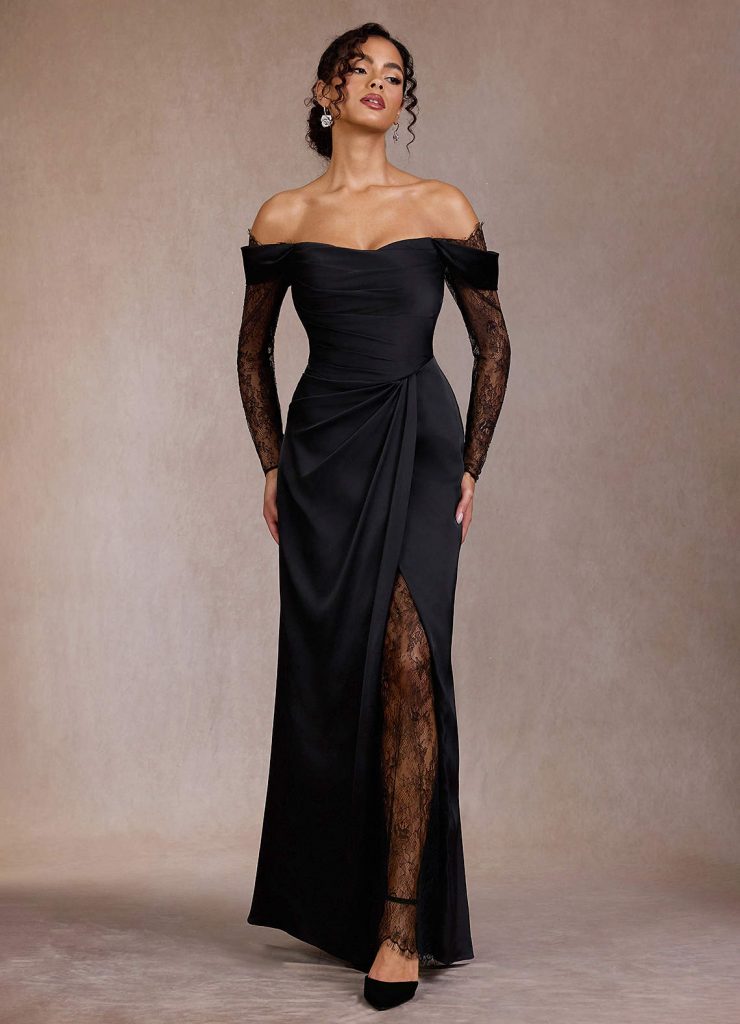
Fitted or illusion sleeves, floor-length, quality fabric, clearly defined waist. The most successful long-sleeve formal looks at black-tie events combine structural simplicity with fabric quality — the sleeve doesn’t need to be a statement if the fabric is right. An illusion-sleeve column in quality crepe reads as precisely appropriate. Elegant black evening dresses with fitted illusion sleeves are consistently the strongest black-tie long-sleeve option.
Evening Weddings
Lace sleeves in chiffon or organza are specifically well-suited to evening wedding guest dressing. They provide full coverage while the lace texture reads as celebratory rather than formally conservative. Pink evening gown dresses with lace sleeves are one of the most consistently well-photographed wedding-guest choices — the color, the lace texture, and the coverage all work together rather than separately.
Winter Formal and Holiday Events
Long sleeves solve the outerwear problem at cold-weather formal events — no wrap to manage, no stole to keep track of throughout the evening. Green evening dresses in velvet with long sleeves for a December gala: the sleeve provides warmth, the color and fabric provide the elegance. Velvet sleeves specifically require a precise fit because the fabric’s nap direction affects how light interacts with the arm — a velvet sleeve that’s slightly twisted reads as visibly wrong.
Closing Thoughts
Those three women at the Art Institute gala — I don’t know who they were. I know that their dresses worked and I spent twenty minutes figuring out why. Illusion mesh. V-necklines. Waist seams in the right place. That’s genuinely it.
The sleeve is not the variable that determines whether a long-sleeve gown looks elegant or covered. The other construction decisions are. Get those right and the sleeve just finishes the look. Azazie’s long sleeve evening dress collection covers illusion mesh, lace, and fitted sleeve options across A-line, column, and mermaid silhouettes in sizes 0 to 30 with made-to-order and custom sizing available.
Frequently Asked Questions
Do long sleeves make an evening dress look conservative?
Only when the other elements aren’t balanced. A long-sleeve gown with illusion mesh, a V-neckline, and a defined waist reads as polished and intentional — not conservative. The sleeve type, neckline, and waist construction determine the visual impression together. The sleeve alone doesn’t.
What sleeve style is least likely to add visual bulk?
Illusion mesh or sheer sleeves. They provide full visual coverage while adding almost no visual mass — the fabric is essentially transparent against the skin. Fitted stretch crepe is the second-lightest option visually. Bishop sleeves intentionally add visual weight and only work when that weight is a deliberate design feature, not incidental coverage.
How should a long-sleeve evening dress fit at the shoulder?
The shoulder seam should sit exactly at the natural shoulder edge — not falling toward the arm and not creeping toward the neck. Test by shrugging both shoulders up while wearing the dress: the sleeve should stay in position. A correct shoulder fit creates a smooth visual line from the neck through the sleeve. An incorrect one creates drag lines across the upper arm that make the dress look like it’s straining.
What necklines work best with long sleeves?
V-necklines provide the most reliable counterbalance — they create a downward visual line that counteracts the horizontal visual weight sleeves add to the sides. Off-shoulder necklines create balance through contrast: covered arms, open shoulder. Both work consistently. High, closed necklines require strong waist definition and fitted (not volume) sleeves — the combination of high neck plus volume sleeves plus heavy fabric is the one that reads as bulky.
Are long sleeve evening dresses appropriate for summer formal events?
In lightweight materials — quality illusion mesh, lightweight lace, thin chiffon — yes. The sleeve provides visual full coverage; the physical experience is of wearing very light fabric. Quality mesh sleeves in summer are significantly more comfortable than most people expect, and they’re completely appropriate for warm-weather formal events.
How does the sleeve affect accessory choices?
When the arms are covered from shoulder to wrist, earrings become the primary face-level accessory because the arms aren’t available as visual anchor points. Necklaces work best when the neckline has a significant opening — a high closed neckline with a bold necklace creates visual clutter where there’s already a lot happening. One statement earring and minimal everything else is the strongest formula for long-sleeve formal looks.