
How to Choose Fitted Wedding Dresses That Feel True to Your Vision
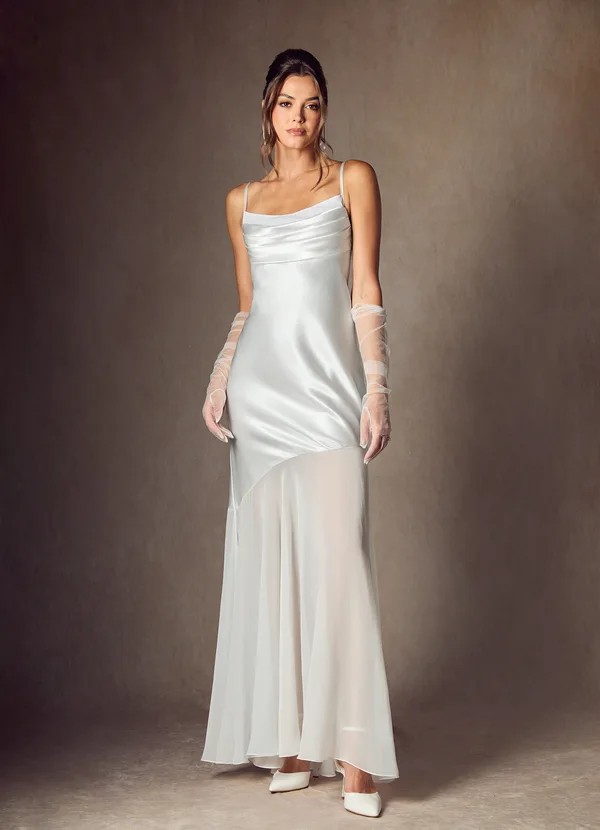
The most common thing I hear from brides who tried on fitted wedding dresses and walked away unsure: ‘It looked amazing, but I couldn’t sit down properly.’ That’s a fit problem. Not a silhouette problem. And it’s fixable — but only if you understand which decisions create it.
A fitted dress that’s been chosen in the right silhouette, sewn in the right fabric, and altered to your actual measurements can be worn all day without once thinking about the dress. That’s the goal.
| THE CORE QUESTION Before anything else — ask yourself how you want to feel at hour six. Not how you want to look in photos. If the honest answer is ‘comfortable and dancing,’ certain fitted silhouettes will serve you much better than others. That answer shapes every decision that follows. |
|---|
Understanding the Silhouettes — They’re Not All the Same
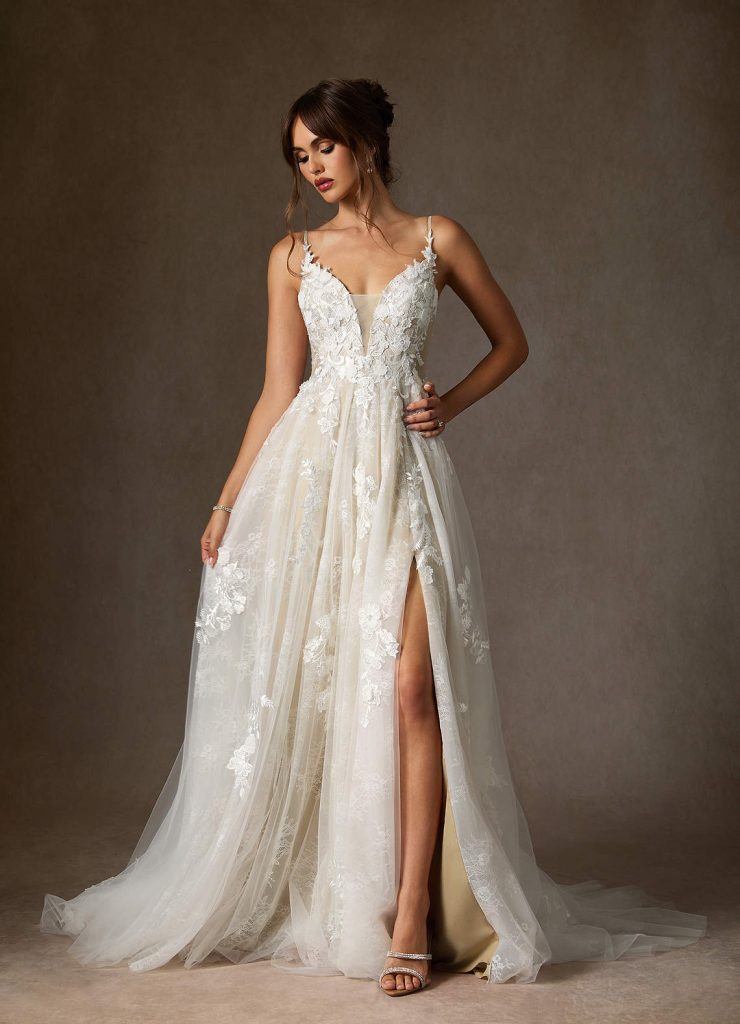
Fit-and-Flare — the Most Comfortable Fitted Option
Counterintuitive, but true: a fit-and-flare often lets you move more freely than a straight column dress. The flare starts at the knee or upper thigh, so the skirt doesn’t restrict your stride. You can walk quickly, climb stairs, and dance. The bodice is fitted and structured, which gives the ‘fitted’ look people want, while the skirt does the practical work of giving your legs room.
Mermaid — the Most Dramatic, the Most Demanding
Mermaid gowns stay tight from the chest to the knee. Beautiful in photos. Genuinely challenging to walk and sit for eight hours.
I’m not saying don’t wear a mermaid dress. But — and this matters — the difference between a comfortable mermaid and an uncomfortable one is almost entirely the flare point. The lower the flare starts, the harder it is to move. A trumpet flare at mid-thigh gives you considerably more range of motion than one that breaks at the knee. This is the single most important question to ask when trying on this silhouette.
The Flare Point Is Where to Focus, Not the Overall Shape
Most brides pick a silhouette based on how it looks from the front in the boutique mirror. That’s fine for the decision, but the flare point is what determines whether the dress works on the wedding day.
When trying on any fitted dress, walk from one side of the room to the other. Take actual steps — not the careful boutique walk. If you feel a pull or have to shuffle, the flare point is too low for your stride. Ask for a style where the flare breaks higher.
| ◆ FIT-AND-FLARE Comfort: High — good movement all day Flare point: Hip or upper thigh Best for: Dancing, long events Honest take: Most versatile fitted choice |
~ TRUMPET Comfort: Medium — depends on flare point Flare point: Mid-thigh Best for: Drama with mobility Honest take: Check the flare point before committing |
◻ MERMAID Comfort: Lower — tight through the hip and knee Flare point: At or below the knee Best for: Photos, walking entrances Honest take: Beautiful, but test the stride carefully |
|---|
Fabric — This Is Where Modern Fitted Dresses Changed
Stretch Fabrics Are the Real Game-Changer
Ten years ago, a tight-fitted wedding dress usually meant discomfort. That’s genuinely less true now. Stretch satin and stretch crepe — two fabrics that have become standard in quality bridal construction — provide a smooth, fitted surface that reads as polished and bridal while offering just enough stretch for movement. You’re not fighting a rigid material. The dress responds to your body.
An ivory wedding dress in stretch crepe is, in my experience, the combination brides describe as the most comfortable, fitted look. It photographs as sleek and tailored. It wears like something slightly forgiving. The matte surface also hides fit imperfections more than a glossy satin would — which matters in the fitting room.
Lace — Romantic, but Know What You’re Getting
Delicate lace over a fitted silhouette is beautiful. But the lace itself (as opposed to the lining underneath) doesn’t stretch, which means the lining construction matters a lot. A stretch jersey lining under a lace overlay is comfortable. A fully rigid structured lining under lace is not. If you love lace for a fitted dress, ask specifically about the lining. That’s the part you actually feel against your body for eight hours.
| Fabric | Comfort Level | Movement | Best For |
|---|---|---|---|
| Stretch crepe | ★★★★★ | Excellent — responds to body | Any fitted silhouette |
| Stretch satin | ★★★★ | Good — more give than regular satin | Mermaid and trumpet |
| Regular crepe | ★★★★ | Soft drape with some structure | Column and sheath styles |
| Lace (lined) | ★★★ | Depends entirely on lining | Romantic fit-and-flare |
| Heavy satin | ★★ | Beautiful but stiff | Evening galas, formal venues |
Tailoring — Where Most Fitted Dress Comfort Problems Start
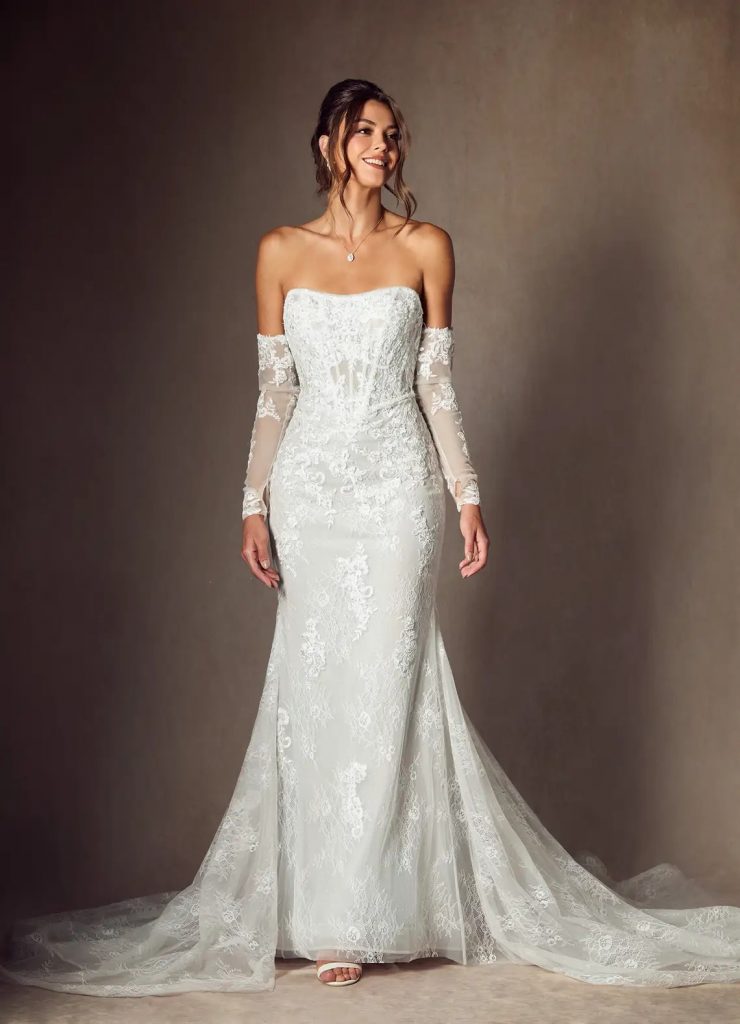
Size Up, Not Down
The advice that helps more brides than any other: when in doubt, order a size up. A fitted dress that’s slightly too small doesn’t look ‘more fitted’ — it looks strained. The seams pull, the fabric distorts, and it photographs exactly as uncomfortable as it feels. A dress ordered a size larger and tailored in is easier to alter, sits more smoothly, and costs less to fix than a dress that’s too small.
The Knot’s guide to choosing a wedding dress that fits your body makes this point directly — bridal sizing runs smaller than regular clothing sizing, and brides consistently underestimate how much that affects fitted silhouettes. Your bridal size is often two to three sizes larger than your regular clothing size. That’s normal. It doesn’t say anything about you.
The Movement Test Is Non-Optional
A fitted dress that looks perfect standing still in the boutique can be genuinely unwearable at the reception. The test isn’t the mirror — it’s sitting down in a real chair, taking the stairs, bending down to hug a child, walking at your actual pace.
Brides confirms this in their bridal-fitting guidance: the movement test should be built into every fitting appointment, not skipped just because the dress looks right.’ With fitted silhouettes — where the fabric is close to the body, and any restriction is immediately felt — this test matters more than it does for a full ball gown.
At-Home Try-On — More Valuable Than Brides Expect
Azazie’s at-home try-on (available for wedding dresses) lets you test the fit in real conditions — your own home, your own movements, your own light. For fitted dresses specifically, this is a more accurate test than a boutique fitting, where you’re still being careful. Try the dress with your actual shoes. Eat a full meal in it if you can. That’s the honest version of whether it’s going to work.
Three Decisions That Separate a Comfortable Fitted Dress from One You’ll Regret
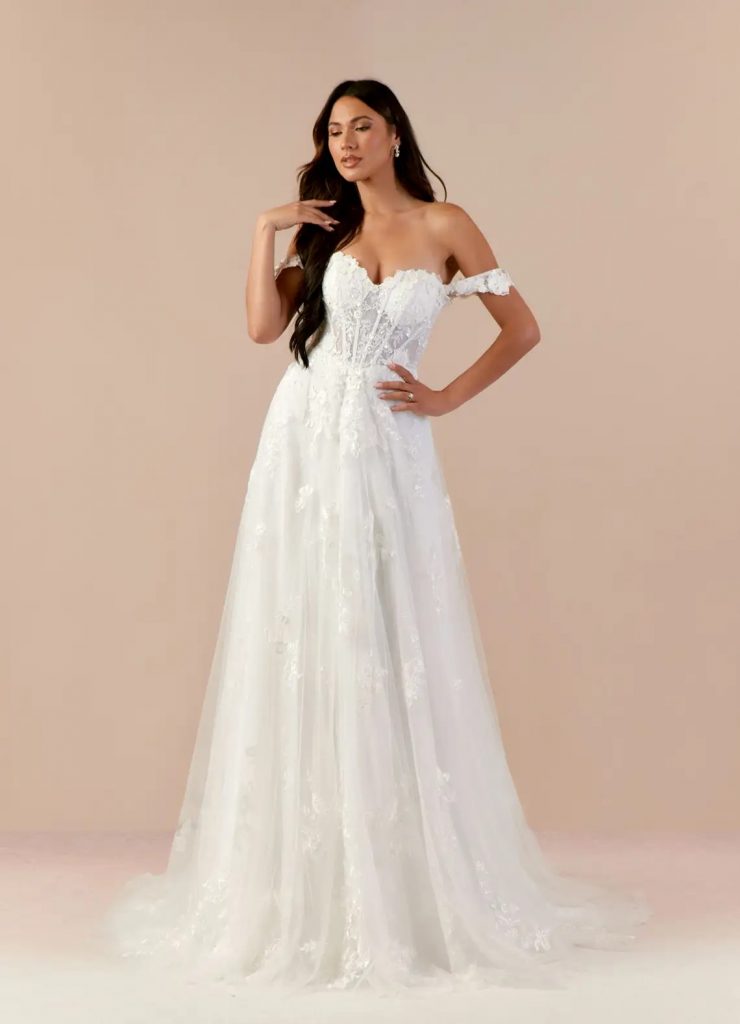
| 1 | Find where the flare starts — before you fall in love with the dress. The flare point is the most important variable in any fitted bridal silhouette. Try the dress on, then take ten full walking steps at your natural pace. If you feel resistance at the knee or have to adjust your stride, the flare starts too low for all-day wear. Ask if the same style is available with the flare beginning slightly higher. Most brands have variation within the same silhouette. This is a question worth asking before putting down a deposit. |
|---|
| 2 | Choose the fabric before choosing the style. The silhouette tells you the shape. The fabric tells you how it actually feels. Stretch crepe and stretch satin move with the body; heavy structured satin works against it. A beautiful mermaid in stretch fabric can be comfortable enough to dance in. The same silhouette in rigid brocade probably isn’t. Ask specifically about the fabric composition — not just the surface look — before committing. |
|---|
| 3 | Order a size up and tailor in. This is the single most consistent piece of advice from fitters, sewists, and brides who’ve been through it. Bridal sizing runs small. Fitted dresses are less forgiving than other silhouettes when the fit is even slightly off. A dress altered from a larger size fits more smoothly, pulls less at the seams, and photographs better than one that was too small and stretched. If you’re between sizes, always go up. |
|---|
Color and Neckline Options for Fitted Wedding Dresses
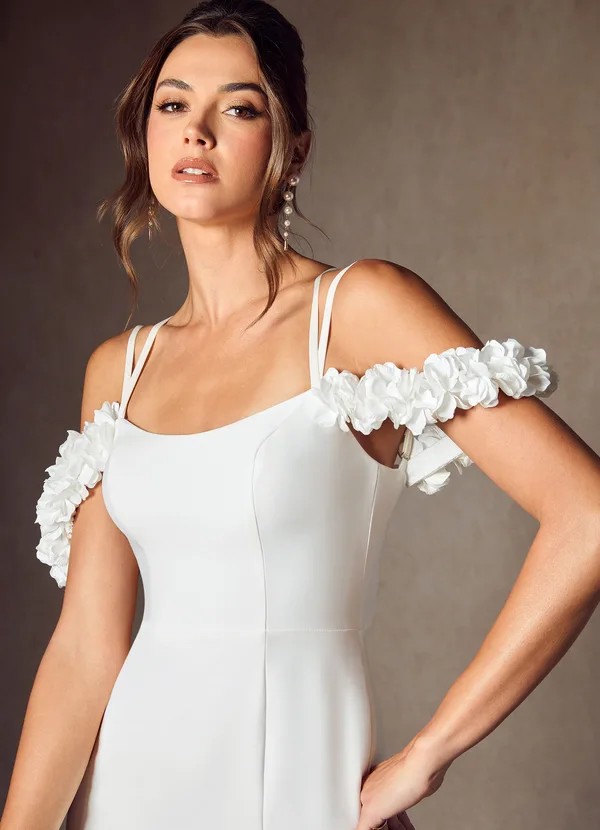
Which Colors Work Best for Fitted Silhouettes
A diamond white dress in a fitted silhouette is the most classic and reliably photographed option. But nude dresses for wedding in crepe deserve more attention than they get — a nude fitted gown has a sculptural quality in photos that white doesn’t quite replicate. The color reads as skin-adjacent, and the silhouette reads as architectural. For brides who want something between ‘definitely bridal’ and ‘not traditional white,’ nude in a fitted silhouette is worth trying.
Neckline — How It Interacts with a Fitted Bodice
A satin strapless wedding dress is the most classic neckline for a fitted bridal gown — clean lines, no visual interruption, the silhouette does all the work. But strapless bodices in fitted dresses can feel slightly unstable when dancing, which is (and I’ve heard this from multiple brides) more annoying than people expect.
A sleeveless wedding dresses style with thin straps offers the same clean look with slightly more security — especially for brides who plan to dance heavily or who don’t want to worry about staying in place. It’s a small practical advantage.
Closing Thoughts
Silhouette first. Find the flare point. Fabric second — stretch fabrics change what’s possible. Tailoring third size up and alter in.
When those three things are right, a fitted dress doesn’t feel like a choice you made for the photos. It feels like a choice you made for the whole day.
Frequently Asked Questions
What makes a fitted wedding dress different from other styles?
Fitted dresses follow the body’s natural shape rather than adding volume. The result is a cleaner, more sculpted silhouette — less fabric overall, more defined lines. The difference from an A-line is that fitted styles stay close to the hip and thigh rather than flaring from the waist.
Can I wear a fitted wedding dress if I have curves?
Yes. A well-constructed, fitted dress in stretch crepe or stretch satin is actually designed to follow and support curves — that’s where fitted silhouettes photograph most naturally. The key is choosing a fabric with some give and a flare point that sits above your widest point, not below it.
Are fitted wedding dresses uncomfortable to wear all day?
They can be — or they can be very comfortable. The difference is almost always the fabric choice and whether the dress was sized and altered correctly. A fitted stretch-fabric dress that fits properly is genuinely comfortable for a full day.
What’s the difference between fit-and-flare and mermaid?
Fit-and-flare releases at the hip or upper thigh. Mermaid stays tight through the knee. Fit-and-flare is the more comfortable option for movement. Mermaid is the more dramatic visual. If you want the fitted look and need to dance, fit-and-flare.
How do I ensure the best fit?
Order a size up if you’re between sizes. Wear the shoes and undergarments you plan to wear on the day of every fitting. Do the movement test — walk, sit, climb stairs — before finalizing any alteration. And book a final fitting close to the wedding, not three months before, because bodies change.
What accessories work with a fitted wedding dress?
Minimal. The silhouette is already a strong visual statement. A drop earring, a thin bracelet, or a delicate pendant — one or two pieces that catch light. A cathedral veil works beautifully with a fitted dress because its length contrasts with the gown’s close fit. Anything too heavy or chunky competes rather than complements.
Can I wear a fitted dress for an outdoor wedding?
Yes — choose a lighter fabric. Stretch crepe breathes. Heavy brocade doesn’t. For a beach or outdoor ceremony, a fitted stretch-satin or crepe dress in ivory or champagne will hold up better in warmer conditions than heavier, structured fabrics.
Are fitted wedding dresses available in plus sizes?
Yes. Azazie offers fitted wedding dresses in sizes 0–30 with made-to-order construction and custom sizing. For fitted silhouettes specifically, custom sizing is more valuable than standard sizing because the dress has less room to hide fit imperfections than a fuller style does.
What’s the best color for a fitted wedding dress?
Diamond white, ivory, and nude all work well. A champagne wedding dress in a fitted silhouette is a particularly strong combination for warm-toned skin and outdoor settings — the color photographs warmly, and the clean, fitted lines give it a modern quality.