
Evening Dresses with Sleeves: Fit Details That Make the Upper Body Look Refined
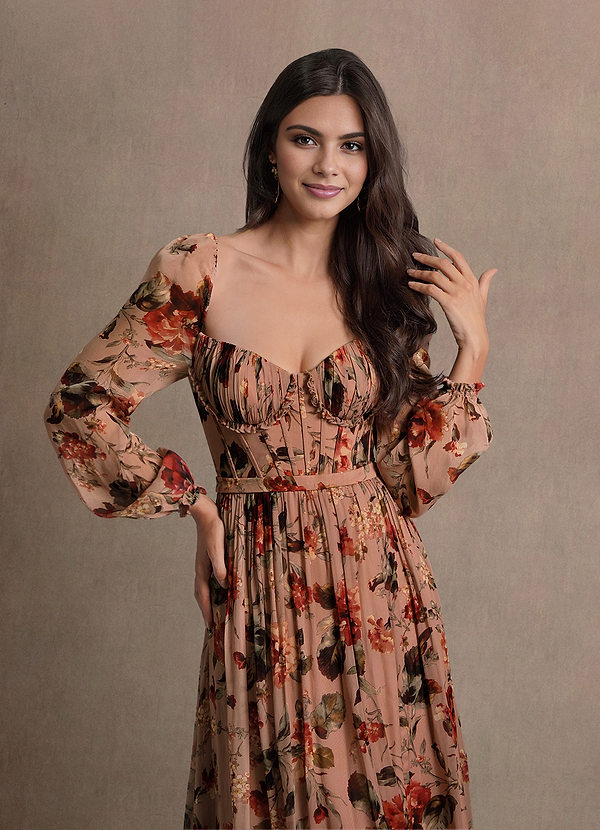
The upper body in any evening dresses with sleeves is where the look is won or lost. More specifically, the shoulder seam placement, the armhole depth, and the sleeve-to-neckline proportion are the three decisions that determine whether a sleeved formal dress reads as polished and intentional or as covered and uncertain.
I spent an entire formal styling session last October going through this with a client preparing for a winter gala in Boston. She’d tried on seven sleeved gowns and described every one as feeling either ‘too covered’ or ‘wrong somehow.’ Right — the problem wasn’t the sleeves. It was the armhole construction on four of them and the neckline-sleeve proportion on the other three.
Once those two things were right, the dress looked completely different. Same amount of coverage—completely different impression.
| The upper-body refinement principle: a sleeved evening dress looks polished when the sleeves are contained, and the neckline is open. These two elements need to work in opposition. A fully covered arm needs a partially open neckline — and vice versa. When both the sleeve and the neckline are closed-in, the upper body reads as uniformly covered, which is exactly what makes sleeved formal dresses read as conservative rather than elegant. |
|---|
The Armhole and Shoulder — The Two Fit Details Nobody Discusses Enough
Why the Armhole Determines Everything
An armhole that’s cut too small creates a pulling effect across the back of the dress every time you move your arm. This isn’t just a comfort problem — it’s a visual one. The pulling creates horizontal drag lines across the upper back that, in photographs, read as the dress fighting the body.
An armhole that’s cut correctly allows the arm to move through its natural range without the dress moving with it. The sleeve travels with the arm; the dress stays put. That’s the difference between a dress that looks like it fits and one that looks like it was wrestled into.
The Shoulder Seam — Where It Needs to Sit
The shoulder seam should sit at the exact edge of the natural shoulder — not creeping down the upper arm and not pulled in toward the neck. When it’s wrong by even half an inch, the entire armhole is off, and the sleeve reads as too tight or too loose from the moment you put the dress on.
Test: Stand with your arms relaxed at your sides. The shoulder seam should be visible as a clean horizontal line right at the shoulder edge. That’s the position. Test it before you decide the dress fits.
Neckline Balance — The Element That Makes Coverage Look Intentional
V-Necklines and Surplice Styles
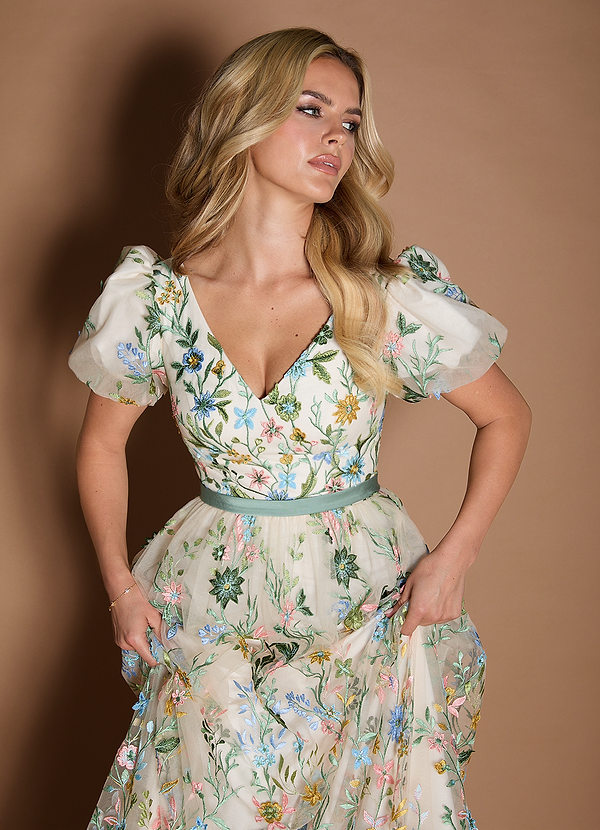
A V-neckline is the most reliable counterbalance to full sleeve coverage. It creates a vertical line from the face downward, drawing the eye along the center of the torso and opening up the décolletage. On a full-sleeve dress, this downward draw is specifically what prevents the upper body from reading as enclosed.
This is especially valuable for modest evening dresses with long sleeves — the V-neckline signals that the coverage is a deliberate design choice and not a structural limitation of the dress. The sleeve is intentional. The neckline confirms it.
Off-Shoulder Necklines — Contrast Coverage
Off-shoulder with long sleeves reads as unusual at first — the shoulder is exposed, but the arm is covered. In practice, it’s one of the most visually effective sleeved formal dress constructions because the exposed shoulder and décolletage create openness at face level that actively balances the covered arm.
I’ll be honest — I initially thought this combination would look contradictory. It doesn’t. The contrast between the open shoulder and the covered arm creates visual interest that reads as designed rather than covered.
High Necklines — Strict Requirements
A high neckline with long sleeves can look extraordinary — but it requires quality fabric, a clearly defined waist, and usually a minimalist silhouette. Without those three things, the high-neck-long-sleeve combination reads as uniformly covered rather than deliberately structured.
Sleeve Fit Details — The Specifics That Determine Polish in Motion
Sleeve Width at the Upper Arm
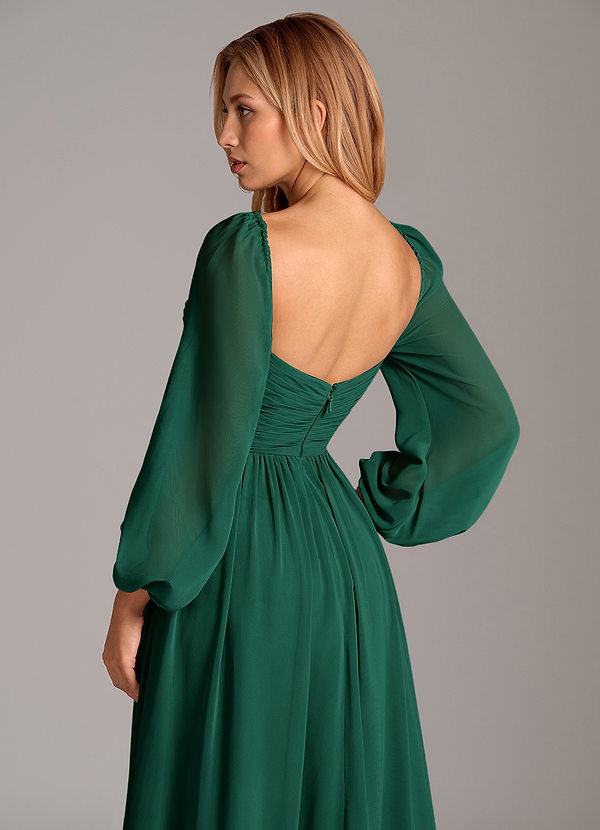
The sleeve should be smooth across the upper arm, with no excess fabric gathering anywhere. Excess fabric at the bicep creates bunching visible in photographs and an uncomfortable pulling sensation when the arm bends. Insufficient fabric pulls visibly when the arm moves.
The test for this: hold your arm out at a 90-degree angle, as if you’re about to shake someone’s hand. The sleeve should stay smooth. Any bunching or pulling at this angle means the sleeve width is wrong for your arm proportions.
Cuff Position and Finish
A long sleeve should end at the wrist bone — at the narrowest point of the wrist — not at the base of the hand and not at mid-forearm. This specific position frames the hand and creates a natural visual stopping point. A sleeve that ends too long needs to be constantly pushed up. One that ends too short creates a visual break at an unproportionate point.
Cuff finish matters more than most people realize. A clean hemmed cuff, a narrow lace edge, or a subtle button closure all create a visual ‘period’ at the wrist that signals the sleeve is intentionally finished. No cuff finish — just a raw or gathered edge — reads as unfinished regardless of how beautiful the dress is elsewhere.
Three-Quarter vs. Full Length — Which Actually Works Better
Three-quarter sleeves are — I want to say underrated? They solve several problems simultaneously. They avoid the wrist cuff issue entirely, they show the narrowest part of the forearm and wrist naturally, and they’re significantly easier to fit correctly than a full-length sleeve. For warm-weather formal events, three-quarter removes the heat burden of a covered wrist without the visual incompleteness of a cap sleeve.
Full-length sleeves are stronger for winter formal events, black-tie occasions where maximum coverage reads as appropriately formal, and styles where the cuff is a deliberate design element. Evening long sleeve dresses in lace or illusion mesh handle the full-length question best because the transparency of the fabric reduces the visual weight even when coverage is complete.
Five Specific Fit Checks for Evening Dresses with Sleeves
| 1 | Shoulder seam position. Arms relaxed at your sides: the seam should sit at the natural shoulder edge. Not down the arm. Not in toward the neck. Precisely at the shoulder edge. This is the single most important fit check for a sl,eeved dress and it takes app5mately five completeto evaluate. If it’s off, the entire sleeve fit is off. |
|---|
| 2 | Forward arm reach. Reach both arms forward. The back of the dress should stay in position. If the back lifts with your arms, the armhole is too small and the arm mobility will be compromised throughout the event. This is the event-duration test — you’re not just evaluating how the dress looks while you’re standing still. You’re evaluating how it behaves when you move. |
|---|
| 3 | Upper arm fabric check. Hold one arm at ninety degrees forward. Check for bunching at the bicep or pulling at the elbow. Smooth: the sleeve width is correct. Bunching: too much fabric. Pulling: too narrow. Either issue will be present throughout the event and will show in photographs. |
|---|
| 4 | Wrist position. Let your arm hang naturally. The sleeve cuff should rest at the wrist bone — not covering the hand, not stopping at mid-forearm. If the cuff rides up when you bend your arm, the sleeve is too short. If it covers your hand when relaxed, it’s too long and will need either alteration or constant management. |
|---|
| 5 | Neckline-sleeve visual balance. Step back from the mirror and look at the upper body as a whole. Is there a clear visual relationship between the neckline and the sleeve — the neckline creating openness that balances the sleeve coverage? Or does the upper body read as uniformly covered from neckline to wrist with no clear visual contrast? The second version needs either a more open neckline or a lighter sleeve treatment. |
|---|
Neckline × Sleeve Type — What Works and What Doesn’t
| Sleeve Type | Best Neckline Match | Avoid | Formality |
|---|---|---|---|
| Fitted opaque | V-neck or sweetheart | High closed neck | All formal |
| Illusion / mesh | Any neckline works | Nothing to avoid | All formal |
| Lace overlay | V-neck, off-shoulder | Heavy embellished neck | Romantic formal |
| Bishop/volume | Open V, off-shoulder | High or closed neck | Statement formal |
| Three-quarter | Most necklines work | Nothing to avoid | All levels |
Closing Thoughts
The shoulder, the armhole, the neckline balance, and the cuff finish — those four elements determine whether an evening dress with sleeves looks polished. Everything else is secondary.
The proportion between the sleeve and the neckline has the greatest visual impact. Which lines up with what I’ve observed: the clients who struggle with sleeved formal dresses aren’t choosing the wrong sleeve — they’re choosing the wrong neckline to go with it. Whether that’s a fixable problem with a different dress or something that requires alteration is the follow-up question.
Frequently Asked Questions
What’s the most important fit detail in evening dresses with sleeves?
The shoulder seam position. If the shoulder seam isn’t sitting at the exact natural shoulder edge, everything else about the sleeve fit is off — the armhole depth, the sleeve width, the cuff position. This is the fit check to do first, before evaluating anything else about a sleeved formal dress.
What neckline works best with long sleeves?
V-necklines are the most reliable. They create a vertical visual line from the face downward that counterbalances the visual weight of the covered arms. Off-shoulder necklines create a different kind of balance through contrast — exposed shoulder, covered arm. Both work. High, closed necklines require the most careful styling with a very clearly defined waist.
How do I tell if a sleeve fits correctly before buying?
Three tests: reach both arms forward and check if the dress back lifts (it shouldn’t). Hold one arm at ninety degrees and check the upper arm for bunching or pulling. Let your arm hang naturally and check where the cuff sits on the wrist. All three tests together tell you whether the sleeve is fitted for your arm proportions.
Are full-length or three-quarter sleeves better for formal events?
Depends on the event season and venue. Full-length sleeves in quality fabric read as more formal and work better for black-tie and winter events. Three-quarter sleeves are more practical for warmer events, easier to fit correctly, and create a natural visual stop at the forearm that’s inherently flattering. Neither is objectively better — the context determines which is right.
Do plus-size sleeved evening dresses require different armhole construction?
Yes. Plus size evening dresses with sleeves require armhole construction that’s scaled for plus-size arm and shoulder proportions — not just circumference measurements scaled up from a standard size. When the armhole is graded up without adjusting its depth and placement, the sleeve restricts arm movement and creates back drag lines even when the rest of the dress fits. This is why plus-size-specific sizing for sleeved formal gowns produces meaningfully better results than standard sizing in a large size.
What’s the most common mistake in sleeved evening dress styling?
Over-accessorizing at the wrist or arm when the sleeve is already detailed. If the sleeve has lace, beading, or any embellishment at the cuff, adding a bracelet creates visual clutter right at the point where the eye naturally assessto evaluate the sleeve’s finish. Let the cuff finish be the statement if it’s a designed element. If the sleeve is plain, a simple ring or bracelet can add a finishing touch without competing.