
What to Know Before Choosing Red Evening Dresses for Low Light and Photos
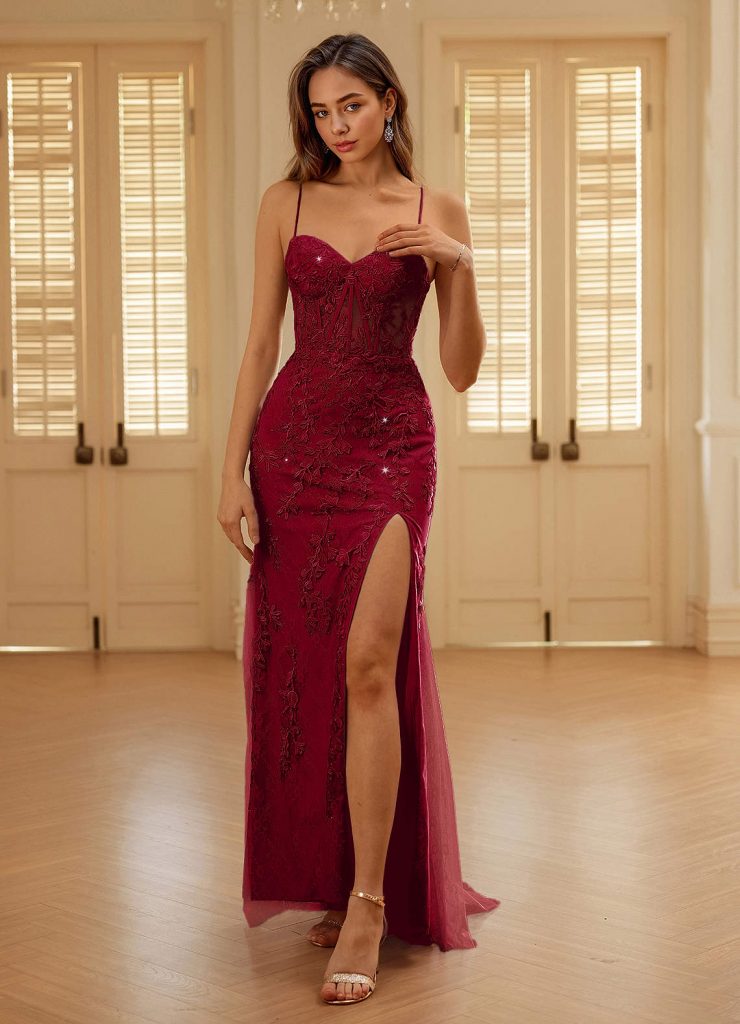
Not all red evening dresses photograph the same. That sentence sounds simple, but it has real consequences — and a colleague of mine discovered this in the worst way possible at a December gala in Boston.
She chose a deep burgundy dress because it looked extraordinary in the boutique and in person at the event. Every photo from that night showed a woman in a near-black dress. The color had effectively disappeared in the venue’s low lighting and under the camera flash.
The shade was beautiful. The setting ate it. Red has a specific relationship with light that other formal colors don’t — because the human eye and camera sensors process it differently. Understanding that relationship before you buy is the whole point of this article.
| The key decisions, fast: for low-light venues, choose true red or scarlet with a cool blue undertone — not burgundy or wine. For flash photography, avoid the very brightest reds, which can overexpose (go hot pink). For skin tone harmony, warm reds work for olive and darker complexions; cooler reds work for fair and cool-toned skin. |
|---|
The Shade Decision — This Is Where Most People Get It Wrong
The Three Distinct Red Categories
There are — I want to say three? Yeah, three categories of red that behave completely differently at formal events. Bright red (scarlet, cherry, true red). Deep red (burgundy, wine, maroon). Warm red (coral red, tomato, orange-red).
Bright reds perform best in photos. They have enough saturation to survive flash photography without overexposing and enough presence to show up in dimly lit rooms. They’re the most photogenic category of the three, hands down.
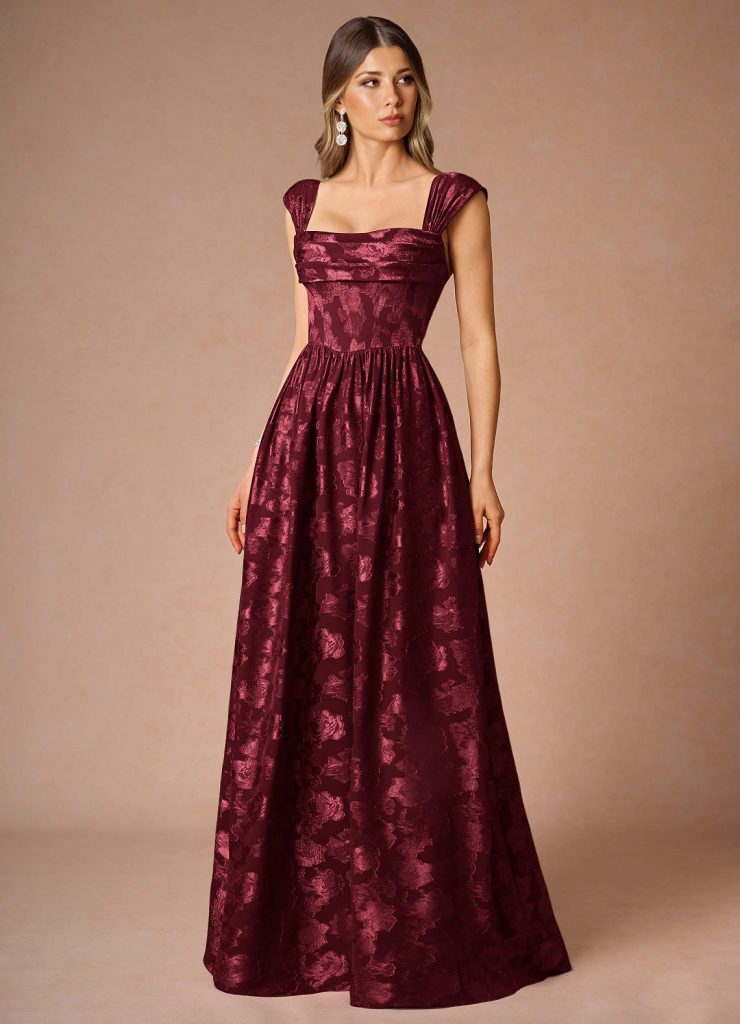
Deep reds are the elegance trap. Burgundy and wine look phenomenal on a hanger and outstanding in person at a well-lit boutique. Under amber ballroom lighting or in a low-light photography setting, they can appear near-black or a muddied brown tone. My colleague’s problem, exactly.
The Photography Science Part — Worth Knowing
Red is the ‘R’ channel in RGB photography. Cameras are specifically tuned to render red with high sensitivity. Very bright reds in direct flash can overexpose in the red channel — they clip to hot pink rather than staying red. This is why some red evening dresses that look vivid and saturated in person come out looking pink or pale in photos. This isn’t a photography failure — it’s camera physics.
Wikipedia’s entry on the red dress effect covers the psychological aspect: red clothing creates a measurable attention response in observers. But it only produces that response when the red appears red, not pink, brown, or near-black. Shade selection is the reason that the psychological effect either works or doesn’t.
| Red Category | In Person | Low-Light Photos | Flash Photos |
|---|---|---|---|
| True red / scarlet | Vibrant, vivid | •••••• — holds color | •••••★ — occasional pink risk |
| Cherry / cool red | Crisp, bold | ★★★★★ — excellent | ★★★★★ — most photogenic |
| Burgundy/wine | Rich, elegant | ★★ — goes near-black | ★★★ — muddied depth |
| Warm/orange red | Warm, energetic | ★★★ — depends on venue | ★★ — can read orange |
| Maroon / dark wine | Luxurious | ★ — often reads black | ★★ — muddy in flash |
Fabric — What Red Does Under Different Materials

Satin in Red — The Reliable Performer
Quality red satin catches ambient light from multiple angles and reflects it as a warm, saturated color. Under venue lighting, a red satin gown creates shifting highlights that follow the wearer, visible depth that reads clearly in photos and in person.
The concern with very bright red satin is the risk of flash overexposure. A cool-toned crimson in satin is the combination that performs most consistently — enough brightness to stay red under ambient light, enough cool undertone to prevent the pink-clip problem in flash photography.
Velvet in Red — Extraordinary in Person, Risky in Photos
This one genuinely surprised me. Red velvet in person — particularly in a deep, rich scarlet — has a visual complexity in which the pile casts shadows at different angles, giving the color a sense of three-dimensional depth. It’s extraordinary.
In photos, that same depth can read as darkness rather than richness. Velvet absorbs more light than it reflects, so in low-light photography it can appear opaque and shadowed rather than luminous. If you love velvet for red — and I understand why — choose the brightest red the fabric comes in rather than a deeper tone, and plan on professional lighting for any formal photos.
Chiffon and Sequins — the Two Opposite Solutions
Chiffon in red is forgiving. It diffuses light softly, so even in dim conditions it retains color rather than absorbing it. The downside is that it can read as slightly lighter or less saturated than the dress actually is, which is the opposite of the problem with velvet.
Sequins on a red gown are the nuclear option. Under any lighting condition, in any venue, with any flash, sequined red holds its color completely because the sequins actively reflect every light source in the room. If photographing well is your primary concern, a sequined or embellished red is the most reliable answer. I’ll be honest: it’s not always the most elegant answer, but it’s the most photogenic one.
| The fabric trap: very matte fabrics in deep red (like matte crepe in wine or burgundy) are the most likely to photograph as black in low-light settings. If you love matte fabric and deep red, test a photo in a dimly lit room before the event. What you see on the camera preview is what the venue photographer will capture. |
|---|
Skin Undertone and the Red — Often Overlooked, Always Visible
Cool Skin Undertone — Blue-Based Reds
Cool undertones (pink, blue, or purple base notes in the skin) read best against cool reds — crimson, cherry, and certain scarlet tones. These reds create a clean contrast without the skin appearing too yellow or washed out. Evening dresses, floor-length in a cool-toned crimson against a cool complexion, are among the strongest formal looks available — the contrast is clean and photographs with precision.
Warm Skin Undertone — Warm Reds
Warm undertones (yellow, peach, or golden base in the skin) absorb warmth from warm reds — tomato, coral-red, and orange-red tones — creating a harmonious glow rather than contrast. Burgundy also works well here because its depth doesn’t compete with warm undertones.
Neutral undertones are the lucky ones. They can wear most reds well, which is why the advice ‘just try reds on and see’ is actually reasonable for neutral complexions but not particularly helpful for everyone else.
A Note on Deep and Dark Complexions
Vibrant, saturated reds photograph with extraordinary visual power against deep and dark skin tones. The contrast creates genuinely striking images — the color reads as more saturated against the darker background. This is where true red and cherry red are at their absolute strongest as choices.
I’d specifically recommend against deep burgundy or wine for darker complexions in low-light settings — the color difference is less visible against dark skin in dim conditions, and the shade is the entire point of the choice.
Four Tests Before You Commit to Red for a Formal Event
| 1 | The lamp test — not daylight, not a boutique. Take the dress home (or request additional photos if buying online) and photograph it under a lamp that approximates warm indoor lighting—the kind with an amber or warm white bulb. Take a photo with your phone without portrait mode. If the red holds its color under that warm light — you’re fine. If it turns brown or dark, the venue will do the same. Burgundy and wine regularly fail this test. True red and cherry consistently pass it. |
|---|
| 2 | Test with your skin in natural light. After the lamp test, take a photo in daylight — the dress against your arm or neck. Does the red create a clear, clean contrast with your complexion? Or does it blend or read as muddy? If you have warm undertones and you’re testing a cool red, this photo will tell you if the contrast is working or competing. You’re looking for the dress to stand out from your skin, and for the combination to read as intentional rather than accidental. |
|---|
| 3 | Ask what lighting the venue uses. This sounds like an unusual step, but it takes just one phone call and is worth doing. Warm amber lighting — which is common in most hotel ballrooms and formal gala spaces — interacts very differently with deep reds than neutral or cool venue lighting does. If the venue is using warm golden lighting, lean toward a brighter, cooler red. If the venue has neutral or cool lighting, warm and deep reds work better. Photographers work with venue lighting at every event, and the information is usually available. |
|---|
| 4 | Settle on a single accessory direction before the dress. Gold accessories warm any red. Silver cools it. Nude creates a monochromatic tone-on-tone that reads as fashion-forward and very strong against red. Black accessories can compete with red rather than complement it — black draws away from red rather than framing it. Decide the accessory direction before you’re standing in the boutique, because the boutique’s lighting will make every accessory combination look correct, which won’t help you decide anything. |
|---|
Styling and Accessory Choices for Red Evening Dresses

Silhouettes That Photograph Best in Red
Structured silhouettes — mermaid, A-line, column — create shadow lines that add visual depth to solid red. A mermaid evening dress in red creates those hip and waist definition lines that give the camera something to grip beyond the color itself. Fabric folds and structural lines create shadow gradients that read as dimensional in photos. A completely flat, smooth, unstructured red does not.
Accessories — What Works and What Competes
Gold warms red. Evening dresses paired with gold-adjacent accessories and a red gown create a warm, cohesive impression that photographs well under amber lighting. Silver evening dress-toned accessories cool a warm red and sharpen the contrast — better for cool-toned reds in cool-lit venues.
Nude accessories are underrated for red. The tone-on-tone creates an extended silhouette that makes the red look more intentional, not less. Nude heel against red gown photographs as a single clean column of warm color from floor to neck.
What I’d avoid: bold jewel-tone accessories competing for attention alongside red. An emerald clutch with a red gown sounds striking on paper — but in a photo, you end up with two competing color statements instead of one clear visual focal point. The red needs to own the look. One accessory at a time.
Sleeve Options — When Coverage Helps
A longer sleeve on a red gown has a specific advantage: it extends the red color surface. More red visible means more of the shade is doing the photographic work. Evening long-sleeve dresses in red photograph with greater visual impact than sleeveless versions, because the color extends through the arm into the photo frame rather than cutting off at the shoulder.
Sheer or illusion sleeves in the same red tone are the best of both worlds — coverage that matches the dress color, fabric movement, and a full red silhouette in every shot.
Petite and Plus-Size Considerations for Red Evening Gowns
Plus Size in Red
Red is one of the most commanding color choices for plus-size formal wear. Plus size evening dresses in true red or scarlet create a single, unified visual impact that reads as strong and intentional across all frame sizes. The same low-light and fabric advice applies — satin and structured fabrics in bright, cool reds perform best. Empire and A-line silhouettes in red are particularly strong, with the vertical line from waist to hem creating clean proportional clarity.
Petite in Red
Red in a floor-length silhouette on a petite frame photographs with more presence than the same shade in a shorter dress. The length of the red column creates an elongated visual impression that shorter hems interrupt. If you’re petite and want red, go floor-length, choose a silhouette with vertical lines of detail, and let the color do the visual work of presence.
Closing Thoughts
True red or cherry with a cool undertone. Satin or structured fabric. One strong accessory in gold or nude. Floor-length silhouette with defined waist lines.
Those four decisions, made before you walk into a boutique, will get you most of the way there. Azazie’s red evening dresses collection spans sizes 0–30 with made-to-order and custom sizing, which matters for a fitted silhouette where the waist definition and floor hemline are carrying the photographic work. Whether the specific shade within those options photographs the way you need it to is still your call. Do the lamp test before the event.
Frequently Asked Questions
Why does my red dress look black in photos?
Deep reds — burgundy, maroon, wine — absorb more light than they reflect, and under low-light conditions or in dim photography settings, they can appear nearly black. It’s not a camera malfunction. The shade genuinely reads that way under those conditions. The solution is choosing a brighter, more saturated red rather than a deep wine tone.
What’s the red dress effect?
It’s a documented psychological phenomenon — research shows that women in red clothing are perceived as more confident and attractive by observers. Wikipedia’s Red Dress Effect entry covers the academic research. The practical implication: red works psychologically at formal events, but only when the shade reads as clearly red. Deep burgundy doesn’t trigger the same effect because it doesn’t read as red to the same degree.
What accessories pair best?
Gold for most settings — it warms any red and photographs well under amber venue lighting. Silver for a cooler, sharper look under neutral or cool lighting. Nude is a tone-on-tone approach that extends the silhouette. Avoid competing jewel-tone accessories that divide the visual focal point.
What fabrics are most photogenic in red?
Satin and beaded/sequined fabrics perform best — they actively reflect ambient light and maintain color saturation. Velvet is extraordinary in person but can go dark and shadowed in low-light photos unless the shade is very bright. Matte chiffon in deep red is the riskiest for photography.
Can I wear red to a wedding?
It depends on the context and the couple. Red is increasingly common among guests at formal evening weddings. In some cultural contexts, it’s a celebration color. In others — particularly white-tie or conservative religious ceremonies — it can read as attention-seeking. Check the dress code and venue culture. When in doubt, reach out to the couple. A darker, deeper red reads more subdued than a bright scarlet.
What silhouettes work best in red?
Structured silhouettes with defined waist and shadow lines — mermaid, A-line, column. A mermaid evening dress in red creates natural visual depth through the hip and waist definition. Avoid very full ball gowns in red — the volume creates a lot of the same color in the frame, which can read as overwhelming rather than elegant.
Does the venue lighting actually matter that much?
Yes. More than most people expect. Warm amber ballroom lighting is where deep reds disappear, and true reds glow. Cool venue lighting makes warm orange-reds look flat and makes cool reds look crisper. One phone call to the venue asking about their lighting setup — or asking the event coordinator — gives you information that’s genuinely worth having.
Is red appropriate for a black-tie event?
Completely. Red is one of the most traditional formal evening colors. Azazie’s guide on elegant red evening dresses covers the styling specifics. Floor-length in quality satin or structured crepe, with minimal accessories and appropriate shade selection, is as correct for black-tie as any other formal color.