
What Shoes, Jewelry, and Fabrics Pair Best with Yellow Formal Dresses for a Clean, Formal Look
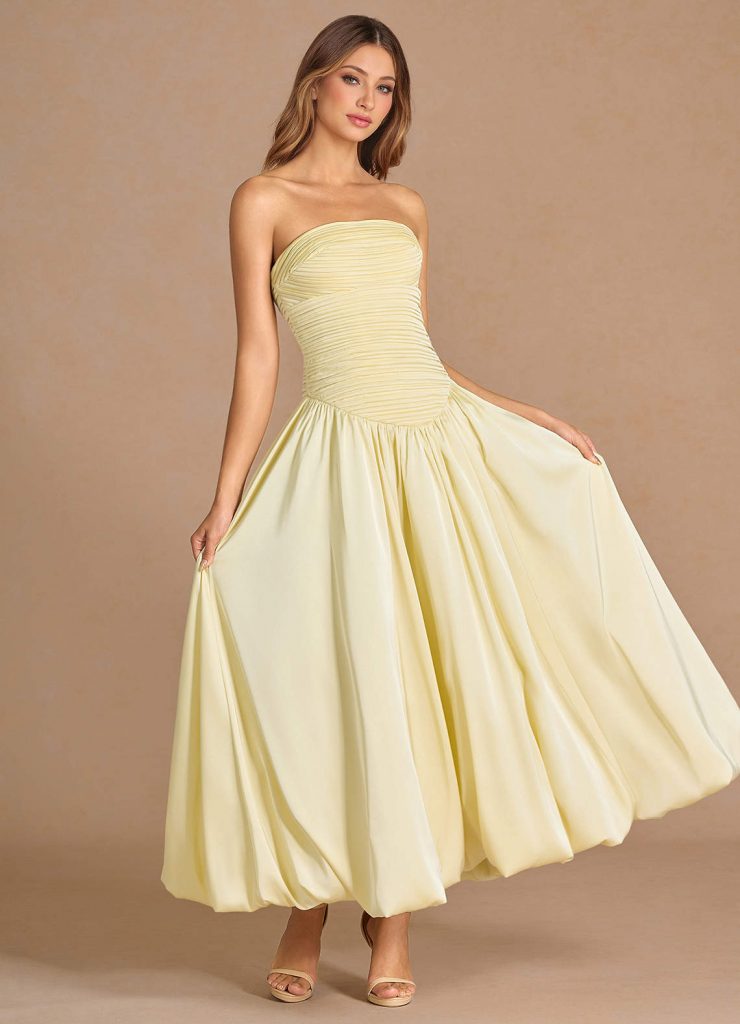
Gold shoes. That’s where most yellow formal dress questions end up, and it’s the right instinct. But getting yellow to look genuinely formal — not just cheerful — involves the fabric, the specific shade against your complexion, and accessories that know when to step back.
Yellow tends to get oversimplified in styling advice. This cuts through the parts that actually matter.
| QUICK TIP: Butter yellow first. If you’re new to wearing yellow at formal events, this is the shade with the least risk and the most upside — it’s the only yellow that flatters most complexions without any adjustment. |
|---|
Yellow Shades — Not One Color, But a Whole Spectrum
Lemon yellow and mustard yellow are technically the same color name. In practice t, they photograph differently, work with different skin tones, and belong to different event types. Treating them as interchangeable is where most yellow dress styling mistakes come from.
Warm yellows carry orange in their base — mustard, golden, honey, marigold. Cool yellows, lean green — lemon, canary, citron. Butter yellow sits in neither camp, which is exactly why it’s the most reliably flattering shade across different complexions.
| ☀ BUTTER Tone: Balanced — neither warm nor cool Best for: Genuinely most skin tones Events: Any season, any formality Pair with: Gold or silver — both work |
◆ LEMON Tone: Cool — slight green lean Best for: Medium to deep complexions Events: Summer, outdoor, warm venues Pair with: Silver jewelry + nude heels |
▲ MUSTARD Tone: Warm — deep orange base Best for: Warm and olive skin tones Events: Fall and winter formals Pair with: Gold + dark or nude heels |
■ GOLDEN Tone: Rich amber — warmest option Best for: Deep and warm complexions Events: Evening galas, black-tie Pair with: Gold jewelry + gold or nude heels |
|---|
Fabrics for Yellow Formal Dresses
Yellow makes low-quality fabric obvious in a way that dark colors mask. The slightly sheer, slightly plastic look that you might barely notice in black becomes visible in yellow. The fabric here is doing half the styling work.
Satin and Silk — The Evening Standard
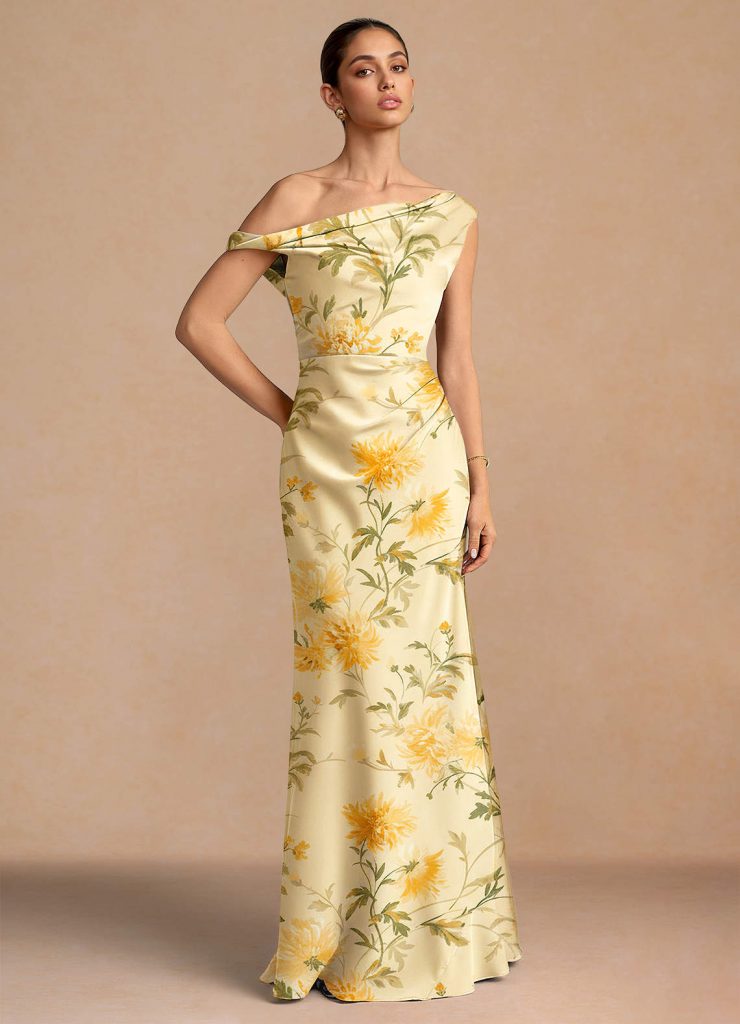
A satin formal dress in yellow has a liquid warmth to it — the surface sheen adds depth to the color rather than flattening it. Satin fabric overview confirms what you see in person: the smooth, reflective finish creates highlights and shadows as you move, which is what makes floor-length yellow satin gowns photograph so well at evening events. For galas and black-tie affairs, this is the fabric that does the most work.
Chiffon — The Daytime and Outdoor Option
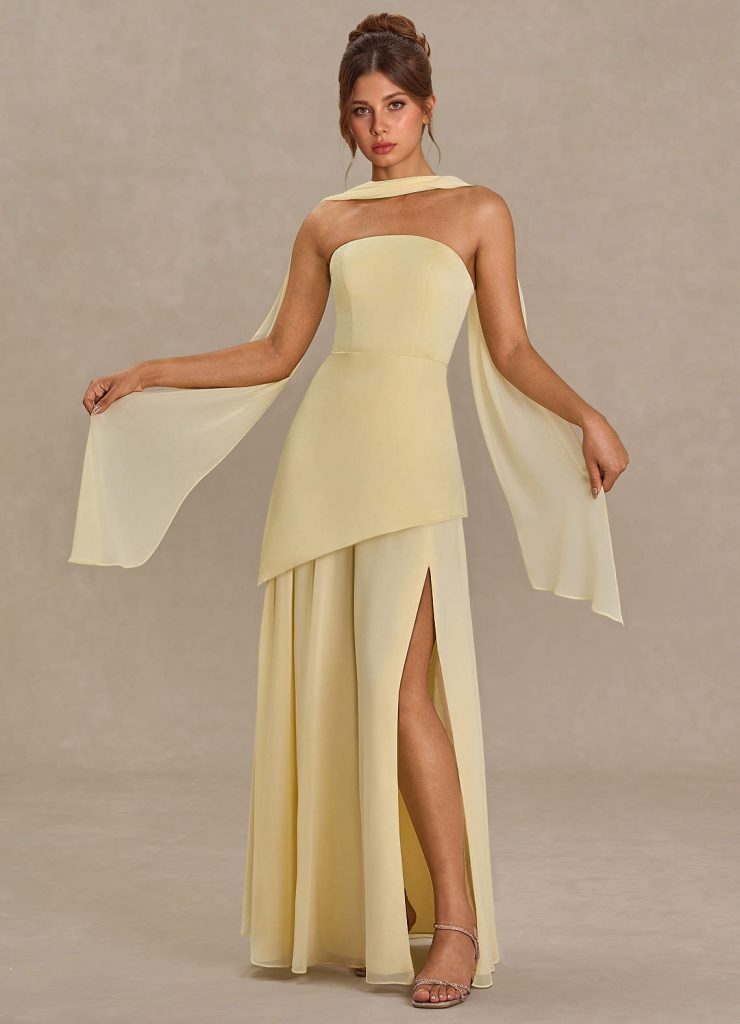
Chiffon does the opposite thing to yellow — it diffuses the color rather than amplifying it. Chiffon fabric characteristics include a soft drape and slight translucency, which soften bright shades and make it well-suited for daytime events and outdoor settings. For long formal dresses at garden weddings or summer receptions, yellow chiffon is the cleaner choice — the color reads as luminous rather than intense.
Velvet and Crepe — Fall and Winter Weight
Mustard yellow in velvet formal dresses is a specific combination worth knowing about for fall formal dresses and colder events. Velvet absorbs light rather than reflecting it, so the color reads as richer and deeper — more amber than yellow. Crepe gives the same structured quality in a lighter weight: matte, architectural, no shine.
Velvet and crepe consistently perform well for formal winter events because their fabric weight conveys occasion-appropriate elegance in a way lighter materials can’t.
| Fabric | Best Event Context | What It Does to Yellow | Season |
|---|---|---|---|
| Satin / Silk | Evening galas, black-tie | Adds depth and liquid warmth | Year-round |
| Chiffon | Outdoor, daytime, warm-weather | Diffuses and softens brightness | Spring, summer |
| Velvet | Winter and fall formal events | Absorbs light — richer, deeper color | Fall, winter |
| Crepe | Any formal, minimalist styles | Matte, structured, clean silhouette | Any season |
Shoes for Yellow Formal Dresses
Gold heels pair well with yellow because they’re warm. It’s essentially a monochromatic move — different shades of the same color family, which creates cohesion rather than contrast. Most formal yellow-dress situations are solved with gold heels.
Nude heels are the elongating alternative. They disappear against the leg, keep the dress as the visual center, and work particularly well with midi lengths, where the hemline is where the eye lands anyway.
Black heels: fine for deep mustard or golden yellow, where the contrast feels deliberate. White or ivory shoes: skip entirely — they compete with yellow rather than anchor it.
| Shoe | When It Works | Best Yellow Shade Match |
|---|---|---|
| Gold metallic heels | Evening events, galas — the default choice | All yellows, especially mustard and golden |
| Nude / skin-tone heels | Elongating — keeps the dress as the focal point | Butter and lemon — keeps the look airy |
| Silver metallic heels | Modern contrast for cooler shades | Lemon, canary, pastel yellow |
| Black heels | High-contrast — needs confidence | Deep mustard and golden yellow only |
| White / ivory | Avoid this combination | Competes with yellow rather than complements |
Jewelry for Yellow Formal Dresses
Warm yellow (mustard, honey, golden): gold jewelry. Cool yellow (lemon, canary, pastel): silver. Butter yellow: either, genuinely. That’s the whole framework.
Ears or neck. Not both. Yellow is already the loudest thing in the look — the jewelry punctuates it, doesn’t amplify it.
| Metal / Stone | Best Shade Match | Effect |
|---|---|---|
| Gold | Mustard, golden, honey, butter | Warm + warm — cohesive, sun-drenched |
| Silver / Platinum | Lemon, canary, pale yellow | Clean contrast — fresh and modern |
| Pearls | Butter, soft tones | Matte softness — works across all yellows |
| Crystal / Diamond | Any shade | Neutral sparkle — doesn’t compete |
| Citrine / Topaz | Deep golden, mustard | Tonal — warm layered palette |
Styling Yellow by Event — The Shade Shifts With the Context
Deep mustard at a November black-tie reads formal and considered. Bright lemon at the same event can look underdressed, even though it’s in the same color family. Yellow calibrates to the event context more than most formal colors do — the shade decision isn’t just about skin tone.
| Event | Best Shade | Fabric | Accessory Note |
|---|---|---|---|
| Wedding — daytime | Butter or honey | Chiffon or lace | Minimal — subtle gold |
| Wedding — evening | Soft gold or deep butter | Satin or crepe | Restrained. Don’t upstage. |
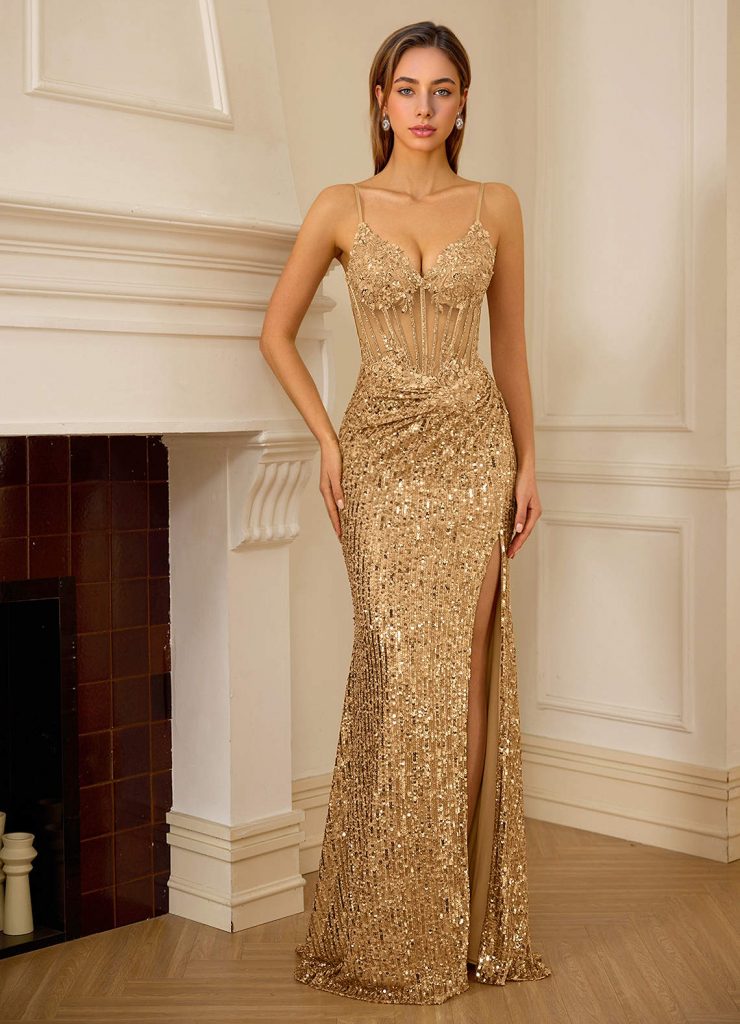
| Gala / Black-tie | Golden or canary | Satin, sequin | Crystal earrings + gold heels |
| Semi-formal party | Any yellow | Crepe or soft satin | Gold hoops — easy |
| Winter formal | Mustard or deep golden | Velvet or heavy crepe | Deep gold, dark heels |
Yellow as a Wedding Guest Color
Yellow is actually a strong wedding guest color — it reads as celebratory without competing with white or ivory the way some colors do. For a formal dress forwedding-guest dressw, the softeades (butter, honey) are safer than lemon or canary. Avoid anything pale enough to be confused with near-white. According to Vogue’s formal attire guide, polished midi or floor-length is expected at formal weddings, butter-yellow handles that are without any issueany issues at Galas and Black-Tie Events.
A floor-length golden-yellow satin gown under ballroom lighting is photographically compelling in a way that black simply isn’t. Long formal dresses in this context, with crystal earrings and gold heels, is the combination. Keep the rest minimal — the dress is already doing everything.
Yellow at Daytime Formal Events
Midi formal dresses in butter yellow with minimal gold jewelry and nude heels are the cleanest daytime formula. Chiffon or soft crepe for fabric. Natural makeup — no heavy eye, nothing that adds visual weight. The look should read fresh and unhurried.
What Goes Wrong — Specific Mistakes Worth Knowing
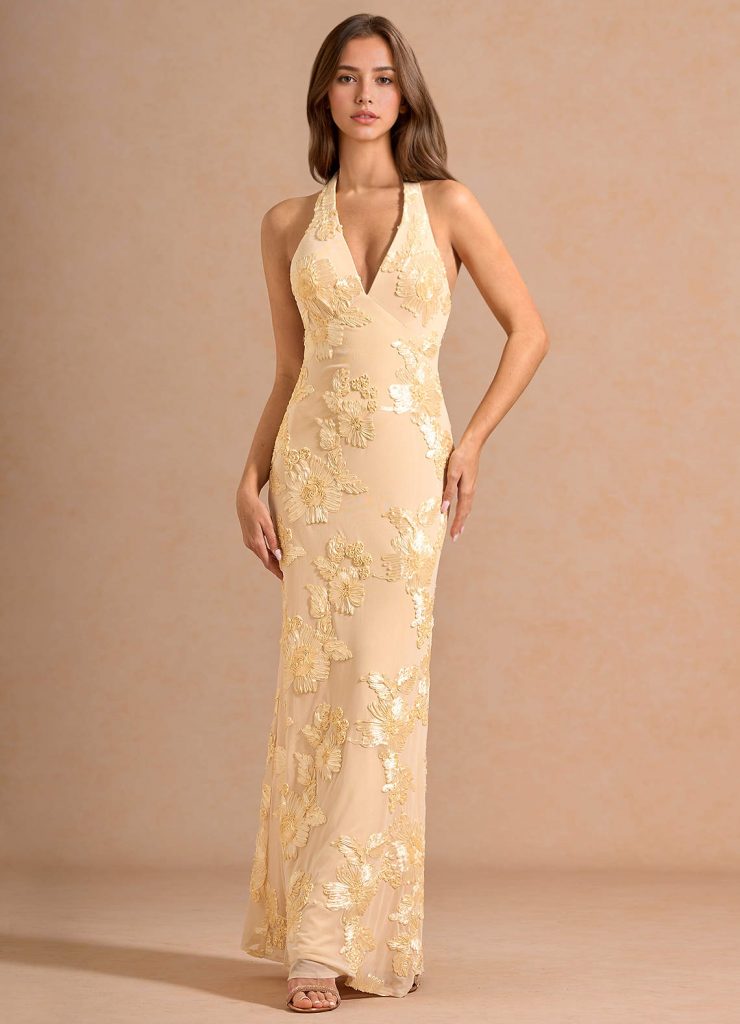
Yellow is already working hard as a color. Adding too much to it doesn’t help the look — it competes with it.
| ✓ DO | ✗ AVOID |
|---|---|
| Match metal tone to shade undertone (warm = gold, cool = silver) | Gold AND silver together — doesn’t resolve, just adds noise |
| One jewelry focal area — ears or neck, not both | White or ivory shoes with yellow — competes, reads accidental |
| Test the shade near your face in daylight before buying | Heavy dark makeup with bright yellow — harsh contrast under lighting |
| Fabric weight should match the event’s formality level | Over-accessorizing — yellow doesn’t need extra layers of attention |
| Tailor the dress — yellow finds every imprecise fit | Choosing a shade based on personal preference, not skin undertone |
| A well-fitted yellow dress will outperform a better-quality yellow dress that doesn’t sit right. Yellow finds imprecise fits — the fabric pulls, the waistline shifts — in a way navy or black masks. Budget for the alteration. |
|---|
Hair and Makeup for Yellow Formal Dresses
Yellow sits warm on the color wheel. The makeup needs to match that warmth or deliberately contrast it — going in a third direction creates low-level visual friction that shows in photos, even when it’s hard to identify.
| 1 | Warm dress = warm makeup. This is the rule with the most impact. Deep butter or golden yellow with a cool-toned lip creates dissonance consistent across phdissonance otos. Match the warmth level — peachy or warm-coral lip, bronze-toned or neutral eye. The makeup and dress should feel like they came from the same palette. |
|---|
| 2 | For cool yellows, lean cooler toward the matones keup or go fu, fully neutral. Lemon and canary lean green-cool. A soft pink or mauve lip creates better visual harmony than a warm peach. Alternatively, a nude lip with no heavy eye keeps everything out of the way and lets the dress carry the color. What doesn’t work: accidentally going warm in both the dress and the makeup. |
|---|
| 3 | Hair up with yellow photographs is noticeably cleaner than hair down. When the hair is up, the color gets unobstructed visual focus — especially at the neckline. One-shoulder, backless, sweetheart, or halter necklines particularly benefit from an updo. The neckline detail is full. The color reads richer. This isn’t a hard rule, but three times out of four, up is the better call. |
|---|
| 4 | Luminous base — not a matter. Yellow reflects warmth onto the face. A radiant foundation base works with that reflection; a flat matte finish works against it under event lighting. Subtle luminosity at the cheekbones and brow bone — not shimmer, just not flat — is the right call. Small detail, visible difference in photos. |
|---|
Conclusion
Shade, fabric, shoes, jewelry. Those four decisions determine whether yellow formal dresses look intentional or accidental. The shade needs to match your skin tone’s undertone direction. The fabric needs to communicate the event’s formality. Shoes should complement rather than compete. Jewelry picks one area to speak and stays quiet everywhere else.
Azazie carries a wide selection of formal dresses in sizes 0–30, with made-to-order options and custom sizing available. The yellow formal dress range spans pale butter to deep golden amber — worth exploring if yellow is confirmed as the direction and you need to find the version of it that’s right for you.
Frequently Asked Questions
What shade of yellow works best for my skin tone?
Fair and cool skin: lemon or bright canary — the cool undertone provides clean contrast without washing out. Medium and olive tones: golden, honey, or mustard — the orange-warmth is complementary. Deep skin tones: almost any shade, but vibrant canary and deep golden-amber photograph particularly well. Butter yellow is the safest starting point across all complexions — it doesn’t commit strongly to either warm or cool, which is its main advantage.
Can I wear yellow to a formal wedding as a guest?
Yes. Softer shades — butter, honey, soft gold — are safer than bright lemon or canary at most ceremonies. The one thing to avoid: any yellow pale enough to read near-white. A floor-length or midi yellow dress in chiffon with pleated gold accessories is a polished, genuinely appropriate wedding guest dress
Gold or silver jewelry with a yellow dress?
Warm yellows (mustard, golden, honey) go with gold. Cool yellows (lemon, canary, pastel) work better with silver. Butter yellow is flexible enough for either. Pearls and crystal work across the entire yellow family without requiring an undertone decision. Pick one metal and use it consistently — mixing both reads cluttered.
What shoes go best with a yellow formal dress?
Gold metallic heels for most situations — the shared warmth creates cohesion. Nude heels when you want the dress to dominate and the leg line uninterrupted. Black heels for deep mustard or golden yellow, where the contrast feels deliberate. White shoes: skip — they compete rather than complement.
What fabrics make yellow look most formal?
Satin and silk add depth and dimension — the color looks richer, not flat. Chiffon works for daytime and outdoor events where a softer, diffused look is appropriate. Velvet in deep mustard is particularly strong for fall and winter events. Crepe offers a matte, structured alternative for clean, minimalist silhouettes year-round.
Are yellow formal dresses appropriate year-round?
Yes. Lemon and light butter in chiffon for spring and summer. Deeper butter or soft gold in satin for year-round. Mustard and deep golden in velvet or structured satin for fall and winter. The shade and fabric carry the seasonal signal — yellow as a color works in every season with the right execution.
How do I avoid over-accessorizing a yellow dress?
One focal area — ears or neck, not both. Match metal to shade undertone. Small metallic clutch and clean heels complete the look without adding noise. Yellow is already the most attention-demanding element in the look — accessories should support it, not add to the visual competition.