
Types of Graduation Dresses: Choosing the Right Style for Ceremony, Photos, and Comfort
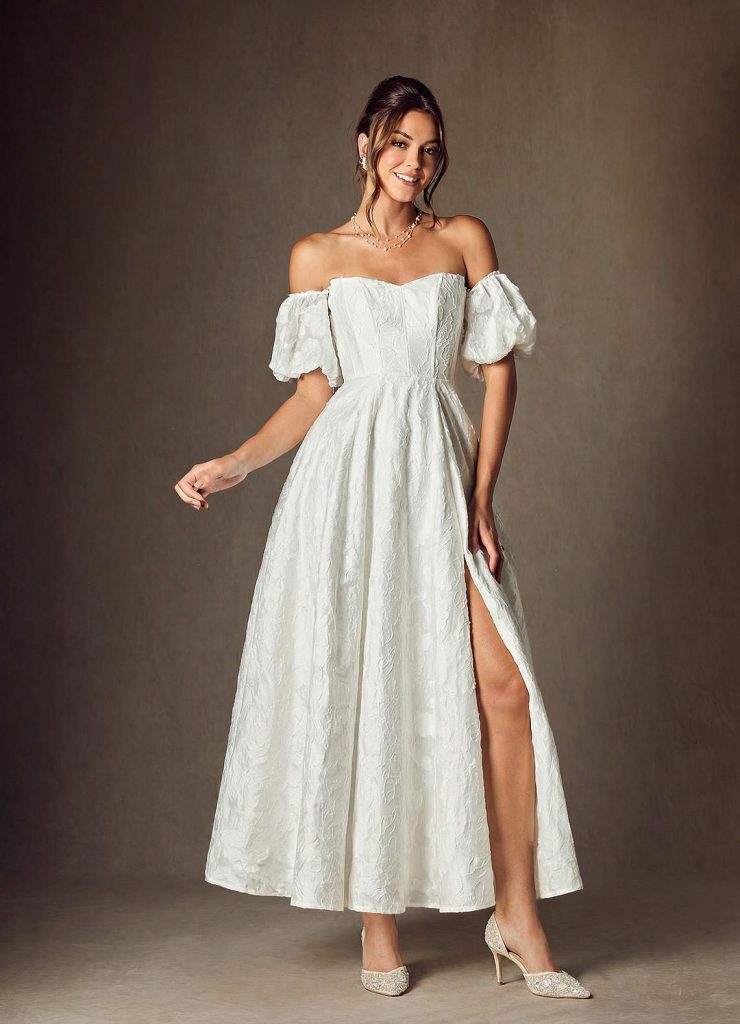
There’s no single right answer when it comes to graduation dress styles. That’s actually kind of freeing — it means you have options, and the right one depends on what your specific ceremony is like, what the photos need to look like, and how long you’re going to be in this thing. Because graduation is long. Six or seven hours isn’t unusual once you factor in everything.
Here’s what matters: the silhouette has to sit flat under a graduation gown, the fabric has to breathe under two layers, and the length has to work with the gown hem rather than creating some weird accidental layering moment. White or cream handles the photography requirements in every scenario without any coordination. Within those guidelines, you’ve got actual choices.
Browse types of graduation dresses — 100+ styles from mini through maxi across every silhouette type in white, cream, and soft neutrals.
What Kind of Dresses Are Worn for Graduation?
More variety than you’d expect. The types of dresses for graduation span everything from very simple white sheaths to lace midis to cute mini styles — and they’re all appropriate as long as they handle the practical requirements of the day. Here’s the full breakdown by type.
| 1 | A-Line Best for: Every ceremony type, every body type |
Fitted at the waist, gentle flare at the hem — most universally flattering Sits flat under the graduation gown without adding shoulder bulk Holds visible shape at wide-angle ceremony distance Photographs from every angle, including group shots and close-ups A-line white graduation dresses: the most consistently photographed graduation style |
|---|
| 2 | Sheath / Fitted Best for: College commencements, polished portrait sessions |
Closest to body — gown drapes naturally without being pushed out Sharpest look in close-up cap-and-gown portraits Needs some stretch in the fabric for extended ceremony sitting Most modern silhouettes once the gown comes off White strapless graduation dresses in sheath style photograph very cleanly |
|---|
| 3 | Lace Best for: Any ceremony — the full-day fabric |
Lightweight, breathable — holds shape without wrinkling after hours of wear Adds texture depth that registers in photos at every camera distance Proper lining is non-negotiable — stage lighting reveals unlined lace Elegant without being heavy or overdressed Lace graduation dresses work in a ceremony context and transition naturally to dinner |
|---|
| 4 | Mini Best for: High school graduation, warm venues, party-first |
Stays completely hidden under the graduation gown — cleanest stage silhouette Great surprise reveal once the robe comes off after the ceremony Party-ready without any styling change Most popular type for high school ceremonies and warm venue settings White mini dresses for graduation: among the most searched graduation styles |
|---|
| 5 | Midi Best for: College ceremonies, all-day wear, transitions to dinner |
Most consistently recommended type across all graduation settings Visible at the gown hem — looks intentional rather than invisible Works ceremony → photos → dinner without a change Balances formality and comfort better than any other single type White midi graduation dresses: the most versatile graduation dress purchase |
|---|
| 6 | Floor-Length Best for: Formal university commencements, evening events |
Elegant for formal university or doctoral ceremonies Photographs are taken dramatically in outdoor campus portrait sessions after the ceremony Must be slim silhouette under gown — avoid voluminous maxi styles Test on actual stairs with ceremony shoes before the day Graduation long white dresses: best for post-ceremony outdoor portraits |
|---|
| 7 | Modest / Long-Sleeve Best for: Conservative settings, personal coverage preference |
More coverage — higher necklines, longer sleeves Very clean portrait neckline — no competition with graduation cap in close-ups Practical for longer ceremonies in any temperature setting Modest graduation dresses are popular for family-focused ceremonies |
|---|
Types of Graduation Dresses by Length
Length is the most practical type distinction at graduation. The choice directly affects how the dress interacts with the gown hem in stage photos, whether stairs are a tripping hazard, and what the overall look feels like once the robe comes off.
| Length | Ceremony Performance | Best For | |
|---|---|---|---|
| MINI | Short / knee | Hidden inside the gown — cleanest stage look | High school, warm venues, party priority |
| MIDI ⭐ |
Mid-calf | Visible at gown hem — intentional, polished | College commencements, all-day wear, dinner after |
| MAXI | Floor-length | Dramatic — slim silhouette only, test on stairs | Formal university commencements, evening events |
How Each Type Photographs — What the Camera Actually Sees
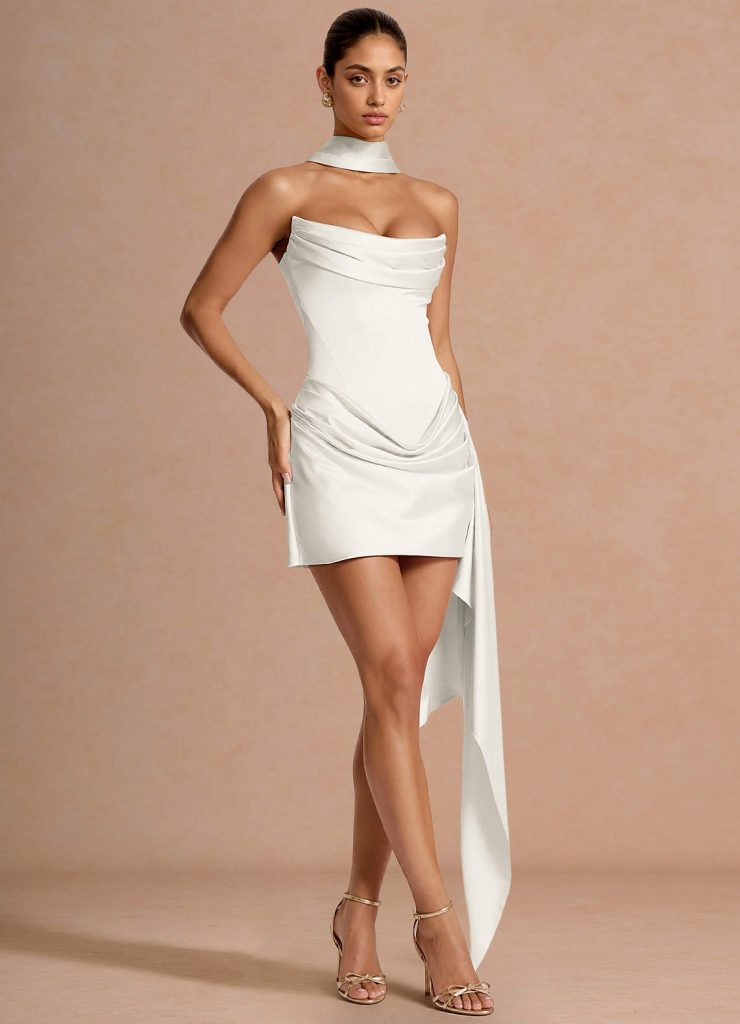
Graduation produces four distinct photo scenarios in one day, and they don’t all ask the same things. Wide-angle ceremony shots from across an auditorium. Close-up cap-and-gown portraits. Outdoor family portraits in afternoon natural light. Candid evening celebration photos. The types that photograph consistently across all four are the simplest ones.
A-Line in Photos
An a line white graduation dress holds shape at camera distance in a way that shapeless or very loose styles don’t. Wide-angle ceremony shots need the dress to read as a defined form, not a formless white area under the robe. The waist definition and gentle hem flare register clearly even from across an auditorium. That’s why A-line photographs better than basically anything else at ceremony distance.
Lace in Photos
Plain fabric can look flat in bright outdoor light — it reads as one-dimensional in wide shots. A lace graduation dress catches light in a way that creates visible warmth and texture even in group shots from a distance. The one thing you might not think to check: hold the lace up to a bright lamp before ordering. Stage spotlights reveal transparency in unlined lace that’s completely invisible in a store or fitting room.
Floral and Party Types
Floral graduation dresses and party graduation dresses photograph better in natural outdoor light than under artificial stage lighting. Spring ceremony outdoor settings are where soft floral prints look warmest and most intentional. The pattern rule for group shots: subtle over bold. Small florals register as texture in wide shots. Large geometric prints look fragmented and busy when multiple people are in the frame.
Types of Graduation Dress Fabrics — What Actually Works Under a Gown
The gown is a full extra layer of heavy synthetic polyester. The fabric you wear underneath is the comfort decision — get it wrong, and you’re managing heat and discomfort from hour two onward.
| Fabric Type | Why It Works | Best Graduation Context |
|---|---|---|
| Chiffon | Breathes well | Outdoor spring ceremonies, warm venues, full-day wear |
| Matte Crepe | Wrinkle-resistant | Any ceremony — holds shape, photographs flat, no glare |
| Lace (lined) | Texture + breathable | Any ceremony — adds photo depth, lining is non-negotiable |
| Stretch Satin | Sleek, some give | Indoor ceremonies, evening events, portrait-heavy sessions |
| Cotton Blend | Most breathable | Hot outdoor stadiums, casual high school ceremonies |
| Heavy Velvet / Shiny Satin | Avoid — heat + glare | Velvet traps heat; shiny satin creates flash glare in stage photos |
| ! | The Transparency Check This is the one test most people skip and then regret. Test your white dress under a bright overhead light or hold it up to a window before the day. Stage spotlights are considerably more intense than any store or fitting room. Unlined white fabric that looks completely opaque indoors can become clearly transparent under ceremony spotlights. Always check. |
|---|
Types of Graduation Dresses by School and Setting
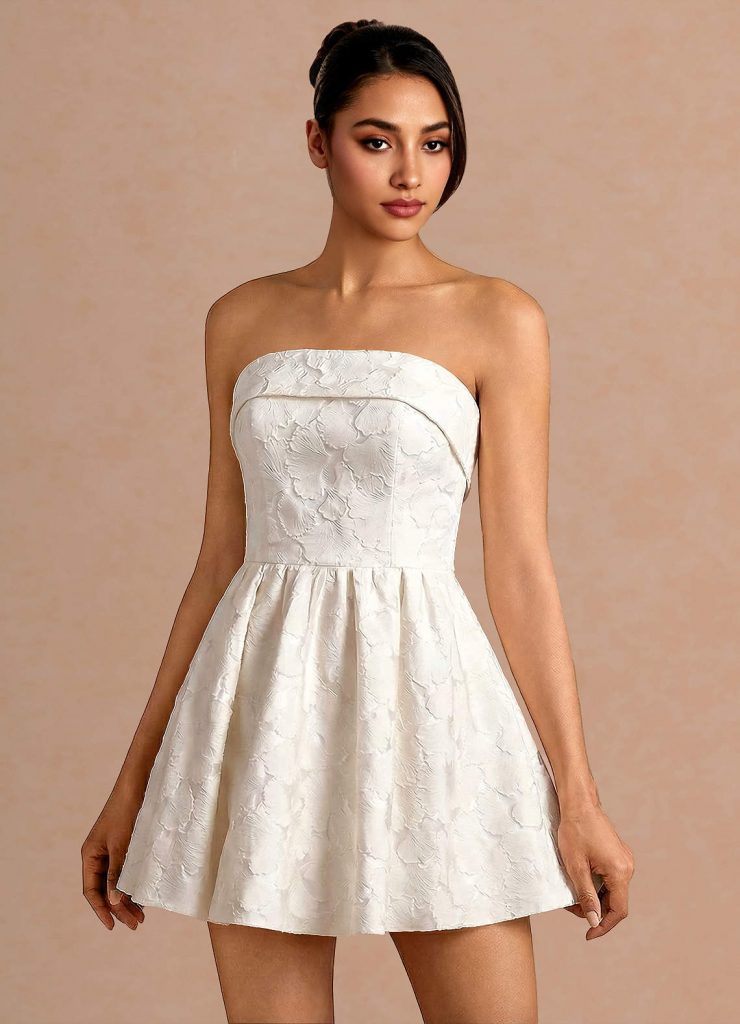
High school gymnasium in June and a university outdoor commencement are genuinely different scenarios — different formality, different lighting, different heat levels. The type that works best shifts with the setting.
High School Graduation
Gymnasium settings tend to run warm, the gowns are often thinner synthetic material, and the overall tone is more celebratory than formal. High school graduation dresses in mini or midi lengths, white or cream, made of breathable chiffon or cotton, are the most common and practical choice. The mini is especially popular here — hidden under the gown during the ceremony, party-ready once the robe comes off. No wardrobe change needed.
College and University Graduation
University ceremonies are longer, more formal, and typically followed by dinners or evening events. College graduation dresses lean toward midi or floor-length in structured styles — A-line, lace, clean sheath. The graduation hood and honors regalia are more prominent at the university level, so the choice of neckline matters more — it needs to allow stoles and cords to sit flat and photograph cleanly.
Casual Graduation Dressing
For a more relaxed ceremony or a personal preference for a less formal look: a clean sundress or simple wrap in white or cream at knee or midi length. Comfortable, breathable, and looking intentional is what casual graduation dressing actually means. Not just any dress — a dress that looks like you chose it specifically for the occasion, just without the formality dial cranked all the way up.
Dress Type Do’s and Don’ts
| ✓ Choose These Types | ✗ Avoid These Types |
|---|---|
| ✓ A-line in white — most photographically reliable graduation type | ✗ Club-style bodycon minis with no coverage on stage stairs |
| ✓ Lace midi with proper lining — breathable and photographs with depth | ✗ Unlined white fabric that becomes transparent under stage spotlights |
| ✓ Modest styles with higher necklines for conservative settings | ✗ Heavy back structural details that create visible gown bumps |
| ✓ Mini for high school or party-first — clean reveal after ceremony | ✗ Floor-length maxi that hasn’t been tested on stairs with ceremony shoes |
| ✓ Midi for all-day reliability across every graduation scenario | ✗ Very shiny satin — creates flash glare in ceremony and portrait photos |
| ✓ Breathable fabric for extended wearing under a heavy graduation robe | ✗ Heavy velvet or thick brocade in warm venues — heat gets genuinely bad |
Why White Graduation Dresses Are the Most Popular Type
It’s not just tradition — there are practical reasons white graduation dresses dominate across every type of graduation ceremony. White reflects light evenly. Stage lighting, outdoor afternoon sun, indoor evening, flash from phones — white handles all of those consistently without shifting dramatically or washing out. Dark colors can disappear under certain gown colors. Loud colors create a distraction in group ceremony photos. White just works in every scenario without asking you to coordinate anything.
Works under any gown color — dark navy, black, maroon, royal blue, emerald — no coordination required. White also photographs with natural brightness, making your face the focal point of portraits rather than competing with the dress color. You might notice that white graduation portraits tend to look more timeless years later than colorful ones. That’s the color of doing photographic work, not just being traditional.
The white graduation dress isn’t required. But it’s the most consistently reliable type across all school levels, ceremony settings, and photo scenarios — which is why it keeps showing up.
| ✓ | Type Selection Quick Guide Ceremony only → Midi or A-line in white crepe or lace · High school → Mini in white chiffon · College formal → Midi lace or structured sheath · All-day wear → Midi in matte crepe or stretch satin · Party-first → Mini with accessories swap · Modest preference → Long-sleeve or high-neck midi in white |
|---|
The Short Version
The types of graduation dresses that work share the same core qualities: white or neutral color, breathable fabric, a silhouette that sits flat under the gown, and a length that’s either clearly mini (hidden under the gown, party reveals after) or clearly midi (visible at the hem, all-day polished). A-line is the most photographically reliable type. Lace is the most elegant full-day option. Mini is the party-readiest. Midi is the most versatile.
Azazie has 100+ graduation dresses across every type — A-line, lace, modest, strapless, mini, midi, maxi — in white, cream, and soft neutrals with custom sizing so the length lands right.
Frequently Asked Questions
What kind of dresses are worn for graduation?
The most common types are white midi and mini dresses, A-line silhouettes, lace styles, and clean sheaths. White and cream are the most popular colors — they photograph consistently and pair well with any graduation gown color. Midi is the most popular length for college. Mini is most popular for high school because it stays hidden during the ceremony and reveals naturally at the party afterward. No single type is required — it’s about what handles the specific ceremony.
What are the different types of graduation gowns?
The academic robe — graduation gown — differs by degree level. High school gowns are usually lightweight synthetic. Bachelor’s gowns have oblong sleeves. Master’s gowns have elongated sleeves, and doctoral gowns have three velvet stripes and often bell-shaped sleeves. The hood coloring represents your field of study. For the dress underneath, the main practical consideration is the gown’s fabric weight and length — heavier doctoral gowns need a flat, smooth dress underneath that won’t shift.
What is the dress called for university graduation?
The academic outfit is called graduation regalia — it includes the graduation gown (academic robe), the mortarboard, the academic hood, and any honor stoles or cords. The dress worn underneath doesn’t have its own formal name. Commencement dress is sometimes used for more formal university ceremonies. Most people just call it a graduation dress, a ceremony dress, or an under-gown dress.
What is the dress code for a graduation?
Most US graduation ceremonies have an implied semi-formal to business casual dress code rather than a published one. Schools that do provide guidance tend to focus on modesty and appropriate length. The graduation gown covers most of the dress during the ceremony anyway — what shows is the neckline peeking above the collar and the hem at the bottom. The practical guidelines are: nothing too casual, nothing too revealing, nothing that creates bulk or bunching under the robe.
What do girls wear under graduation gowns?
Most popular types: white mini dresses (hidden during the ceremony, party-ready afterward), white midi dresses (visible at the gown hem, polished all-day option), A-line in white or cream (flattering, holds shape in photos), and lace graduation dresses (breathable, textured, holds shape). The main requirements, regardless of type: breathable fabric, a clean silhouette without structural back details, and a hem at or shorter than the graduation gown hem. Non-dress alternatives — jumpsuits and two-piece sets — also work when they’re streamlined.
Do girls have to wear a dress for graduation?
No. Tailored jumpsuits and two-piece sets are increasingly common graduation choices — they handle the gown interaction the same way dresses do when they’re streamlined and fitted. The graduation dress is just the most traditional choice. The same practical guidelines apply regardless of type: breathable fabric, clean silhouette, and appropriate level of formality. If a tailored jumpsuit or two-piece set feels more like you than a dress, that’s a completely valid graduation outfit.
Why wear white under a graduation gown?
Three practical reasons: white photographs consistently across all graduation-day lighting conditions, it works with any gown color without coordination effort, and it transitions naturally from ceremony to celebration without any visual clashes. The light-reflective quality creates natural brightness in portraits, making your face the focal point rather than the dress. It’s not required — but those practical advantages explain why the majority of graduates across every school type keep choosing it.
How to dress for graduation in a casual style?
Casual graduation dressing means polished casual, not just casual. A clean white sundress or simple wrap in a breathable fabric, at knee or midi length. Comfortable block heels or dressy flats. Simple jewelry. Hair that works under a graduation cap — loose waves, low bun, half-up. The key difference between appropriate casual and underdressed: the dress should look like you chose it specifically for graduation, not grabbed it randomly. Intentional and relaxed is the right balance.