
Styling Details that Make Muslim Wedding Dresses Feel Intentional, Elevated, and Wedding-Day Ready
There’s a thing that happens with Muslim wedding dresses that I don’t think gets talked about enough: the difference between a dress that covers everything correctly and one that actually looks stunning usually isn’t the silhouette or the color.
It’s the sleeve. Or more specifically, it’s whether someone thought about the sleeve at all, or just made it long because they had to.
The same goes for the hijab. Most styling guides treat it as an accessory you add afterward. That’s backward. When the hijab and the dress are designed together (or at least chosen together), you can tell immediately. When they’re not, you can also tell immediately.
What follows is what actually separates the two.
| QUICK ORIENTATION Modesty in bridal design isn’t a constraint on beauty — it’s a design parameter. The question isn’t how to cover more while looking good. It’s about making the coverage itself part of what makes the dress beautiful. |
|---|
Silhouette First — Everything Else Follows
A-Line: Still the Default for Good Reason
Not exciting advice. But true. An A-line silhouette is the most forgiving for full coverage because it doesn’t cling below the waist, which means long sleeves don’t look added-on, high necklines don’t read as severe, and the hijab has something clean to rest against rather than competing with embellishment at every layer.
An ivory wedding A-line gown with lace long sleeves is, in my honest opinion, about as reliable as Muslim bridal gets. It looks intentional in photos. It’s comfortable to wear for six hours. And it doesn’t require much in the way of accessories to look finished.
Ball Gowns — the One I’d Approach Carefully
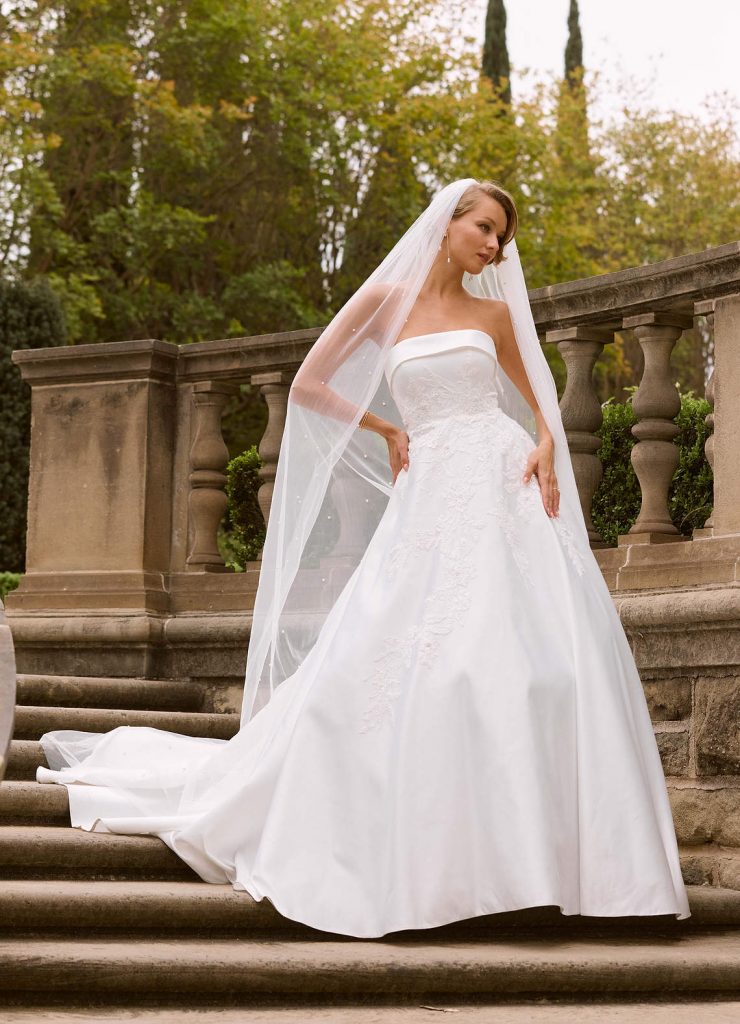
I know ball gowns read as formal and traditionally bridal. And they can be stunning. But here’s what I’ve noticed — heavy skirt volume can actually draw more attention to the body’s midsection than a simpler silhouette does, which is, ironically, the opposite of the modest impression most brides want.
That said, I don’t believe this is a universal rule. A well-fitted ball gown with a clean, structured bodice and minimal skirt detail can look incredibly refined. It’s more about execution than the shape itself. The bodice is where to focus attention. Not the skirt.
Column and Sheath for Modern Modest Bridal
Sleek. White wedding dresses with sleeves in a column silhouette read as genuinely contemporary — not a compromise between modesty and fashion, but an intentional modern bridal choice. The coverage is built into the design. It doesn’t look added. That matters.
| Silhouette | Works for Modest Bridal? | The Honest Take |
|---|---|---|
| A-line | ★★★★★ — yes, reliably | Most forgiving, hijab sits cleanly against it |
| Column/sheath | ★★★★ — very well | Modern, clean lines, coverage is part of the design |
| Empire waist | ★★★★ — comfortable | Great for warm venues, easy movement all day |
| Ball gown | ★★★ — depends heavily on bodice | Volume can compete with the modest impression |
| Mermaid | ★★ — tricky | A tight hip fit can undercut the modest intention |
Sleeves and Necklines — This Is Where It Gets Interesting
What Separates a Good Long Sleeve from an Afterthought
A plain long sleeve in a sea of detailed bridal fabric looks like someone ran out of design ideas at the wrist. That’s the problem. The sleeve is (and I can’t stress this enough) the most visible part of a modest bridal gown — and it gets the least design attention.
Illusion lace over a nude underlay is the most commonly used solution, and it works. The lace provides visual texture, the underlay provides coverage, and together they feel designed rather than functional.
Metropol Wedding’s Muslim bridal guide — which is worth reading if you haven’t — breaks this down clearly: brides who request sleeve detailing (lace, illusion fabric, button-cuff detail) consistently report higher satisfaction with the overall dress than those who make sleeve detailing a secondary consideration. The sleeve is a primary decision. Treat it like one.
Necklines — the Gap Between Plain and Refined
High necklines are fine. High necklines with nothing happening at the edge are not. Even a simple line of embroidery at the neckline, a small row of pearl buttons, or an illusion panel (where lace extends slightly above the main fabric) changes the impression entirely. The neck and collarbone are the first things a camera captures. What’s happening there matters more than what’s happening on the skirt.
Boat necklines — honestly, my preference for most modest bridal looks — cover the collarbone fully without the closeness of a high neck. And they don’t compete with the hijab’s edge, which is a practical advantage most people don’t think about until they’re in the fitting room.
| ◆ LACE SLEEVES What it does: Texture and coverage together Works best with: A-line or clean column Real note: Lace quality varies a lot — feel it Worth it: Yes — most bridal-feeling option |
~ ILLUSION CUFF What it does: Adds wrist detail without bulk Works best with: Fitted long sleeve in the same fabric Real note: Pearl or button = very refined Worth it: Easy detail, high visual payoff |
◻ HIGH NECK What it does: Full neck coverage, clean edge Works best with: Column or minimalist gown Real note: Needs lace or embroidery at the edge Worth it: Yes, but the detail is non-optional |
○ BOAT NECK What it does: Collarbone coverage, doesn’t compete with hijab Works best with: Any silhouette Real note: Most practical choice for hijab brides Worth it: Yes — easiest to get right |
|---|
The Hijab — Designed With the Dress, Not Added After
Fabric Match Is the Thing Nobody Mentions
And yet it’s obvious once someone points it out. When the hijab fabric doesn’t match the dress fabric in weight, drape, and texture, the two pieces look like they belong to different outfits. A flowing lined chiffon gown with stiff hijab fabric — even if the colors are identical — creates a visual disconnect that no amount of embellishment can fix.
The BridesSriLanka modest bridal guide (worth bookmarking for the photo examples alone) makes this specific point: the most polished hijab-bridal combinations share fabric family, not just color. Chiffon with chiffon. Crepe with crepe. Cream colored wedding dresses in flowing chiffon paired with a matching-weight hijab look like one intentional outfit. The same dress with a heavier hijab fabric looks like two things that happen to be the same color.
How Much Embellishment on the Hijab
Less than you think. The hijab frames the face. An overly embellished frame competes.
Subtle pearl edging, delicate lace borders, or embroidery that mirrors the dress’s own detail level — those work. A hijab that’s trying to be a statement piece on its own usually ends up pulling the eye away from the bride rather than toward her. That’s the opposite of what anyone wants.
Detachable Pieces and Multi-Event Flexibility
Muslim weddings often span multiple events — the nikah, the walimah, sometimes a separate reception — and the formality level at each can be genuinely different. A detachable overlay or removable sleeve (sounds more complicated than it is) lets the same gown work across both.
Azazie‘s made-to-order approach means sleeve length, neckline height, and coverage points can all be specified. Custom sizing is available. That matters more for modest bridal than for conventional wedding dresses — because the fit has to work across more coverage points, and any imperfection shows.
Fabric — Opaque Is Required, Heavy Is Optional
The Lined-Fabric Point Is Not Negotiable
Chiffon, tulle, and lace are sheer. Unlined sheer fabric is not modest fabric. But — and this is what gets missed — lined chiffon and lined lace are genuinely excellent for Muslim bridal wear. The lining handles modesty; the outer layer handles beauty. You get the drape, the movement, and the bridal look without compromising coverage. The word ‘lined’ is doing a lot of work in that sentence.
A diamond white dress in lined chiffon with lace long sleeves — that combination is both modest and genuinely beautiful. Not modest despite being beautiful. Both at the same time.
| Fabric | Coverage | Best for Muslim Bridal |
|---|---|---|
| Crepe | Full — matte and opaque | All seasons. Most versatile option. |
| Lined chiffon | Full — when properly lined | Warm venues, destination, outdoor ceremonies |
| Satin | Full — adds structure | Evening and indoor, cooler weather |
| Lace over lining | Full with an underlayer | Garden, rustic, romantic settings |
| Unlined chiffon | Not adequate | Avoid — not an option for modest bridal |
Comfort Across a Long Day — Often Overlooked, Always Noticed

Weight Is the Variable Nobody Talks About
A Muslim wedding can run many hours — nikah, family gathering, walimah, sometimes separate mehndi events. I’ve talked to brides who were perfectly comfortable at hour eight and brides who were done at hour two. The difference was almost always fabric weight.
Lined crepe and lined chiffon breathe. They don’t add unnecessary weight. A heavy satin or structured gown with multiple underlayers can feel genuinely exhausting by early afternoon, especially for outdoor ceremonies in warm weather. It’s not glamorous to think about. But it’s the thing that affects how the day actually feels.
Fit Across More Coverage Points
When a dress covers the arms, neck, and full body length, there are more places for the fit to go wrong — and each one (the sleeve wrist, the neckline lie, the hip drape) is more visible when there’s no décolletage or bare arm to redirect attention. Custom sizing matters more here than in conventional bridal.
| Azazie offers over 200 wedding dresses in sizes 0–30, made to order, with custom sizing available. At-home try-on is an option for wedding dresses. For modest bridal wear specifically, testing the fit of the full outfit — dress, hijab, and shoes — before the wedding day is worth it. |
|---|
Three Decisions Worth Getting Right
| 1 | Choose hijab fabric at the same time as the dress, not after. This is the most commonly skipped step. It’s also the one with the most visible impact. When hijab and dress are selected at different times, the fabrics rarely match in weight and drape, and you can see that in every photo. Bring a swatch of your hijab fabric to dress fittings. Hold them together in daylight. If they don’t belong to the same visual family, one of them needs to change. |
|---|
| 2 | Invest in the sleeve before anything else on the dress. The sleeve is the most visible design feature on a modest wedding gown. A plain long sleeve on an otherwise detailed dress looks like an oversight. Lace, illusion fabric over nude underlay, or button-cuff detail — any of these shifts the sleeve from ‘covering’ to ‘designed.’ Before adding embellishment anywhere else, sort the sleeve first. |
|---|
| 3 | Test the full outfit together — not just the dress. Sit down. Stand up. Walk across a room. The placement of the hijab pin affects how the neck moves. The sleeve length affects arm movement. You need to know whether these things work together before the wedding day, not during it. This is a fifteen-minute test. Do it with the shoes, the hijab arrangement, and the under-cap — the complete look. |
|---|
Venue and Season Pairings
| Setting | Silhouette | Fabric | Color |
|---|---|---|---|
| Mosque ceremony | A-line or column | Crepe or lined satin | Ivory, white, cream |
| Outdoor garden | A-line or empire | Lined chiffon | Ivory, champagne |
| Destination wedding | A-line — packs well | Lightweight crepe | Personal choice |
| Indoor hall/reception | Any formal option | Satin or heavy lace | White, ivory, ecru |
| Summer outdoor | Empire or A-line | Lined chiffon or lace | Light ivory or cream |
A Note on Color
Most Muslim weddings use white or ivory — and honestly, antique white wedding dress options tend to photograph warmer and softer than bright white, especially in outdoor or candlelit settings. That’s not a hard rule. Just something worth knowing before you commit.
Closing Thoughts
The styling decisions that matter most for Muslim wedding dresses are specific: which sleeve treatment, how the hijab fabric was chosen relative to the dress, and whether the neckline has any edge detail.
None of it requires expensive fabric or elaborate embellishment. It requires making those decisions deliberately, and in the right order.
Wedding dresses at Azazie include over 200 options in sizes 0–30, made to order with custom sizing available. At-home try-on is offered for wedding dresses — worth using to check the complete look, full outfit, before the day.
Frequently Asked Questions
What makes a Muslim wedding dress different from other wedding dresses?
Full-sleeve coverage, a high or boat neckline, and opaque fabric — those are the non-negotiable design requirements. Beyond that, the aesthetic can be anything: minimalist, romantic, traditional, or contemporary. The modesty requirements shape the design parameters, not the entire look.
Can Muslim wedding dresses be customized?
Yes. And for modest bridal, customization is especially useful — standard bridal sizing doesn’t account for long sleeves or high necklines at the right proportions. Made-to-order and custom sizing handle this well.
Are modern minimalist styles available?
Yes, and they work well for Muslim bridal wear. Clean column gowns, simple lace A-lines with no embellishment, streamlined crepe dresses with full coverage — these are established options now, not niche.
What fabrics work best?
Lined crepe for versatility and lined chiffon for warmth and outdoor venues. Lace over a lining for romantic settings. The word ‘lined’ is the key — unlined sheer fabrics don’t provide coverage on their own.
How do I choose the right hijab?
Match the fabric weight and drape first. Color second. Embellishment third. A hijab in the same fabric family as the dress reads as part of the outfit. One that doesn’t read as an accessory, regardless of how beautiful it is.
Are detachable components available?
Yes — detachable sleeves, removable overskirts, and adjustable necklines are available. Useful for multi-event weddings where the ceremony and reception have different levels of formality.
What’s the best silhouette?
A-line, in most cases. Most forgiving across body types, most compatible with long sleeves and high necklines, and most reliably flattering in photographs with a hijab. The sheath or column is the better choice for brides who prefer a cleaner contemporary line.
How do I add elegance without compromising modesty?
Sleeve detail first. That’s where the photography and the eye land. Lace sleeves, illusion cuffs, or a subtle embroidery line at the neckline add bridal quality without adding coverage. Most of the embellishment budget belongs on the upper body — not the skirt.
Are Muslim wedding dresses budget-friendly?
The range is wide. Simple crepe A-lines in standard sizing are priced at accessible points. Made-to-order and custom sizing add cost, but the fit benefit is real. Fabric quality and embellishment level drive the price more than the modesty requirements do.