
Pink Evening Dresses: What to Know Before Choosing Your Shade
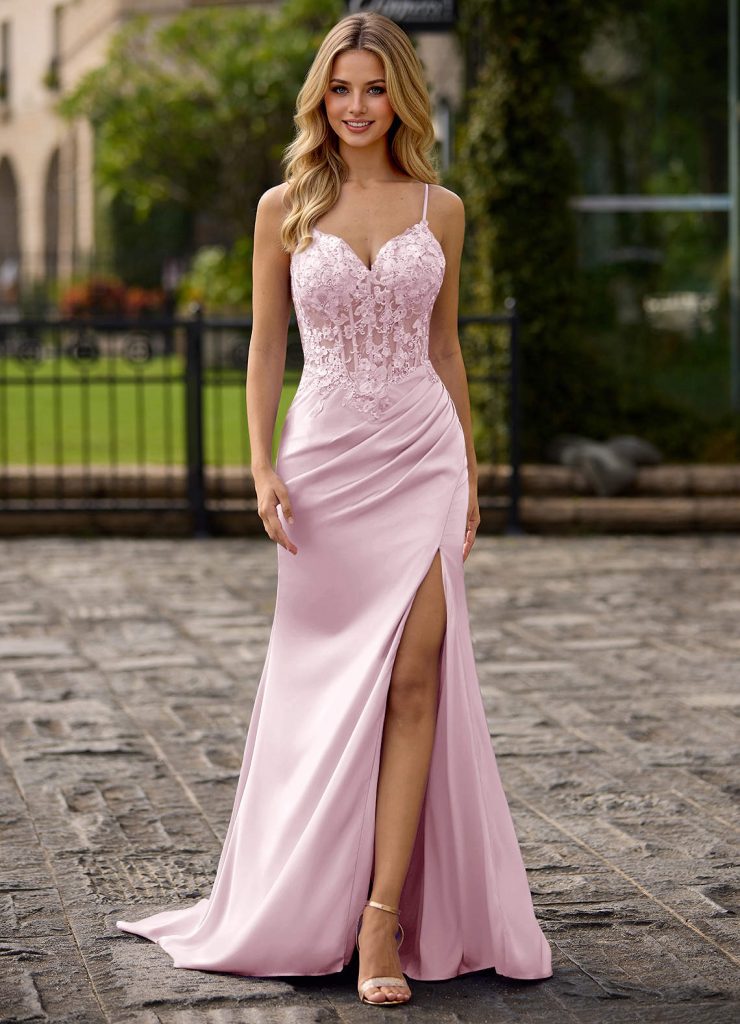
Pink reads completely differently in a boutique versus a hotel ballroom at 8 PM. I don’t mean slightly differently. I mean, you can choose a pink evening gown dresses that looks vibrant and warm under shop lighting, wear it to a gala with amber venue lights, and watch it turn this flat, slightly peachy orange that reads as nothing.
This happens specifically with lighter pinks. Pale blush, soft rose, dusty mauve — these shades are highly reactive to warm ambient lighting. The warm light and the warm pink undertone create a merged effect in which the color stops appearing pink and becomes a vague warmth. This is a problem that’s entirely avoidable if you know what to look for before buying.
| The shade-versus-lighting test: hold the dress near a lamp — not daylight, a lamp — and take a phone photo. If the shade looks similar to how it appeared in the boutique, it’s reasonably lighting-stable. If it’s shifted significantly warmer, flatter, or more orange, that’s the dress’s behavior under event conditions. |
|---|
The Shade Question — Which Pinks Survive Low Light and Flash
The Lighting Problem With Pale Pink
Warm amber lighting — the standard for hotel ballrooms, restaurant private dining, candlelit galas — washes pale pinks toward a peachy beige. The pink essentially disappears into the room’s warm color temperature. You’ve chosen pink, and it reads as not-quite-anything.
This is frustrating because blush and soft rose are genuinely beautiful in the right setting. Outdoor daytime events, cool-toned indoor lighting, natural window light — pale pinks photograph with genuine luminosity in those conditions. The issue is specifically warm indoor evening lighting.
Deeper, more saturated pinks don’t have this problem. A deep magenta, a vivid fuchsia, a rich rose — the saturation is high enough that even warm amber lighting can’t neutralize it. The color stays visible as a distinct pink rather than dissolving into the room’s warmth.
The Flash Photography Problem With Very Pale Pink
Camera flash does something different. It tends to overexpose very pale colors — blowing out the detail in the fabric and creating a flat, featureless surface in the photo. A pale blush gown under flash can look almost white, with no visible texture or dimension.
Here’s the counterintuitive part — I didn’t expect this to work as well as it does — but a slightly deeper pink actually photographs more like pale pink looks in person than pale pink itself photographs. The medium saturation captures and holds detail under flash in a way that very pale shades don’t.
| Pink Shade | Under Warm Amber Light | Under Camera Flash | Best Setting |
|---|---|---|---|
| Pale blush / dusty rose | Washes toward peach-beige | Can overexpose to near-white | Cool-lit or outdoor events |
| Medium rose / warm pink | Holds saturation well | Strong depth in photos | Most indoor formal venues |
| Hot pink / fuchsia | Vibrant — reads clearly | Very photogenic — high contrast | Galas, awards, and evening events |
| Deep magenta/berry | Rich holds color completely | Exceptional — detailed in flash | Black-tie, low-lit events |
| Champagne-pink / nude-pink | Merges with skin tone under warm light | Often disappears in photos | Avoid for a formal evening |
Fabric — What Creates Dimension When the Color Can’t
Satin and Silk in Pink — the Reflective Option
Quality satin in pink creates its own light-and-shadow relationship through the reflective surface. As you move, different planes of the fabric catch light at different angles, creating visible variation that prevents the flat-color problem in photos. A pink satin gown under event lighting has dimensions that a matte pink fabric in the same cut doesn’t.
The caveat: the quality has to be high. Cheap pink satin looks synthetic and slightly plastic in warm lighting — it reflects too harshly. Quality bridal-weight satin reflects softly and warmly.
Velvet in Pink — Unexpected but Strong
Wait — this one is genuinely underrated, and I think people overlook it because they don’t associate velvet with pink specifically. Deep pink or magenta velvet creates a pile-and-sheen effect that photographs with remarkable depth. The velvet’s surface casts micro-shadows at every angle, making the photo look textured and dimensional rather than flat.
For hot pink specifically: velvet in a hot pink or deep fuchsia reads as editorial and luxe in a way that a smooth fabric in the same shade doesn’t. A mermaid evening dress in deep rose velvet is one of the most photographically reliable evening looks available.
Chiffon in Pink — Handle With Care
Chiffon in pale pink creates a beautiful effect in the right conditions — outdoor daytime events, natural light, garden settings. For indoor formal events with warm amber lighting, light pink chiffon is at the highest risk of color-washing. Multiple layers create depth through translucency. Single-layer chiffon in pale pink at a candlelit gala is the most challenging option photographically.
Embellishment — the Photographic Rescue for Pale Pinks
Beading and Sequins Against Pale Pink
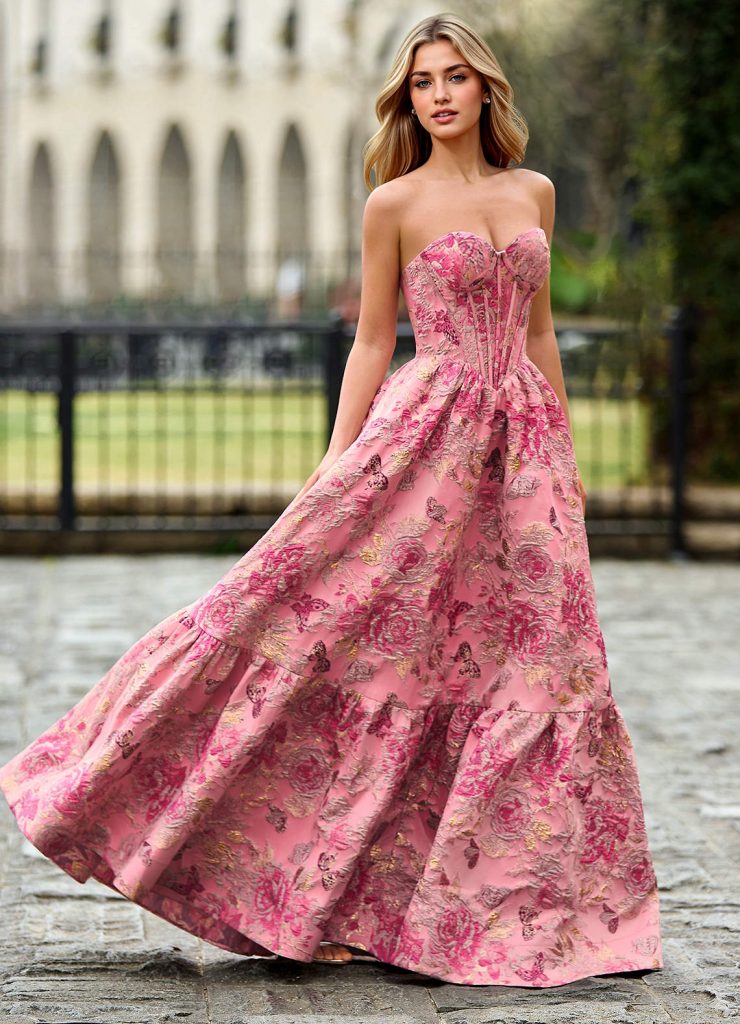
Surface texture — beading, sequins, lace — does for pink what it does for white: it gives the camera’s sensor something to grip. When a camera flash hits a sequined pink gown, each sequin creates a distinct point of reflected light that reads as detail rather than overexposed flatness.
This is specifically why heavily embellished blush gowns photograph better than unembellished ones. It’s not about the embellishment being pretty — it’s about the surface variation preventing the blowout.
Lace Overlay in Pink
A lace overlay against a pink underlay creates a pattern-against-color contrast that photographs with inherent dimension. The lace pattern itself creates shadows within the surface that prevent the flat-pink problem. If you love blush pink and want to wear it to an indoor evening event, a lace-overlay construction is the most reliable fabric choice.
Four Decisions Before Buying a Pink Evening Gown
| 1 | Test the shade under lamp light, not daylight. Take the dress to a window — but not for the daylight test. The actual test is a lamp. Hold the dress near an indoor lamp that approximates warm yellow light. Take a phone photo. If the pink has shifted significantly toward orange, peach, or beige, that’s what it will look like at a hotel ballroom. If it holds its color, you’re in good shape. This test catches the pale pink under warm light problem before you commit. |
|---|
| 2 | Decide whether you want the pink to read as a statement or as soft. Hot pink, fuchsia, and deep magenta are statement colors — they register immediately and hold under all lighting conditions. Blush and rose are soft and romantic, but require the right setting. Be honest about your venue. A candlelit dinner for 40 is a different lighting environment than a hotel ballroom gala for 200. Choose the shade for the actual lighting, not the boutique. |
|---|
| 3 | For pale pink, prioritize textured fabric over smooth. Smooth, unembellished pale pink satin is the hardest combination to photograph well at a formal evening event. Add any surface texture — beading, sequins, lace, velvet — and the photographic behavior improves significantly. If you love blush and want it to look like blush in photos, the fabric construction is not optional. |
|---|
| 4 | Choose accessories that create contrast, not match. Pink-on-pink accessorizing is a risk at formal events. Gold against pink creates warmth and definition. Silver against deeper pinks creates a clean contrast. Nude shoes elongate without adding color competition. A color-pop accessory — a sapphire or emerald piece — reads beautifully against pink because the contrast is clear and intentional. Matching pink shoes and a pink clutch to a pink gown creates a monochromatic effect that can read as washed out rather than coordinated. |
|---|
Pink Evening Dresses by Occasion — What Changes
Black-Tie and Formal Galas
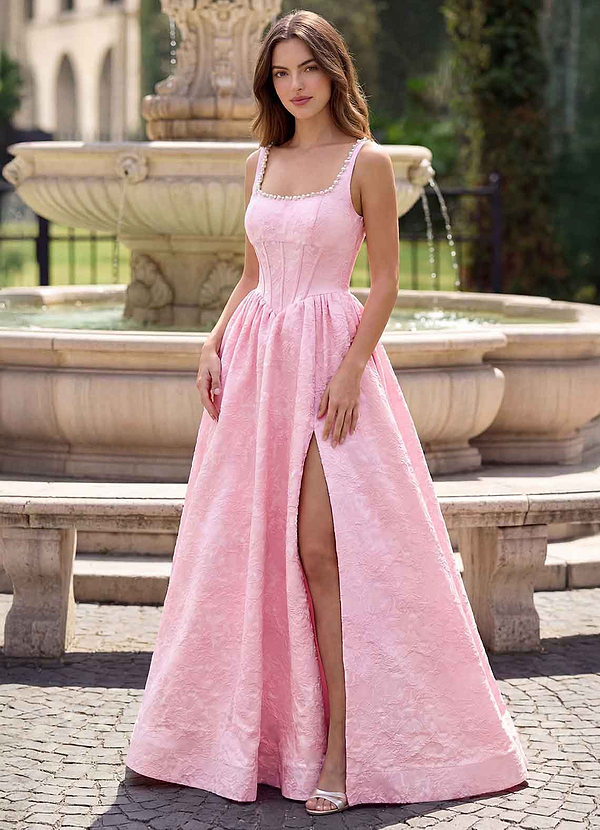
Deep pink, magenta, or rich rose in quality fabric. According to the Azazie guide on selecting formal dress color, saturated colors hold up better under varied venue lighting than pastels. For black-tie: floor-length, quality satin or velvet, one strong accessory element. Evening dresses floor length in deep rose or fuchsia reads as deliberately formal — the color is doing real work at that saturation level.
Wedding Guest
Pink is one of the strongest wedding guest colors — it reads as celebratory without any risk of being confused with bridal. Any shade works; the saturation choice depends on the venue lighting. Outdoor daytime wedding? Blush is perfect. Indoor evening reception with warm lighting? Go medium rose or deeper.
For petite attendees: petite evening dresses in pink with vertical silhouette lines — V-necklines, empire waist, high slit — photograph with excellent elongation in this color. For plus-size: plus size evening dresses in A-line or wrap silhouettes in medium-saturation pink photograph consistently well and flatter across figure types.
Award Ceremonies and Evening Galas
This is where hot pink earns its moment. A vivid fuchsia or hot pink floor-length gown at an award ceremony reads as confident and intentional — it’s one of the few colors that photographs with genuine impact from across a large venue. The color is impossible to miss or misread, even in challenging photography conditions.
Closing Thoughts
Pink is more technically demanding than most formal colors because its photographic behavior varies significantly with shade and venue lighting. Pale pink in the wrong venue looks like the color gave up. Deep pink in the right fabric looks extraordinary.
The color you see in a shop and the color that photographs at an evening event aren’t always the same decision. Test the shade. Match the venue’s lighting type. And if you’re committed to blush — which is genuinely one of the most beautiful formal colors in the right conditions — put that pale shade in a textured fabric that can hold its own when the amber lights come on.
Frequently Asked Questions
Which pink shade photographs best at evening events?
Medium to deep saturation — warm rose, vivid fuchsia, hot pink, deep magenta. These hold their color under warm amber venue lighting and under flash photography. Pale blush is the most challenging shade for indoor evening events because it’s highly reactive to warm light and prone to overexposure under flash.
What fabrics make pink evening dresses look better in photos?
Textured fabrics: quality satin (creates reflective dimension), velvet (creates shadow-and-pile depth), lace overlay (creates pattern contrast), beaded fabric (creates distinct light points that prevent overexposure). Smooth, unembellished pale pink chiffon is the most difficult fabric-shade combination for indoor evening photography.
Can I wear blush pink to a formal evening event?
Yes — but know the venue’s lighting. Cool-toned or neutral venue lighting is fine for blush. Warm amber ballroom lighting washes blush toward peach. If your venue is candlelit or has warm interior lighting, choose a slightly deeper shade or prioritize textured fabric that maintains visible dimension under those conditions.
What accessories work with pink evening dresses?
Gold is the warmest and most cohesive pairing — it picks up the warm tones in pink without competing. Silver creates a clean contrast that works particularly well against deeper pinks and fuchsia. Nude shoes elongate the silhouette without adding color complexity. Avoid matching pink accessories to a pink gown unless you’re very deliberate about the monochromatic effect.
Is hot pink appropriate for formal events?
Yes. Hot pink and fuchsia are fully appropriate at formal galas, award ceremonies, and black-tie events. They read as deliberate and confident in these contexts — and they’re one of the strongest photographic choices you can make for events with professional photographers. The saturation level means the color is impossible to misread regardless of lighting.
What makeup works with pink evening dresses?
For pale pink gowns, a bold lip or strong eye creates necessary contrast. For vivid pink gowns: nude or soft lip with minimal eye makeup — the dress provides all the color energy. For deep magenta or fuchsia, a nude or champagne lip is the strongest choice, as anything more competes with the dress’s saturation.
Do pink evening dresses work for all skin tones?
Yes, but the shade matching matters. Warm skin tones work best with warm pinks — coral pink, peach rose, warm fuchsia. Cool or neutral skin tones suit cool pinks better — dusty mauve, cool rose, blue-toned fuchsia. Deep skin tones carry vivid hot pink and magenta exceptionally well — the contrast is high, and the color reads with maximum impact.