
Petite Evening Dresses for Weddings: Support, Movement, and Confidence
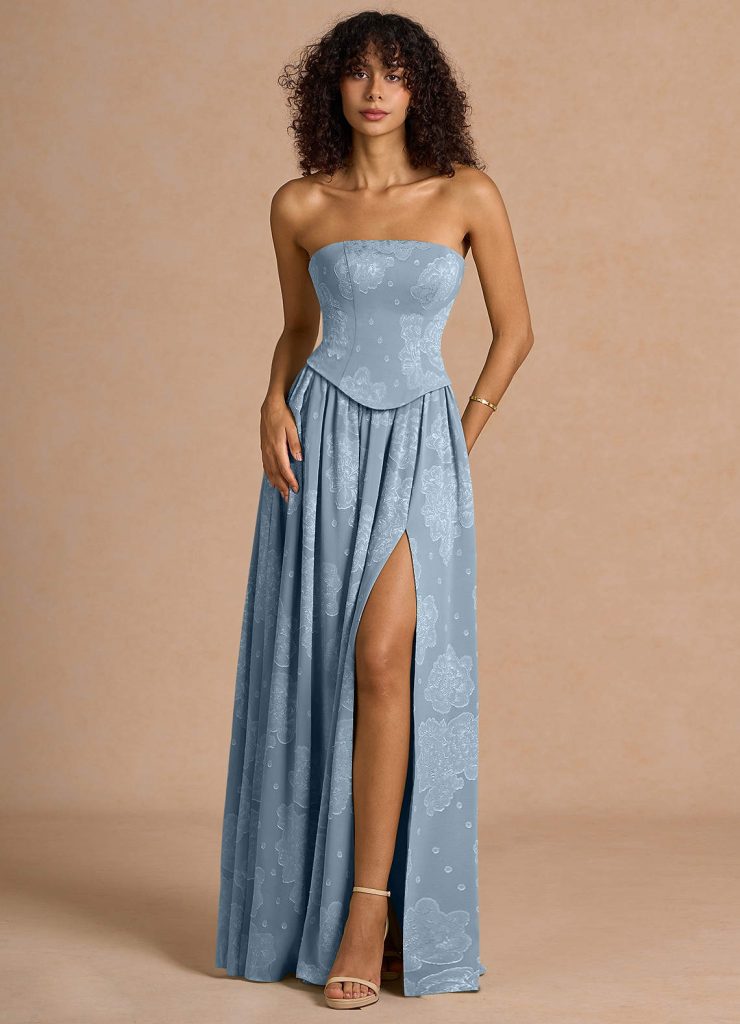
Standard-sized evening dresses on a petite frame have one consistent failure mode: excess fabric at every seam. The shoulder sits wrong. The waist hits too low. The hemline that should graze the floor — on a 5’7” frame — pools six inches past the feet instead. Petite evening dresses solve this by proportionally reconstructing the bodice, sleeve, and hem — not just scaling down. That distinction matters for a wedding event where you’ll be wearing the dress for six to eight hours.
I’ve seen this play out at two weddings this past year — both friends in gorgeous standard-sized floor-length gowns that required constant hemline management. One finally took the shoes off early. The other held her skirt every time she walked. Those are avoidable problems with the right construction. And they have nothing to do with the dress being beautiful.
| The petite proportion rule: the bodice should end at the natural waist — not 1.5 inches below it. The waist hits at the right place, so the skirt begins at the right place, and the hemline falls correctly without alteration. That cascade of proportional construction is what makes petite-specific sizing different from standard sizing cut small. |
|---|
Silhouettes That Work for Petite Frames at Wedding Events
A-Line — The Most Reliable Overall
An A-line in proper petite proportioning creates a clean vertical line from bust to hem that photographs with natural elegance. No horizontal visual break at the waist, no wide horizontal hemline that shortens the eye’s vertical travel. Evening dresses floor length in A-line for petite frames, photograph with the most elongation of any silhouette — the skirt’s gentle flare creates movement in photos without adding visual width at the hips.
And the movement benefit is real. An A-line doesn’t require you to walk carefully the way a mermaid does — the gentle flare accommodates a normal stride without pulling at the thighs. For a wedding event with a cocktail hour, dinner, dancing, and photographs over several hours, that’s not a small thing.
Empire Waist — Counterintuitively Good for Petites
I didn’t expect evening dresses empire waist to be a strong petite recommendation. Still, it works specifically because the high seam placement — just below the bust — creates the longest possible uninterrupted vertical line from that point to the hemline. On a petite frame, that length is the visual effect you’re creating. The skirt reads as very long because the starting seam is very high.
The empire waist also removes the waistline-hitting-in-the-wrong-place problem entirely. There is no waistline in the conventional sense. This is a clean solution to the most common complaint about petite fit.
Sheath and Column — Only If the Fit Is Perfect
Here’s the thing about sheath dresses for petite frames: they work beautifully when the proportions are right, and they fail visibly when they’re not. A sheath with a too-long bodice creates a dropped-waist effect that reads as the opposite of elongating.
If you’re committed to a sheath or column, petite-specific sizing is non-negotiable — not just a size small. The bodice length has to match your torso length, not a standard torso length scaled to a smaller circumference.
What to Avoid — and Why
| Ball gowns and heavily structured, full skirts in standard sizing overwhelm a petite frame in proportion. The skirt volume reads as larger than the upper body, creating a top-heavy-in-reverse effect. If you love the ball-gown silhouette, petite-specific construction in a lighter fabric — such as quality chiffon or tulle with reduced volume — can work. Standard-sized ball gowns need significant alterations to achieve the correct proportional balance. |
|---|
Four Decisions Before Choosing a Petite Wedding Guest Gown

| 1 | Settle the heel height before the hemline. A floor-length petite gown is hemmed to a specific heel height. If you’re wearing 2-inch heels, the hemline falls correctly for 2-inch heels — not for 3-inch heels or flats. Decide on your actual shoe before you order or hem the dress. Many petite women prefer kitten heels or block heels for long events because they provide some height without the balance challenge of a stiletto after several hours of dancing. Test the full look — dress plus actual shoes — before the event. |
|---|
| 2 | Identify the one silhouette line you want to create and build around it. For petite frames at formal events, you’re creating a long vertical line. V-neckline draws the eye down the center of the torso. A high waist seam (empire) extends the leg-to-body proportion. A floor-length, uninterrupted hem completes the vertical. These aren’t separate decisions — they’re parts of the same design intention. Picking a round neckline, a dropped waist, and a mid-calf hem all in the same dress creates a series of horizontal visual breaks that work against elongation. Choose one strong vertical and let the rest support it. |
|---|
| 3 | Test movement, not just appearance. Sit in the dress. Walk a full flight of stairs. Sit again. Any place the dress pulls, bunches, or requires adjustment when you move is a problem you’ll encounter every time you move throughout the event. A wedding involves standing for photographs, navigating venue seating, dancing, and several hours of general movement. The test isn’t whether the dress looks good standing still — it’s whether you can stop thinking about it by hour two. |
|---|
| 4 | Check the color against the venue lighting. Wedding venues have specific lighting — often warm amber ballroom light or outdoor natural light. Test the dress color in the lighting type your venue uses. Deep jewel tones, navy, and rich forest green are exceptionally forgiving across venue lighting types. Pale or nude tones can wash out under warm amber lighting. Black is reliable, but check that it reads against the specific background of your venue. |
|---|
Petite Silhouette Quick Reference for Wedding Events
| Silhouette | Elongation | Movement | Petite Proportion Note |
|---|---|---|---|
| A-line floor | ★★★★★ | Excellent — free stride | Best in petite-specific sizing |
| Empire waist | ★★★★★ | Very good | High seam creates max vertical |
| Sheath/column | ★★★★ | Good if the cut is clean | Requires petite sizing — not just small |
| Midi A-line | ★★★ | Best for comfort | Choose heel height carefully |
| Ball gown | ★★ | Limited — requires careful walking.g | Needs petite-specific construction |
Fabric and Color — the Two Decisions After Silhouette
Fabric Weight for Petite Frames
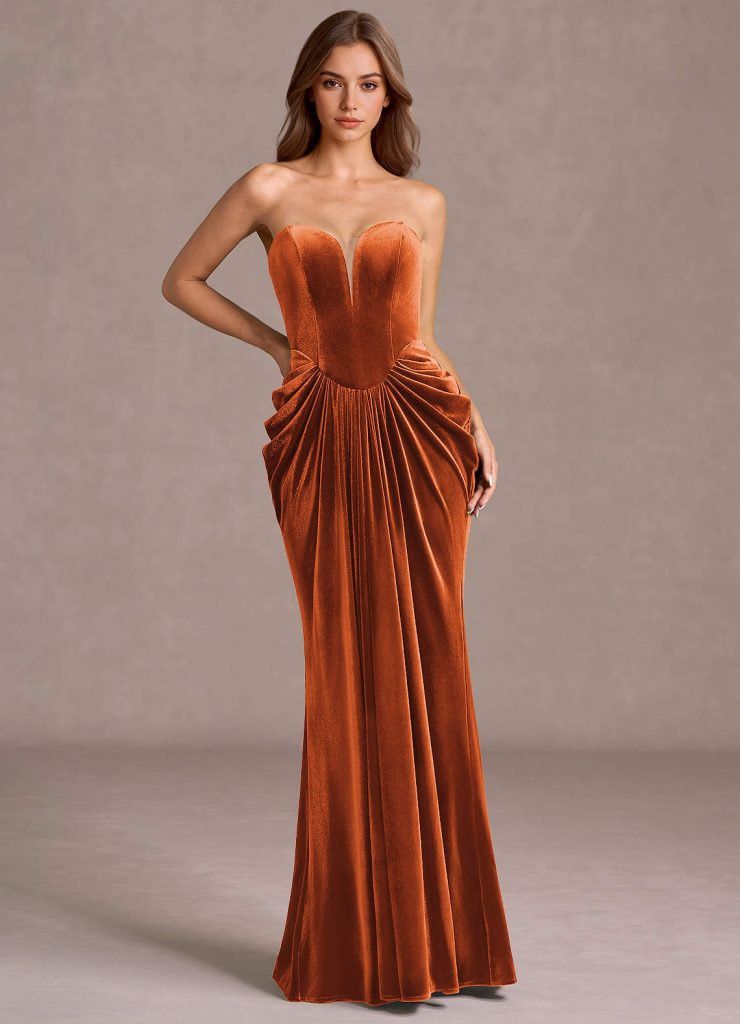
Heavy, bulky fabrics add visual mass, which works against elongation. Quality chiffon, lightweight crepe, and fluid jersey all drape rather than sit, which creates the vertical line you’re building. Structured fabrics are fine in the bodice for support. For the skirt: lightweight and fluid.
There’s another angle here — I won’t go too far into it — but the hemline behavior is also about fabric weight. A heavy satin skirt needs extra length to drape correctly. A chiffon skirt drapes with less length required. For petite frames where hemline precision matters, lighter fabric is more forgiving.
Color Strategy for Petite Frames
Monochromatic dressing creates the longest visible vertical line. A single color from neckline to hemline — especially in deep jewel tones — reads as more elongated than a color-blocked or two-toned look. Elegant black evening dresses are reliable for this reason: an uninterrupted dark color, with no waist contrast, creates a continuous dark vertical that photographs as longer. Purple evening dress or deep navy in an A-line achieves the same effect with color.
Frequently Asked Questions
What silhouettes work best for petite women at weddings?
A-line and empire waist are the most consistently flattering across different petite body types. Both create strong vertical visual lines and allow natural movement over a long event. Sheath and column work very well if the proportions are petite-specific rather than just a small standard size.
Can petite women wear floor-length gowns to weddings?
Yes, and floor-length often elongates more than mid-length for petite frames — the continuous hem-to-ceiling visual line creates more perceived height than a hemline break at the calf. The key: the hem must be set for the exact heel height you’ll wear. Test the full look before the event.
What’s the most important fit detail for petite evening gowns?
Bodice length. The waist seam needs to fall at your actual natural waist, not at a standard-frame waist position. When the waist hits in the wrong place, everything below reads incorrectly — the hip proportion, the leg length, the hemline position. Petite-specific sizing gets this right; standard sizing scaled down often doesn’t.
What necklines work best for petite wedding guests?
V-necklines create a vertical line down the center of the torso that reads as elongating. Off-the-shoulder and sweetheart styles highlight the collarbone, creating width at the shoulder that balances the dress’s visual weight. Avoid high, closed necklines that foreshorten the torso and create a visual break at the neck.
What heel height works best for petite women at weddings?
Honestly, whatever you can comfortably wear for six-plus hours. The dress hemline can be set to whatever heel height you choose. A 2-inch block heel or kitten heel is more stable for dancing and prolonged standing than a 4-inch stiletto. Bring a flat option if you’re planning to dance significantly.
What colors are most flattering for petite frames at weddings?
Monochromatic deep tones. Navy, emerald, deep burgundy, and black all create uninterrupted vertical lines that read as elongated. These colors also perform reliably under warm indoor wedding venue lighting. Avoid color-blocked dresses or two-tone looks that create horizontal visual breaks at the waist.
Are petite-specific sizes necessary,y or can I just size down?
Petite-specific sizing is meaningfully different from standard sizing for small sizes. Proportional construction — shorter bodice, adjusted shoulder, proportional hem — doesn’t happen when you just choose a smaller size. According to the Azazie formal dress guide for petite body types, petite-specific construction is the more reliable approach to achieving a polished, well-fitting formal look.
ClosingThoughtss
The silhouette and proportion decisions come first — before the color, before the fabric, before the accessories. Get those right, and the rest of the choices become much easier. Get them wrong, and no amount of alteration fully fixes a bodice that hits two inches too low.
The BelleAmore Wedding guide on petite formal dress silhouettes makes this point well: the right silhouette doesn’t just make a petite frame look taller — it makes the whole dress feel intentional and balanced, which is the actual goal at someone else’s wedding. You want to look polished and at ease, not like you’re trying to manage a dress. Whether you end up in a floor-length A-line or a midi with a defined waist, that ease comes from the construction.