
How to Style White Evening Dresses So They Look Luxe and Photogenic
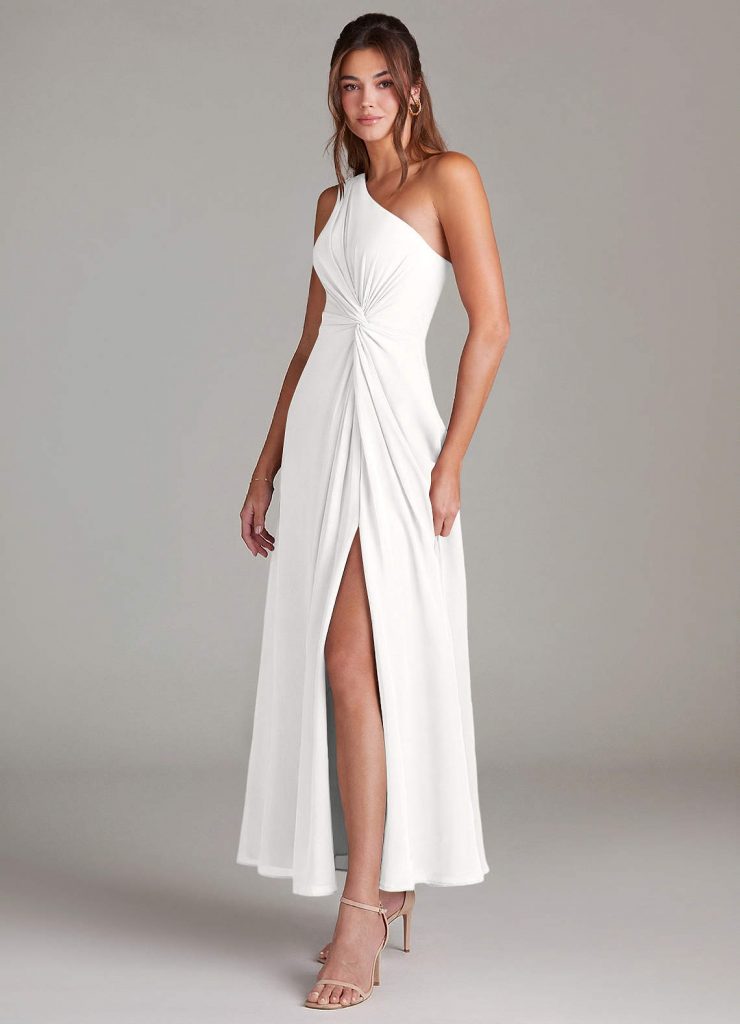
White evening dresses look extraordinary under the right conditions and genuinely difficult under the wrong ones. That gap is larger than it is with any other formal color. I’ll be honest — I didn’t fully understand this until I watched a woman at a New Year’s Eve gala in Washington, D.C., walk in wearing a white column gown that should have been stunning.
The fabric was stiff and synthetic, the lighting in the room was warm and amber, and the white turned this flat, slightly yellowish grey that read as nothing. Same silhouette in quality crepe? Completely different story. White doesn’t forgive, which makes the fabric decision the entire game.
| The most photogenic version of white evening wear is not the brightest or most gleaming white — it’s the white with the right undertone for the lighting. Warm amber ballroom lighting reads differently from blue-toned venue lighting. Ivory and off-white tones photograph warmer and richer than stark white under most formal event conditions. |
|---|
Fabric — The Decision That Everything Else Depends On
Why White Is the Most Demanding Fabric Test
You’ve seen it happen in photos: two people in white, same venue, same lighting — one looks luminous, and one looks flat. Fabric quality is doing that. The material determines whether white reads as intentional luxury or as ‘I found this at the back of a rack.’
Heavy white crepe holds its shape and reflects light off its surface without glare. Quality satin has a warm, moving luminosity — you can actually see the drape shift in motion photos. Chiffon in white creates a very specific effect where layers of it over one another create depth in a single color.
Synthetic polyester blends, on the other hand, tend to go flat in warm indoor lighting and develop that slightly off-white tone I mentioned. The color stops reading as ‘white’ and starts reading as ‘needs washing.’ That’s a strong judgment, but it’s accurate.
The Undertone Question
Stark bright white is the most challenging version to wear. It reads as very cold under warm amber lighting, which is what most formal venues use. Off-white, ivory, and warm white tones photograph richer and more dimensional.
Here’s the thing — you don’t have to commit to full ivory if you want white. But if you’re choosing between two similar dresses, the one with a slightly warmer white undertone will almost always photograph better at a ballroom or hotel gala than the cooler, brighter option.
| Fabric | In White | Photography | Best Setting |
|---|---|---|---|
| Heavy crepe | Sculptural, elegant | Clean surface reflection | Award events, galas |
| Quality satin | Luminous, warm movement | Catches light beautifully | Black-tie, high formality |
| Layered chiffon | Ethereal, dimensional | Depth through layers | Warm-weather events |
| Velvet (off-white) | Rich, unexpected | Photographically complex | Winter formal events |
| Synthetic polyester | Can yellow under warm light | Flat in most conditions | Avoid for a formal evening |
The Photography Problem — What White Does in Photos
Overexposure: White’s Specific Photographic Challenge
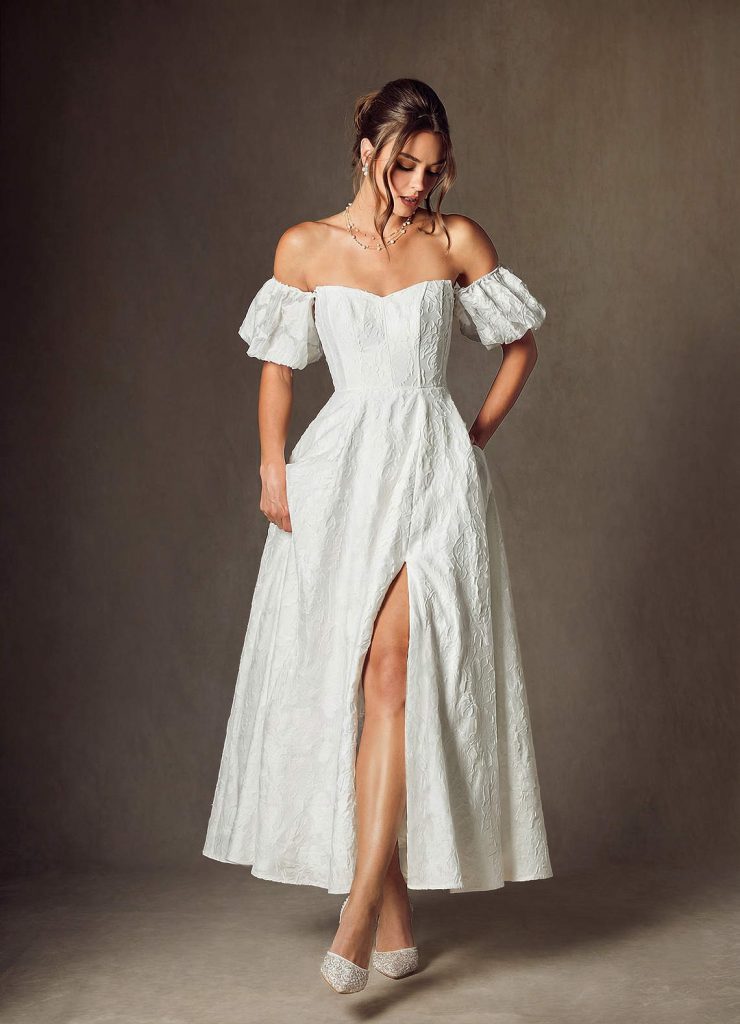
Cameras — especially with flash — often overexpose white, blowing out the detail in the fabric. You’ve seen this: a photo where someone’s white dress reads as a flat, featureless, bright area with no visible texture or dimension.
Textured white fabrics fix this. Subtle beading, lace overlay, pleating, or embroidery give the camera something to grip — the shadows and highlights within the texture create visible detail that prevents the blowout effect. A completely flat, unembellished white satin gown is the most challenging to photograph. The same silhouette with any surface texture is dramatically better.
This is — and I want to be specific here because it’s not the obvious answer — why the ‘subtle embellishment’ rule for white dresses is actually more about photography than it is about aesthetics.
The Shadow Issue — Silhouette Choices That Help
A mermaid evening dress in white creates natural shadow lines through the hip-defining construction, giving the camera’s exposure something to work with. Same with A-line — the volume of the skirt creates a gradient from highlight to shadow that reads as dimensional rather than flat.
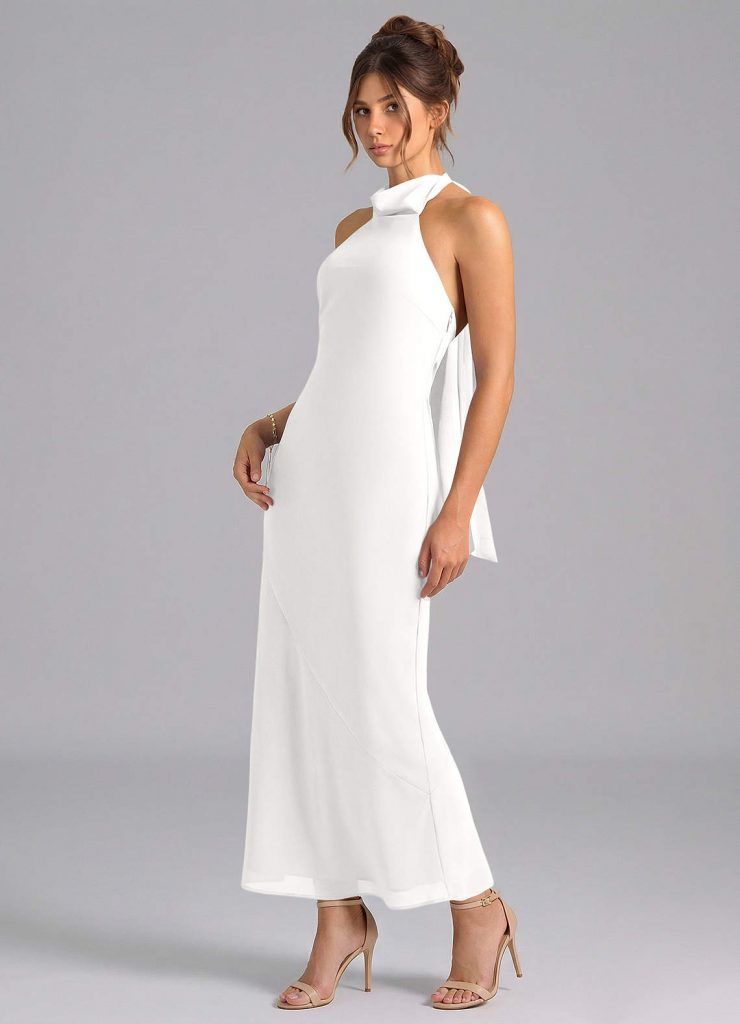
Sheath and column in white are the most photographically demanding because there’s minimal structural shadow. They work best in textured fabric — heavy crepe with natural surface movement, or lace overlay that creates its own shadow pattern.
Accessories — The Specific Decisions That Make or Break White
Gold vs. Silver vs. Nude — Which Actually Works
Gold against white is, in my opinion, the strongest combination in formal white styling. It creates warmth that offsets the color’s natural tendency to read as cold under venue lighting. A gold cuff, small gold drop earrings, or a gold-toned clutch against white reads as deliberate and luxurious.
Silver can read as bridal. I’m not saying don’t wear silver — but know that silver evening dress-adjacent accessories against white can create a very specifically bridal impression that may or may not be what you’re going for at a non-wedding event. Nude accessories — nude heel, nude clutch — are actually the most editorial white pairing. The monochromatic tone-on-tone reads as intentional high fashion rather than accidentally bridal. I didn’t expect that to work as well as it does.
The Color-Pop Option
Bold accessories against white is the third approach. A deep blue evening-dress-adjacent accessory — like a sapphire clutch or cobalt shoes — against a white gown creates a strong contrast that photographs well. Same with deep emerald, ruby red, or any saturated jewel tone. The white becomes the neutral, and the accessory becomes the point. It works. But it requires the accessory to be genuinely high-quality because it’s now the focal point of the look.
| The accessory trap specific to white: adding too many metallic pieces because you think white looks ’empty.’ It doesn’t — white with quality fabric is complete as a single-color statement. One strong accessory piece. Not three. Not five. The dress is the point. |
|---|
Four Decisions Before Wearing White to a Formal Event
| 1 | Check the fabric in the specific lighting type of your venue. Hotel ballrooms with amber lighting, outdoor evening venues with neutral light, and museum event spaces with mixed lighting all interact with white differently. If you can’t test in the actual venue, a lamp in your home that approximates warm amber indoor light will give you a better read than natural daylight. Fabrics that look extraordinary in daylight can go flat under warm artificial light. Test it. |
|---|
| 2 | Choose surface texture rather than flat, smooth fabric. Subtle beading, lace overlay, light pleating, or tonal embroidery give photographers’ cameras something to grip. A completely smooth white surface blows out to flat whiteness in flash photography. Any texture prevents this. The embellishment doesn’t have to be visible or prominent — fine-grain texture in the fabric itself is enough. Heavy crepe with natural movement serves this function without any added embellishment. |
|---|
| 3 | Settle the white undertone question before the accessory question. Warm-white and ivory fabrics photograph richer under most formal venue lighting than stark, bright white. If the dress is warm-toned, gold accessories read as intentional. If it’s a cooler white, silver, or nude works better. Getting the undertone right first makes every subsequent accessory decision easier, because you’re building around a warm palette or a cool one — not guessing. |
|---|
| 4 | Confirm the appropriateness of the event and venue for white. White at formal galas, award ceremonies, and black-tie dinners is completely fine — even striking. White at a wedding as a guest is almost universally still considered inappropriate and will be the thing people notice in photos for decades. Before committing to white for any event, verify it’s not a wedding or wedding-adjacent celebration. Which, fine, obviously — but it’s worth the thirty seconds to confirm. |
|---|
White Evening Dresses by Occasion — Quick Reference
| Event | White Appropriate? | Best White Style | Accessory Direction |
|---|---|---|---|
| Black-tie gala | Yes — strong choice | Floor-length, quality fabric | Gold or nude |
| Award ceremony | Yes | Column or mermaid w/ texture | Bold single piece |
| Evening dinner | Yes | A-line or midi, clean | Minimal, one element |
| Wedding guest | No — avoid | Choose another color | N/A |
| Military ball | Yes with caution | Floor-length, covered | Navy or gold accessories |
Color Combinations That Work With White Evening Dresses
Gold — the Most Reliable Pairing
An evening dress in gold-toned accessories against white creates the warmth the color needs in indoor lighting. Gold earrings, a gold evening bag, or gold shoes all work. The combination reads as intentional and luxurious rather than incidental. This is the combination I’d personally default to for any formal venue with warm interior lighting.
Black and White — the High-Contrast Option
A black and white evening dresses-adjacent approach — white gown with black accessories — is extremely photogenic. The high-contrast photographs are crisp and create a very specific formal elegance that reads well from across a room. Black shoes, a black clutch, and simple silver or black jewelry against white is one of the strongest formal looks for any event. Genuinely hard to go wrong with it.
The Monochromatic All-White Approach
Ivory shoes against an off-white or ivory dress. White-toned accessories. Same-tonal jewelry in gold or pearl. This reads as genuinely high-fashion at formal events and is one of the most underused approaches. Evening dresses floor length in white, with tone-on-tone accessories, create this very specific red-carpet effect that you don’t see as often as you’d expect. There’s another angle here, too — the all-white approach photographs with the least visual complexity, so the dress’s construction and fabric quality are the entire visible story, which goes back to fabric quality being the first decision.
Hair and Makeup — Where White’s High Contrast Creates Specific Choices
Makeup Against White
White creates a high-contrast background against most skin tones, which means your makeup contrast reads differently than it would against a jewel-toned dress. Features look more defined against white.
This is actually good news. A classic red lip against white photographs is intentional and bold rather than overdone. Soft smoky eye against white reads as refined without competing with the dress. A nude or very natural makeup look against white can, in some cases, read as washed out — the dress’s brightness can overwhelm a very minimal face.
Anyway, the point is that the usual rule of ‘one strong makeup element’ applies here, with the additional note that you can lean into that element slightly more against white than you might against a dark gown.
Hairstyle Choices
An updo against a white dress is the most cohesive option for formal events because it doesn’t add color competition at the neckline. Any hair color reads as an additional element against white, and a loose shoulder-length hairstyle creates a border that breaks the gown’s clean line.
That said, a sleek blowout worn to one side works very well. The key is that it’s a deliberate choice, not hair that happens to be down. White demands intentionality across all elements.
Closing Thoughts
White evening dresses require more from the fabric, fit, photography, and accessories than any other formal color. That’s not an argument against them. When those decisions are right — quality fabric with the right undertone, one strong accessory, deliberate hair and makeup — white in a formal room is as commanding as it gets. Nadine Merabi’s guide on how to style a white dress makes the same point: the color’s difficulty is also its power.
And Vivien Lauren’s piece on choosing and styling a luxury white dress delves into fabric-quality specifics that are worth reading if you’re committing to white for a major event. The question is whether you’re willing to get every decision right. Most people aren’t. The ones who look extraordinary.
Frequently Asked Questions
How do I make a white evening dress feel luxurious?
Fabric first. Quality crepe, satin, or chiffon in white reads as luxurious; synthetic polyester reads as plain regardless of silhouette. After fabric: one strong accessory element in gold or nude, precise tailoring, and surface texture that gives photographers’ cameras something to work with.
What’s the best color to pair with a white evening dress?
Gold is the most reliable pairing for formal indoor events — it adds warmth that white needs under venue lighting. Black creates high contrast, making photographs appear sharp. Nude tones create a monochromatic editorial effect. Saturated jewel tones as a single accent piece (one bag, one shoe color) create a strong contrast that reads well across a room.
Can I wear white to any formal event?
Not to a wedding as a guest — that rule still applies across most cultural contexts and is very visible in photos for decades. For all other formal events — galas, award ceremonies, formal dinners, black-tie events — white is completely appropriate and can be genuinely striking.
What fabrics photograph best in white?
Textured fabrics over flat ones. Heavy crepe, quality satin, lace overlay, chiffon layers — all create surface variation that prevents the camera from blowing out the white to a flat area. A smooth, unembellished white satin column dress is the most challenging to photograph. Any texture solves it.
What silhouettes work best for white evening gowns?
A-line and mermaid both create structural shadow lines that photograph naturally. A white mermaid evening dress creates a hip-defining silhouette that adds depth to the photo. Column and sheath work best in textured fabric because the minimal structural shadow means the fabric has to do all the dimensional work.
Gold or silver jewelry with white?
Gold for most formal events with warm interior lighting. Silver reads as potentially bridal in some contexts and can create a cooler overall impression. Nude or pearl jewelry is the safest all-occasion choice — tone-on-tone with white doesn’t create any competing color story.
Is off-white better than stark white?
For most formal indoor venues: yes. Warm-white, ivory, and off-white photographs look richer under amber and warm lighting. Stark bright white is the most challenging version photographically — it can read as very cold under warm lighting or blow out to flat white under flash. The difference is subtle in a boutique; it’s visible in evening event photos.
What hairstyle works best with a white evening gown?
An updo is the most cohesive option because it doesn’t add additional color elements at the neckline. A polished one-sided blowout also works — the deliberateness is the key. Loose, casual styling against a formal white gown creates a contrast in formality that shows up in photos.