
How to Style Blue Formal Dresses for a Polished, Flattering, and Event-Appropriate Look
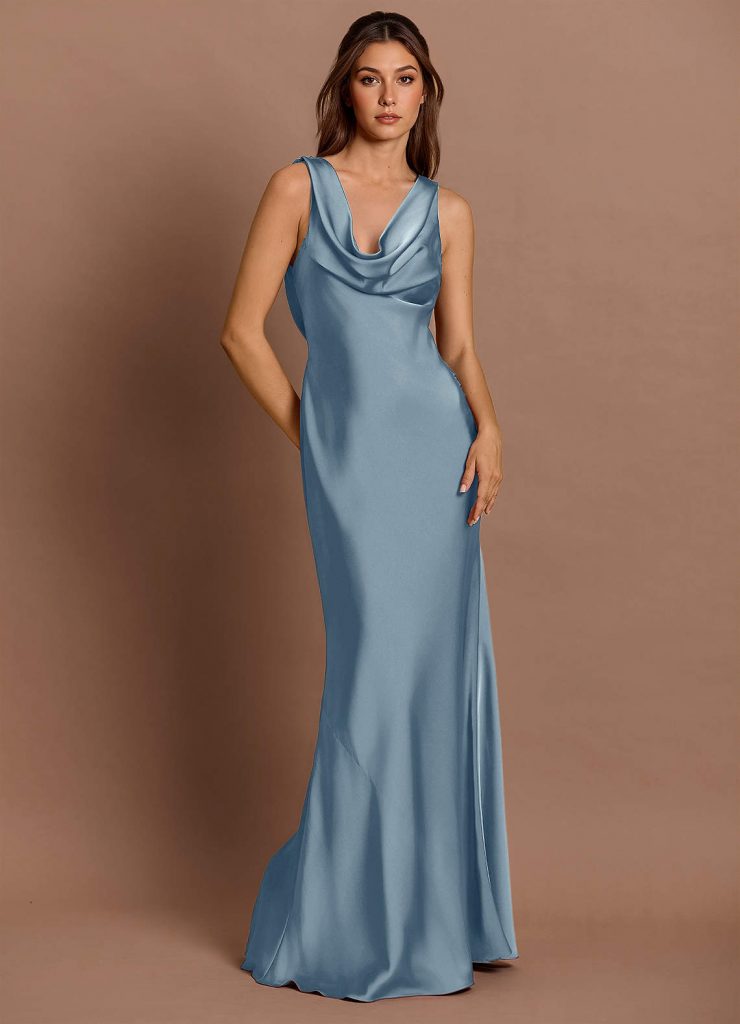
Here’s what actually happens when you wear blue to a formal event — everything photographs better. The color holds its depth under flash, doesn’t wash out under venue lights, and works with almost every skin tone rather than fighting it. Blue formal dresses are one of the more underrated choices in the formal category, honestly.
The dress itself is one decision. The styling that follows — accessories, makeup, hair — is where most looks either come together or quietly fall apart. This guide covers it all, starting with the shade.
| QUICK TIP: Royal blue and gold jewelry. If you take one thing from this guide, make it that combination — it’s almost impossible to mess up. |
|---|
Why Blue Works at Every Formal Event
Here’s something photographers will actually say if you ask them — the color you’re wearing affects roughly a third of how a final photo looks. Blue specifically holds its richness under flash and ballroom lighting in a way most colors don’t manage.
Black goes flat under harsh light. Pastels disappear. Deep blue just… holds.
And it does the same slimming, elongating thing black does — but with personality. At most formal events, a significant chunk of the room shows up in black. Blue reads differently—more intentional, less default.
| ◆ Why Photographers Love It | ◆ What It Does for You |
|---|---|
| Holds depth under venue flash — no bleed, no washout | Flatters warm, cool, and neutral undertones |
| Works in dim ballrooms and outdoor natural light | Works alongside most complexions, not against them |
| Creates visual depth that black doesn’t offer | Reads polished without being predictable |
| Stays rich across different camera settings and angles | Pairs naturally with gold, silver, and neutral accessories |
Choosing the Right Shade of Blue for Your Skin Tone
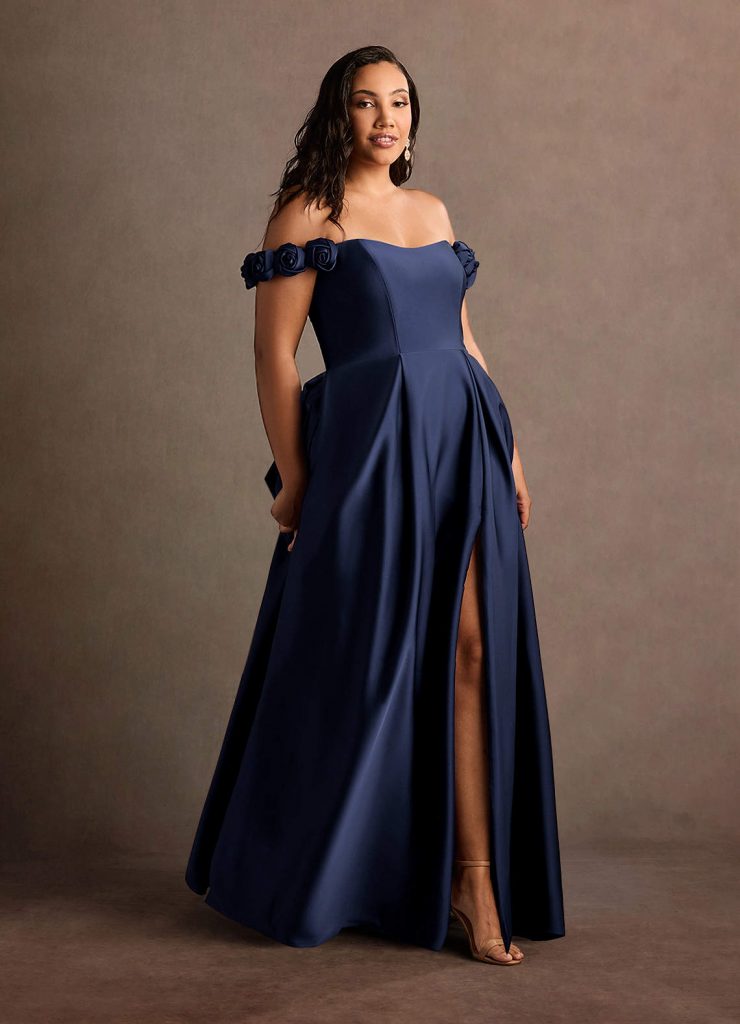
‘Blue’ is really about fifteen different moods depending on the shade. The same silhouette in powder blue versus midnight navy looks like two completely different outfits — same cut, completely different energy.
Skin tone is the first filter. The fastest check: hold the dress near your face in natural light. The shade that makes your complexion look alive — that’s the one.
| ☁ LIGHT BLUE Best for: Fair to light skin tones Best event: Daytime, outdoor, spring Pair with: Silver + champagne heels Fabric: Chiffon, lace |
★ ROYAL BLUE Best for: Medium to deep skin tones Best event: Galas, evening receptions Pair with: Gold jewelry + metallic heels Fabric: Satin, sequin |
◆ NAVY / MIDNIGHT Best for: All skin tones Best event: Black-tie, winter, military ball Pair with: Silver or gold + dark heels Fabric: Velvet, structured satin |
|---|
Light Blue Formal Dresses
Light blue — sky, dusty, powder — is the daylight option. It flatters fair to light skin tones most naturally, and the softness of the color actually does better in natural light than under artificial ballroom lighting. (That’s not a criticism of the shade — it’s a placement thing.)
Pair with silver jewelry and champagne heels. Keep everything else minimal. Adding heavy embellishment to a light blue dress works against the softness that makes it special — it’s that simple.
Royal Blue Formal Dresses
Royal blue earns the attention it gets. Medium to deeper skin tones carry it best — the contrast between the saturated color and warmer complexions is genuinely striking, almost like the dress was made for that combination.
Gold is the metal for royal blue. Not silver — gold. It adds warmth and keeps the look from reading too cool or too sharp. A structured gold clutch and strappy heels, and you’re most of the way there.
Navy and Midnight Blue
Navy and midnight carry the same formality as black — but with real visual depth. In candlelight or under chandeliers, they almost look lit from within. It’s one of those things that’s hard to describe but very obvious in a room.
Velvet formal dresses in midnight blue are worth considering, especially for fall and winter events. The texture catches light in a way that makes darker blues look almost jewel-like indoors.
| Skin Undertone | Best Blue Shade | Best Venue Match |
|---|---|---|
| Cool — pink or rosy | True navy or midnight blue | Dimly lit ballrooms, indoor evening venues |
| Warm — yellow or golden | Royal blue or sapphire | Outdoor receptions, natural light, daytime events |
| Neutral | Most shades — let the fabric finish decide | Any setting; satin reflects, velvet absorbs |
| Deep or dark complexion | Rich midnight or near-black navy | Any venue — the contrast reads naturally striking |
Styling Blue Formal Dresses for Different Events
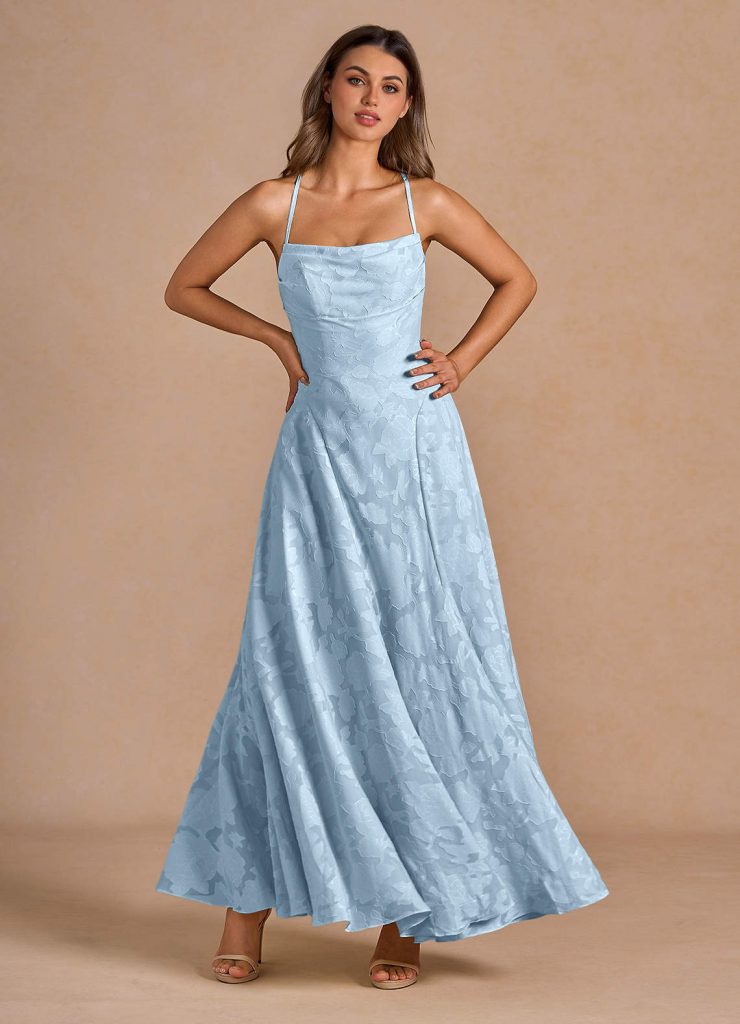
The shade question and the event question are related but different. Getting both right at the same time is the actual goal — and most style mistakes happen when someone only solves one of them.
| Event | Best Blue Shade | Recommended Length |
|---|---|---|
| Wedding — daytime / outdoor | Light/powder/sky blue | Midi or floor-length |
| Wedding — evening reception | Navy or deep sapphire | Floor-length |
| Gala / Black-tie event | Midnight / royal blue | Floor-length only |
| Semi-formal party/cocktail | Any shade works | Short, midi, or tea-length |
| Military ball | Navy or midnight blue | Floor-length |
| Winter formal | Deep navy or midnight | Floor-length, velvet preferred |
Blue as a Formal Dress for Wedding Guests
Blue is one of the better choices for a formal dress for a wedding guest — practically any shade fits somewhere on the spectrum; it’s just about matching the right one to the ceremony. Light blue for outdoor, daytime, or garden weddings—Navy or sapphire for evening receptions or anything with a formal dress code.
Keep the accessories understated — delicate jewelry, simple heels, a neutral clutch. According to The Knot, formal wedding guests are generally expected in floor-length gowns or polished midi lengths. Blue handles both without any trouble.
One thing worth doing before you commit to a shade: check the invite or wedding website and confirm what color the bridal party is wearing. Worth five minutes.
Blue for Galas and Black-Tie Events
Black-tie galas are where deep blue looks its best. Long formal dresses in satin, sequin, or chiffon — navy or royal blue — look extraordinary under ballroom lighting. Rhinestone drop earrings, a glittery structured clutch, metallic heels in silver or gold: that’s the formula.
Vogue’s guide to formal attire consistently recommends floor-length silhouettes for black-tie occasions. A structured, deep blue gown with the right embellishment delivers exactly that — no second-guessing required.
Blue Semi-Formal Dresses for Cocktails and Parties
Semi-formal. This is where blue has the most range. Short, midi, tea-length — any of it works reasonably well, honestly.
The shade calibrates the formality: a short cobalt dress with pointed-toe heels reads intentional and polished. A dusty blue midi with strappy sandals reads effortless. Neither is wrong — it depends on the venue and what the night actually calls for.
Accessories That Actually Work with Blue
Blue is strong enough to carry most formal looks on its own. The accessories here should support it — not compete. That’s the only real rule, and it covers most of the decisions.
| Item | ✓ Best Choices | ✗ What to Skip |
|---|---|---|
| Jewelry | Gold hoops, pearl drops, silver crystal studs, thin chain necklace | Heavy stacked pieces when the dress is already embellished |
| Shoes | Champagne heels, silver sandals, nude strappy heels, gold stilettos | Competing bold colors — bright red shoes fight the dress directly |
| Bag / Clutch | Small metallic clutch, simple gold or silver chain pouch | Oversized bags — they break the silhouette and read casual |
| Hair accessories | Delicate crystal clips, gold pins for updos | Chunky plastic pieces or anything that reads overly casual |
Pick one focal area — ears or neck, not both. If the neckline has any detail or embellishment, the necklace goes. Letting the gown’s structure lead the jewelry decision produces a more cohesive look almost every time.
Makeup and Hair Tips for Blue Formal Dresses
The neckline of the dress is the guide. Whatever it’s showing off — frame it, don’t fight it.
Four decisions. Start at the lip and work outward from there.
| 1 | Decide on your lip first — everything else follows from this. Bold red against blue is high-contrast and genuinely editorial. Nude-pink is softer, more versatile. This single choice sets the direction for every other makeup decision you make that night. |
|---|
| 2 | Match the eyes to the lip, not the dress. Red lip means minimal eyes — mascara and a thin liner. Nude lip opens up warm bronze or gold shadow. Matching eyeshadow directly to the blue of the dress reads as costume. That’s a pattern worth avoiding. |
|---|
| 3 | Add one small navy detail at the waterline. A navy liner along the lower waterline quietly ties the makeup to the dress without being obvious. Small detail, but it photographs noticeably better. Let’s try it before the event to see the difference. |
|---|
| 4 | Let the neckline decide the hair. Strapless or off-shoulder: waves or soft curls. High neck or halter: sleek updo or low bun. One-shoulder: half-up styles that highlight the asymmetry. The dress made a structural decision — the hair should agree with it. |
|---|
Styling Mistakes That Are Easy to Make with Blue
Blue is forgiving, honestly. But a few specific patterns come up often enough that they’re worth naming.
| ✓ DO THIS | ✗ AVOID THIS |
|---|---|
| Choose one jewelry focal area — ears or neck, not both | Stacking multiple bold accessories on an embellished dress |
| Match the shade’s visual weight to the event’s formality | Sky blue to a black-tie gala — it reads underdressed |
| Have the dress tailored — fit is the highest-impact change | Matching the eyeshadow color directly to the shade of the dress |
| Let the neckline guide the hair styling decision | An oversized bag that interrupts the dress silhouette |
| The fit one is the one most people underestimate. A well-fitting midi will always outperform a trending gown that doesn’t sit right. Tailoring is not optional at formal events — it’s the single highest-impact change you can make to how any dress looks. |
|---|
Conclusion
The shade, the event, the accessories, and the neckline. Those four things cover most of what styling blue formal dresses actually requires. Pick the blue that works with your skin tone, match its weight to the occasion, keep the accessories restrained, and let the neckline lead the hair.
Azazie carries a wide selection of formal dresses in sizes 0–30, with made-to-order and custom sizing options. The blue range spans pale sky to deep midnight — worth exploring if you’re starting from scratch or haven’t found the right shade yet.
Frequently Asked Questions
What color shoes go with blue formal dresses?
Metallics — gold, silver, champagne — are the easy answer. They brighten the fabric without fighting it. Nude heels work well when you want the leg to look longer and more seamless. For navy or midnight specifically, black heels or deep burgundy can create a strong, intentional contrast that works really well.
Can I wear blue to a formal wedding as a guest?
Yes, and it’s honestly one of the better guest choices. The main thing is avoiding the exact shade the bridal party is wearing. Light blue works for daytime and outdoor ceremonies. Navy and sapphire are better for evening receptions. Keep the accessories refined and the length appropriate — and you’re good.
What’s the difference between formal and semi-formal dress codes?
Formal typically means floor-length gowns or polished midis in elevated fabrics — chiffon, satin, lace. Semi-formal opens up shorter lengths and cocktail dresses. Blue works across both. The shade and silhouette just adjust depending on which dress code you’re working with.
Is navy blue formal enough for a gala or black-tie event?
Completely. Navy carries the same formality as black, just with more depth and visual dimension. In a well-structured gown, navy actually reads more intentional than black at most events. It’s not playing it safe. It’s a considered choice.
What jewelry works best with royal blue?
Gold, almost always. It adds warmth and keeps the look from reading too cold. Silver and crystal work too if you want something more contemporary. Either way, the rule stays the same: one focal area. Ears or neck — not both.
Are blue formal dresses available for plus sizes and petite frames?
Yes. A-line silhouettes are broadly flattering and create a balanced, elongated line. Empire-waist styles work particularly well for shorter frames. Floor-length gowns in deeper blue shades create a continuous vertical that reads elegant on most body types — the shade itself has a lengthening effect.
What colors are best for winter formal events?
Navy, midnight blue, deep sapphire. These shades pair naturally with velvet or sequined fabrics, which add visual warmth and richness. Metallic accessories in silver or gold photograph cleanly under indoor event lighting — and they hold up well in photos taken under dim, ambient conditions.