
How to Style Black Semi-Formal Dresses for a Polished Look
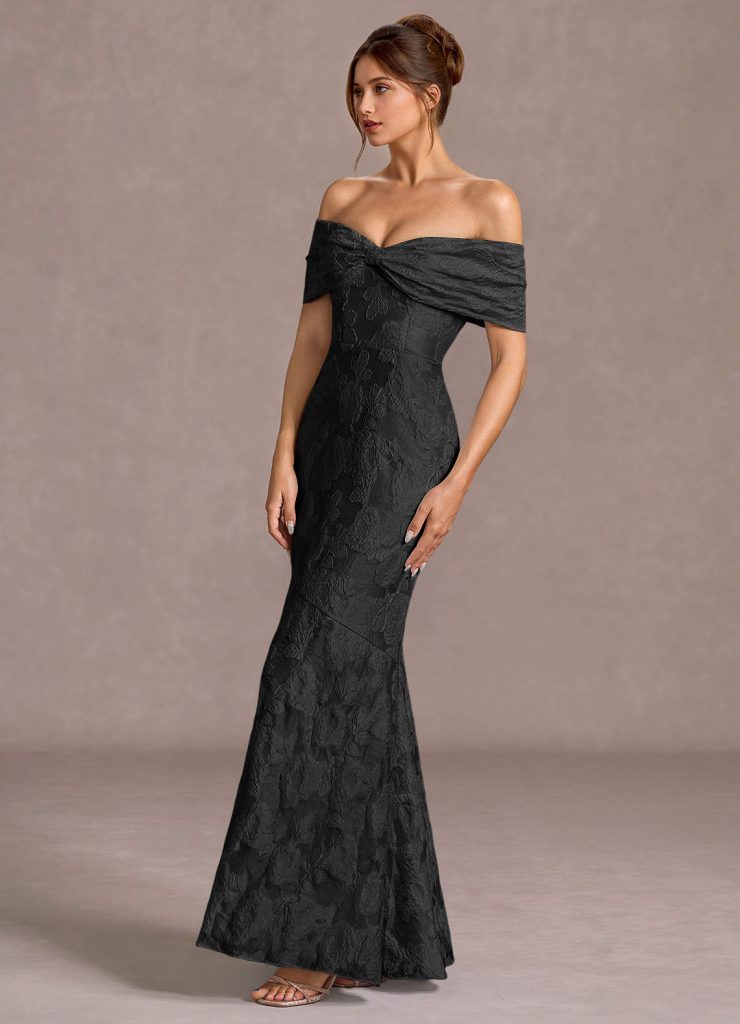
Black is the one semi-formal color where you basically can’t go wrong matching shoes and jewelry to the dress. And that’s actually what makes it tricky. The freedom is real, but so is the risk of just throwing a bunch of things on and hoping for the best. Turns out ‘anything goes’ and ‘everything works’ are not the same thing.
The short version: metallic shoes, one statement piece of jewelry, fabric that matches the actual formality of the event you’re going to. Not just any black dress for any occasion — the fabric is doing a lot of the work here and ignoring that is where most styling mistakes come from.
The Appeal of Black Semi-Formal Dresses
So black photographs differently than color. There’s no color to read in photos — what the camera captures is the silhouette, the fabric’s surface behavior, and the light and shadow created by the cut. That’s why a well-fitted black dress in a good fabric looks expensive in photos and a poorly fitted one looks actively bad. The color isn’t helping or hurting — it’s just not there as a variable. The fit and fabric become everything.
The accessory thing is genuinely useful though. Gold, silver, pearls, bold gemstones, crystal, even a pop of color — all of it works against black without looking like a mistake. That’s not true of most formal colors. Navy and gold are a specific pairing. Blush and rose gold are a specific pairing. Black and whatever you feel like is actually the rule.
But — and this is the actual key point — black’s neutrality makes it really easy to pile on. ‘It all matches!’ yes, but three statement pieces against a black dress looks confused, not polished. One strong focal point is the rule regardless of what that focal point is.
Choosing the Right Fabrics for Black Semi-Formal Dresses
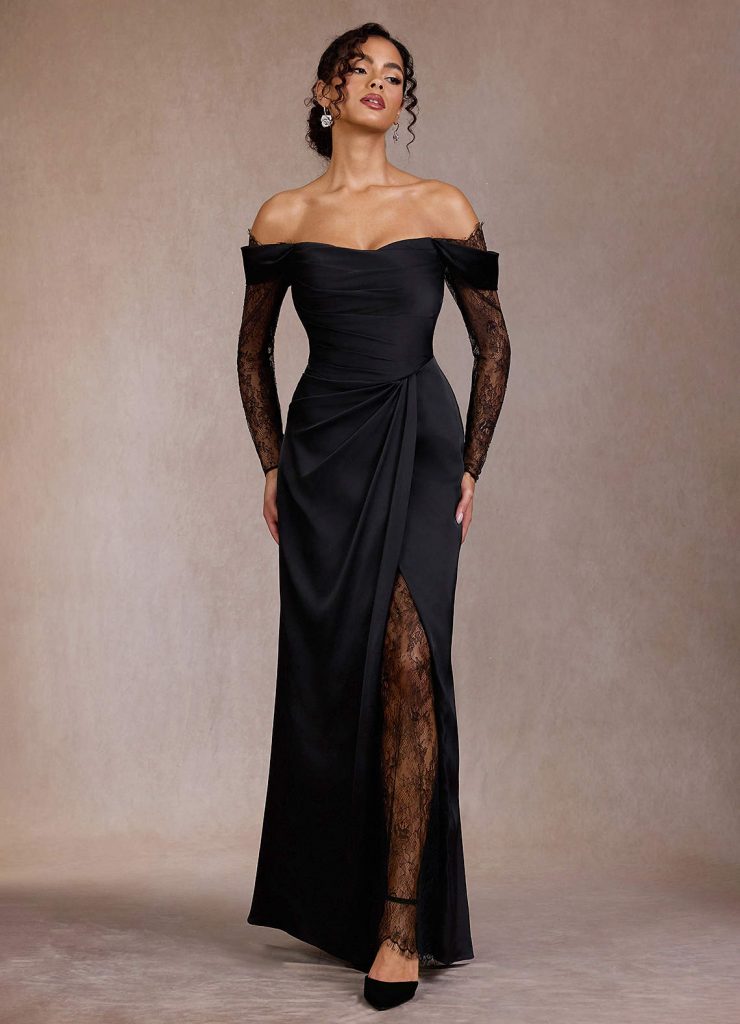
Semi-formal sits above cocktail and below black-tie. Most people read it as ‘nice dress’ and leave it there, which works out fine until it doesn’t. The specific signal it’s sending is: quality fabric, clean silhouette, knee to midi length in most cases. Not floor-length gown. Not a going-out bodycon dress from a fast fashion site.
Black handles both errors — being too casual or too formal — reasonably well, because the color itself reads as serious. But it doesn’t fix them completely. A cheap jersey bandage dress is still too casual for a semi-formal event even if it’s black. A sequin floor-length column gown tips toward full-formal territory even if you’re calling it semi-formal. The color buys you some forgiveness. The fabric and silhouette still matter.
Choosing the Right Fabrics for Black Semi-Formal Dresses
Here’s the thing about black and fabric quality — black amplifies it. A cheap fabric in navy or dusty rose can slide by. The same fabric in black looks cheaper than it is because there’s nothing else to look at. And a genuinely good fabric — satin, velvet, structured crepe — looks more expensive in black than it would in literally any other color. So the fabric choice is doing a lot.
◆ Satin and Silk — The Evening Standard
Black satin has this specific surface behavior where the sheen creates highlights along the silhouette’s natural curves. That’s what gives it the clean, high-end look in event photos and under venue lighting. For evening semi-formal events — cocktail receptions, galas, upscale dinners — black satin is genuinely the reliable standard. Not exciting advice, but it keeps working.
| Fabric | Event Context | What It Does | Season |
|---|---|---|---|
| Satin / Silk | Evening events, upscale receptions | Surface sheen — highlights the silhouette’s curves | Year-round |
| Chiffon | Daytime, outdoor, lighter semi-formal | Soft movement — graceful, not heavy or formal | Spring, summer |
| Velvet | Fall/winter evening occasions | Absorbs light — creates rich, dense depth | Fall, winter only |
| Crepe | Any semi-formal, fitted styles | Matte, structured, clean — the no-fuss option | Any season |
| Lace overlay | Evening, romantic events | Texture + elegance without being informal | Spring, fall |
The occasion-calibration is fabric-driven more than anything else. A black chiffon midi at a wedding daytime feels right. Black velvet at the same wedding feels overdressed. Same color, same basic silhouette — completely different event appropriateness.
Shoe Choices for Black Semi-Formal Dresses
Black shoes with a black dress technically work. But the monochromatic effect can flatten the whole look unless the fabric textures are being deliberately contrasted — like a matte crepe dress with a patent leather heel or something. Most stylists go straight to metallics because they add the light reflection that black fabric absorbs, which creates visual interest without adding another color.
Nude heels are specifically useful with black midi lengths, where the hemline draw attention to the ankle area. They extend the visual line of the leg and keep the eye on the dress rather than the break point. And red heels with a black dress — this is an old combination but it still works when you want personality in the look and you’re willing to commit to it.
| Shoe | When It Works Best | Effect |
|---|---|---|
| Gold metallic heels | Evening events, galas, cocktail receptions | Warm contrast — adds light to what the dark fabric absorbs |
| Silver metallic heels | City events, modern styling, cooler venues | Sharp, contemporary, clean-edge look |
| Nude heels | Midi lengths, elongating effect needed | Extends the leg’s visual line — dress stays dominant |
| Black heels | When texture contrast is very deliberate | Monochromatic — needs something else to create interest |
| Red or bold heels | High-contrast intentional statement looks | Strong personality signal — good when the dress is simple |
Jewelry Pairings for Black Semi-Formal Dresses
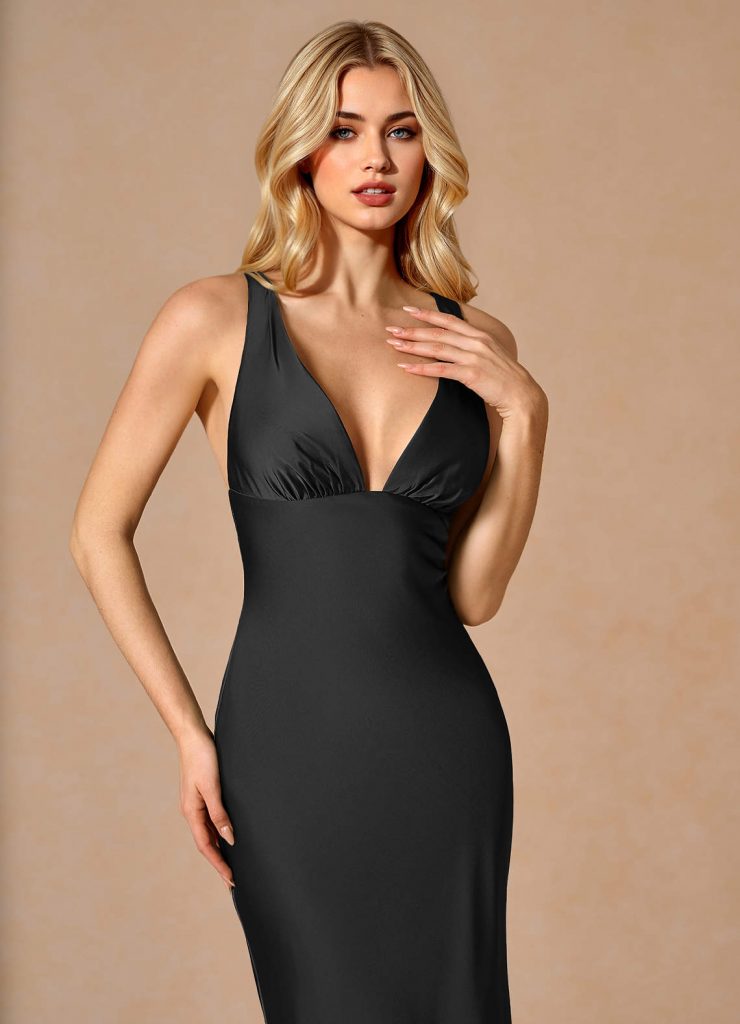
Gold, silver, pearls, gemstones, crystal — black genuinely works with all of it. The color provides contrast for anything. So the question isn’t whether something will work with black. It’s what mood you’re going for and then picking one direction and staying there.
The most consistent mistake is adding too many pieces when the black base is already carrying the visual weight. One or two quality items outperform five medium ones every single time. Gold earrings or silver earrings. Not both. Not with a statement necklace also. Pick the focal point and turn everything else down.
| Metal / Stone | Mood | Best With |
|---|---|---|
| Gold | Warm, regal, classic evening | Satin and velvet — gold adds warmth to their richness |
| Silver / Platinum | Sharp, modern, clean-edge | Any black dress — especially crisp against chiffon |
| Pearls | Soft, timeless, iconic | Any fabric — particularly strong at weddings |
| Crystal / Diamond | Sparkle without color — fully neutral | Any semi-formal black dress in any silhouette |
| Gemstones | Color statement against a black canvas | Simple, unembellished black dresses specifically |
Styling Black Dresses for Different Occasions
The fabric and silhouette are doing the occasion-calibration here, not the accessories. A black chiffon midi and a black velvet floor-length gown are both ‘black dresses.’ They communicate completely different event appropriateness even if the jewelry is identical. Getting the fabric right for the specific occasion is the actual styling decision.
| Event | Best Silhouette | Best Fabric | Accessory Note |
|---|---|---|---|
| Wedding — daytime | A-line or midi | Chiffon with lace detail | Metallic or colorful — not somber |
| Wedding — evening | Fitted midi or floor-length | Satin or silk | Pearls or crystal — celebratory |
| Cocktail party | Knee or midi — fitted | Crepe or satin | Gold or silver — one statement piece only |
| Gala / formal event | Floor-length or structured midi | Satin or sequin | Crystal earrings + metallic clutch |
| Daytime semi-formal | Midi or tea-length | Chiffon or soft crepe | Minimal — nude heels, simple jewelry |
Black at weddings specifically — it’s shifted from ‘edgy exception’ to broadly accepted in most Western contexts. The key is the styling direction: feminine fabric details (lace, chiffon, floral embellishments) and accessories that read as celebratory. Pearl earrings and gold heels on a black dress communicate ‘celebratory guest’ just as clearly as a colored dress does.
| At galas, black is almost a default — which is both its advantage and its risk. The real opportunity is in the silhouette: a well-chosen backless, one-shoulder, or corset black gown reads as deliberate rather than just predictable. |
|---|
Common Mistakes When Styling Black Semi-Formal Dresses
Black’s neutrality makes it feel like anything works. That’s mostly true, but some specific combinations consistently undermine the whole look rather than adding to it.
| ✓ Do This | ✗ Skip This |
|---|---|
| One strong accessory focal area — ears or neck | Multiple statement pieces — each one competes with black |
| Match fabric weight to event formality level | Heavy velvet at a daytime semi-formal — reads overdressed |
| Add one color element (shoe, lip, jewelry) to signal the occasion’s mood | All-black accessories with a black dress at a wedding or gala |
| Get the fit right — alterations are worth it with black | Wearing off-the-rack without checking fit — every gap shows in black |
The most common black semi-formal mistake at events: the wrong fabric for the occasion type. Velvet at a daytime garden party. Chiffon at a winter black-tie dinner. The color works everywhere — the fabric communicates the event code.
Hair and Makeup for Black Semi-Formal Dresses
Two clear options with black: let the dress be understated and let the makeup be the accent, or keep both quiet and let the silhouette do everything. Trying to do both at once is the mistake.
◆ Red Lip and Black Dress
The red lip against a black dress combination exists because it works, consistently in most contexts. High contrast, photographs with editorial clarity, basically impossible to get wrong if you match the lip tone to your complexion temperature. Warm red for warm complexions. Cool-toned deep red for cooler ones. That’s the whole rule.
◆ Nude Lip and Strong Eye — The Alternative
Nude or soft pink lip with a defined smoky or graphic eye keeps attention on the dress silhouette. This direction specifically works when the dress has interesting structural details — open back, corset element, asymmetric neckline. The makeup recedes and the construction does the talking.
◆ Hair Follows the Neckline
Strapless or sweetheart: hair up or loosely back — let the neckline show. High neck or halter: updo, otherwise the upper silhouette reads crowded. V-neck: either works, but a low loose wave with a V-neck is one of those specific combinations that consistently photographs well. Simple rule: hair should support what the neckline is doing, not compete with it.
◆ Foundation Finish Matters More With Black
Black reflects no light back toward the face, so the face’s own luminosity determines the overall look’s glow. Matte foundation under event lighting with a black dress can look flat. A subtly radiant base — luminous at the cheekbone — creates what the dress isn’t providing. Small adjustment, visible difference in photos.
Conclusion
Fabric, silhouette, one strong accessory, occasion code. Those four things determine whether a black semi-formal dress looks intentional or just safe. The color is doing its job already — the rest of the decisions are about directing where it goes.
Azazie carries formal dresses in sizes 0–30 with made-to-order options. The black semi-formal dresses selection covers midi lengths to structured evening silhouettes — worth exploring once black is confirmed as the direction.
Frequently Asked Questions
What is the best way to accessorize a black semi-formal dress?
One strong piece, not three medium ones. Black is already carrying the visual weight — jewelry should punctuate it, not compete with it. Metallic tones (gold or silver) are the most reliable because they add light to a dark fabric without adding another color. Quiet shoes and bag if the jewelry is doing something.
How do I make a black dress look fresh and modern?
Fabric choice does more than any accessory. Black crepe midi with architectural lines reads current. Black chiffon with a contemporary neckline — one-shoulder, backless — reads fashion-forward. One sharp geometric accessory beats three classic ones.
Are black semi-formal dresses appropriate year-round?
Yes. Chiffon and lighter crepe for spring and summer semi-formal events. Satin year-round for evening. Velvet specifically for fall and winter — the fabric weight matches the season. The color never reads seasonally wrong. The fabric carries the seasonal signal.
How do I choose the right black semi-formal dress for my body type?
A-line cuts balance pear shapes by adding visual weight to the upper body. Fitted sheaths and wrap styles follow the hourglass line. Petite frames benefit from shorter hemlines or high slits. Taller frames can carry dramatic silhouettes — column gowns, structured floor-length — that shorter frames might get overwhelmed by.
What accessories should I avoid with a black semi-formal dress?
Casual accessories — canvas bags, sporty sandals, chunky plastic jewelry. Also over-accessorizing in general. And at celebratory events like weddings and galas: all-black-everything signals the wrong mood. Add one element of contrast or color to match the occasion’s energy.