
How to Choose Graduation Dresses With Gown That Photograph Well and Sit Smoothly
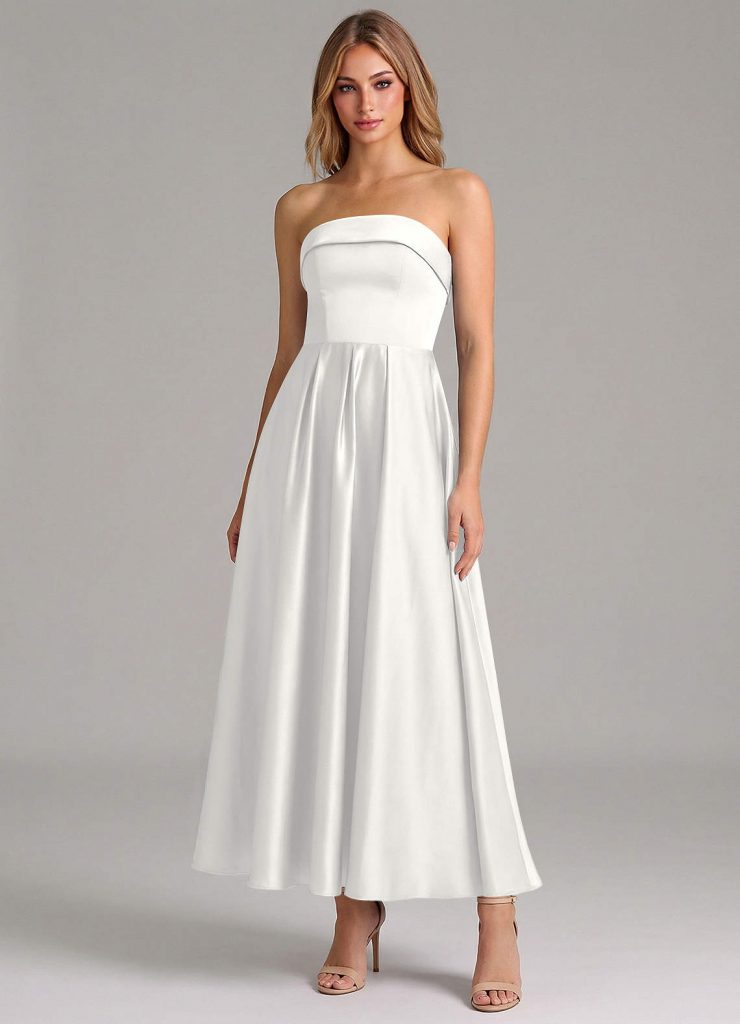
Graduation dresses with a gown are a specific category, not just any dress you throw on for the ceremony. The gown changes everything. What looks great on its own can bunch, bulge, or bleed through once you layer a synthetic robe over it — and since most official photos are taken while you’re wearing the robe, those are the pictures that matter most.
The short version: keep it simple, breathable, and the right length. White and cream handle any gown color. Midi sits polished at most graduation gown hems. Mini disappears completely and reappears as a reveal at the party. Floor-length can be stunning for formal university ceremonies — just test it on actual stairs first. Browse graduation dresses in white and neutral tones — 100+ styles built for ceremony comfort and photo readiness.
Why the Gown Changes Everything About Dress Choice
Here’s the thing most people don’t think about until they’re standing in front of a mirror in the actual robe: graduation gowns are thin, synthetic, and clingy. They’re also not exactly tailored. They sit differently on everybody, and whatever is underneath shows — bulges, bunching, even color from the dress below if the robe is light enough.
A dress with a structured bow at the back? That bow becomes a visible lump under the robe. Big ruffled hem? Creates weird volume at the bottom that shows in stage photos. Very slippery satin? The gown slides around, and your cap and stole won’t sit right. The dress that works under a gown is one that barely exists — smooth, flat, clean lines.
You might notice that the students in graduation photos who look the most polished are usually the ones in the simplest white dresses. Not the most interesting dresses. The ones that let the gown do its thing and then get out of the way once the robe comes off.
| Silhouette | Fabric | Length | Neckline |
|---|---|---|---|
| A-line or fitted sheath No big bows or back details Nothing bulky at shoulders Smooth from top to hem |
Breathable — not polyester Not too slippery (gown slides) Wrinkle-resistant is key Lace holds shape beautifully |
Dress = same or shorter than the gown Mini: fully hidden, great reveal Midi: most balanced option Floor: formal only, test stairs |
V-neck or scoop sits cleanly Fits naturally inside the gown collar Avoids competing with hood/stole High neck creates a stage pop |
Best Lengths for Graduation Dresses With Gown
Length is the single most practical decision you’ll make for the ceremony. The relationship between your dress hem and the gown hem determines the visual at the bottom of every stage photo — and it’s one of those things that’s very obvious on camera and very easy to get wrong.
Mini — Fully Hidden, Great Reveal
A white mini-dress graduation gown stays completely inside the gown during the ceremony, creating the cleanest possible stage silhouette and avoiding the awkward hemline-peeking issue. The payoff is the post-ceremony reveal. Once the robe comes off for family photos and the party, you have a fun, youthful look that transitions naturally. Mini is especially reliable for high school ceremonies in warm gyms.
Midi — The Sweet Spot
A white midi graduation dress is the most consistently recommended option, and for good reason. It sits just below the knee or at mid-calf — usually right at or slightly above the graduation gown hem — which creates a polished, intentional visual in stage shots. You can see a strip of white at the bottom, which reads as deliberate rather than accidental. For college ceremonies, midi is usually the default pick.
Long Dress With Graduation Gown — When It Actually Works
A graduation long white dress under a gown can look genuinely elegant — particularly for formal university commencements where the gowns are heavier, and the whole setting is more formal. The critical rule: the dress hem should not extend beyond the gown hem in a way that looks uneven. A slim column or A-line silhouette in lightweight fabric is the safest choice for floor length. And seriously — walk up and down real stairs in this combination before graduation day.
| Length | How It Sits | Best For | |
|---|---|---|---|
| MINI | Short / knee | Hidden inside the gown — cleanest stage look | High school, warm venues, outdoor, casual tone |
| MIDI ⭐ Best |
Mid-calf | Visible at gown hem — intentional, polished | College ceremonies, all photo types, dinner after |
| FLOOR | Floor-length | Dramatic — works when slim, not bunchy | Formal university commencements, outdoor portraits |
| ! | Floor-Length Warning If you’re wearing a long dress with a graduation gown, test the full combination on actual stairs. Not just standing — walking up and stepping down, in your ceremony shoes. A hem that catches mid-stride becomes a tripping hazard on stage in front of everyone. |
|---|
Dress Styles That Actually Sit Flat Under a Gown
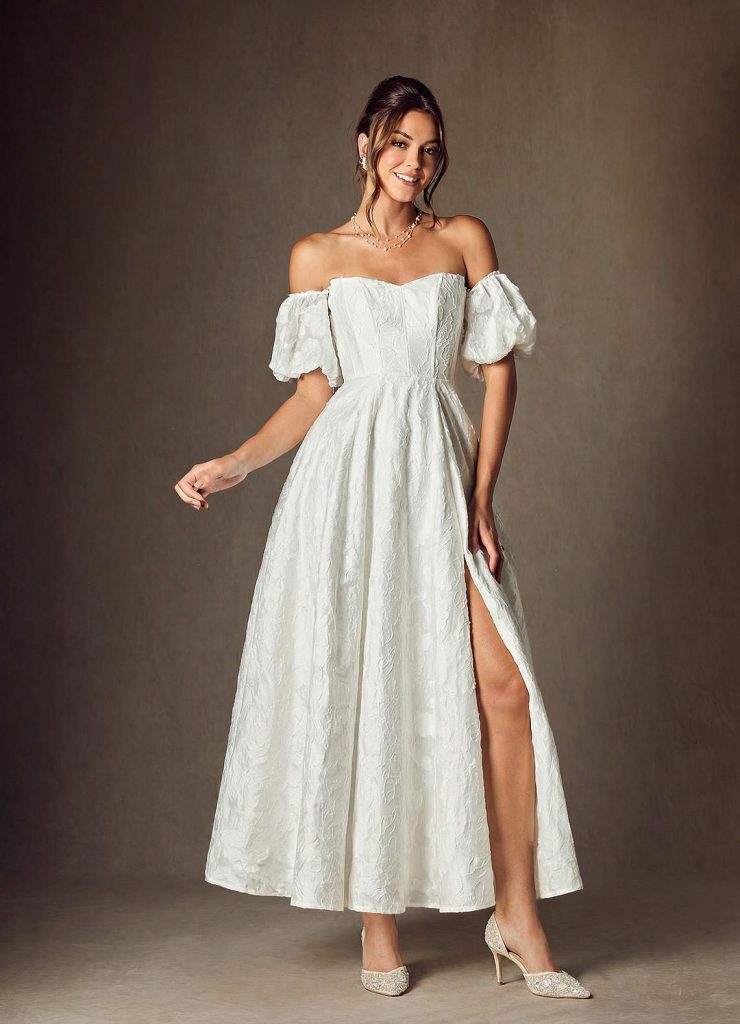
Style affects the gown interaction more than most people expect. Some dress silhouettes were basically made for under-gown wear. Others fight the robe in ways that show very clearly in ceremony photos.
A-Line — Most Reliable Under a Gown
An a line white graduation dress is genuinely the safest choice. Fitted at the waist, gentle flare toward the hem — the shape creates waist definition without adding shoulder bulk where the gown sits heaviest. The flared skirt flows naturally under the robe rather than bunching. It photographs well once the gown comes off, too, which is the longer payoff.
Fitted Sheath — Cleanest Silhouette
A fitted sheath sits close to the body, which means the gown drapes naturally over it without being pushed out in unexpected places. In ceremony photos, fitted styles look the most streamlined — no weird volume, no lumpy areas. The one thing to check: make sure there’s enough give to sit and stand comfortably for an extended ceremony. A zero-stretch sheath can be genuinely uncomfortable after an hour in a folding chair.
Lace — Texture Without Bulk
A lace graduation dress is a strong pick for undergown wear because lace is inherently lightweight and its open weave breathes well. More importantly, lace holds its shape through extended wear — it doesn’t wrinkle into a crumpled mess after sitting for two hours. The lace pattern adds visual interest when the robe comes off for photos, making it one of the best fabric choices for the transition from ceremony to celebration. Lining is non-negotiable: unlined lace in bright ceremony lighting creates a transparency problem.
What to Avoid
Anything with structured volume at the back (large bows, oversized sashes) creates a visible bump through the gown fabric. Very slippery satin shifts under the robe, which makes caps and stoles sit crookedly. Thick velvet or heavy brocade traps heat — graduation ceremonies in late spring can be warm, and adding two heavy layers is genuinely uncomfortable. Ruffled tiers or layered skirts create bulk at the hem that shows in stage photos.
| A-Line | Fitted Sheath | Lace | Avoid |
|---|---|---|---|
| Waist definition, no shoulder bulk Flows under the gown naturally Best for most body types Works on stage + in portraits |
Closest to the body = least bulk Gown drapes cleanly over it Needs slight stretch for comfort Looks sharpest in photos |
Breathes well under the robe Holds shape through ceremony Must be fully lined Elegant once the gown comes off |
Large back bows (visible lump) Slippery satin (gown shifts) Heavy velvet or brocade (heat) Ruffled tiers (hem bulk) |
Best Fabrics for a Graduation Dress With a Gown
Fabric is the comfort decision. It also determines whether your dress holds its shape through two hours of sitting and a stage walk, or whether it crumples and wrinkles by the time your name is called. Under a graduation robe, fabric choices that might be fine in any other context become genuinely important.
| Fabric | Why It Works Under a Gown | |
|---|---|---|
| 1 | Chiffon | Breathes well under the robe, doesn’t trap heat, drapes naturally rather than bunching. Best for warm venues. |
| 2 | Matte Satin | Holds shape and photographs with a clean sheen. Matte version avoids flash glare. Needs some structure to not slide. |
| 3 | Crepe / Ponte | Wrinkle-resistant and structured. Stays looking polished through a long ceremony without sagging. |
| 4 | Lace (Lined) | Lightweight, breathable, holds shape. Lining is mandatory — unlined lace becomes transparent under ceremony lighting. |
| 5 | Stretch Knit | Comfortable for extended sitting, moves with you. Needs enough structure to avoid looking too casual for a ceremony. |
| ✗ | Heavy Velvet / Brocade | Traps heat, stiff, and doesn’t drape naturally under a gown. Best saved for fall or indoor evening events. |
| ★ | Breathable Fabric Tip Graduation venues are often warmer than expected — gymnasiums, auditoriums, and outdoor stadiums. Under a synthetic graduation robe, a heavy fabric choice becomes noticeably uncomfortable before the ceremony is halfway over. If it feels warm in a fitting room, it’s going to feel considerably warmer in a crowded venue in late May. |
|---|
Graduation Dresses With Gown by Ceremony Type
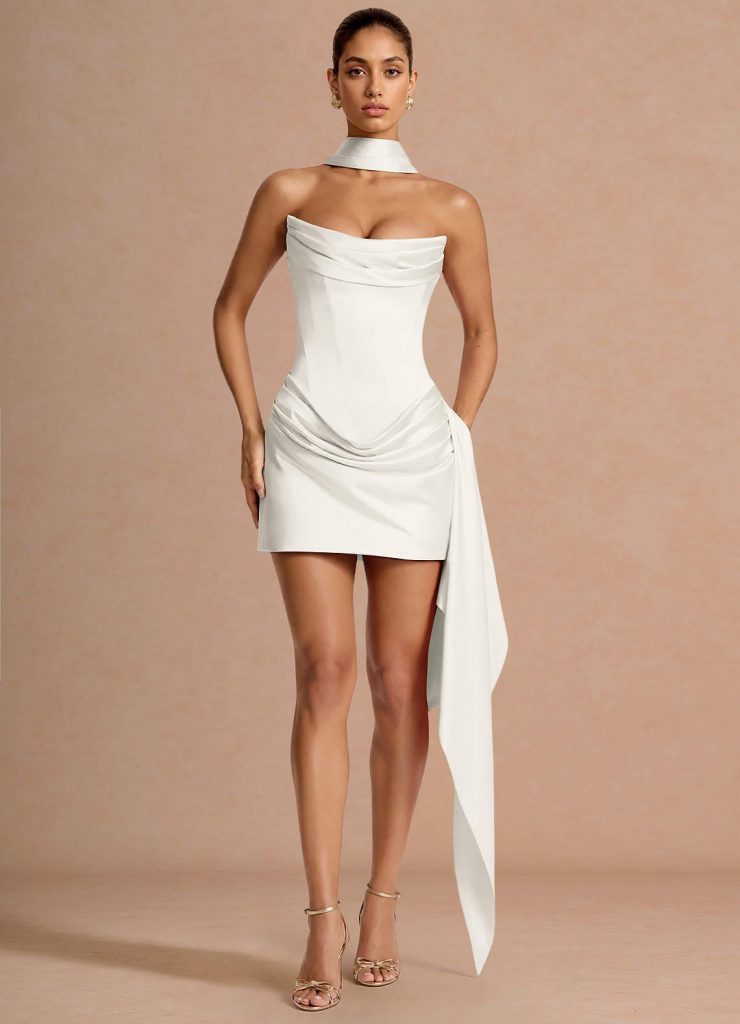
The setting changes the calculation significantly. A high school gymnasium in June and a formal university commencement on an outdoor quad ask for different things from the dress beneath the gown.
| High School | College / University | Outdoor Ceremony |
|---|---|---|
| Mini or midi length White or cream gowns are often thin Lightweight breathable fabric Gymnasium = warm, plan for heat Simple clean neckline |
Midi or floor-length More structure appropriate Hood and stole need a flat neckline Ceremony can be 2+ hours Robe comes off for outdoor portraits |
Light, breathable fabric essential Shorter hem is safer on uneven ground White photographs in all light Wind can lift light skirts — test Block heels are better than stilettos |
For high school graduation dresses specifically, the gymnasium setting almost always runs warm and gowns are frequently lightweight polyester — meaning the transparency test matters more here than at most university ceremonies. College graduation dresses tend to pair better with midi or floor-length styles because university gowns are heavier and more structured.
Graduation Gown Dress Do’s and Don’ts
| ✓ DO | ✗ DON’T |
|---|---|
| ✓ Test the full combination: dress + robe + shoes before the day | ✗ Wear a brand-new, untested combination on stage |
| ✓ Choose white or cream — won’t bleed through or clash | ✗ Wear dark, saturated colors under a light-colored gown |
| ✓ Pick fabric that breathes under two layers | ✗ Choose heavy velvet or thick brocade for a spring ceremony |
| ✓ Keep the neckline clean so the hood and stole sit flat | ✗ Wear a bulky or ornate neckline that competes with honors regalia |
| ✓ Steam both the dress and gown before the ceremony | ✗ Wear wrinkled fabric — cameras catch creases in photos |
| ✓ Keep the dress hem the same length or shorter than the gown | ✗ Wear a dress that accidentally peeks below the gown unevenly |
5-Step Pre-Graduation Dress Check
| Step | What to Check | |
|---|---|---|
| 1 | The Transparency Test | Hold the dress in direct, bright light — a window or an overhead lamp. White fabric can become see-through under the ceremony stage spotlights in ways invisible in a dressing room. |
| 2 | The Gown-On Test | Put on the dress, then the gown. Check the hemline relationship, check for bulk at the shoulders and back, sit down, and stand up quickly. |
| 3 | The Stairs Test | Walk up and down real stairs in the full combination with your ceremony shoes. Non-negotiable for floor-length styles. |
| 4 | The Sit Test | Sit for 10 minutes in the dress. Does it ride up? Does it pull? Does anything feel restrictive? Graduation ceremonies involve extended sitting. |
| 5 | The Steam | Steam both the dress and the gown the night before. Cameras catch wrinkles in photos in ways that aren’t obvious in person. |
| ✓ | Quick Day-Of Checklist Seamless nude undergarments · Safety pins in bag · Lint roller for dark gowns · Comfortable broken-in shoes · Both pieces steamed · Hemline tested with actual gown |
|---|
The Short Version
Graduation dresses with a gown work best when the dress supports the robe rather than competing with it. Clean silhouette, breathable fabric, the right hem length, proper lining. White or cream handles every gown color. Midi is the most consistently reliable length. A-line or sheath sits flattest under the robe. Test everything together before the day — that single step prevents the most common graduation dress mistakes.
Azazie has 70+ graduation dresses in white, cream, and soft neutrals with custom sizing available so the hem lands exactly where you need it relative to your gown length.
Frequently Asked Questions
What dress should you wear under a graduation gown?
A simple, lightweight dress in white or cream with clean lines and breathable fabric. A-line and sheath silhouettes sit flattest under the robe. Avoid anything with structural back details or very slippery fabric — both create visible problems through the gown.
Should your dress be longer or shorter than the graduation gown?
Same length or shorter — not longer. If the dress extends visibly below the gown unevenly, it looks accidental and messy in stage photos. Either keep it clearly shorter (mini, hidden inside) or at the same level as the gown hem (midi, flush). The in-between is the awkward zone.
Can you wear a long dress with a graduation gown?
Yes, when the dress is slim and the fabric is lightweight. A long white graduation dress in a clean column or A-line silhouette, worn under a formal university gown, can look elegant. The hem should not extend beyond the gown. Walk up stairs in the combination before the ceremony day — not just stand in front of a mirror.
What length dress is best under a graduation gown?
Midi is the most recommended for college ceremonies — visible at the gown hem but not awkwardly longer. Mini is excellent for high school settings — fully hidden during the ceremony, with a great reveal afterward. Floor-length works for formal university commencements when the dress silhouette is slim.
What fabric works best under a graduation robe?
Chiffon, crepe, and matte satin. These breathe beneath the robe’s additional layer, hold their shape during extended sitting, and don’t create excessive heat. Avoid heavy velvet or unlined fabrics. Lace is excellent when properly lined — the open weave breathes while the lining handles transparency.
How do you stop a dress from bunching under a gown?
Choose a flat, streamlined silhouette with no structural back details. Avoid thick fabrics, layered hems, or very slippery satin. Seamless undergarments help the dress sit flat against the body. The gown-on test before the ceremony day reveals any bunching issues early enough to fix them.
What colors look best under a graduation gown?
White and cream are the most reliable. They won’t bleed through light-colored gowns or create visible color through thin synthetic fabric. They also handle any gown color — dark, light, or bright — without the stress of coordination. Pastels work if the gown is dark. Avoid dark saturated colors under lighter gowns.
How do you make sure a white dress isn’t see-through under stage lighting?
Test under direct bright light before the ceremony. Stand in front of a bright window or step under a bright overhead lamp while wearing the dress. Stage lighting is more intense than any dressing room — this test reveals transparency that’s invisible in typical shopping conditions. Choose a fully lined dress or one in a structured fabric that doesn’t require a separate lining.