
How to Choose Graduation Dresses That Feel Polished and Photo-Ready
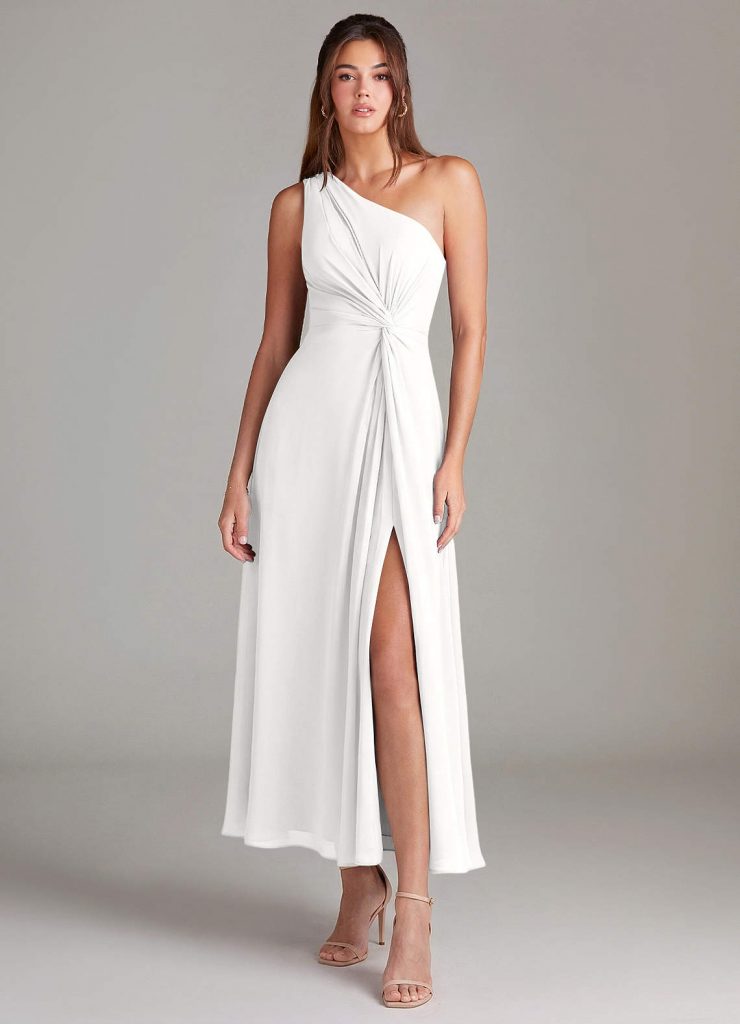
Okay, real talk — graduation day is longer than it looks on paper. You’re up early, in the dress for hours, sitting through speeches, walking across a stage, smiling for a hundred photos. The right dress just… disappears. You stop thinking about it. That’s the goal. White and cream shades work best for photos, midi lengths are the sweet spot for most people, and anything lightweight beats anything heavy every single time.
What Makes a Graduation Dress Look Polished Under a Gown
Here’s the thing most people don’t realize until they’re standing in front of a mirror in their robe — the gown covers like 80% of your outfit. So “polished” doesn’t mean complicated or expensive. It means the small visible bits look intentional—the neckline, for example. The hem is peeking out below. The way the dress holds its shape after you’ve been sitting for two hours.
Clean Silhouettes Work Best
A-line and sheath cuts are genuinely the most dependable here. Not because they’re trendy — just because they stay put. Sit down, stand up, walk across a room, they don’t twist or bunch or fight the robe. Shift dresses are solid, too, especially if the ceremony is outside and you need airflow over structure.
What to skip: multiple skirt layers, wide ruffled hems, anything with dramatic sleeve volume. Lovely on their own. Under a robe? They create a weird lumpy silhouette that shows in every group photo.
Fabric Matters More Than You’d Think
Chiffon, stretch satin, lace graduation dresses — these all drape well and breathe. Lace especially photographs with a softness that plain fabric just doesn’t have. It nicely catches the light. You might notice in photos that lace reads as “intentional” even in quick candid shots.
Heavy polyester, structured boning, thick brocade — avoid those. They trap heat under a robe and go stiff after a couple of hours. Nobody wants to be uncomfortable at their own graduation.
Best Graduation Dress Lengths for Photos and Comfort
In simple terms, length is probably the most practical choice you’ll make. It directly affects how you move, whether you trip on stage stairs, and what shows up in ceremony photos.
Mini Graduation Dresses
A white mini graduation dress gives you the most freedom to move. No worrying about catching fabric on stairs, no awkward hem bunching when you sit. For warm weather or high school ceremonies — where the whole vibe is more celebratory anyway — this just works. Photographs clean too, especially outdoors.
Midi Graduation Dresses
Honestly, this is where most people land — and for good reason. A white midi graduation dress hits at the knee or ankle, so a little bit will still be visible below the robe hem. That small detail makes a difference. It looks like a real choice rather than “my outfit disappeared under this gown.” And you can go straight to dinner after without changing.
Long Graduation Dresses
Long styles are great for formal college ceremonies — especially if you’re planning to take the robe off for outdoor photos after. One thing, though: actually walk around in the dress before graduation day. With the shoes you’re planning to wear. The hem needs to be short enough that stairs aren’t a hazard. Sounds obvious, but it’s the kind of thing people forget.
| Length | Best For | Key Benefit |
|---|---|---|
| Mini | High school, warm venues, outdoor settings | Easy movement, zero tripping risk |
| Midi (Most Popular) | College ceremonies, dinner, evening events | Visible below the robe, no wardrobe change |
| Floor-Length | Formal college ceremonies | Great for post-ceremony outdoor photos |
Best Graduation Dress Colors for a Photo-Ready Look
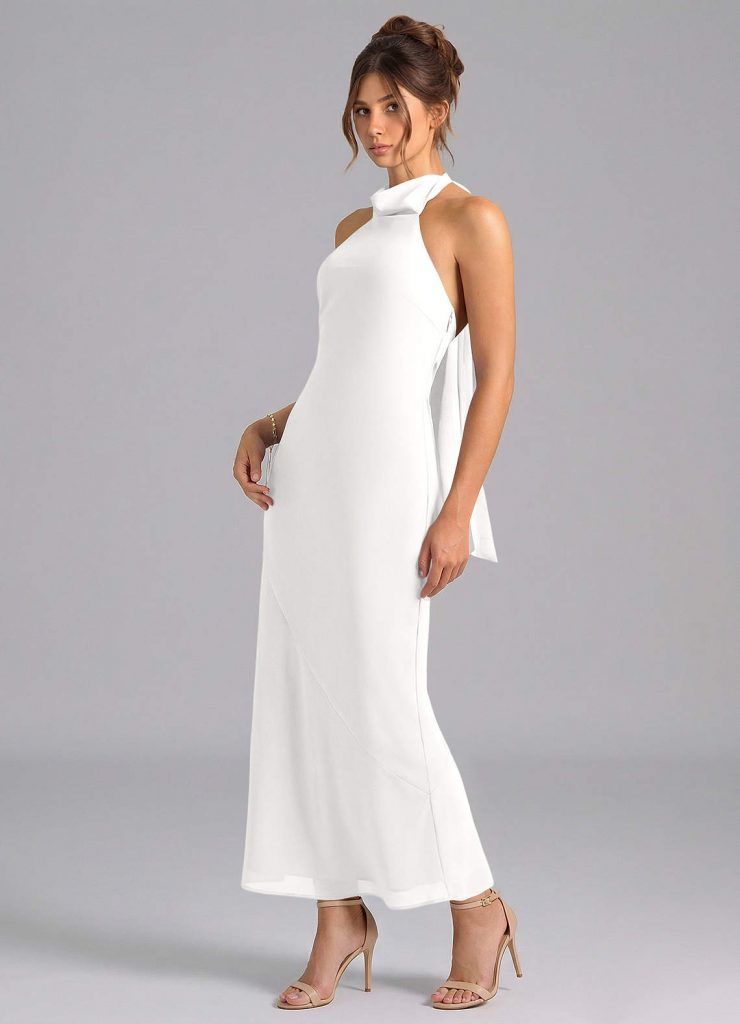
This is one of those choices that feels aesthetic but is actually pretty practical. The wrong color under bright ceremony lighting can show through your gown, look flat in photos, or clash with the school’s robe color in ways that are hard to fix after the fact.
White Graduation Dresses
White is the default for a reason — not because it’s boring, but because it just works. Reflects light evenly, looks clean in literally every photo format. Candid, posed, wide-group shots, stage close-ups. Accessories are easy because nearly everything pairs with white.
Cream, Ivory, and Champagne
If stark white feels a bit cold on your skin tone, try these moves. Ivory is especially good for golden and olive complexions. Champagne has a subtle shimmer that photographs nicely under evening lighting — if you have dinner or an event after, it holds up really well.
None of these bleeds through light-colored robes the way darker shades do. They’re safe, versatile, and don’t require much planning for accessories.
Colors to Think Twice About
Dark saturated colors can bleed through thin robe fabric — especially if the gown is white or off-white. Bold patterns and busy prints get fragmented in wide ceremony photos with a hundred people in the frame. Neon shades pick up flash in a way that almost always looks bad in editing.
| White | Cream | Ivory | Champagne | Blush |
|---|---|---|---|---|
| Classic, bright | Warm, elegant | Versatile | Subtle shimmer | Soft, romantic |
Comfort Features That Make Graduation Dresses Easy to Wear
This part gets glossed over in most buying guides, and it really shouldn’t. You’re going to be in this dress for a long time. Early arrival, the ceremony, photos, family dinner — easily eight hours. A dress that looks great but feels wrong by hour three is not the right dress.
Breathable Fabric is Non-Negotiable
Late spring ceremonies get warm. Under a graduation robe, they get warmer. Chiffon, cotton blends, stretch satin — these breathe. Lined polyester doesn’t. If you’re trying on a dress and it already feels stuffy at room temperature, it’s going to be miserable inside a gymnasium in May.
A Little Stretch Goes a Long Way
Seriously. You’re sitting through speeches, presentations, waiting for your name — that can be over an hour of sitting. A dress with zero give will pull across the hips and back before the ceremony is half over. Even a small amount of stretch in the fabric changes the whole experience.
Custom sizing helps a lot with this. Azazie’s made-to-order option means the dress is cut to your actual measurements, not a size chart that might be off by an inch in three places. And A-line graduation dresses naturally accommodate movement better than fitted cuts — the flare at the hem means your stride isn’t restricted even without stretch fabric.
Graduation Dresses by Ceremony Type
The setting genuinely changes the calculation. A high school gymnasium in June and a university outdoor commencement are asking for pretty different things from a dress. Getting this right eliminates one thing to stress about.
| High School Graduation | College Graduation | Outdoor Ceremony |
|---|---|---|
| Mini or midi length White or soft cream Simple, clean styling Easy movement for the stage |
Midi or floor-length Slightly more formal Chiffon or lace fabrics Transitions to evening events |
Breathable cotton or chiffon Shorter hem — safer on grass Light colors for warm weather Flat footwear recommended |
For high school graduation dresses, simpler tends to work better. Gymnasium lighting is not forgiving of busy patterns. College ceremonies give you more room — especially if the robe comes off for outdoor photos later in the day.
Popular Graduation Dress Styles Right Now
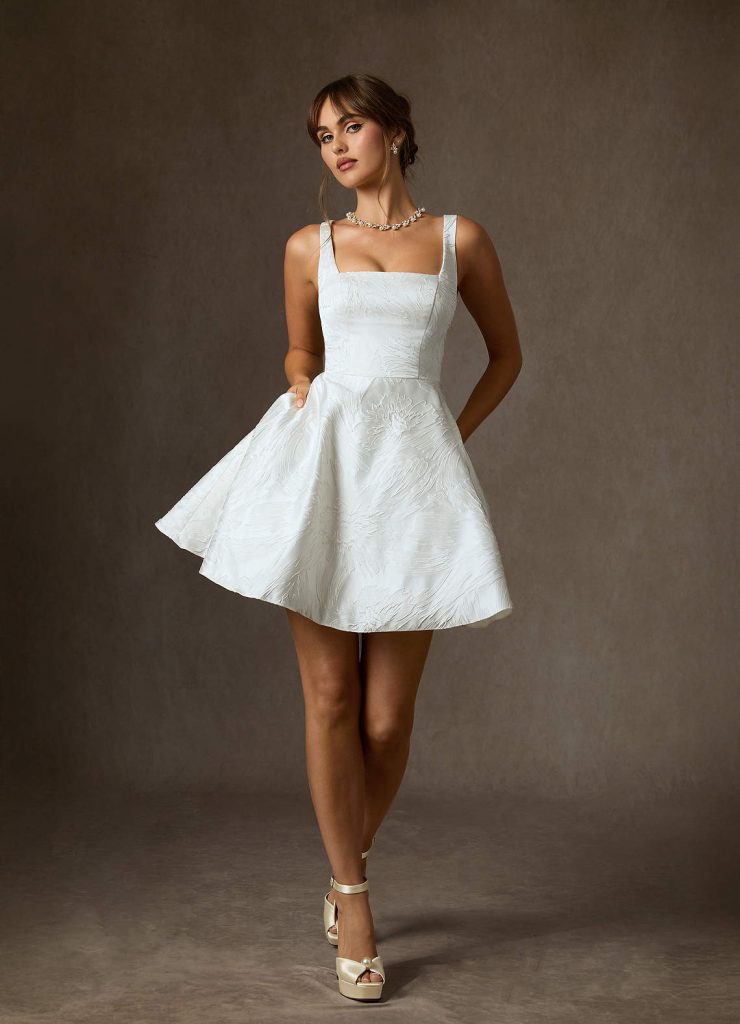
These styles keep showing up at the top of graduation searches each spring — not because of trends, but because they actually work in real ceremony conditions. Long sitting periods, stage moments, and outdoor photos. They hold up.
White Mini Dresses
Clean and practical. The shorter hem works under almost any robe length without adding bulk or creating a weird silhouette. For high school ceremonies where the energy is more celebratory than formal, this is a really solid pick.
White Midi Dresses
The default for good reason — sits low enough to be visible below the robe, transitions to dinner without a change, and photographs well indoors and out. If you’re not sure where to start, start here.
Lace Dresses
Lace adds something that solid fabrics just don’t—real texture that shows up in photos without being loud. It looks intentional, is refined without being fussy, and tends to photograph well in different lighting—a good choice if you want something a bit more memorable than a plain sheath.
A-Line Dresses
Flattens the widest range of body types and works in every photo format. Fitted at the waist, flares toward the hem — that shape does well in group shots, portraits, and the stage moment. Nothing about it looks wrong under any shooting condition, which is honestly rare.
How to Make Your Graduation Dress Photo-Ready
You’re going to be photographed a lot. Candid, posed, group shots, stage moment, post-ceremony celebrations. Some of those photos will exist for a long time. A few small choices make a real difference in how the dress reads across the board.
Simple Necklines
V-neck, square neck, and scoop cut — all photographs cleanly frame the face. They sit naturally with a graduation cap and don’t compete with the tassel or gown collar. Complex necklines with hardware, high necks with asymmetrical draping — those tend to look cluttered once the robe is added on top.
Solid Color or Subtle Texture Over Prints
Prints break apart in wide group shots: lace, pleating, soft embroidery — those read as texture without disrupting the line of the dress. Florals and geometric patterns are fine on their own, but they tend to disappear or fragment in multi-person ceremony photos.
Pick Fabric That Actually Moves
Lightweight fabrics create a natural sense of movement in outdoor celebration photos. A soft hem that catches the breeze, fabric that drapes rather than holds rigid. Stiff materials photograph flat. If outdoor photos after the ceremony are part of your plan, this matters more than it seems at the fitting stage.
Quick Graduation Dress Checklist
- Before you confirm the order, run through these. A dress that clears all six will work across every part of the day without requiring you to think about it.
- Sits flat under the gown — no visible bulk or bunching through the robe fabric
- Color reads clean on camera — white, cream, ivory, or soft neutral tone
- Hem length lets you walk up stairs and the stage without catching
- Fabric breathes — no heavy polyester or velvet lining for warm venues
- Fit allows sitting for a long ceremony without pulling or tightening
- Neckline works naturally with a graduation cap and tassel
Conclusion
The best graduation dress is the one you forget about once you put it on. That’s genuinely the standard. When the fit is right, the fabric breathes, and the length makes sense for your ceremony — the dress just works in the background while you focus on the actual day.
Start with the ceremony type. Confirm the color won’t cause issues under your robe. Make sure the hem is short enough to walk confidently. Those three things narrow it down fast.
Azazie has 100+ graduation dresses in white, cream, and soft neutrals — all three lengths, with custom sizing available. Browse the collection and find the one that makes the day easier.
Frequently Asked Questions
What color graduation dress looks best for photos?
White and soft neutrals — cream, ivory, champagne — honestly, these just work. They reflect light evenly, look clean against any backdrop, and don’t create problems under lighter robes. Blush is a good option if you want a little warmth without going into full color territory. Dark or saturated shades tend to cause issues under both flash and natural light, especially in group shots.
Should graduation dresses be short or long?
Mini and midi are the most practical — full stop. Mini is the easiest to move in and is best for high school settings. Midi is the most popular choice because it’s visible below the robe, and you don’t have to change for dinner. Floor-length makes sense for formal college ceremonies, but only if you’re actually planning to remove the robe for photos afterward.
What dress works best under a graduation gown?
Something lightweight and structured. A-line and sheath cuts sit flat and don’t bunch under the robe. Fabric matters here just as much as silhouette — chiffon and stretch satin behave well under a gown, while heavy layers and thick boning create visible bulk that shows through even on dark-colored robes.
Can I wear a long dress to graduation?
Yes — especially for formal college ceremonies. It’s a great choice if you’re planning to take the robe off for outdoor photos afterward. Just one thing: walk around in it before the day, with the shoes you’re planning to wear. The hem needs to be short enough that you can take a full stride on stage stairs without catching it.
What fabric is most comfortable for graduation?
Chiffon, stretch satin, and cotton blends. They breathe under a robe, they don’t trap heat, and they photograph well. Velvet, thick polyester, brocade — save those for indoor evening events with actual climate control. In a warm ceremony venue, a heavy fabric robe is genuinely uncomfortable.
Are two-piece sets appropriate for graduation?
Yeah, they work — especially for the celebration after. For the ceremony itself, the main thing to check is whether the waistband creates bulk under the robe. A slim, close-fitting waistband is fine. Something thick or structured at the waist will show through the gown in photos.
How should I accessorize my graduation dress?
Keep it simple for the ceremony. Stud earrings, a delicate necklace, maybe a thin bracelet — that’s genuinely enough. Bold jewelry disappears under the robe during the ceremony anyway, so there’s no point. Save statement pieces for the celebration later, when the robe comes off, and the accessories actually become part of the look.
Where can I find graduation dresses in white and cream?
Azazie has over 100 graduation dresses across white, cream, and soft neutral tones — mini, midi, and floor-length options with A-line, sheath, lace, and pleated styles. Custom sizing is available, which means the dress is built to your actual measurements rather than a standard size chart.