
Graduation Picture Dresses That Photograph Best for Portraits, Stage Shots, and Cap-and-Gown Photos
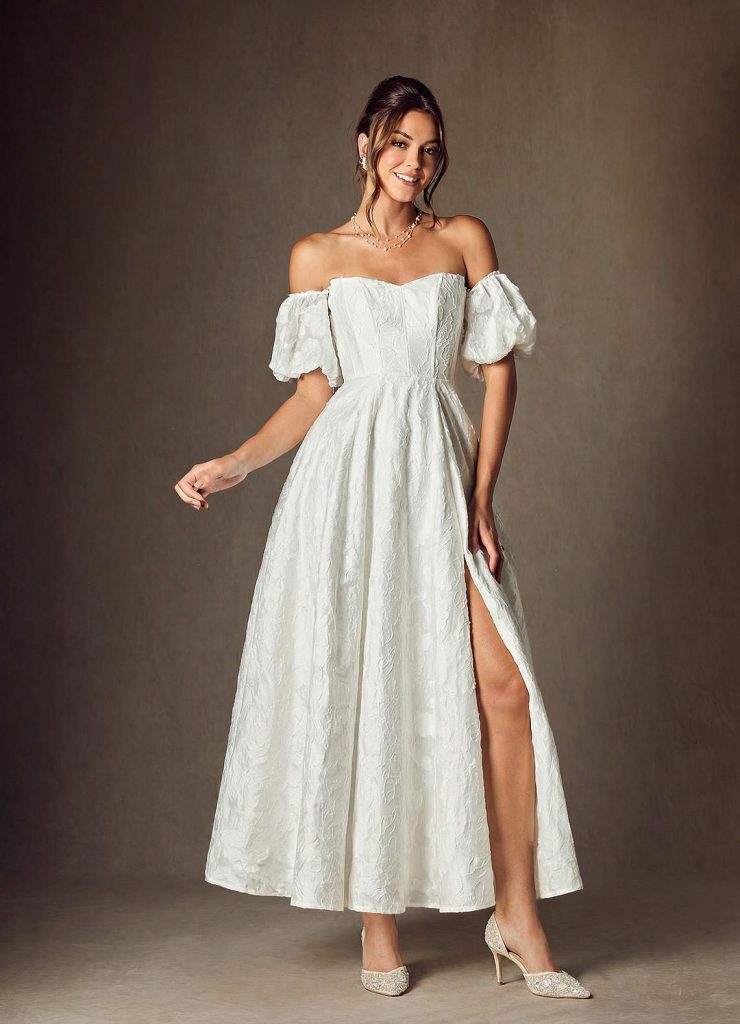
Graduation picture dresses are a specific category — not just any dress that happens to look nice, but styles chosen because of how they interact with light, movement, and cameras. The difference shows. A dress that reads beautifully in a fitting room can look flat, busy, or awkward in a photograph. And graduation produces multiple very different photo scenarios in the same day: wide-stage shots from a distance, close-up cap-and-gown portraits, and outdoor natural-light sessions after the ceremony.
Most grads land on white or cream because those shades photograph the most consistently across all of those conditions. Simple silhouettes consistently outperform busy ones in photos. Mini or midi lengths handle the gown interaction cleanest. That’s the reliable formula — and it’s worth understanding why before you order.
Browse graduation picture dresses in white, cream, and soft neutrals with 70+ styles designed specifically for the ceremony and photo contexts graduation produces.
What Actually Makes a Graduation Dress Photo-Ready
Photography changes how clothing reads. A print that looks interesting in person can vibrate and distort on camera. A very shiny satin picks up stage flash in a way that creates blown-out white patches. Thin, unlined fabric becomes transparent under outdoor sun. None of these things is obvious in a dressing room, which is exactly why graduation picture dresses are worth thinking about separately.
Four things actually determine how a dress photographs: fabric reflection (how it handles light), structure (how it defines shape), movement (how it looks in motion), and complexity (how many visual elements compete for attention). Solid white, clean silhouette, balanced weight — that combination photographs reliably across every graduation scenario.
You might notice that the graduation photos that hold up best years later are almost always the simple ones. No competing ruffles, no loud print fragmenting in a group shot, no dramatic hem fighting with the gown. The dress supports the portrait. It doesn’t compete with it.
| Fabric Reflection | Structure + Fit | Movement + Drape | Simplicity |
|---|---|---|---|
| Matte or soft sheen fabrics Avoid overly shiny satin White reflects light evenly Check for transparency outdoors |
Defined waist = clear shape Not too tight — shows tension Not too loose — reads as bulk Custom sizing helps significantly |
Cap-toss needs skirt movement Stage walk needs hem freedom Flowing fabric = natural candids Stiff fabric looks rigid in motion |
Less detail = more face focus Busy patterns fragment in groups Clean lines = timeless photos Lace adds texture, not noise |
Dress Lengths and How Each Photographs
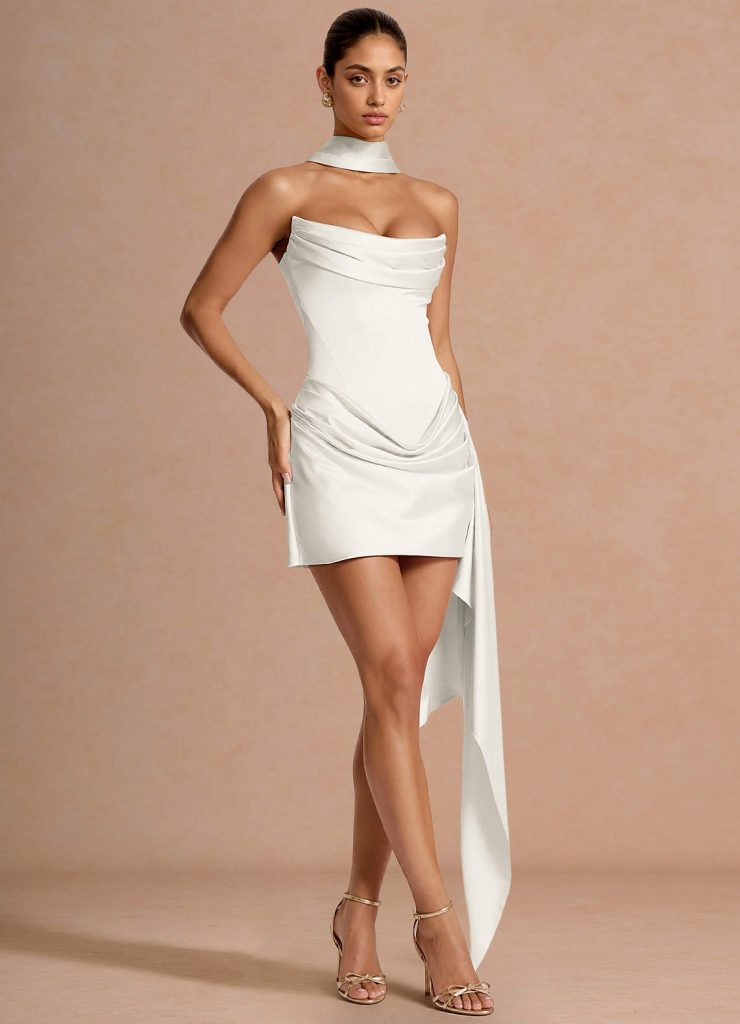
Length is the most practical photo decision you’ll make. It changes the proportions in full-body shots, determines what happens at the gown hem in stage photos, and affects whether you trip going up stage stairs, which would absolutely end up in someone’s photo.
Mini
A white mini dress, graduation style, stays completely hidden under the graduation gown during the ceremony, creating the cleanest possible stage silhouette in ceremony photos. Once the robe comes off, the short hem photographs with energy and a youthful quality. Good for close-up portrait sessions where a shorter length creates a less formal, more celebratory feel.
Midi — Most Recommended for Photos
The white midi graduation dress is the most consistently photogenic graduation length. It remains partially visible below the gown hem in stage shots, making the overall look appear intentional rather than invisible. In full-body outdoor portraits after the ceremony, midi length creates elegant proportions that photograph well from every angle. It’s the length most professional photographers point to when asked.
Floor-Length
Floor-length dresses photograph dramatically well in styled outdoor portrait sessions — the flowing hem catches movement, works beautifully in wide-angle shots, and gives a high-fashion quality to post-ceremony campus photos. The practical consideration: test it on stairs with your actual shoes before graduation day. One awkward step mid-ceremony is the kind of thing cameras catch.
| Length | Photo Strength | Best Photo Context | |
|---|---|---|---|
| MINI | Short / knee | Clean stage silhouette, energetic portraits | Stage shots, outdoor candids, close-up portraits |
| MIDI ⭐ Best |
Mid-calf | Visible below the own, balanced portrait proportions | All photo types — portraits, stage, outdoor sessions |
| MAXI | Floor-length | Dramatic movement, high-fashion styled shots | Outdoor campus portraits, post-ceremony sessions |
Most Photogenic Graduation Dress Styles
Silhouette affects every single photo type — how you look sitting in the ceremony seats, how the gown interacts with the dress shape, how you carry yourself walking across the stage, how outdoor portrait shots frame your figure. Some styles just photograph better than others, and it’s worth knowing why.
A-Line
Floor-length dresses photograph dramatically well in styled outdoor portrait sessions — the flowing hem catches movement, works beautifully in wide-angle shots, and gives a high-fashion quality to post-ceremony campus photos. The practical consideration: test it on stairs with your actual shoes before
graduation day. One awkward step mid-ceremony is the kind of thing cameras catch.
| Length | Photo Strength | Best Photo Context | |
|---|---|---|---|
| MINI | Short / knee | Clean stage silhouette, energetic portraits |
Stage shots, outdoor candids, close-up portraits |
| MIDI ⭐ Best |
Mid-calf | Visible below the own, balanced portrait proportions |
All photo types — portraits, stage, outdoor sessions |
| MAXI | Floor-length | Dramatic movement, high-fashion styled shots |
Outdoor campus portraits, post-ceremony sessions |
Most Photogenic Graduation Dress Styles
Silhouette affects every single photo type — how you look sitting in the ceremony seats, how the gown looks.
interacts with the dress shape, how you carry yourself when walking across the stage, and how an outdoor portrait shot frames your figure. Some styles just photograph better than others, and it’s worth knowing why.
A-Line
A white, line-detailed graduation dress is the most camera-reliable graduation silhouette. Fitted at the waist, with a gentle flare toward the hem, it creates a clear, balanced shape that doesn’t get lost under a graduation gown and reads well from every camera angle. In group ceremony photos, A-line holds a visible. even from a distance. In individual portraits, waist definition creates a polished figure without a sense of movement.g tight or restrictive.
Lace
Flat, plain fabrics can look one-dimensional in photos, especially in bright outdoor light. A lace graduation dress adds real texture — the open weave creates subtle shadow patterns that register in photographs at every distance, from the wide auditorium stage shot to the close-up portrait. White lace especially photographs with warmth and depth. The one thing: make sure the dress is properly lined. Stage lighting reveals transparency that’s completely invisible in a fitting room.
Minimal and Clean
Here’s something counterintuitive — the simplest dresses often produce the best graduation photos. No busy pattern competing with your stoles and cords. No heavy ruffles creating odd shadows under the stage lights. No dramatic print fragmenting in a wide group shot. A clean white sheath or shift keeps the camera in place. focused on your face and the achievement rather than the outfit. These are also the photos that don’t feel dated years later.
What to Avoid for Photos
Overly shiny satin that catches flash in blown-out patches. Very fine lace without a lining (transparent under outdoor sun). Busy patterns or large prints that fragment in wide shots. Multiple competing embellishments near the neckline — you’ll also be wearing a cap, a tassel, and potentially stoles or cords, So that area is already visually crowded.
| A-Line | Lace | Minimal Sheath | Avoid |
|---|---|---|---|
| Best for all photos types Holds shape under gown Flattering from every angle Defines waist in portraits |
Adds texture to photos Depth in bright outdoor light Must be fully lined Reads elegantly at distance |
Focus stays on your face No visual noise in groups Timeless in photos for years Clean stage + portrait shots |
Overly shiny satin (flash glare) Unlined white fabric (transparent) Loud busy prints (fragment) Heavy embellishments at neckline |
Colors That Work in Graduation Photos
Color isn’t just a style preference for graduation photos — it’s a technical decision. Different shades interact differently with stage lighting, outdoor sun, and flash photography. The wrong color under certain conditions can look washed out, muddy, or overly contrasted against the graduation gown.
White is the classic choice for photos because it reflects light evenly across all graduation scenarios — indoor stage lighting, outdoor afternoon sun, and family flash photos. It creates natural brightness without overexposing and provides clean contrast against dark-colored graduation gowns.
Cream, ivory, and champagne are worth considering if stark white feels cold on your skin tone. Ivory especially photographs with warmth that pure white sometimes lacks. Champagne has a very subtle shimmer that registers softly in evening and indoor lighting, without creating the flash-glare problem that
Heavily metallic fabrics cause.
A white graduation dress is the most camera-friendly graduation silhouette. Fitted at the waist, with a gentle flare toward the hem, it creates a clear, balanced shape that doesn’t get lost under a graduation gown and reads well from every angle. In group ceremony photos, Athe -line holds its shape even from a distance. In individual portraits, the waist definition creates a polished figure without feeling tight or restrictive.
Lace
Flat, plain fabrics can look one-dimensional in photos, especially in bright outdoor light. A lace graduation dress adds real texture — the open weave creates subtle shadow patterns that register in photographs at every distance, from the wide auditorium stage shot to the close-up portrait. White lace, especially in photographs, adds warmth and depth. The one thing: make sure the dress is properly lined. Stage lighting reveals transparency that’s completely invisible in a fitting room.
Minimal and Clean
Here’s something counterintuitive — the simplest dresses often produce the best graduation photos. No busy pattern competing with your stoles and cords. No heavy ruffles creating odd shadows under stage lights. No dramatic print fragmenting in a wide group shot. A clean white sheath or shift keeps the camera focused on your face and the achievement rather than the outfit. These are also the photos that don’t feel dated years later.
What to Avoid for Photos
Overly shiny satin that catches flash in blown-out patches. Very fine lace without a lining (transparent in direct sunlight). Busy patterns or large prints that fragment in wide shots. Multiple competing embellishments near the neckline — you’ll also be wearing a cap, a tassel, and potentially stoles or cords, so that area is already visually crowded.
| A-Line | Lace | Minimal Sheath | Avoid |
|---|---|---|---|
| Best for all photo types Holds shape under the gown Flattering from every angle Defines waist in portraits |
Adds texture to photos Depth in bright outdoor light Must be fully lined Reads elegantly at a distance |
Focus stays on your face No visual noise in groups Timeless in photos for years Clean stage + portrait shots |
Overly shiny satin (flash glare) Unlined white fabric (transparent) Loud, busy prints (fragment) Heavy embellishments at the neckline |
Colors That Work in Graduation Photos
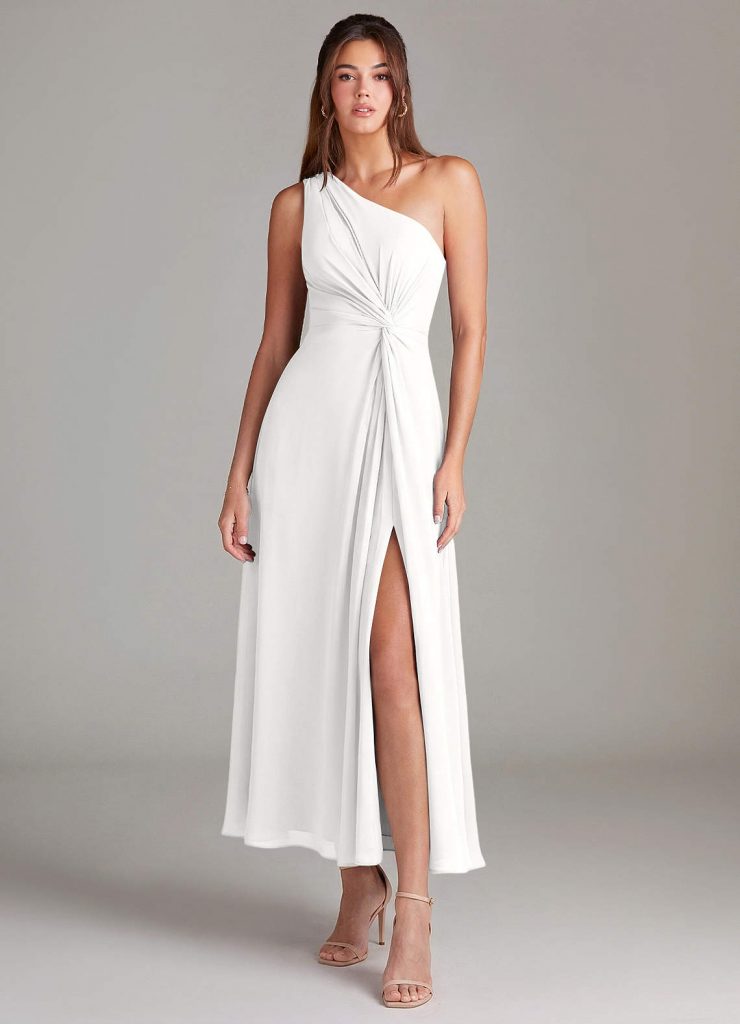
Color isn’t just a style preference for graduation photos — it’s a technical decision. Different shades interact differently with stage lighting, outdoor sun, and flash photography. The wrong color, under certain conditions, can look washed out, muddy, or overly contrasted with the graduation gown.
White is the classic choice for photos because it reflects light evenly across all graduation scenarios — from indoor stage lighting to outdoor afternoon sun to family flash photos. It creates natural brightness without overexposing and provides clean contrast against dark-colored graduation gowns.
Cream, ivory, and champagne are worth considering if stark white feels cold on your skin tone. Ivory especially photographs with warmth that pure white sometimes lacks. Champagne has a very subtle shimmer that registers softly in evening and indoor lighting without creating the flash-glare problem that heavily metallic fabrics cause.
| ⬜ White | 🟡 Cream | 🌿 Ivory | ✨ Champagne | 🌸 Blush |
|---|---|---|---|---|
| Best for all lighting | Warm indoor shots | Soft outdoor portraits | Evening & flash | Spring ceremonies |
| ! | Transparency Check Test your white dress under direct bright light before graduation day. Hold it up to a window or step under a bright overhead light while wearing it. Stage lighting is significantly more intense than dressing room conditions — a dress that looks opaque in a store can become noticeably transparent under ceremony spotlights. |
|---|
Graduation Picture Dresses by Photo Type
Graduation day isn’t one photo session — it’s several different scenarios that each ask different things of the dress—the stage walk during the ceremony. The formal cap-and-gown portraits taken before or after. The outdoor campus photos were taken in natural light. Each situation has a different camera distance, lighting, and relationship with the graduation gown.
Stage Walk and Ceremony Photos
These are taken from a distance, often from the audience or official ceremony photographers set far back. The dress needs to hold visible shape at a distance, which is why A-line and defined silhouettes outperform loose or shapeless styles in stage shots. The hem should be clean and even. If the dress is longer than the gown, it creates a messy layered look that reads very clearly on camera.
Close-Up Cap-and-Gown Portraits
These photos are close and unforgiving. The neckline is visible and important — V-neck, square-neck, and scoop-neck styles all frame the face naturally in close-up portraits without competing with the graduation cap. Very ornate necklines with hardware or dramatic draping can create visual competition with the cap in tight portrait shots. Keep the neckline clean and the accessories minimal.
Outdoor Campus Photos
Post-ceremony outdoor sessions are where the dress gets its full reveal without the gown. Natural light is the most flattering lighting condition, and college graduation dresses in white or cream photograph especially well in outdoor campus settings — against brick, greenery, and architecture. Flowy fabric catches light and movement. White creates contrast against almost every natural background.
Group and Family Photos
In multi-person photos, simplicity wins harder than in individual portraits. Busy patterns, multiple embellishments, and dramatic silhouettes create visual competition in group shots. A clean white dress lets you read clearly within the frame without drawing focus away from the collective image. That said, you still want to be visible. Pure white against a dark gown creates exactly the right kind of contrast for family group photos.
| Photo Type | What Matters Most | Dress Tip |
|---|---|---|
| Stage Walk | Visible shape at distance | A-line, clean, even hem |
| Cap-and-Gown Portrait | Neckline, fabric quality | Clean neckline, no heavy embellishment |
| Outdoor Campus | Natural light interaction, movement | White or ivory, flowing fabric |
| Group / Family | Clarity in frame, contrast with the gown | Simple, clean — let the white do the work |
Graduation Picture Dress Do’s and Don’ts
| ✓ DO | ✗ DON’T |
|---|---|
| ✓ Choose white or cream — they photograph consistently across all lighting | ✗ Wear overly shiny satin that creates flash glare in portraits |
| ✓ Test for transparency in direct bright light before the day | ✗ Trust the fitting room — stage lighting is far more intense |
| ✓ Keep the neckline clean and simple for close-up cap portraits | ✗ Layer heavy jewelry near the neckline (cap + stole + necklace = clutter |
| ✓ Steam the dress before the session — cameras catch every wrinkle | ✗ Wear a brand-new dress that hasn’t been tested on stairs |
| ✓ Choose A-line or midi for balanced photos at every distance | ✗ Pick a pattern or print that may fragment in wide group shots |
| ✓ Match hem length to gown — visible or hidden, not halfway | ✗ Wear a hem that accidentally peeks out unevenly from under the gown |
Practical Photo Tips for Graduation Day
Steam the dress the night before — not the morning of. Wrinkles appear significantly more in photos than in person, especially in close-up portraits. A garment steamer takes five minutes and eliminates the stress of last-minute creasing.
Test the full combination before graduation day. Put the dress on, add the graduation robe, and sit down — then stand up quickly, take the stairs, and walk forward naturally. Anything awkward in that test will be awkward on stage and in photos. Catching it beforehand is always better.
Shoes affect posture, and posture affects photos. Shoes that are comfortable to walk in create a confident stride across the stage. A wobbling walk in uncomfortable heels is very visible in ceremony photos. Block heels, low wedges, or dressy flats all photograph well and are considerably more practical for a long graduation day.
| ✓ | Pre-Photo Checklist Steam dress the night before · Test for transparency under bright light · Walk in ceremony shoes on actual stairs · Keep neckline accessories minimal · Wear the gown + dress combination before the day. |
|---|
The Short Version
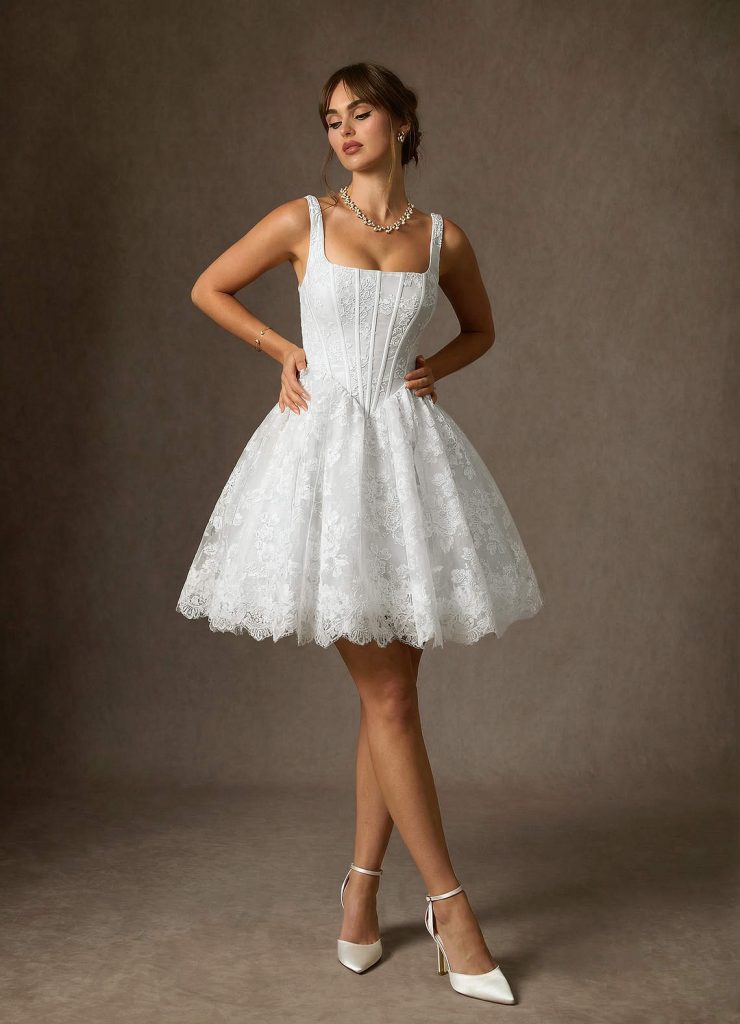
Graduation picture dresses that photograph well tend to share the same qualities: white or cream, clean silhouette, minimal embellishment, and fabric that handles light without glare or transparency. Midi is the most photo-balanced length across every graduation scenario. A-line or sheath silhouettes outperform busy ones. Lace adds texture that reads beautifully on camera when properly lined.
The dress is one element in a frame that also includes a graduation cap, a robe, a diploma, and your face. Clean supports that frame. Complicated competes with it. Browse Azazie’s 70+ graduation dresses in white, cream, and soft neutrals with custom sizing — and pick the one that feels right for both the ceremony and the photos.
Frequently Asked Questions
What dress looks best in graduation pictures?
White or cream in a clean silhouette — A-line, sheath, or lace. These photographs are consistent across stage lighting, outdoor natural light, and family flash photos. Simple designs keep the camera focused on your face rather than competing embellishments. A white midi graduation dress is the most widely recommended choice across different graduation photography contexts.
Should a graduation dress be short or long for photos?
Midi is the most photo-balanced length. It stays partially visible below the gown hem in stage shots — which makes the overall look appear intentional — and creates elegant proportions in outdoor full-body portraits. Mini photographs cleanly and works well for close-up portrait sessions. Floor-length looks dramatic in styled outdoor campus photos, but requires a stairs test before the day.
Why does a white photograph work better for graduation?
White reflects light evenly across different lighting conditions — indoor stage lighting, outdoor afternoon sun, flash photography. It creates natural brightness in portraits without overexposing, provides clean contrast against dark graduation gowns, and doesn’t shift in color across different camera settings the way some other shades do. It’s also the most timeless choice — white graduation photos don’t date.
Does lace look good in graduation pictures?
Yes — lace adds visual texture that registers in photos at every distance. Plain fabric can look flat in bright light; lace creates subtle shadow patterns that add depth. It reads as refined and intentional without being complicated. The important thing is proper lining — stage lighting reveals transparency that’s completely invisible in a fitting room, and unlined lace under ceremony spotlights is a problem worth avoiding.
What neckline is most photogenic for graduation portraits?
V-neck, square-neck, and scoop-neck all photograph cleanly in close-up cap-and-gown portraits. They frame the collarbone without competing with the graduation cap in the portrait frame. Very ornate or heavily draped necklines can create visual competition in tight portrait shots where the face, cap, and neckline are in proximity. Keep it clean.
Can I wear a patterned dress for graduation pictures?
You can, but solid colors or subtle textures like lace photograph more consistently. Patterns can fragment or create visual noise in wide-group ceremony shots where many people are in the frame simultaneously. A small, subtle print or soft texture is better than a high-contrast geometric or large floral print for graduation photo contexts.
What should I do the night before to prep my dress for photos?
Steam it. Wrinkles appear significantly more in graduation photos than in person, particularly in close-up portraits where the fabric details are fully visible. Five minutes with a garment steamer the night before eliminates creasing from packaging and transport. Also test for transparency under a bright lamp — hold the dress up to direct light or step under a bright overhead fixture while wearing it.
How does dress length interact with the graduation gown in photos?
The hem relationship between the dress and the gown is visible in every ceremony photo. A dress that’s distinctly shorter than the gown creates a clean stage silhouette. A dress that’s distinctly longer creates an intentional layered look in full-length portraits. A dress that’s only slightly longer than the gown creates an awkward, accidental-looking layer that reads poorly on camera. Either clearly shorter or clearly longer — avoid the in-between.