
White Dresses for Graduation Ceremony:What Actually Works Under a Gown
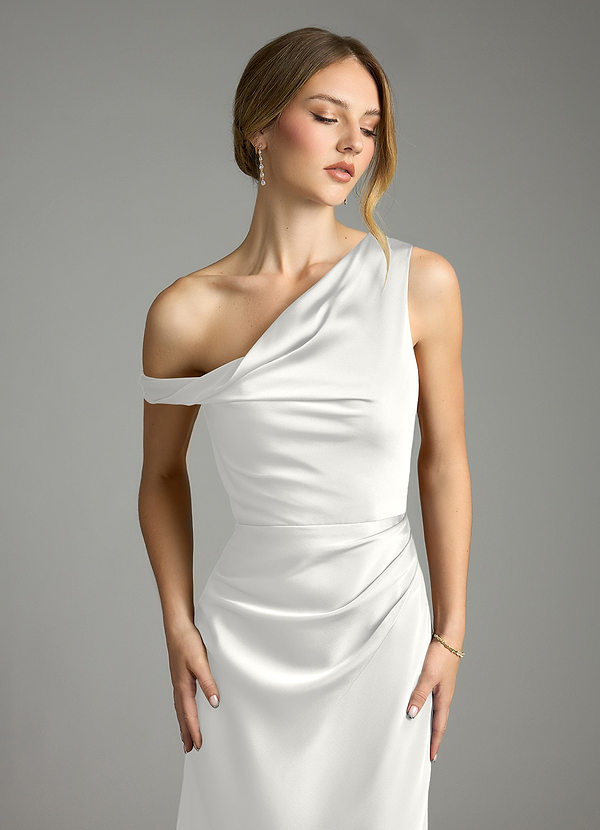
There’s a reason almost every graduation photo from the last thirty years has a grad in a white dress. White photographs consistently; it doesn’t clash with any gown color, and it reads clean even under stadium lighting. But here’s what those guides don’t tell you: white dresses for graduation ceremony aren’t all created equal.
The dress that photographs beautifully in a boutique can look completely different under stage spotlights. The silhouette that felt comfortable in a dressing room can bunch under a robe after an hour of sitting. None of that shows up until the day itself.
This guide is about avoiding those surprises. What fabrics actually hold up? Which silhouettes behave under a gown? What nobody mentions about the hem relationship. All of it.
| ☀️ OUTDOOR CEREMONY Mini or Short Midi Breathable fabric, stays hidden or barely peeks — cooler under heavy robes |
🏫 INDOOR AUDITORIUM Midi or A-Line Mini Midi peeks intentionally below gown — structured fabric holds shape in stadium light |
⛪ RELIGIOUS / FORMAL Modest Midi or Maxi More coverage, cleaner neckline, nothing competes with academic regalia |
|---|
The Silhouettes That Behave Under a Gown
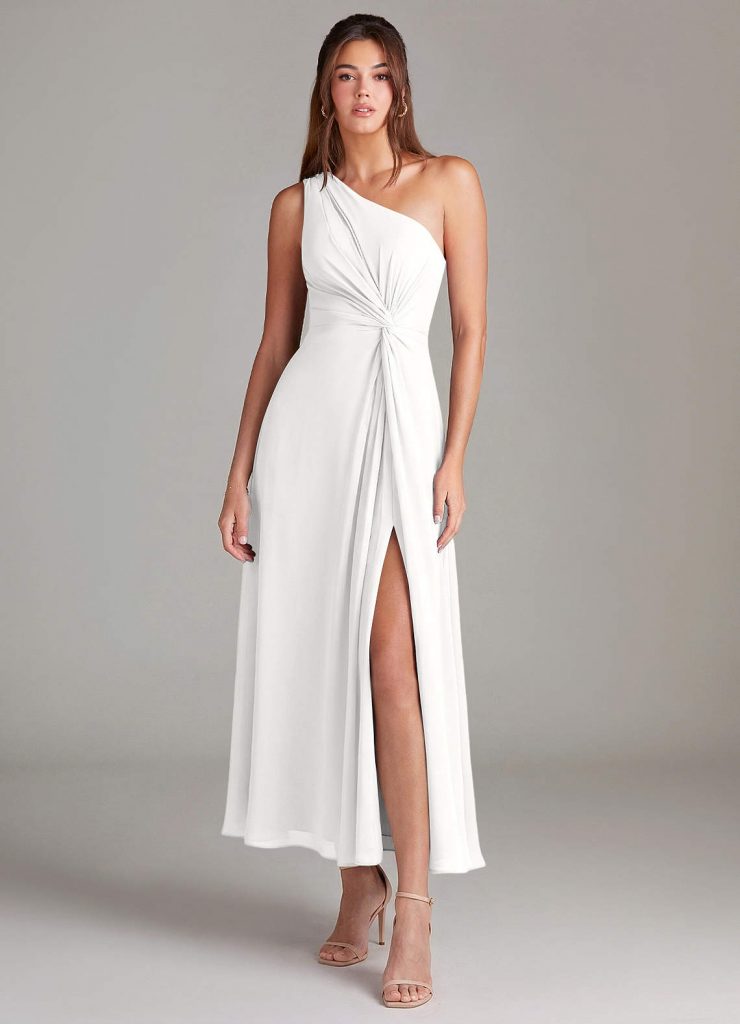
Not every pretty dress works in a graduation context. The gown is the variable most people forget to account for. A-line hides beautifully under a robe and photographs well once it comes off. Sheath sits flat and doesn’t bunch. Fit-and-flare adds waist definition that’s visible even through the robe fabric.
| Silhouette | Under the Gown | Photo Performance | Notes |
|---|---|---|---|
| A-Line [MOST POPULAR] | Flares softly — no bulk | Clean and balanced at every distance | Works for every venue type |
| Fit-and-Flare | Waist definition visible through the robe | Best in movement and outdoor shots | Structured fabric keeps it crisp |
| Sheath / Column | Narrow — completely flat | Modern and sleek in portraits | Best for formal indoor ceremonies |
| Wrap | Adjustable, sits naturally | Flattering in full-body shots | Good if you’re between standard sizes |
| Short Midi | Partially visible below the gown hem | Balanced proportions in outdoor portraits | The most universally photogenic length |
For most grads, an a line white graduation dress is the answer. It’s not the most exciting recommendation, I know. But it consistently works at every ceremony type, in every lighting condition, under every gown. If you want more visual interest, go with a fit-and-flare. Both are genuinely good choices.
Four Photo Contexts Your Dress Has to Handle
Graduation isn’t one photo session. It’s four or five completely different scenarios happening back-to-back, and each one photographs the dress differently. This is the thing most style guides skip over entirely.
| Stage Walk: Wide shot, usually from the audience or a ceremony photographer positioned far back. The dress needs a visible shape at a distance — A-line and defined waist silhouettes outperform shapeless styles here. |
|---|
| Cap-and-Gown Portrait Close-up. The neckline is fully visible. Square, V-neck, and scoop necks frame the face without competing with the cap. Avoid very ornate necklines — they fight with the tassel and cap brim in tight portrait shots. |
| Outdoor Campus Photos: Natural light, full body visible once the robe comes off. White reflects outdoor light evenly, which is why it photographs so cleanly here. Flowy fabrics catch movement. This is where the dress shines. |
| Group and Family Photos: Simplicity wins out in group shots. Busy patterns and heavy embellishments create visual competition in frames with multiple people. A clean white dress lets you read clearly without pulling focus from the group. |
| Cap Toss Movement shot. Flared skirts and flowing fabric look natural mid-air. Very tight or narrow silhouettes can look awkward in these shots. Worth keeping in mind if this matters to you. |
Fabrics — The Honest Version
This is where most graduation dress decisions go wrong. Everyone picks the silhouette first and the fabric second, but graduation involves stage lighting, heat, and hours of sitting. The fabric determines whether the dress holds up through it all.
| ⚪ CHIFFON Best for: Outdoor ceremonies, warm weather Lightweight, doesn’t trap heat under a robe, flows naturally in every photo scenario. Probably the most ceremony-practical fabric for graduation. |
⚫ CREPE Best for: Indoor formal ceremonies Matte finish, resists wrinkles, holds structure. One of the cleaner-looking options in close-up portrait shots because it doesn’t catch the light the wrong way. |
|---|---|
| ○ LINED LACE Best for: Spring and outdoor ceremonies Adds visual texture that reads at every camera distance. Unlined lace is the problem — stage lighting reveals transparency. Fully lined only. |
● COTTON-POPLIN Best for: Hot weather, casual ceremonies Breathable and structured. Holds its shape well in outdoor light. Not the most formal choice, but very practical for long ceremonies in warm climates. |
| □ SOFT SATIN Best for: Evening ceremonies, formal venues Matte or soft-sheen satin is elegant. Mirror-finish satin creates white-out glare patches under flash. Know which kind you’re buying. |
■ PONTE / SCUBA Best for: Fit-and-flare styles specifically Holds shape extremely well. Heavier than chiffon, so not ideal for outdoor heat, but keeps structured silhouettes looking crisp after hours of wear. |
| ⚠ TRANSPARENCY TEST — TWO MINUTES BEFORE THE DAY Hold the dress under a bright overhead light while you’re wearing it. If you can see through it there, you’ll see through it under the ceremony spotlights. Stage lighting is dramatically more intense than any dressing room. This catches people off guard every graduation season. |
|---|
The Hem Relationship — Intentional vs. Accidental
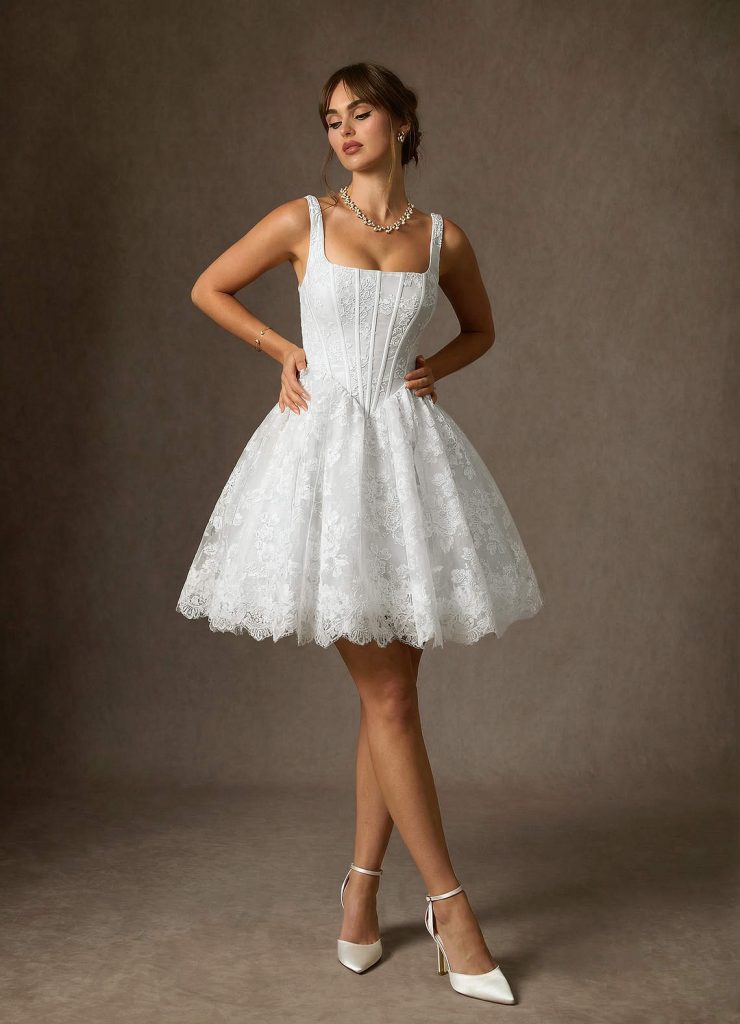
This is the thing nobody talks about in graduation dress guides, and it’s visible in almost every ceremony photo. Where the dress hem sits relative to the graduation gown hem matters.
| Rule: Either clearly above the gown hem · clearly below it · or exactly matched — never accidentally in between |
|---|
| Hem Scenario | In Ceremony Photos | Verdict |
|---|---|---|
| Dress hem clearly shorter than the gown (mini or short midi) | Clean stage silhouette, dress fully hidden during processional | ✓ Always looks intentional |
| Dress hem 2–4 inches below gown (longer midi) | Intentional layered look, polished and styled | ✓ Works if deliberate |
| Dress hem slightly longer than gown (small accidental overlap) | Looks messy and unplanned in stage shots | ✗ The zone to avoid |
Put both pieces on at home before graduation day. Stand in front of a mirror and look at where the hem falls. If it’s landing in that awkward, almost-matching zone, you still have time to adjust.
Ceremony Type Changes: What Dress Makes Sense
A formal university convocation has different expectations than an outdoor high school ceremony on the football field. The dress that reads polished at one can look slightly off at the other. Browse high school graduation dresses and college graduation dresses separately — the recommended styles for each are genuinely different.
| HIGH SCHOOL CEREMONIES ▸ Short mini or A-line midi in chiffon or lace ▸ Playful details like ruffles, pleats, tiered hems ▸ Lighter fabric for outdoor spring ceremonies ▸ More personality in the silhouette is appropriate here |
COLLEGE / UNIVERSITY CEREMONIES ▸ Clean A-line or sheath midi, minimal embellishment ▸ Structured crepe or ponte for formal indoor auditoriums ▸ Simple neckline that doesn’t compete with hood or stoles ▸ Dress should support the regalia, not compete with it |
|---|
Day-Before Checklist — What Actually Matters
None of these takes long. All of them exist because something goes wrong when they get skipped.
| 1 | Steam the dress the night before, not the morning of. Hang it immediately after steaming. Wrinkles in ceremony photos are very obvious in close-up portraits and almost impossible to fix once you’re there. |
|---|
| 2 | Transparency test under a bright overhead light while wearing it. Two minutes. Stage spotlights are far more intense than any dressing room mirror. |
|---|
| 3 | Put on the full combination — dress, shoes, gown — and walk actual stairs. If anything is awkward at home, it will be awkward in front of everyone. |
|---|
| 4 | Get dressed after hair and makeup are fully done. Product transfer on white fabric shows clearly in photos. Easy to forget under graduation morning pressure. |
|---|
| 5 | Keep a stain pen somewhere accessible for the reception. Give it to a friend to hold. White fabric shows everything. |
|---|
| ✓ Do This | ✗ Skip This |
|---|---|
| Choose matte or soft-sheen fabric for clean photos | Use heavy mirror-finish satin — creates glare under stage flash |
| Try the full hem combination before graduation day | Assume the fitting room mirror shows you what stage lighting will |
| Keep neckline jewelry minimal — regalia fills that space fast | Layer heavy accessories over stoles and honor cords |
| Steam the dress the night before and hang it immediately | Fold it back into a bag after steaming — creases return fast |
| Confirm your school’s dress code before purchasing | Buy before checking the ceremony guidelines for length or shade |
Before You Order — The Short Summary
Pick a silhouette that works under the robe (A-line, fit-and-flare, or sheath). Pick a fabric that handles ceremony conditions (chiffon, crepe, lined lace). Confirm the hem relationship is intentional — not accidentally in-between. Steam the night before. Do the transparency check.
Azazie has 100+ graduation dresses in white, cream, and soft neutrals, with custom sizing available. Browse the collection to find a style designed for the ceremony, the portraits, and the celebration that follows.
Frequently Asked Questions
Do Americans wear white to graduation?
White graduation dresses became a widespread US tradition in the mid-20th century and stuck around. Most American high schools and colleges have an unspoken expectation of white, not a rule, but a very strong norm.
It’s rare to walk across a graduation stage and not see the majority of graduates in white.
Are white dresses appropriate for all types of graduation ceremonies?
Pretty much, yes — with one caveat. Check your specific school’s dress code before finalizing anything. Some religious institutions or highly traditional universities have guidelines around coverage or shade.
Most schools don’t restrict it at all, but finding out the day before is a bad situation.
Why do people wear white dresses specifically for graduation?
The short version: it started as a visual metaphor for a fresh start and a new chapter. The longer version: white photographs better than almost any other color under the combination of stage lighting, outdoor sun, and the flash photography involved in a graduation day.
The symbolism came first, but the practical benefits for photography are probably why it stayed.
What grad dress color is most popular right now?
White is still the dominant choice by a significant margin. Ivory and cream have been gaining ground — they’re warmer and sometimes more flattering in outdoor light. Champagne is a popular alternative for evening ceremonies.
Pastels show up occasionally but are less common. Dark or heavily saturated colors are still pretty rare in graduation contexts, specifically.
What’s the white dress theory?
It’s a concept from fashion psychology — the idea that wearing white signals confidence, clarity, and a fresh start. Whether or not you believe in fashion psychology, there’s something to the fact that white has been the chosen color for new beginnings (graduations, weddings, christenings) across a huge range of cultures. For graduation specifically, it’s become a signifier of the transition itself.
What do white dresses symbolize at graduation?
New beginnings, mostly. The blank page. The end of one chapter and the start of the next. There’s also a historical thread connecting white ceremonial dress to purity of intent and new purpose — themes that map reasonably well onto graduating and stepping into whatever comes after.
Practically speaking, it also means you look cohesive in the group photo without wearing the same thing as anyone else.
What’s the psychology behind choosing white?
People who choose white for significant occasions tend to be signaling intentionality — the choice reads as deliberate and considered rather than arbitrary. There’s research suggesting white is associated with orderliness and clarity.
For graduation day specifically, the more interesting angle is that white photographs so well that choosing it is also a subconsciously practical decision, even when people frame it in symbolic terms.