
What to Know Before Choosing Red Formal Dresses for a Bold Look Without Limiting Accessories
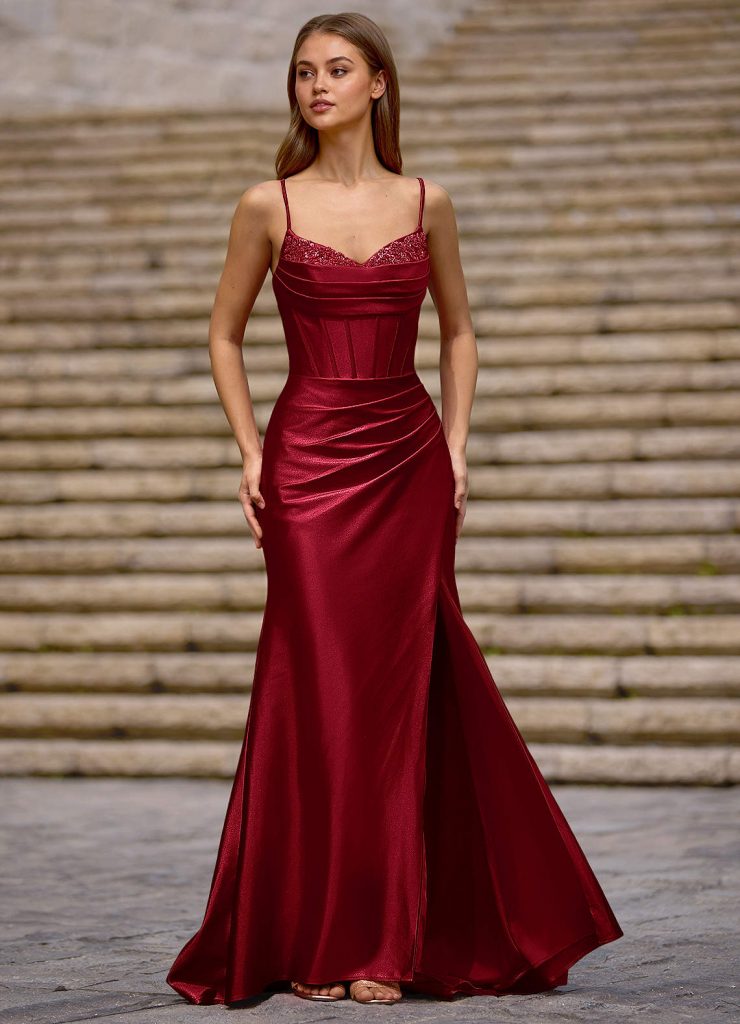
There’s a shade of red for every skin tone, every event, and every accessory situation you’re working with. That’s the part most people miss. Red formal dresses aren’t one color — they’re a whole spectrum that runs from orange-tinted scarlets to near-black wines, and each one behaves differently. Nail the shade. Everything else — accessories, fit, makeup — follows from that.
| QUICK TIP When in doubt, start with Ruby. It’s the one shade in the red family that flatters more skin tones than it doesn’t, and it gives you the most accessory flexibility of any red option. |
|---|
Understanding Red Formal Dresses — The Shade Problem
Why Red Has Always Been a Formal Staple
Red formal wear has been culturally significant long enough that researchers study it. Verywell Mind’s color psychology research consistently links red to authority, confidence, and perceived competence — not just warmth or passion. At a formal event where impressions form quickly, that’s a meaningful distinction.
What makes red different from black as a formal choice isn’t drama — it’s that the color does the attention-work before you’ve done anything else. Black requires a strong silhouette or accessory to create interest. Red arrives with interest already built in.
Choosing the Right Shade of Red
The warm-cool split matters here more than with most colors. Scarlet, poppy, and tomato are warm reds — orange in the undertone. They read completely differently on golden olive skin versus pink-toned fair skin, which is why ‘Does red suit me?’ is genuinely the wrong question. ‘Which red?’ is the right one.
Crimson, raspberry, and deep burgundy lean cool. The blue undertone in these shades works with fair, cool complexions in a way warm reds don’t. Ruby sits in the middle — balanced enough to work across more skin tones than any other shade in the family.
| 🔴 SCARLET Tone: Warm — orange undertone Best for: Warm & olive skin tones Best at: Outdoor, daytime events Pair with: Gold jewelry + nude heels |
◆ RUBY Tone: Balanced — works everywhere Best for: Genuinely all skin tones Best at: Galas, weddings, and any formal events Pair with: Gold or silver — both work |
▲ CRIMSON Tone: Cool — slight blue undertone Best for: Fair and cool complexions Best at: Evening events, cocktails Pair with: Silver + black heels |
■ BURGUNDY Tone: Deep wine — muted, cool Best for: All tones (safest for events) Best at: Winter formals, black-tie Pair with: Gold + dark or nude heels |
|---|
Choosing the Right Red Dress for Your Body Type

Red saturates the entire silhouette. The shape becomes more visible in this color, not less, which means a silhouette choice that barely registers in black can be quite obvious in scarlet. Choose the cut more deliberately than you would with neutral colors.
| Frame | Best Silhouette | What It Does | Avoid |
|---|---|---|---|
| Hourglass | Mermaid, sheath, fit-and-flare | Follows natural proportions — looks planned | Adding unnecessary volume |
| Pear shape | A-line, ball gown, V-neckline | Draws the eye upward, balances hips naturally | Pencil skirts — cling at exactly the wrong place |
| Petite | Tea-length, knee-length, high slit | Breaks the color block, adds a vertical line | Full ball gowns — too much red fabric |
| Tall frame | Floor-length, ball gown, column | Carries dramatic volume that other frames can’t | Almost nothing — most options work |
Hourglass Figures
Mermaid and sheath styles follow the natural line rather than fighting it. A corset formal dress in scarlet or ruby is worth considering, specifically here — the built-in structure shapes without adding bulk, and the color makes the whole thing look intentional rather than accidental.
Don’t ‘soften’ the silhouette with red. The opposite advice is usually right: lean into a fitted, defined cut. Vague, flowing silhouettes can look unresolved when saturated with color.
Pear-Shaped Figures
An a line formal dress is the practical answer. The skirt falls away from the hips without clinging — balances the proportions naturally. V-necklines and any embellishment or visual interest in the top half of the dress draw the eye upward.
Floor-length A-line in deep ruby is one of those specific combinations that photographs well from almost every angle. The skirt carries the color, and the neckline gets attention. Works.
Petite Bodies
The risk with petite frames and red floor-length gowns is being visually swallowed. That much fabric in that saturated a color can overwhelm a smaller frame in a way navy or black wouldn’t. Tea-length and knee-length tend to work better.
If floor-length is non-negotiable — sometimes it is — a high slit solves the problem. It breaks the uninterrupted color block, creating a vertical line that reads as height. Not a compromise. Actually, a strong look.
Tall Frames
Tall frames get the most options here and the least risk. Floor-length ball gowns, dramatic trains, velvet formal dresses in deep burgundy — all of it works in a way other frames can’t pull off as cleanly. The height carries the volume. Lean into the theater of red rather than scaling it back.
Pairing Accessories with Red — The Supporting Cast Rule
The accessories aren’t supposed to compete with red. They’re punctuation, not additional sentences.
| Item | ✓ Works Well | ✗ Skip This |
|---|---|---|
| Jewelry | Gold hoops, crystal drops, thin chain, diamond studs | Bold multicolor stones — they add noise, not contrast |
| Shoes | Nude heels, gold/silver metallics, black strappy sandals | Patterned shoes, competing bright color heels |
| Bag / Clutch | Small metallic (gold or silver), simple black envelope | Oversized bags — break the silhouette. Printed bags — complete. |
| Hair accessories | Crystal pins, gold clips, and minimal bands for updos | Heavy floral crowns, anything competing with a high neckline |
The Jewelry Rule — Just Two Decisions
Warm red dress — gold metal. Cool red dress — silver or platinum. That’s the whole rule. Match the metal to the shade’s undertone, not to a personal preference.
And pick one focal area. Ears or neck — not both. If the neckline has any embellishments, skip the necklace—just earrings. As Vogue India’s guide on styling red observes, treating the dress as the primary focal point and letting accessories recede behind it is what separates a polished red look from an overwhelming one.
Shoe Choices — More Range Than Most People Use
Nude heels are the elongating, almost-always-correct answer. Gold and silver metallics work for galas and evening events. Black heels create a sharp contrast and work particularly well with deeper reds — burgundy and wine — where the contrast reads as intentional rather than harsh.
Seasonal note: velvet heeled platforms for winter balls, light metallic strappy sandals for summer, and outdoor events. The fabric of the shoe should match the formality of the venue — same principle as the dress itself.
Styling Red Formal Dresses for Different Occasions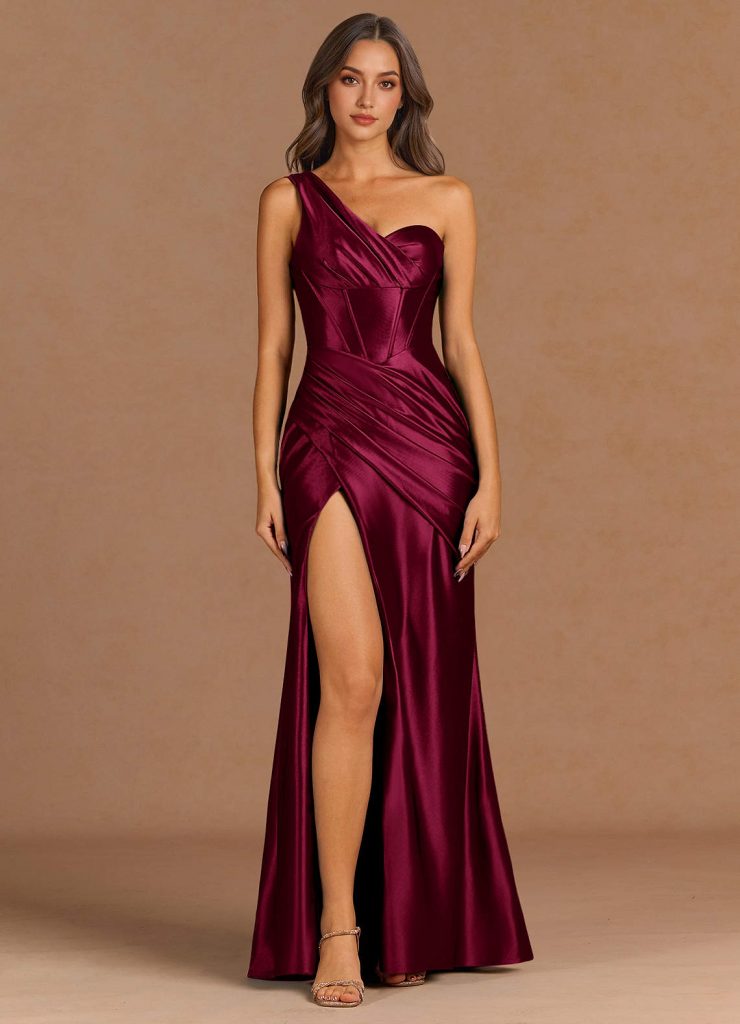
A deep burgundy floor-length gown at a black-tie gala is a power move. That same dress at a casual outdoor afternoon wedding might feel out of place. The shade, the silhouette, and the accessories all need to match the occasion’s specific energy.
| Event | Best Red Shade | Length | Accessory Note |
|---|---|---|---|
| Wedding — daytime | Burgundy or wine (safest) | Midi or floor-length | Subtle gold. Understated. |
| Wedding — evening | Deep ruby or cranberry | Floor-length | Delicate gold or silver |
| Gala / Black-tie | Scarlet or ruby | Floor-length only | Crystal + metallics — lean in |
| Semi-formal party | Crimson or wine | Tea or knee-length | Playful — strappy, hoops |
| Military ball | Deep ruby or burgundy | Floor-length | Formal metallics |
Red Dresses for Wedding Guests
The cultural consensus on red at weddings has shifted. It’s acceptable. According to Brides’ wedding guest etiquette guide, the main considerations now are the specific shade and styling approach — not whether red is permissible at all.
Burgundy and wine-toned reds are safer than bright scarlets for most wedding contexts. A formal dress for wedding guest in deep burgundy with minimal gold jewelry and nude heels is one of those specific combinations that photographs well and communicates ‘celebrated guest,’ not ‘competing for attention.’ Check the bridal party’s palette before committing to a shade. Worth doing.
Red Dresses for Galas and Black-Tie Events
Black-tie galas are where red operates at its highest level. Long formal dresses in satin or sequin fabric — scarlet or ruby — under ballroom lighting is one of those specific looks that justifies the effort. Crystal or rhinestone earrings, metallic clutch, heels in gold or silver: the standard formula for a reason.
One specific note for galas: the more embellished the dress, the quieter the accessories need to be. Vogue India’s red dress guide points to this as the most common gala mistake — adding competing elements to a dress that’s already doing significant visual work.
Red Dresses for Semi-Formal Events
This is where red has the most flexibility. Knee-length or tea-length in crimson or wine, black strappy sandals, simple gold hoops — works for a holiday cocktail event, an awards dinner, a milestone birthday.
The makeup can stay cleaner here than at a gala. A red lip is optional at semi-formal — sometimes a nude lip with strong eye definition is actually the more interesting choice. Let the dress be more of the thing.
Common Mistakes When Styling Red Formal Dresses
Most red styling mistakes happen when someone tries to add to the look rather than letting the color carry it. Red is unforgiving about this in a way black and navy aren’t.
| ✓ DO THIS | ✗ AVOID THIS |
|---|---|
| Pick one jewelry focal area — ears or neck, not both at once | Multiple statement accessories — cluttered with a color that’s already bold |
| Match makeup temperature to dress undertone (warm red = warm tones) | Warm scarlet dress with a cool-purple lip — it creates subtle but visible friction |
| Match fabric to the event: satin/velvet for formal, chiffon for casual | Jersey or casual fabric at a black-tie event — the fabric reads the room wrong |
| Get the dress tailored — red finds every bad fit | Wearing off-the-rack without alterations — every gap and pull is visible |
| Let the gown be the thing — accessories just punctuate | Competing with statement hair, necklace, and earrings — too much |
Over-Accessorizing — The Most Common Mistake
The dress is the statement. Full stop. An embellished red gown doesn’t need a necklace. Doesn’t need a bracelet stack. It needs the right earring and the right shoe.
That’s the complete look. Anything added past that point is competing.
Makeup Temperature — The Subtle One
This one is specific: pairing a warm, orange-toned scarlet dress with a cool, purple-based lipstick. The visual dissonance is subtle — hard to identify when you’re looking at yourself in the mirror — but immediately felt in photos. It registers as ‘something’s slightly off.’
Warm red needs warm makeup tones. Cool red needs cooler ones. That single rule fixes more red-dress styling problems than any change in accessories.
Fabric vs. Event Formality
The fabric communicates what you think of the event’s dress code — sometimes even more loudly than the color. Satin, velvet, and silk are formal signals. Chiffon and lace work at semi-formal. Jersey fabric at a black-tie event looks underdressed regardless of how good the cut is.
Getting this wrong in red is more noticeable than in black. Red already has the room’s attention. The fabric either confirms the occasion or contradicts it.
Final Tips for Styling Red Formal Dresses
Red rewards attention to detail. A few specific final considerations — tailoring, makeup sequencing, hair decisions — separate a good red look from a genuinely polished one.
Tailoring Is Not a Finishing Touch — It’s Part of the Look
| A well-fitting red dress will always outperform a better-quality red dress that doesn’t fit. The color amplifies fit problems. Budget for the alteration. |
|---|
Red finds every bad fit — the tight bodice, the hem two inches too long, the waistline sitting off. All of it is visible in a way black would absorb. With red, tailoring isn’t optional finishing work; it’s part of what makes the look work at all.
Hair and Makeup — In This Specific Order
The neckline guides the hair decision. The dress’s undertone guides the makeup. Four choices — work through them in this order.
| 1 | Start with the lip — it determines everything else. Red lip against red dress: works perfectly when the undertones match, creates a visual clash when they don’t. Nude lip: lets the dress dominate completely — clean and deliberate. Wine or berry lip: sits in the middle, complementary without competing. Make this decision before choosing anything else. |
|---|
| 2 | Match makeup temperature to dress temperature — this is the one most people skip. Warm red dress (scarlet, ruby) pairs well with warm, bronzed eyes and peachy neutral tones. Cool red dress (crimson, burgundy) gets cooler, with mauve tones. The mismatch here is subtle but registers in every photo. It’s easier to get right than most people realize. |
|---|
| 3 | Neckline decides the hair. Strapless or high neck — hair up. Off-shoulder or plunging V — loose waves for contrast. —one-shoulder half-up styles that work with the asymmetry. The dress made a structural decision. Hair just needs to agree with it, not fight it. |
|---|
| 4 | Keep the foundation luminous, no matter. Red draws the room’s attention directly to your face. A flat matte finish under bright event lighting can look heavy. A subtle luminosity at the cheekbones and brow bone balances the dress’s boldness. Not shimmer — just not flat. |
|---|
Confidence — Which Is Real Advice, Not Filler
People wearing red are consistently perceived as more confident and authoritative than those in other colors. The research is real. But it only translates when the wearer appears to have chosen the color intentionally. Wear it like the plan was red. That’s the whole note.
Conclusion
Shade, silhouette, accessories, and event code. Those four things determine whether a red formal dress reads as a considered choice or a styling oversight. The shade needs to match your skin tone’s undertone. The silhouette needs to work with your frame. The accessories need to support the dress rather than compete with it. And the fabric needs to match what the event actually calls for.
Azazie offers a wide selection of formal dresses in sizes 0–30, with made-to-order and custom sizing available. The red formal dress range spans scarlet to deep wine — worth looking at if you know red is the direction and just need to find the specific version that’s right for you.
Frequently Asked Questions
What color shoes go with blue formal dresses?
Metallics — gold, silver, champagne — are the easy answer. They brighten the fabric without fighting it. Nude heels work well when you want the leg to look longer and more seamless. For navy or midnight specifically, black heels or deep burgundy can create a strong, intentional contrast that works really well.
Can I wear blue to a formal wedding as a guest?
Yes, and it’s honestly one of the better guest choices. The main thing is avoiding the exact shade the bridal party is wearing. Light blue works for daytime and outdoor ceremonies. Navy and sapphire are better for evening receptions. Keep the accessories refined and the length appropriate — and you’re good.
What’s the difference between formal and semi-formal dress codes?
Formal typically means floor-length gowns or polished midis in elevated fabrics — chiffon, satin, lace. Semi-formal opens up shorter lengths and cocktail dresses. Blue works across both. The shade and silhouette just adjust depending on which dress code you’re working with.
Is navy blue formal enough for a gala or black-tie event?
Completely. Navy carries the same formality as black, just with more depth and visual dimension. In a well-structured gown, navy actually reads more intentional than black at most events. It’s not playing it safe. It’s a considered choice.
What jewelry works best with royal blue?
Gold, almost always. It adds warmth and keeps the look from reading too cold. Silver and crystal work too if you want something more contemporary. Either way, the rule stays the same: one focal area. Ears or neck — not both.
Are blue formal dresses available for plus sizes and petite frames?
Yes. A-line silhouettes are broadly flattering and create a balanced, elongated line. Empire-waist styles work particularly well for shorter frames. Floor-length gowns in deeper blue shades create a continuous vertical that reads elegant on most body types — the shade itself has a lengthening effect.
What colors are best for winter formal events?
Navy, midnight blue, deep sapphire. These shades pair naturally with velvet or sequined fabrics, which add visual warmth and richness. Metallic accessories in silver or gold photograph cleanly under indoor event lighting — and they hold up well in photos taken under dim, ambient conditions.