
Tips for Choosing Wedding Dresses for Short Women That Flatter Your Height
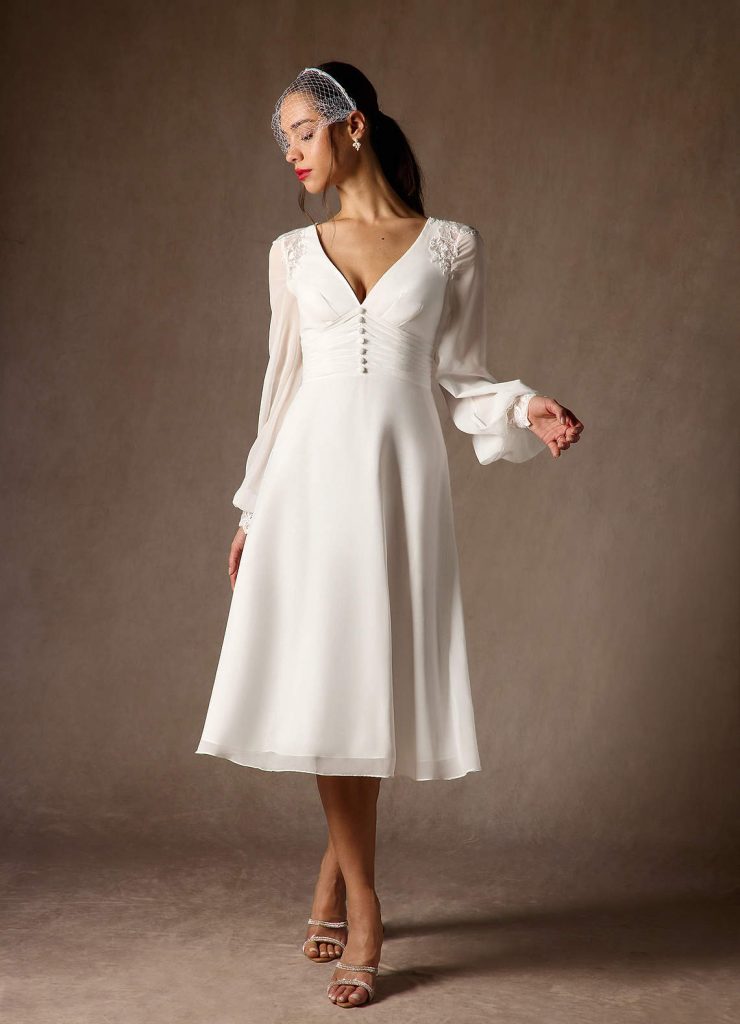
MIdi Wedding dresses for short women work best when the silhouette, hem length, and proportion details are chosen with height in mind. The right style creates the appearance of a longer, more balanced frame without sacrificing comfort or personal taste. A-line and shorter-length styles are consistently the top recommendations for petite brides — both elongate without overwhelming a smaller frame.
What “Short” Means in Bridal Sizing
Most bridal gowns are designed for a height of 5’7″ to 5’9″. Brides under 5’4″ are generally considered petite in bridal terms. The hem alteration alone on a standard-length gown can remove 4–6 inches of fabric — sometimes more — and this affects how the skirt falls, how the flare sits, and how the overall silhouette reads.
Understanding your height relative to standard sizing helps you make smarter choices before ordering — not just after the dress arrives.
Best Silhouettes for Short Women
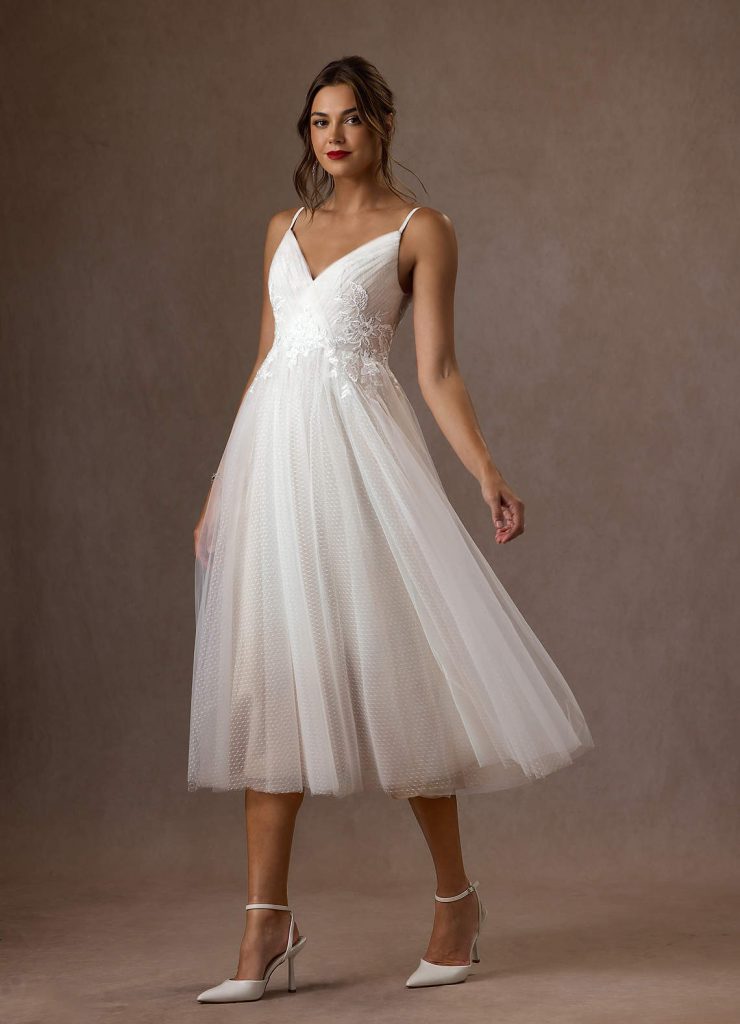
A-Line: The Most Reliable Choice
The A-line creates a clean vertical line from the waist to the hem. It does not interrupt the body with horizontal bands of fabric or wide tiers, which makes it one of the most elongating silhouettes for shorter frames. The waist definition draws the eye to the narrowest point of the body, which creates the impression of added height.
Brides exploring short wedding dresses in an A-line silhouette will find styles that retain proportion without requiring major hem alterations.
Sheath and Column: Clean and Lengthening
The sheath silhouette lies close to the body from shoulder to hem. Its unbroken vertical line is one of the most effective ways to create the appearance of height. This style works best for slender to athletic frames — stretch crepe or stretch satin versions offer comfort for brides who want to move freely throughout the day.
Empire Waist: Lifts the Visual Midpoint
An empire waist sits just below the bust rather than at the natural waist. This placement visually raises the body’s midpoint, which makes the legs appear longer. For shorter brides with a fuller midsection, the empire waist is also one of the most comfortable silhouettes available.
Silhouette Comparison for Short Frames
| Silhouette | Effect on Height | Best For |
| A-line | Creates vertical length | Most body types |
| Sheath | Unbroken vertical line; maximum elongation | Slender, athletic frames |
| Empire waist | Raises visual midpoint; legs appear longer | Fuller midsection; comfort focus |
| Midi length | Clean hem that shows shoes; adds height | Relaxed venues; outdoor settings |
| Fit-and-flare | Flattering but watch flare point placement | Hourglass, pear shapes |
| Ball gown | Can overwhelm; works with careful proportioning | Classic bridal preference |
What to Avoid and Why
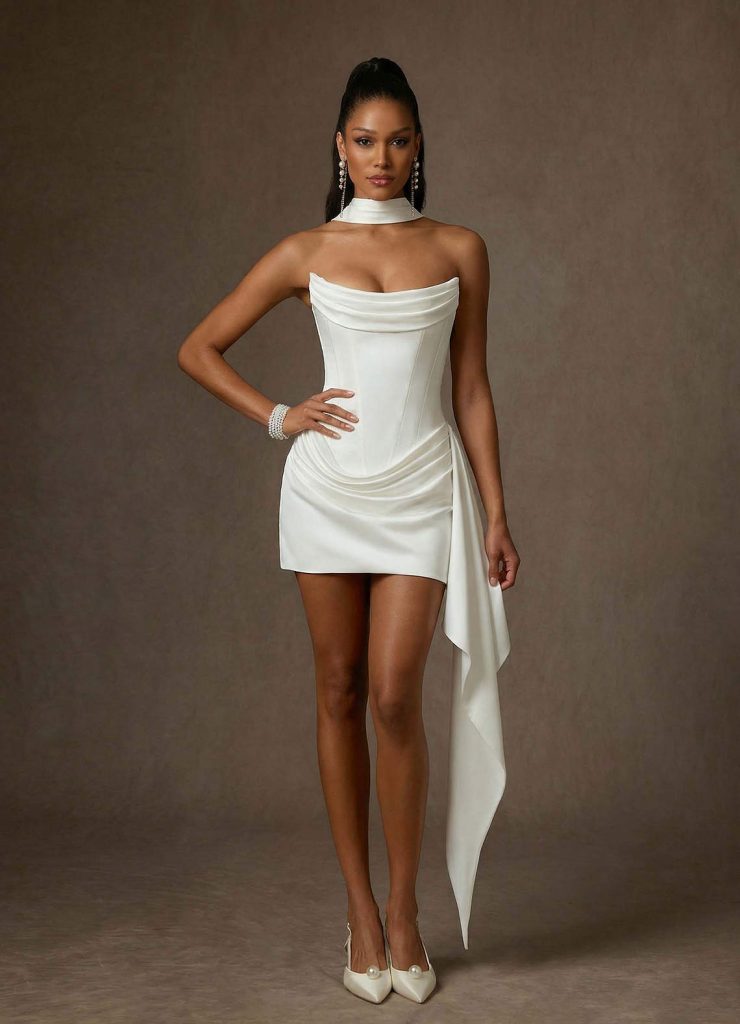
Some design details reduce the appearance of height on shorter frames. Being aware of them helps narrow choices faster.
- Wide horizontal ruffles — cut across the body and interrupt vertical length
- Dropped waistlines — lower the visual midpoint and shorten the torso further
- Oversized skirt volume — a very full ball gown can overpower a petite frame
- Very long trains — add weight and visual mass that a shorter frame has to carry
- Wide-banded waists or thick sashes — create a horizontal break that shortens the silhouette
None of these are absolute rules — but they are worth considering when deciding between two styles you like equally.
Key Measurements for Short Brides Ordering Online
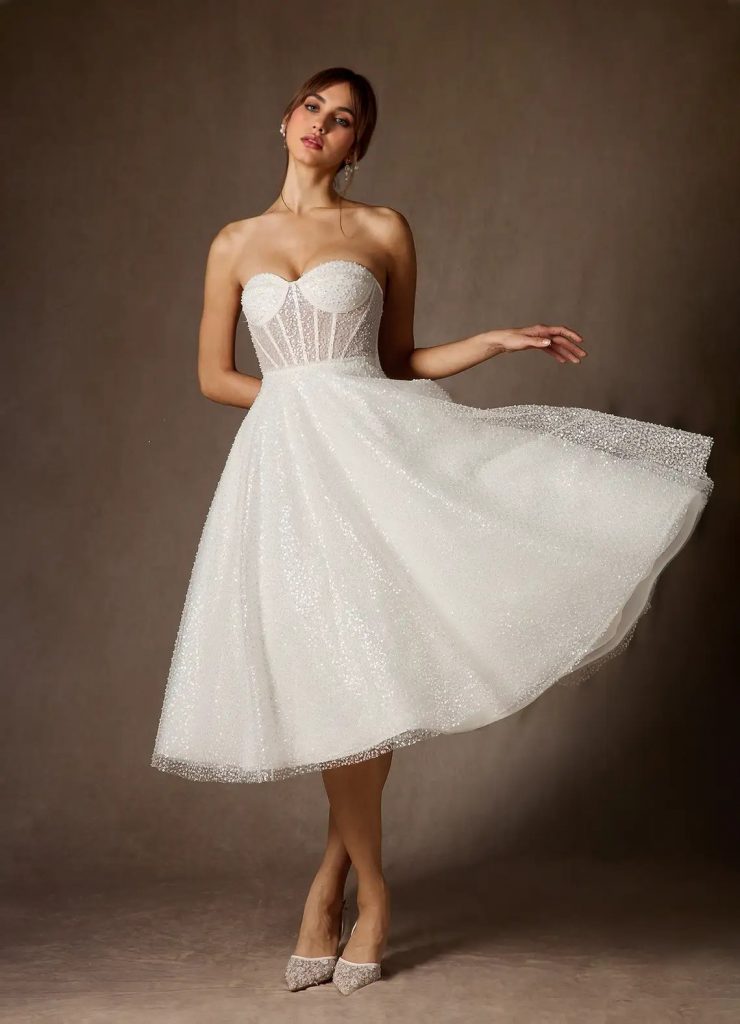
Standard bridal sizing does not account for height. These are the measurements that matter most for shorter frames.
- Hollow to floor — the single most important measurement for petite brides; taken from the center collarbone to the floor in bare feet
- Waist to floor — helps determine where the skirt begins relative to the hem; critical for fit-and-flare and mermaid styles
- Bust, waist, and hips — standard measurements for size selection
- Torso length — measure from the shoulder to the natural waist; helps assess whether the bodice will hit at the right point
- Knee height — useful for midi and tea-length styles; determines where the hem will fall on your specific frame
The Short Bride Ordering Rule
Always provide your hollow-to-floor measurement when ordering. For standard-length gowns, plan for a hem alteration of 3–6 inches depending on your height. Order the dress length that matches the look you want, then budget time and cost for professional hemming before the wedding.
Common Fit Challenges for Short Brides
Hem Too Long Across the Entire Skirt
This is the most predictable challenge. A standard floor-length gown on a bride under 5’4″ will trail significantly — sometimes by 6 inches or more. The hem needs to be lifted, but this also raises where the train or skirt fullness begins. Work with a seamstress who has experience altering bridal skirts at the hem, not just at the waist.
Flare Point Sits Too Low
In fit-and-flare and mermaid silhouettes, the flare is positioned based on average height proportions. On a shorter bride, the flare often starts at mid-calf rather than the knee — changing the silhouette significantly. A seamstress can reposition the flare point upward. This is a moderate-complexity alteration that must be addressed at the first fitting.
Bodice Sits Too Long on the Torso
A standard bodice length assumes a longer torso. Short brides sometimes find that the waistline seam hits below the natural waist, which makes the torso look longer and the legs look shorter. Custom sizing adjusts the bodice drop to the correct point for your proportions. If ordering standard sizing, assess this at the very first fitting.
Sleeve Length Falls Past the Wrist
Standard sleeve lengths are calibrated for taller brides. A fitted long sleeve on a shorter bride may extend well past the wrist. Sleeve shortening is a low-complexity alteration — but it needs to be completed before the second fitting so other adjustments can be checked with the correct sleeve in place.
Hem Length Options: What Works for Short Brides
Not every shorter bride wants a full-length gown. These hem lengths are all practical and flattering across petite frames.
| Hem Length | Falls At | Best Venue |
| Floor length | Touches the floor | Formal, ballroom, church |
| Tea length | Mid-calf | Garden, outdoor, semi-formal |
| Midi | Below knee to mid-calf | Relaxed, destination, courthouse |
| Mini or above knee | Above knee | Cocktail wedding, elopement |
Midi and tea-length styles are particularly popular for short brides because they eliminate the need for a significant hem alteration. The dress falls naturally at a flattering point on the leg without pooling or dragging. A diamond white dress in a midi A-line silhouette photographs cleanly and suits both formal and relaxed wedding settings.
Necklines and Details That Add Height
The right neckline draws the eye upward and adds vertical interest to a shorter frame.
- V-neck — creates a vertical line from chin to chest; one of the most elongating neckline choices
- Sweetheart — sits low enough to create vertical space without interrupting the shoulder line
- Halter — draws the eye straight up to the face and collarbone; very effective on petite frames
- Simple strapless — clean horizontal line at the bust with no distraction above it
A spaghetti strap wedding dress is a popular neckline choice for shorter brides — the thin straps do not cut the shoulder line horizontally, which keeps the vertical silhouette clean from shoulder to hem.
Avoid wide off-the-shoulder or cap sleeve styles if height is a priority — horizontal lines across the shoulder add visual width rather than length.
Fabrics That Work Best for Short Frames
Lightweight fabrics move with shorter frames more naturally than heavy structured options.
| Fabric | Why It Works for Short Brides |
| Chiffon | Lightweight; does not overpower a smaller frame |
| Stretch crepe | Smooth and fitted; elongating vertical line |
| Lace over chiffon | Detail without bulk; keeps the look proportional |
| Tulle (single layer) | Light volume without overwhelming the frame |
| Matte satin | Structured and clean; good for A-line and sheath |
Heavy duchess satin and multi-layered tulle ball gowns can visually dominate a petite frame. If a full-skirt style is preferred, choose lighter-weight versions of these fabrics rather than the heaviest available.
A champagne wedding dress in soft tulle or chiffon A-line is a frequently reviewed combination for short brides — the tone and fabric both keep the look light and proportional.
Shoes and Undergarments for Short Brides
Shoes
- Heels add height and change the hem measurement — always try on your dress in the shoes you plan to wear
- A 2–3 inch heel is the most practical range for a full wedding day
- Block heels provide stability on grass or uneven outdoor surfaces
- Flats are a valid choice — order the hem length to match your flat shoe height specifically
Undergarments
- High-waist smoothing shorts — keeps the silhouette clean under fitted and A-line styles
- Strapless longline bra — smooths the torso without adding bulk above the waist
- No petticoat or minimal petticoat — too much underskirt volume can overpower a shorter frame
- Built-in cups or boning — preferred over external undergarments for shorter silhouettes where proportion matters most
Alteration Planning for Short Brides
Shorter brides typically need more hem work than other body types — but other alterations are usually straightforward.
| Alteration | Complexity | When to Request |
| Hem shortening | Low to moderate | First fitting |
| Flare point repositioning | Moderate | First fitting |
| Bodice drop adjustment | Moderate | First fitting |
| Sleeve shortening | Low | First fitting |
| Bustle attachment | Low | Second fitting |
| Waist taking in | Low | First fitting |
Fitting Schedule
- First fitting — 8–10 weeks before the wedding; focus on hem length, flare point, and bodice drop
- Second fitting — 4–6 weeks before; confirm all adjustments; check everything in your wedding shoes
- Final fitting — 1–2 weeks before; full dress rehearsal with shoes, undergarments, and accessories
Azazie offers custom sizing across their full collection of wedding dresses in sizes 0–30. For shorter brides, providing the hollow-to-floor measurement during the custom sizing process significantly reduces the hem work required after arrival.
Comfort Checklist Before Finalizing
Run through these points before approving final alterations:
- Does the hem clear the floor by approximately 1 inch in your wedding shoes?
- Does the waist seam sit at your natural waist — not below it?
- Is the flare or skirt fullness beginning at a flattering point on your leg?
- Can you walk, climb stairs, and sit comfortably without tripping on the hem?
- Are sleeve lengths correct with your shoes on and posture natural?
- Does the overall silhouette feel proportional — not top-heavy or skirt-heavy?
- Can you move freely through the full range of reception activities?
Frequently Asked Questions
What is the best wedding dress length for a short bride?
Midi and tea-length styles are the most practical for short brides because they require little to no hem alteration. Floor-length gowns are absolutely wearable but require professional hemming. The best length depends on the venue — midi and tea-length styles suit outdoor and relaxed settings particularly well.
Should short brides avoid ball gowns?
Not necessarily — but the skirt volume and fabric weight need to be proportionate to the bride’s frame. A lighter-weight ball gown in single-layer tulle or chiffon is more flattering than a very heavy, structured duchess satin version. Choosing a higher waistline within the ball gown silhouette also helps by raising the visual midpoint.
Do short brides need special alterations?
Yes — hem alteration is almost always needed for short brides ordering standard-length gowns. The flare point in fit-and-flare and mermaid styles also frequently needs repositioning. Custom sizing with a hollow-to-floor measurement provided reduces the number of post-arrival alterations significantly.
What heel height should a short bride wear?
A 2–3 inch heel is the most practical for a full wedding day. It adds meaningful height without causing discomfort during a long ceremony and reception. Whichever heel height you choose, wear those exact shoes to every fitting appointment — the hem measurement changes with every inch of height.
Can short brides wear long trains?
Yes, but the train length should be proportionate. A cathedral train on a very short bride requires careful management throughout the day. A sweep or chapel-length train is more practical — it adds elegance without creating excess fabric that needs constant attention. Discuss train length with your seamstress at the first fitting.
What colors look best for short brides?
Tonal choices are less relevant than keeping the color consistent from bodice to skirt — contrast between the two interrupts the vertical line. An ivory wedding gown in one consistent tone from shoulder to hem creates the longest, most cohesive silhouette for shorter frames.
Is custom sizing worth it for a short bride?
Yes — particularly for the hollow-to-floor measurement. Standard gowns are designed for taller proportions, and providing exact height-related measurements at the ordering stage reduces the number and complexity of alterations needed after the dress arrives. Azazie’s custom sizing is available across all sizes 0–30 and is made-to-order for each bride.