
Plus Size Evening Dresses with Sleeves: Fit Features That Make the Look
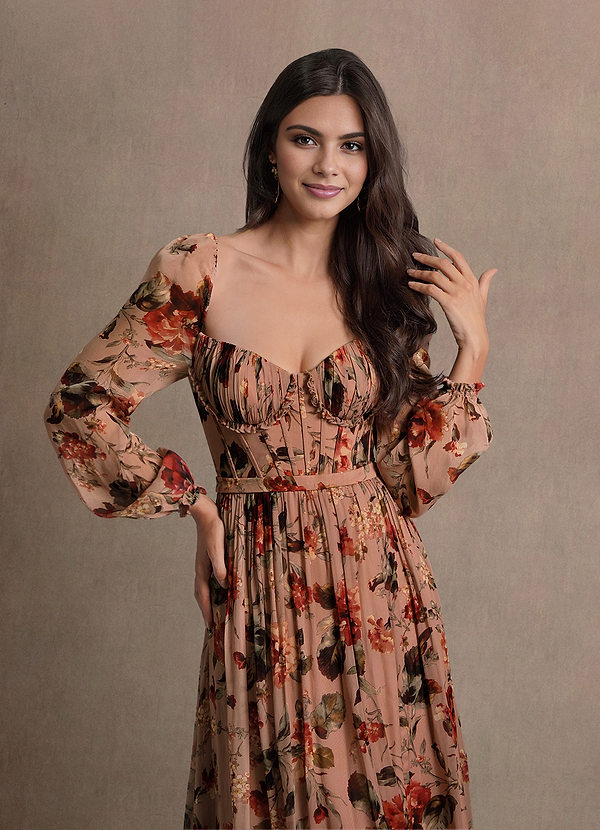
Here’s the thing that doesn’t get discussed enough in plus size evening dresses with sleeves: the armhole construction is what decides whether the sleeve looks elegant or awkward. Not the sleeve style. Not the fabric. The armhole.
A sleeve cut from a well-constructed armhole moves with you. One cut from a tight or poorly placed armhole pulls across the back every time you reach for something, restricts your arm rotation, and creates that bunching across the upper back that shows up in every photo from the evening.
I watched this play out at a gala in Chicago last November — two women in otherwise identical silhouettes, similar sleeve styles. One moved freely and looked effortless all evening. One was visibly constrained. The dress was the same quality. The armhole construction wasn’t.
| The armhole test before buying: reach both arms forward, as if hugging someone. Then raise one arm to ear level. If the back of the dress lifts significantly or you feel restriction in either motion, the armhole is cut too tight, and a sleeve attached to that armhole will compound both problems throughout a long event. |
|---|
The Armhole and Sleeve Fit — Where Most Sleeved Dresses Succeed or Fail
Why the Armhole Matters More Than the Sleeve
A beautiful lace sleeve attached to a too-small armhole looks worse than a plain sleeve on a correctly cut one. The armhole is the structural anchor for the entire upper dress — when it’s wrong, everything the sleeve tries to do gets undermined.
For plus-size bodies specifically, armholes are often the part of the construction that gets scaled incorrectly. Standard plus-size grading sometimes increases circumference measurements while leaving the armhole shape unchanged from a smaller size. The result: the dress fits through the bust and waist but restricts movement through the shoulders and upper arms.
When you’re evaluating any sleeved plus-size evening dress, the armhole is the fit detail to test before the waistline, before the hemline. It’s the one that determines whether you’ll be comfortable for hour one or hour six.
Sleeve Fit — What ‘Enough Room’ Actually Means
Enough room means: you can raise your arm above your shoulder without the dress back lifting. You can cross your arms without feeling the sleeve pull at the elbow. You can reach across a dinner table without feeling the fabric tighten across the shoulder blade.
For evening long sleeve dresses, the wrist-to-shoulder fit line needs to match your actual arm length. A sleeve that’s too short creates visible bunching at the wrist. One that’s too long needs constant adjustment. Neither reads as polished or intentional over the course of a long formal event.
| Lined sleeves in plus-size formal dresses are often problematic. The lining reduces the sleeve’s internal volume and creates friction against the outer fabric, making arm movement feel restricted. If you’re evaluating a sleeved dress with lining, specifically test the arm rotation after trying it on — the restriction may not be obvious until you start moving. |
|---|
Waist Definition — The Difference Between Shaped and Draped
The Case for Defined Waist in Plus-Size Sleeved Gowns
A waistline seam, wrap construction, or defined empire position gives the eye a clear anchor point — something that reads as intentional design rather than fabric. For sleeved gowns specifically, a defined waist works against the natural tendency of sleeves to add visual weight to the upper body.
The sleeve adds presence above the waist. A defined waist creates a clear transition — so the dress reads as a structured top, a defined middle, and a flowing bottom — rather than a single continuous vertical volume that can read as overwhelming.
An evening dress’s empire-waist placement is especially strong for sleeved plus-size gowns because the high waistline shortens the visual area where sleeves and bodice compete for attention. The sleeve reads clearly as a sleeve; the bodice reads clearly as a bodice; the transition happens high up on the torso before the skirt takes over.
When No Defined Waist Works Better
Actually, scratch that framing — it’s not that no defined waist is better, it’s that wrap construction and subtle ruching can create waist definition through visual suggestion rather than structural seaming. And for some sleeve-and-silhouette combinations, that reads as more elegant than a hard seam.
A wrap-style sleeved evening gown in quality crepe, for example, creates waist definition through the diagonal line of the wrap closure — it defines without seaming. The sleeve sits within a construction with visual logic, without requiring a formal waistband.
Sleeve Styles — What Each One Does Visually and Practically
Three-Quarter Sleeves — the Most Versatile
I’d call three-quarter sleeves the most reliable sleeve choice for formal evening wear across most body types. They end at the forearm — showing the wrist and hand, which are visually slimmer — and cover the upper arm completely. The result is that you get coverage where you want it without the sleeve visually extending the entire arm length.
Three-quarters also works specifically for dancing and extended arm movement because there’s no wrist construction to pull or bunch.
Long Sleeves — Full Coverage Done Right
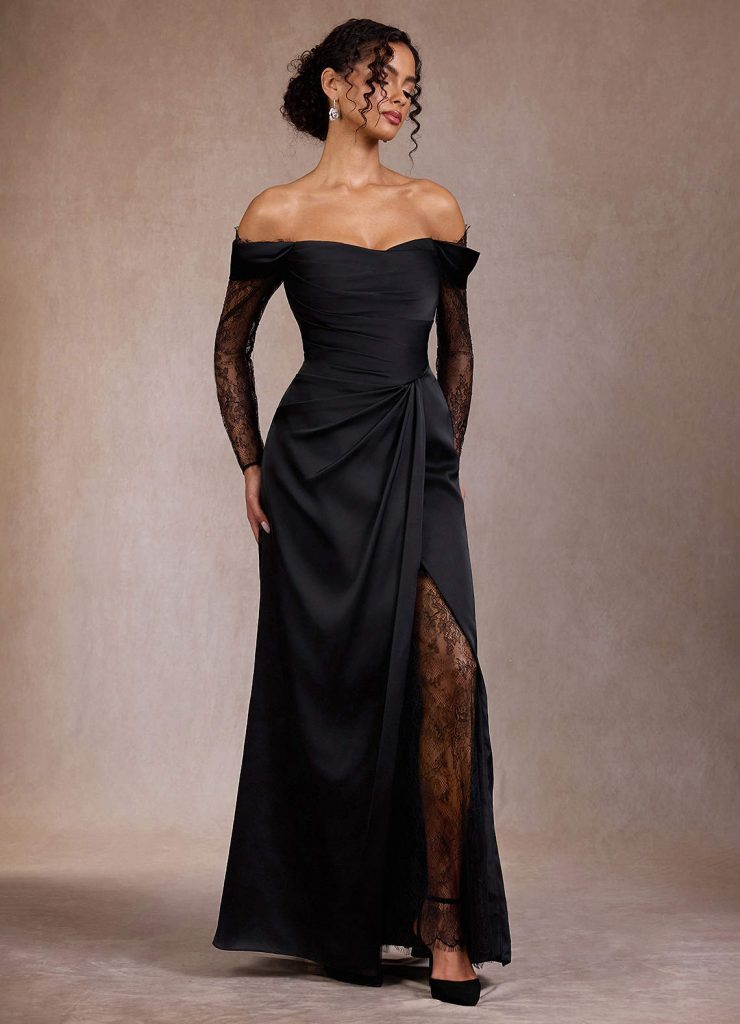
Long sleeves are the most opinionated choice in this list — people tend to love them or feel they make the dress heavier than it needs to be. Honestly? In quality lace or illusion mesh, long sleeves on a plus-size formal gown photograph with real elegance. The coverage feels like a design decision rather than a coverage choice.
The fit requirement for long sleeves is the most demanding: the sleeve length has to match your arm length precisely. And the wrist construction has to sit at the correct point — neither riding up nor sliding down. Custom sizing for long-sleeved formal gowns is genuinely useful for this reason.
Cap Sleeves and Flutter Sleeves — Light Coverage
Cap sleeves add shoulder coverage without the visual weight of a full sleeve. They work well when the goal is shoulder coverage, especially in strapless or spaghetti-strap original designs that have been adapted. The limitation: they don’t cover the upper arm, so the coverage they provide is primarily structural/formal (making the dress read as ‘sleeved’) rather than coverage of the arm itself.
Flutter sleeves are the softest option — they drape rather than structure, which means they read as light and feminine rather than formal and deliberate. Good for warm-weather events or less formal wedding receptions. Not the strongest choice for black-tie or high-formality galas where the dress code calls for more structured elegance.
Lace and Illusion Sleeves — The Elevated Option
An illusion sleeve — sheer mesh or lace with the appearance of coverage — is, in my opinion, the strongest option for modest evening dresses in plus-size formal contexts. It provides the visual impression of a long sleeve with significantly less fabric weight, which means less restriction in the armhole and more natural movement. Lace illusion sleeves in particular read as deliberately formal — they look like a design choice, not a coverage workaround.
Silhouette Choices That Work With Sleeves on Plus-Size Frames
A-Line — the Most Reliable Combination
An A-line skirt below a sleeved bodice creates visual balance because the flare adds volume below the waist to match the presence the sleeve adds above it. Plus-size A-line evening dresses with three-quarter or long sleeves are the most consistently flattering and event-appropriate combination across different body shapes.
The A-line also tolerates movement extremely well, which matters for a sleeved dress because you’re already limiting arm rotation somewhat — you want the skirt to move freely without requiring careful walking.
Mermaid — Intentional and Specific
A mermaid evening dress with full sleeves is a very specific look — it reads as very deliberate and high-fashion, which is exactly right at galas and award ceremonies. The fitted silhouette at the hip creates a strong contrast with the sleeves, giving the overall look a clear visual hierarchy. The sleeve isn’t just coverage — it’s part of the design’s drama.
The limitation: a fitted mermaid with full sleeves requires the most precise fit of any combination on this list. Any imprecision in the sleeve, the bodice, or the hip line shows. Custom sizing matters most here.
Column and Sheath — Clean and Modern
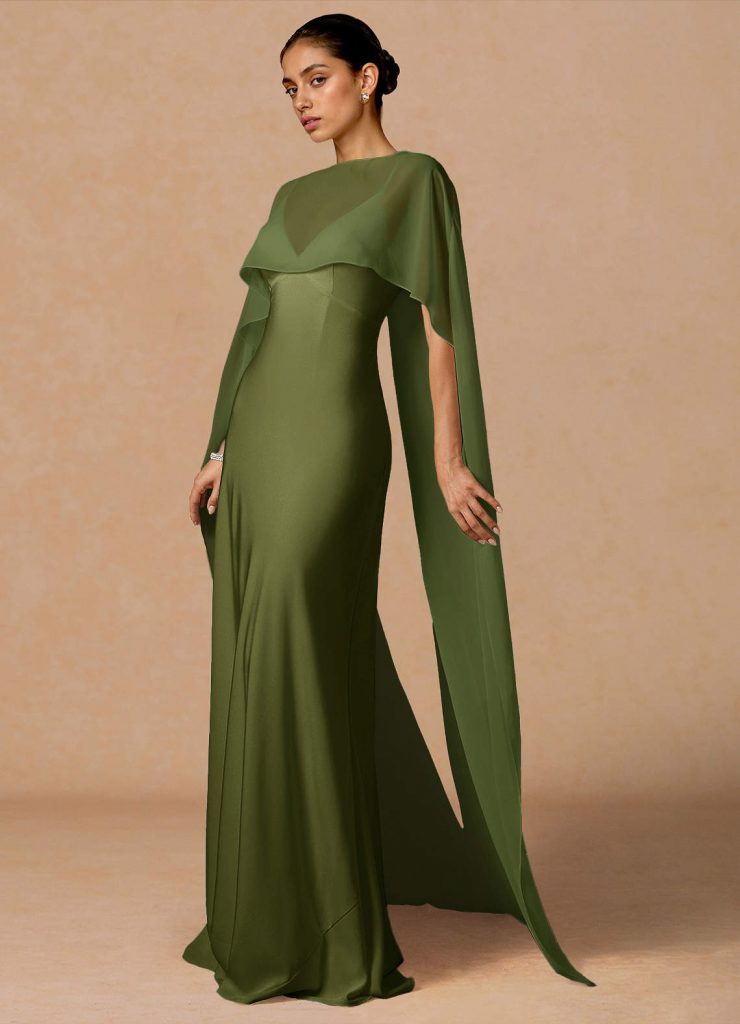
A column silhouette with sleeves is the most editorial choice in this category. It creates a very clean, uninterrupted vertical line from shoulder to hem, with the sleeves reading as a structural element of the column rather than an addition to it.
The fabric requirement is the most demanding: a column with sleeves needs to be quality crepe or heavy jersey that maintains its drape and structure throughout a long event. Cheaper fabrics in this construction show every wrinkle and lose their shape by hour three.
Five Fit Checks Before Buying Any Sleeved Plus-Size Evening Gown
| 1 | Test the armhole by reaching both arms forward and raising one arm. Do this before you check anything else about the dress. Reach forward as if embracing someone. Then raise one arm straight up. The back of the dress should stay in place — not lift when you move your arm. There should be no restriction in either motion that makes you stop short of the full range. If there’s a restriction, the armhole is the problem, and no alteration to the sleeve will fully fix it. |
|---|
| 2 | Check sleeve length against your actual arm length, not the size chart’s arm length. Plus-size sizing often assumes a standard arm length that doesn’t match the actual arm length of every plus-size body. Measure from your shoulder seam to your wrist. Compare to the sleeve length listed in the product specifications, if available. For online purchases: if the sleeve length isn’t listed, ask. A sleeve that’s wrong by two inches requires alteration — and sleeve length alterations are among the more complex formal dress alterations. |
|---|
| 3 | Look at where the waist seam or definition hits when the dress is on. Not where it looks like it should hit. It actually hits when the dress is on your body. A waistline seam that sits too low creates a dropped-waist effect, losing the elongating benefit of a defined waist. One that hits at or just above the natural waist creates the longest possible visual leg-to-body proportion. This is worth trying on for rather than estimating from measurements. |
|---|
| 4 | Move. Actually move. Sit in the dress. Reach across the table. Cross your arms. Stand back up without steadying yourself. Any motion that requires adjustment after means it’ll require adjustment repeatedly during a formal event. A sleeved formal gown should feel secure and static while you move. If you’re managing the dress rather than wearing it, the fit isn’t right. |
|---|
| 5 | Check the dress in artificial indoor lighting — not a phone flash or boutique daylight. Evening events use warm amber or neutral indoor lighting. The way the fabric behaves under that lighting — whether it looks rich and intentional, or flat and cheap — is what your fellow guests will see. Quality crepe and quality jersey look equally good under event lighting. Synthetic blends can look very different under warm amber light than under boutique daylight. The test matters more for sleeved dresses because the sleeve fabric is highly visible across the upper body. |
|---|
Fabric — What Works in Sleeved Plus-Size Formal Gowns
Stretch Fabrics for Sleeved Construction
Quality ponte and stretch crepe are, in my opinion, the most reliable fabrics for sleeved plus-size evening gowns. They have enough recovery to hold their shape over a long event, they allow natural movement through the sleeve, and they photograph with a smooth, structured surface.
The stretch is especially important for the sleeve: a non-stretch fabric sleeve requires extra ease built into the pattern to accommodate arm movement. Stretch fabric accommodates movement through the material itself, which means the sleeve can be cut closer without restricting. A closer cut often reads as more polished.
Lace — Strong Choice for Formal Sleeves
Quality lace as a sleeve fabric photographs exceptionally well and reads as deliberately formal. A lace sleeve adds visual interest at eye level without the weight of a heavy fabric. The limitation: lace sleeves require careful consideration of the lining beneath — a lining that doesn’t match the skin tone or the dress will show through and read as an error rather than a design decision.
Chiffon — Handle With Care in Sleeves
Chiffon creates beautiful movement in a sleeve. It’s also the most visible fabric for fit issues: a chiffon sleeve that’s too wide reads as floppy; one that’s too narrow reads as pulled. And chiffon doesn’t have the stretch recovery that allows slight fit imprecision to self-correct. It shows everything, which makes it beautiful when right and frustrating when not.
| Sleeve Style | Coverage | Formality | Movement |
|---|---|---|---|
| Long lace/illusion | Full arm | Black-tie ★★★★★ | Excellent |
| Three-quarter | Upper arm | All formal ★★★★★ | Best of all options |
| Long jersey/crepe | Full arm | Formal ★★★★ | Very good if it fits precisely |
| Flutter | Shoulder/upper arm | Semi-formal ★★★ | Excellent — very free |
| Cap | Shoulder only | All occasions ★★★ | Good — minimal restriction |
Closing Thoughts
The sleeve is the most visible element of a sleeved evening gown in almost every event photo — it’s at face level, in motion, and covering a large, continuous area. Getting it right isn’t primarily about choosing the right sleeve style. It’s about the armhole construction underneath it.
Azazie offers made-to-order and custom sizing for their collection of plus-size evening dresses, which is especially important for sleeved gowns, where the arm length, armhole depth, and sleeve width all need to match your actual measurements. The standard size chart gets you close. Custom sizing gets you to the fit where you stop thinking about the dress by hour two. Whether that’s worth doing depends on how long the event is and how much you’ll be photographed.
Frequently Asked Questions
What sleeve style is most flattering for plus-size formal wear?
Three-quarter sleeves are the most universally reliable — they cover the upper arm and end at a naturally slimmer part of the arm (the forearm), creating elongation rather than covering it. Lace or illusion long sleeves are the strongest choice for high-formality events like black-tie galas. Flutter sleeves are lovely for less formal settings.
How do I know if the armhole is cut correctly?
Raise your arm straight above your head. The back of the dress should stay in place — not lift when you move your arm. Cross your arms as if you’re cold. There should be no pulling across the shoulder blade. These two movements test the armhole in the two positions that matter most at formal events. If either causes visible restriction or pulling, the armhole needs to be larger or differently shaped.
Can plus-size women wear long-sleeved floor-length gowns to black-tie events?
Absolutely. According to the Azazie guide on flattering plus size formal dresses, long-sleeved gowns in quality lace or structured fabric are entirely appropriate for black-tie events. The sleeve reads as a deliberate design element rather than a coverage workaround — especially in lace-illusion construction.
What fabrics work best for sleeves on plus-size evening gowns?
Quality stretch crepe and ponte for movement and structure. Lace or illusion mesh for high-formality and elegant coverage. Chiffon for lighter, more romantic settings — but the fit needs to be precise because chiffon shows imprecision clearly. Avoid lined sleeves in non-stretch fabrics, as they restrict movement without providing any additional visual benefit.
Do sleeves add visual weight that’s unflattering?
This one is — I want to say it’s more complicated than the yes/no it usually gets. A sleeve in quality fabric with correct armhole construction adds presence without adding visual weight. A sleeve in cheap fabric with a tight armhole adds both. The sleeve style and fabric quality determine whether it reads as intentional elegance or added bulk.
What silhouettes work best with sleeves for plus-size frames?
A-line is the most consistently flattering — the skirt’s volume balances the presence the sleeve adds above the waist. Black evening dresses plus size in A-line with lace sleeves is one of the strongest formal evening combinations available. Mermaid silhouettes work for high-drama events when the fit is precise. Column/sheath works when the fabric quality is exceptional.
Can I wear a modest-sleeved gown to an outdoor summer wedding?
Yes — the key is fabric. Summer evening dresses in chiffon or lightweight illusion mesh allow air to circulate through the sleeves and don’t add the heat burden of heavier formal fabrics. A chiffon flutter sleeve or a lightweight illusion long sleeve reads as appropriate for an outdoor summer wedding without the warmth of velvet or heavy crepe.