
How to Make Elegant Wedding Dresses Look Timeless, Not Trend-Driven, in Photos
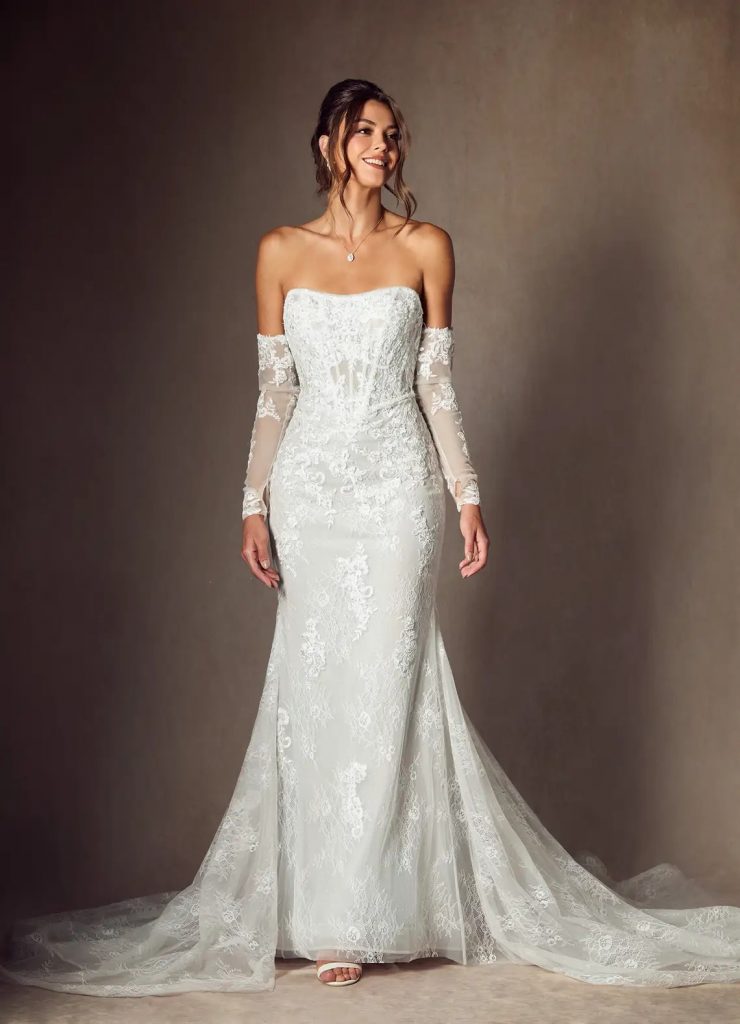
‘Elegant’ describes almost every elegant wedding dresses listing you’ll find. Which means the word has stopped doing useful work.
What brides actually want to know is: will this dress look refined and intentional in photos taken twenty years from now, or will it look like 2026? And that’s a different, more specific question — one that has real answers. Fabric quality. Neckline choice. Restraint in embellishment. Those three decisions, in that order.
| THE ELEGANCE PARADOX The more ornamentation a dress has, the less elegant it usually reads. Elegance is fundamentally a quality of restraint — a dress that does one or two things beautifully reads as more sophisticated than one attempting to be impressive in every direction simultaneously. Honestly, this applies to accessories too. Maybe especially to accessories. |
|---|
Silhouettes — Clean Lines Are What Make Elegance Last
A-Line — Elegant Without Trying
A-line is the most reliably elegant silhouette in bridal fashion. Not because it’s fashionable — because its proportions are inherently balanced.
A waist-defined bodice that flares gradually toward the floor creates visual proportion that flatters the body and photographs cleanly from every angle. An ivory wedding gown in a proper A-line silhouette is one of those combinations that brides in the 1960s wore, brides in the 2000s wore, and brides today wear — and in all three cases, the photos look intentional. That kind of consistency is what ‘elegant’ actually means, when it’s doing real work as a word.
Sheath and Column — The Case for Restraint
A well-constructed sheath or column dress in quality crepe is, I think, the most underutilized elegant option in bridal. It’s simple. Clean. It relies on the fabric and the fit to carry the entire visual impression — there’s nowhere for construction problems to hide, and no embellishment to distract. When it works, it’s extraordinary. When the fabric or the tailoring is off, it shows immediately. That risk is what makes many brides avoid it — and that same quality is what makes it look so refined when it’s done right.
Ball Gown — The Neckline Question
Ball gowns are inherently formal and carry a certain grandeur — but actually, scratch that framing. The question for a ball gown isn’t whether it reads as elegant. It’s whether the bodice construction and neckline choice keep it feeling like a bridal gown rather than a specific decade of bridal fashion.
A sweetheart neckline on a ball gown was enormously popular through the 2000s and 2010s. That association anchors photos. A cleaner strapless edge or a simple off-shoulder line tends to photograph more consistently across time.
| Silhouette | Elegance Level | Timeless Quality | Photo Performance |
|---|---|---|---|
| A-line in crepe/satin | ★★★★★ | Highest proportions hold | Consistently strong |
| Sheath/column | ★★★★★ | Very high — depends on fit | Exceptional when tailored |
| Ball gown (simple bodice) | ★★★★ | Good — neckline is key | Grandeur in formal settings |
| Fit-and-flare | ★★★★ | Good — silhouette holds | Strong with quality fabric |
| Mermaid with embellishment | ★★★ | Varies — depends on the detail level | Strong in formal settings |
Fabric — How the Dress Captures Light Determines Everything
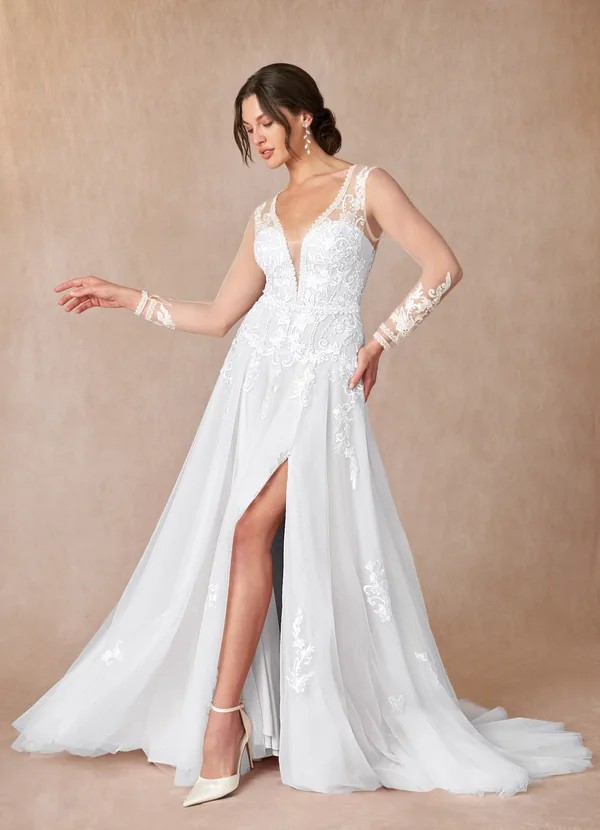
Why Matte Fabrics Hold Up Better in Photos
Glossy fabrics look impressive in person and in well-lit boutique environments. In wedding photography — especially in outdoor natural light, which changes throughout the day — high-shine synthetic fabrics can look washed out, flat, or slightly cheap in prints from 10 or 20 years ago.
Matte crepe and duchess satin consistently absorb light. They hold their surface quality across different lighting conditions. That’s why vintage bridal photos in quality fabrics still look like quality fabrics, while photos in cheaper synthetic satin from the same era can look garish.
The fabrics that have remained bridal standards for decades — silk, duchess satin, crepe, quality chiffon — all have surface qualities that translate reliably to photography across different lighting. That’s not an accident.
| ◆ MATTE CREPE Photographic quality: Excellent — absorbs light cleanly Ages in prints: Consistently well Best for: Sheath, A-line, column Tone: Works in any bridal color |
~ DUCHESS SATIN Photographic quality: Very good — soft structured sheen Ages in prints: Reliably Best for: Ball gown, structured A-line Tone: White, ivory, champagne |
◻ CHANTILLY LACE Photographic quality: Beautiful — adds texture depth Ages in prints: Well — pattern stays readable Best for: Overlay, bodice, sleeve detail Tone: Ivory and cream best |
○ SILK ORGANZA Photographic quality: Luminous — catches light elegantly Ages in prints: Very well — natural quality Best for: Overskirts, capes, overlays Tone: White, ivory, champagne |
|---|
Necklines and Detail — the Most-Photographed Elements
Necklines — What Actually Holds Up
The neckline is photographed more consistently than any other element of the dress. Close portraits, first-look shots, ceremony images from the side, guest reactions — nearly all of them include the neckline.
Clean, restrained necklines age reliably. A soft scoop, a bateau, a simple straight-across edge, a clean V — these have appeared across wedding photography from multiple decades and read as ‘bridal’ in all of them. A satin strapless wedding dress with a clean-cut edge photographs with a timeless quality that has been true since strapless gowns became standard in the 1980s. Dramatic ruffled necklines, highly complex asymmetric draping, or highly ornate appliqué edges more definitively anchor the photo to a specific trend window.
Sleeves — a Digression That’s Worth the Time
Sleeves deserve their own article, and I’m going to go on about them briefly before pulling back. A white wedding dresses with sleeves adds coverage, formality, and can be extraordinarily elegant. Fitted lace sleeves, illusion sleeves with floating appliqués, simple fitted crepe long sleeves — all of these have strong photo history and hold up. But dramatic bishop sleeves, balloon sleeves, or very large puff sleeves are trend-specific, which makes them risky for timeless photos. That’s the whole sleeve point. Moving on.
Embellishment — the Restrained-Is-Better Rule
A single, deliberate embellishment detail reads as elegant. Multiple competing embellishments, heavy bodice beading, lace sleeves, and a crystal waistband — read as accumulated. Azazie’s guide on what makes classic wedding dresses timeless in photos covers this: the gowns that age most gracefully in photos consistently use embellishment to create a single focal detail rather than adding it across the entire gown. The photographic principle is that the camera needs a place to rest — a single focal detail provides it.
Three Decisions That Define Elegant Bridal Photos Across Decades
| 1 | Evaluate the neckline against portraits you already love. Pull up wedding photography you genuinely find beautiful — not recent social media, but photos from 5, 10, or 20 years ago that still look elegant to you today. Look at the necklines. I’d guess the majority are relatively clean. Not simple to the point of anonymity, but without aggressive architectural elements or elaborate applied details. That’s your neckline target: restrained enough not to date the photo, considered enough to be clearly intentional. |
|---|
| 2 | Touch and photograph the fabric before committing. Hold the fabric in front of a window and observe how it responds to natural light. Then take a phone photo. The difference between how quality crepe and cheap synthetic read in natural-light photography is visible in that one step. Quality fabric will have natural luminosity — a softness in how it catches light. Synthetic fabric often has a flat look or a slight glare. If the phone photo looks good, the wedding photos will look better. If it looks flat or shiny-cheap, the wedding photos will show the same thing. |
|---|
| 3 | Remove one accessory before leaving the house. Seriously. Whatever the complete look is on the wedding day, take one piece away before the ceremony. The classic rule about one accessory applies more to wedding photos than to the day itself: accessories are the second most-frequent source of photo-dating, after hairstyle. A simple drop veil, small pearl earrings, and clean shoes let the dress photograph. Every piece you add is another potential ‘oh, that was 2025’ in a photo from 2040. |
|---|
Venue and Elegance Level Alignment
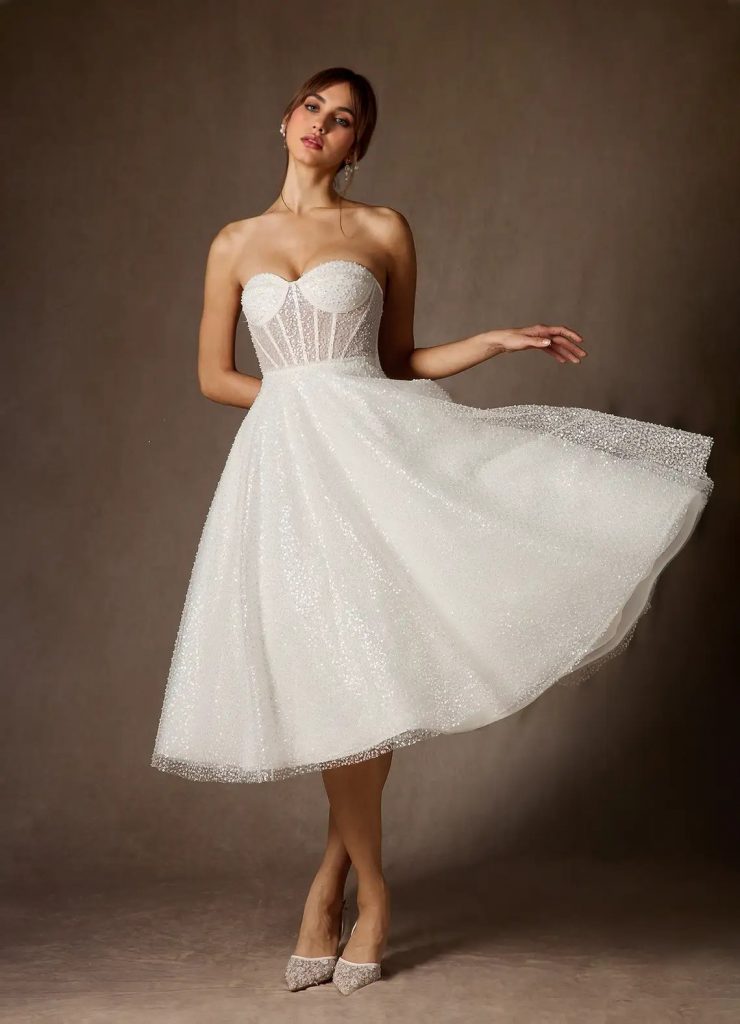
| Venue Type | Dress Weight | Best Neckline | Color |
|---|---|---|---|
| Historic church/cathedral | Heavy — satin, mikado | Strapless, bateau, V | White, ivory, cream |
| Grand ballroom | Medium-heavy — crepe | Off-shoulder, strapless | White, champagne |
| Intimate / garden | Medium — crepe, chiffon | Scoop, V-neck, bateau | Ivory, antique white |
| Destination / outdoor | Light-medium — crepe | Any clean neckline | Cream, ivory, champagne |
| Museum / cultural venue | Medium — quality matters | Architectural clean lines | White, ecru, antique |
For color specifically: cream colored wedding dresses and antique white wedding dress tones photograph with more warmth in natural and outdoor light than pure white. Warm whites (cream, antique white, ivory) gain luminosity in outdoor and candlelit settings, while pure whites can read as slightly cool. Worth testing in actual light conditions before deciding.
Closing Thoughts
Elegant wedding dresses look timeless in photos when the fabric quality is apparent, the silhouette is proportionally balanced, the neckline is clean, and the accessories don’t try to tell their own story.
None of those things requires a specific price point or designer. They require specific decisions.
Frequently Asked Questions
Can a minimalist wedding dress be elegant?
Not just can — minimalism is often the clearest path to elegance. A perfectly fitted sheath in duchess satin or a clean A-line in quality crepe is elegant in a way that a heavily embellished gown can’t always achieve. The minimalist approach requires the fabric and construction to do all the work, which is a form of confidence in itself.
What are the best silhouettes for elegant wedding dresses?
A-line is the most consistently reliable. Sheath and column work exceptionally when the tailoring is precise. A ball gown works in formal settings, with a clean, non-trend-specific bodice. Fit-and-flare in quality fabric also holds up. What tends to age less well: heavy asymmetric draping, silhouettes that depend on a very specific trend-era structural element.
How do I ensure my dress looks elegant in photos?
Fabric choice first. Matte crepe and quality satin absorb and reflect light consistently in photography; cheap synthetic fabrics often don’t. After that: neckline simplicity. And then the accessories — remove one piece before the ceremony. The combination of those three factors determines whether the photo reads as ‘elegant bride’ or ‘wedding from a specific year.’
What fabrics are best?
Matte crepe, duchess satin, silk, and Chantilly lace are the most established choices. They have long track records in bridal for a reason — their surface qualities photograph consistently across different lighting conditions, which is more important than most people realize when choosing fabric.
What accessories complement an elegant wedding dress?
Simple drop veil or cathedral veil. Small diamond or pearl earrings. One piece of jewelry that catches light without dominating. Classic closed-toe pumps or simple sandals. The goal is a bridal look that makes you look back at photos and notice the bride, not the specific jewelry or accessories.
Are elegant wedding dresses available in plus sizes?
Yes. Azazie offers over 200 wedding dresses in sizes 0–30 with made-to-order construction. For elegant silhouettes — A-line, sheath, column — made-to-order and custom sizing ensure the proportions reflect the intended elegance rather than a standard sizing compromise. The at-home try-on option is also available for Azazie wedding dresses.
What’s the best venue for an elegant wedding look?
The venue that matches the weight and formality of the dress. A grand, heavily structured ball gown in a small, intimate ceremony creates a visual disconnect that’s hard to resolve in photos. A simple, clean A-line at a grand cathedral can look intentionally minimal or slightly underdressed, depending on execution. Match the fabric weight and silhouette formality to the venue’s gravity.
How do I adapt an elegant dress for winter?
A tailored bolero in matching crepe or a structured jacket rather than a shawl or wrap — those read as designed rather than added. White wedding dresses with sleeves built into the original gown construction work better for winter than sleeves or wraps added on top. If the dress doesn’t have built-in sleeves, the addition needs to be tailored — not draped.