
How to Choose Winter Wedding Dresses That Are Warm, Elegant, and Photo-Ready
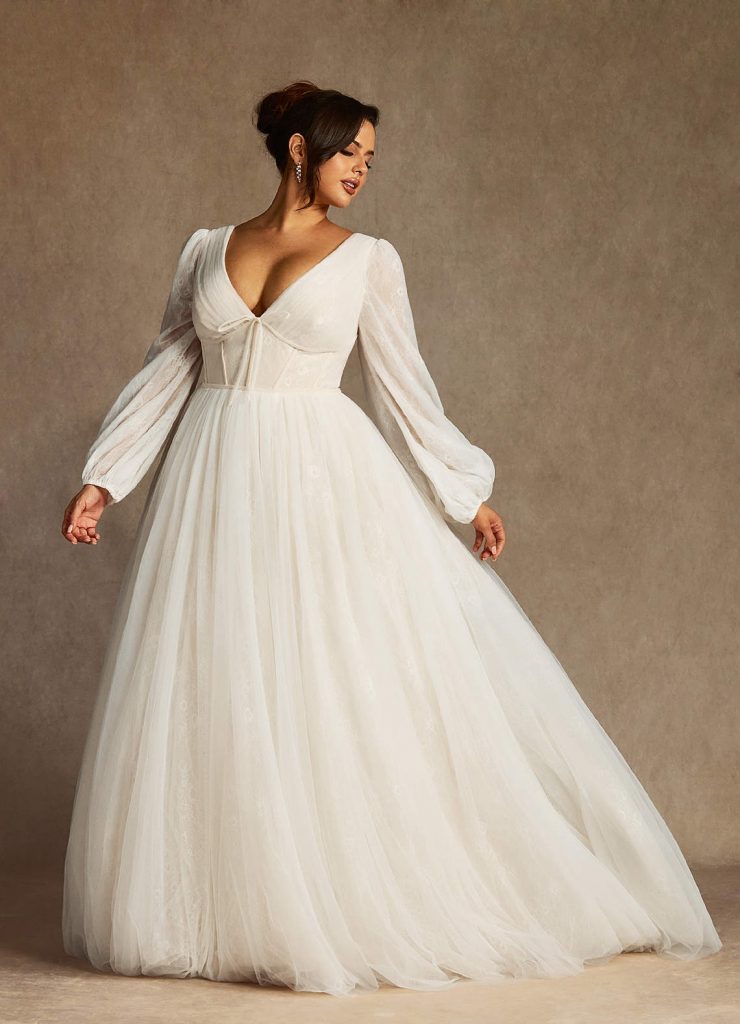
Winter wedding dresses need to do more than look beautiful; they need to keep you comfortable across a long day in cool or cold conditions. The right fabric, sleeve choice, and layering strategy make the difference between a bride who is relaxed and present versus one managing the temperature all day. Long sleeves, heavier fabrics, and structured silhouettes are the practical starting points for most winter ceremonies.
Why Fabric Choice Matters More in Winter
Fabric affects temperature regulation more than any other element of a winter wedding dress. Heavier weaves retain warmth; lighter fabrics lose heat quickly in cold air. Understanding the basics helps you choose confidently before ordering.
| Fabric | Warmth Level | Best Winter Use |
| Duchess satin | High | Ball gown, A-line, structured styles |
| Crepe back satin | Medium-high | Mermaid, sheath, fitted silhouettes |
| Lace over satin | High | Bodice coverage; structured warmth |
| Velvet | Very high | Statement styles; formal winter venues |
| Mikado | Medium-high | A-line; holds shape in cold air |
| Chiffon | Low | Overlay only; pairs with warmer underlayers |
| Tulle | Low to medium | Ball gown skirts; adds volume not warmth |
| Floral jacquard | Medium-high | Structured; textural winter look |
Duchess satin and lace over satin are the most consistently recommended combinations for winter brides. Both fabrics retain body heat, photograph with a rich sheen in low winter light, and hold their shape well in cold outdoor air during portrait sessions.
Best Silhouettes for Winter Weddings
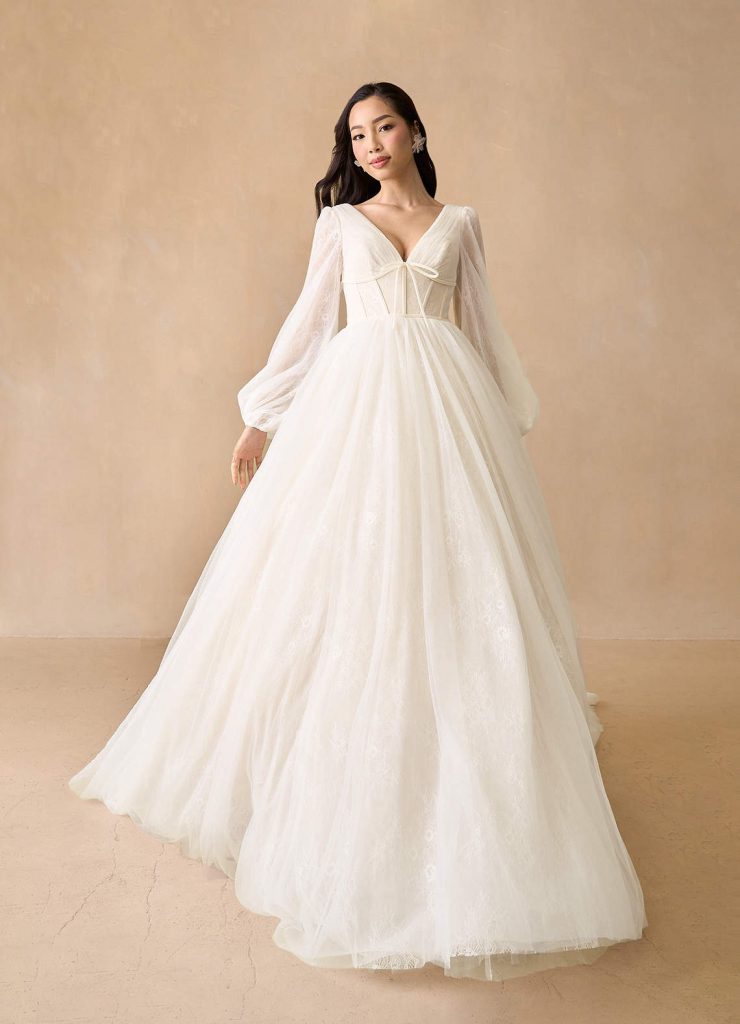
Winter allows for more structured, heavier silhouettes that would feel too warm in summer. These are the strongest choices for cold-weather ceremonies.
Ball Gown: The Classic Winter Choice
Ball gowns in satin or jacquard are particularly well-suited to winter. The full skirt adds visual drama and physical warmth; multiple layers of fabric retain heat effectively. Azazie’s winter wedding dresses collection includes ball gown styles in floral jacquard and lace tulle that photograph beautifully against snowy or candlelit backdrops.
Mermaid and Fit-and-Flare: Body-Warm and Photogenic
Fitted silhouettes in crepe back satin or stretch crepe retain warmth well because they sit close to the body with minimal airflow between the fabric and skin. These styles look especially striking in winter venue lighting; the smooth surface catches candlelight and warm indoor light in a way that open, layered fabrics do not.
A-Line with Sleeves: The Most Versatile Option
An A-line with long sleeves provides the widest range of warmth options. The skirt can be lighter-weight while the sleeved bodice handles the temperature. This combination works for both indoor heated venues and brief outdoor portrait sessions in cold air.
Sleeve Strategies for Winter Warmth
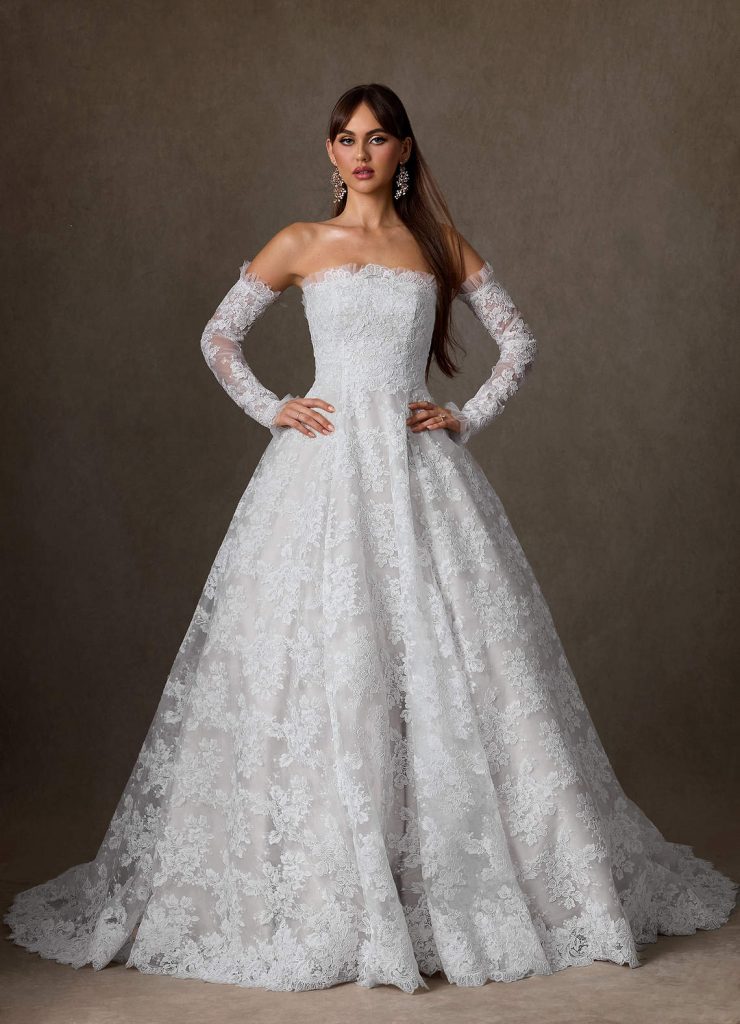
Sleeves are the single most effective way to stay warm without adding an outer layer. These are the most practical sleeve styles for winter weddings:
- Long lace sleeves coverage without weight; photograph beautifully; most popular winter bridal choice
- Illusion sleeves sheer fabric over nude lining; elegant coverage; suits formal venues
- Off-the-shoulder with sleeve wraps the upper arm; adds warmth while keeping the collarbone visible
- High neck with long sleeve maximum coverage; particularly well-suited to very cold or outdoor-heavy days
- Three-quarter sleeve practical for heated indoor venues where full sleeve coverage feels too warm
White wedding dresses with sleeves in lace or stretch satin are the most searched style combination for winter weddings. The sleeve adds warmth, the lace adds texture, and the overall look suits formal venues as naturally as relaxed indoor settings.
Layering Strategies: Staying Warm Without Losing the Look
Not every bride wants built-in sleeves and layering gives you flexibility between ceremony, portraits, and reception.
Bridal Cover-Ups That Work
- Faux fur stole or wrap the most classic winter bridal layering piece; photographs warmly and removes easily for indoor reception
- Lace bolero adds arm coverage while maintaining the lace aesthetic of many winter gowns
- Long bridal cape dramatic and photogenic; particularly effective for outdoor portraits in snow or winter gardens
- Structured bridal jacket for very cold outdoor venues; pairs best with sleeker silhouettes like the sheath or A-line
- Cashmere or wool wrap practical for transitions between venues; not for ceremony or reception photos
Plan cover-up removal in advance. Decide which moments you want the cover-up in photos and which you want the dress alone. Communicate this clearly to your photographer before the day.
Layering for Warmth Under the Dress
- Thermal slip or liner a thin thermal layer underneath the dress lining adds significant warmth invisibly
- Seamless long-sleeve bodysuit works under sleeveless gowns with open backs if the back style allows
- Fleece-lined tights or stockings practical for midi or tea-length styles; important for outdoor ceremonies
- Stick-on warming patches for the lower back and shoulders during outdoor portrait sessions
How Winter Light Affects Your Dress Photos
Winter light behaves differently from summer light and understanding this helps you choose fabrics and colors that photograph at their best.
Overcast winter daylight: Soft and diffused. Satin and sequin fabrics glow evenly without harsh bright spots. This is ideal lighting for almost any bridal fabric.
Indoor candlelight and venue lighting: Warm amber tones. Ivory, champagne, and cream fabrics absorb this warmth beautifully. Bright white can look slightly cool or stark under warm indoor lighting ivory and champagne tones are more forgiving.
Snowy outdoor settings: High contrast. A diamond white dress against a snowy background can blend into the landscape. A warm ivory or champagne tone creates stronger contrast and reads more clearly in photography against white winter backdrops.
Low winter sun: Creates golden-hour light even at midday. Sequins, beading, and satin catch this light and add visible sparkle making winter one of the best seasons for embellished bridal styles.
Winter Color Palette for Bridal Gowns
Classic white remains popular, but winter weddings open up a richer range of bridal tones that suit seasonal lighting and venue aesthetics.
| Color | Why It Works in Winter |
| Diamond white | Crisp; high contrast against dark winter venues |
| Ivory | Warm tone; reads beautifully in candlelight and firelight |
| Champagne | Golden warmth; suits wood, stone, and warm-lit ballrooms |
| Cream | Soft and warm; flattering in low natural and indoor light |
| Antique white | Rich and textured; suits vintage or historic winter venues |
A champagne wedding dress in satin or sequin fabric photographs with a golden warmth that complements winter venue lighting more naturally than stark white. This tone is consistently among the most reviewed and recommended choices for winter brides across indoor ballroom and barn settings.
For brides open to softer tones, cream colored wedding dresses in lace or chiffon over satin offer a quieter, more romantic look that suits candlelit churches, vineyard venues, and intimate indoor ceremonies equally well.
Venue-Specific Fabric Advice
Heated Indoor Ballroom or Church
- Heavier satin and lace are comfortable the venue temperature is controlled
- Ball gowns and structured mermaid styles suit the formal architecture
- A sleeveless or strapless gown is practical if the venue stays consistently warm
Outdoor Winter Ceremony
- Prioritize long sleeves or a substantial cover-up
- Choose satin or crepe back satin they hold up better in cold air than lightweight chiffon
- Plan the outdoor portion to be brief; even the warmest fabric has limits in genuinely cold temperatures
Barn or Rustic Winter Venue
- Lace over satin and floral jacquard suit the textural aesthetic naturally
- A boho champagne wedding dress in a relaxed A-line silhouette pairs well with warm barn lighting and wooden interiors
- Heavier fabrics like mikado photograph well against natural wood and stone textures
Intimate Indoor or Courthouse Winter Wedding
- Simpler silhouettes in stretch crepe or sheath styles suit smaller, warmer settings
- High-neck or long-sleeve styles look polished and intentional without requiring additional layering
- Sequin or beading details catch the light in smaller venues where there is less space for a full dramatic skirt
Comfort Checklist for Winter Brides
Before finalizing your winter wedding dress choice, run through these points:
- Does the dress include sleeves, or is a cover-up planned for outdoor moments?
- Is the fabric heavy enough to retain warmth during an outdoor ceremony or portraits?
- Have you planned a layering strategy for transitions between warm and cold spaces?
- Have you tested your cover-up or wrap in photos? Does it remove cleanly for the reception?
- Is your undergarment choice appropriate for the sleeve and neckline style?
- Have you communicated the outdoor portion timing to your photographer?
- Does the fabric photograph well in your specific venue’s lighting conditions?
Frequently Asked Questions
What is the warmest fabric for a winter wedding dress?
Duchess satin is the heaviest and warmest standard bridal fabric. Velvet is warmer still but less commonly used in full gowns. Lace over satin is the most popular warm-weather bridal combination the two layers together retain significantly more body heat than either fabric alone.
Can I wear a sleeveless gown to a winter wedding?
Yes if the ceremony is indoors and the venue is heated. Plan a substantial cover-up for outdoor portraits, transitions between venues, and arrival and departure. A faux fur stole or long bridal cape removes cleanly for indoor reception photos without disrupting the dress.
What color shows up best in winter wedding photos?
Ivory and champagne both photograph warmly against winter venue lighting and show clear contrast against snow or dark indoor backgrounds. Bright white can blend into snowy backdrops or look stark under warm amber venue lighting. An ivory wedding gown in satin or lace is the most consistent performer across winter photography conditions.
Do sequins work for winter weddings?
Yes sequins are actually one of the best fabric choices for winter. They catch low winter light, candlelight, and warm venue lighting beautifully. A sequin A-line or mermaid gown photographs with visible sparkle in conditions where plain fabric might look flat. Many of Azazie’s winter wedding dress styles feature sequin detailing across the bodice or full skirt.
How do I stay warm during outdoor portraits in winter?
Keep the outdoor portion of your portrait session brief 15–20 minutes in cold conditions is usually enough for excellent shots. Wear a substantial cover-up during transit and remove it only for specific shots. Ask your photographer to prioritize the outdoor portraits early, before the cold becomes uncomfortable. Hand warmers in a bridesmaid’s bag are a practical backup.
Is a ball gown practical for a winter wedding?
Yes the full skirt retains warmth and the dramatic silhouette suits the formal aesthetic of most winter venues. Choose a ball gown in satin or lace over tulle rather than tulle alone for the best warmth-to-weight ratio. Azazie offers over 300 wedding dresses in sizes 0–30, including ball gown styles specifically suited to winter settings.
What sleeve style is best for a winter wedding?
Long lace sleeves are the most popular and practical choice. They provide full arm coverage, photograph beautifully in winter light, and suit formal and relaxed venues equally well. Illusion sleeves are a close second. The sheer fabric gives the appearance of full coverage while keeping the look lighter and more open at the shoulder.