
How to Choose Modest Wedding Dresses That Feel Intentional, Elevated, and Wedding-Day Ready
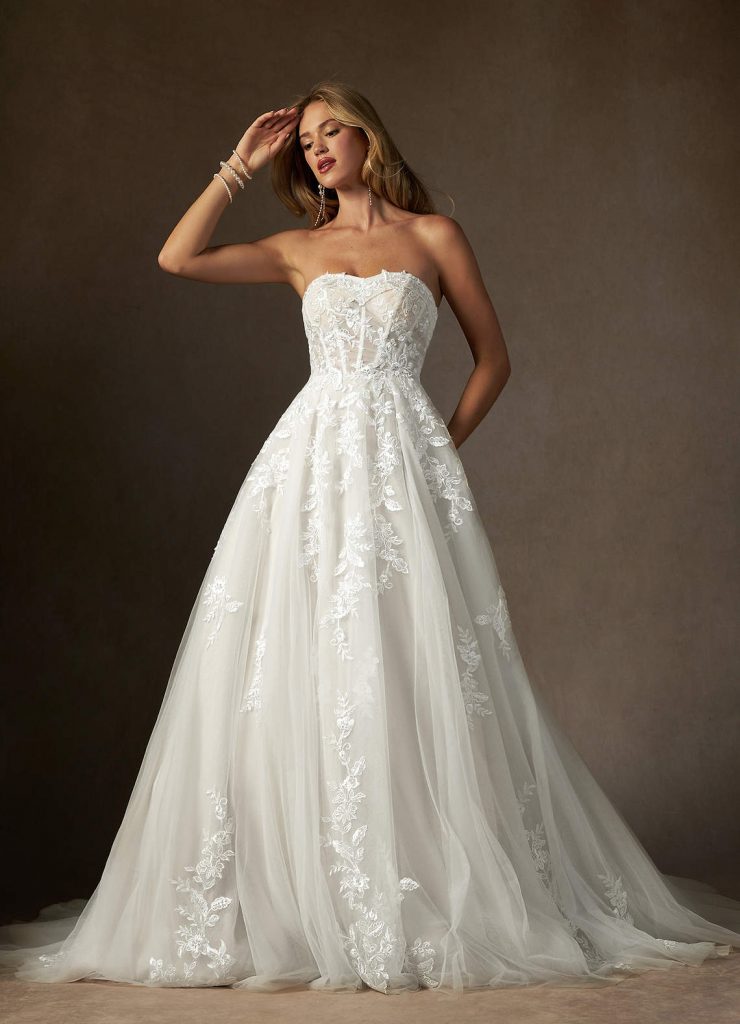
There’s a distinction that matters more than most bridal advice acknowledges: a modest wedding dresses choice that feels intentional looks completely different from a modest dress that looks like coverage was added to something that wasn’t designed for it.
A fitted lace sleeve that’s architecturally part of the bodice reads as designed. A cape draped over a strapless gown reads as covered. Both are technically modest. Only one of them photographs as elevated. That’s the whole distinction — and it shapes every decision in this category.
| THE INTENTIONAL COVERAGE PRINCIPLE The best modest wedding dresses use coverage as a design element, not a correction. Long sleeves that taper into fitted lace at the wrist. An illusion neckline where the mesh is part of the bodice construction. A bateau or high scoop that defines the collarbone rather than hiding it. When coverage is built in, it reads as bridal. When it’s added on, it reads as adjusted. |
|---|
Why the Source of Coverage Matters More Than the Amount
The Sleeve Question — What Actually Reads as Elegant
And here’s the thing most people don’t expect: a beautifully fitted long sleeve in quality lace can be more figure-flattering than a sleeveless gown. The continuous line from shoulder to wrist creates a longer visual column that photographs with a certain architectural quality.
A white wedding dresses with sleeves option where the sleeve is truly part of the original construction — where the lace pattern continues from the bodice into the sleeve, or where the sleeve fabric matches the gown’s surface quality — reads entirely differently from a sleeve attachment that feels bolted on. Check whether the sleeve seam is visually integrated or whether it creates a visible break in the design.
Illusion Necklines — the Most Versatile Modest Technique
Illusion mesh at the neckline allows a dress to have a high, covered look while avoiding the visual flatness that can come from a fully opaque bodice at the collarbone.
The Bateau and High-Scoop Necklines
These are my personal recommendations for brides who want coverage that never reads as conservative. A bateau neckline defines the collarbone and creates a clean horizontal line that’s genuinely one of the most flattering shapes in bridal.
An ivory wedding gown with a bateau neckline and three-quarter fitted lace sleeves photographs with a kind of restraint that reads as sophisticated — and decades of bridal photography confirm it. Grace Kelly. Audrey Hepburn. Multiple Kennedy weddings. Clean, high necklines have a long track record in the photos we still call beautiful.
| Coverage Type | Reads as Designed? | Photography Quality | Works Best With |
|---|---|---|---|
| Built-in illusion neckline | Yes — part of the dress | Sculptural, architectural | Any silhouette |
| Integrated lace sleeve | Yes — continues bodice lace | Elegant, elongating | Fitted or A-line bodice |
| Bateau/high scoop | Yes — neckline as a feature | Clean and timeless | All silhouettes |
| Cape over strapless | Depends on quality | Can read as added | If the cape is made-to-match |
| Detachable sleeve add-on | Only if seamlessly done | Visible seam is a risk | Versatile for 2-in-1 looks |
Fabrics and Silhouettes — What Makes Coverage Beautiful
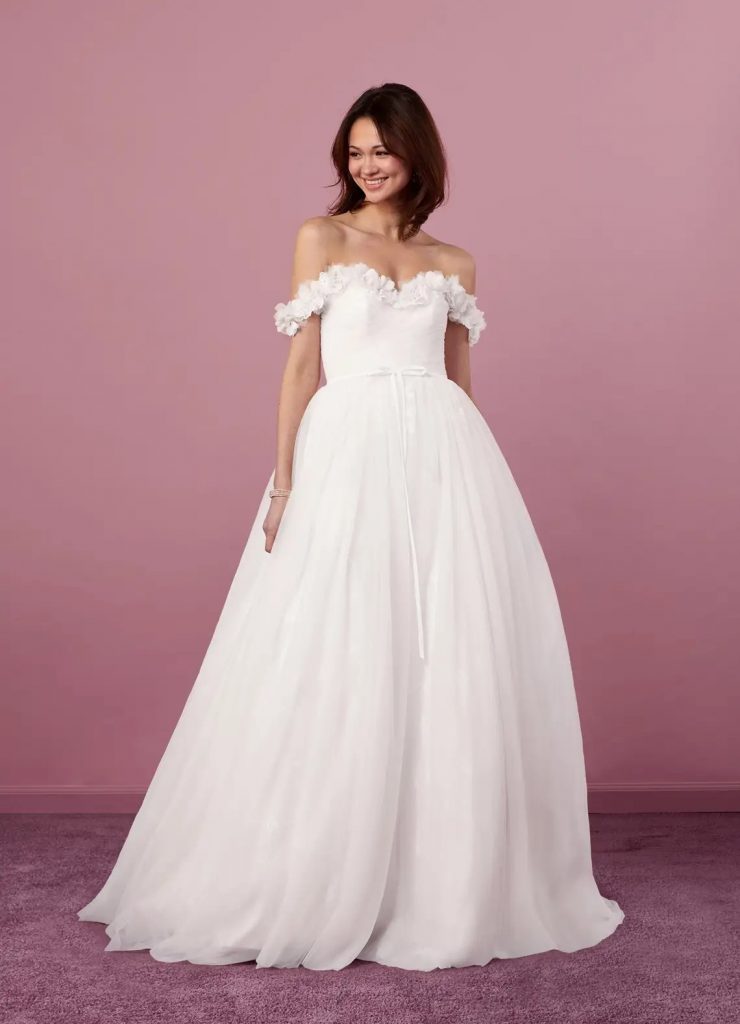
Why Modest Dresses Need Better Fabric Than Average
When a dress has less skin exposure, the fabric does more of the visual work. There’s no décolletage or open back drawing the eye — it’s all about surface quality, drape, and how the fabric handles light.
According to My Bridal Closet’s guide on modest wedding dresses, this is one of the most consistent points they make in consultations: brides seeking modest styles often need to invest more attention in fabric quality than they expect. A cheap crepe in a modest silhouette looks flat and formless. The same silhouette, in quality matte crepe, has real structure and elegance.
Sleeve Fabric Must Match the Gown
I’ll keep this brief: the sleeve fabric weight needs to match the dress body’s. A heavy brocade long-sleeve top over a flowing chiffon skirt creates a visual disconnect — the top half and bottom half look like they’re from different garments. A fitted lace sleeve on an A-line lace dress is a single visual language. That coherence creates the ‘elevated’ quality—keeping it brief because it’s simple: the same fabric family and weight range throughout the dress.
| ◆ FITTED LACE SLEEVES Reads as: Architectural, intentional Best bodice: Lace-forward, fitted Flattering? Very — creates a longer line Fabric match: Continue bodice lace |
~ ILLUSION 3/4 SLEEVES Reads as: Delicate, designed Best bodice: Any — very versatile Flattering? Yes — shows wrist Fabric match: Mesh with lace overlay |
◻ LONG FITTED CREPE Reads as: Sleek, modern Best bodice: Crepe or structured sheath Flattering? Very — clean vertical line Fabric match: Same crepe as body |
○ PUFF/BISHOP SLEEVE Reads as: Romantic statement Best bodice: Structured, fitted Flattering? Depends on proportions Fabric match: Chiffon or organza only |
|---|
WeddingForward’s editorial overview on modest wedding dresses specifically notes that A-line and ball gown silhouettes are the most consistently successful choices for modest bridal. The skirt creates natural volume that balances the coverage in the bodice — the eye isn’t searching for skin to break up the visual, because the skirt itself provides contrast and movement.
Three Things to Check Before Committing to a Modest Wedding Dress
| 1 | Evaluate whether the sleeve is integrated or attached. Pull the sleeve toward the shoulder seam and look at the transition. If the lace pattern is continuous — if you can trace a design element from the bodice into the sleeve without interruption — the sleeve is integrated. If there’s a visible seam or break in the lace pattern, the sleeve was designed as a separate element. Both can work, but the integrated sleeve will consistently appear more intentional in photos. Ask the boutique specifically: was the sleeve in this design from the original pattern, or is it a modification? |
|---|
| 2 | Test the neckline specifically on your collarbone. Stand in profile and look at where the neckline sits relative to your collarbone. A bateau that grazes the collarbone or sits just above it is flattering. A high neckline that creates a thick band across the lower neck can shorten the visual line from chin to chest. Modest doesn’t have to mean the neckline is as high as possible — it means the coverage is where you want it. The collarbone neckline is consistently the most flattering position for coverage that still photographs gracefully. |
|---|
| 3 | Bring a trusted person to the fitting whose sense of style you actually respect. And I mean actually respect — not someone who will just agree with you. The modest bridal category is one where outside perspective matters more than usual, because the bride is making choices that require distinguishing between ‘intentionally covered’ and ‘conservative-by-default.’ Someone who understands what elevates a covered look can tell you whether the dress is doing the work or whether adjustments would help. |
|---|
Venues and Settings for Modest Wedding Dresses
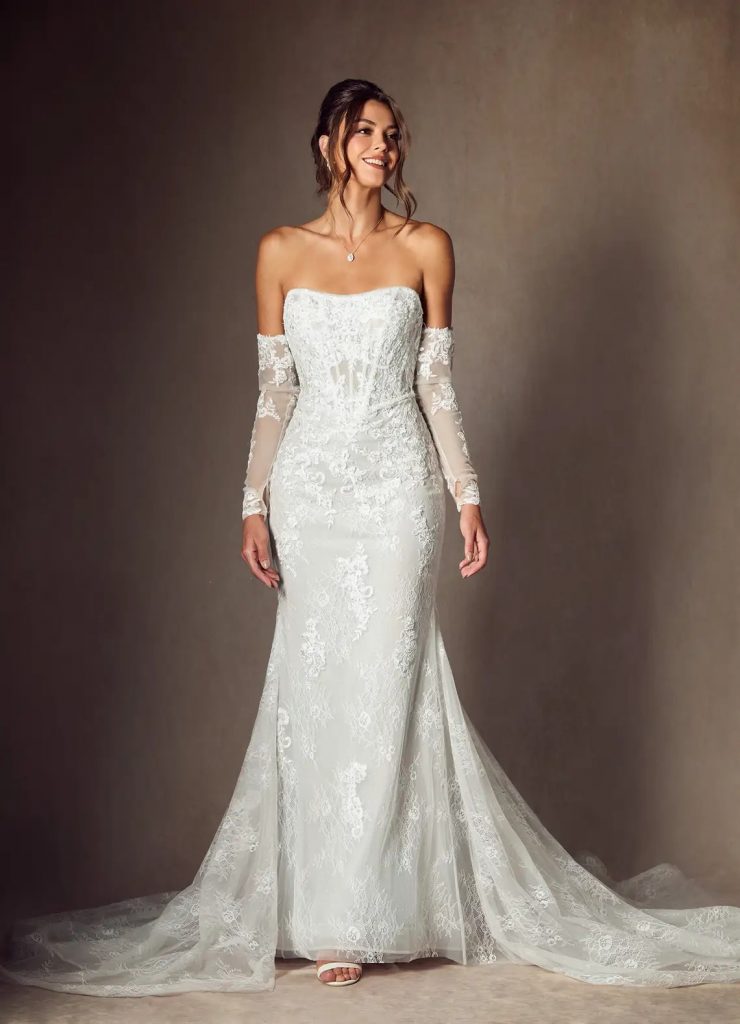
| Venue | Best Silhouette | Sleeve Style | Color |
|---|---|---|---|
| Historic/religious | A-line or ball gown | Long lace or illusion | White, ivory, cream |
| Garden / outdoor | A-line in soft fabric | 3/4 lace or flutter | Ivory, antique white |
| Grand ballroom | Ball gown or sheath | Long fitted or cape | White or ecru |
| Destination / cultural | Sheath or fitted A-line | Illusion 3/4 or long | Cream, champagne |
| Intimate/civil | Sheath or column | Any — modest by design | Any bridal tone |
For color with modest silhouettes, cream-colored wedding dresses and antique white wedding dress options work especially well in natural and indoor light when there’s substantial fabric coverage. Warm whites register warmly in the same way warm skin tones do — and in lace especially, the ivory family reveals pattern detail more clearly than pure white, which can read as slightly flat under flash.
Moments Made Bridal’s trend overview for modest bridal styles notes that fitted lace sleeves and illusion necklines are currently the most-requested modifications to modest bridal patterns — specifically because brides have learned that these elements read as high-design rather than conservative when executed with quality construction.
Closing Thoughts
Modest wedding dresses look intentional when coverage is part of the design rather than a modification to a design that didn’t include it. Fabric quality, integrated construction, and the right silhouette do more for an elevated modest look than any amount of embellishment.
Start with whether the sleeve is integrated. That single check tells you most of what you need to know.
Frequently Asked Questions
What makes a modest wedding dress feel elevated instead of plain?
Coverage that’s built into the original design rather than added afterward. Integrated lace sleeves, illusion necklines where the mesh is part of the bodice construction, and necklines that define rather than simply cover — those all read as designed. A dress where coverage is an afterthought looks like an adjustment. The distinction is visible, and it’s significant in photos.
Can modest wedding dresses look stylish?
Yes — and they can look more sophisticated than revealing dresses when the design is strong. A perfectly fitted long-sleeve sheath in quality crepe is a complete design statement. The coverage isn’t a limitation; it’s a choice. The most elegant bridal photos often feature covered gowns. The issue is never ‘modest or not’ — it’s whether the dress is well designed.
What are the best silhouettes for modest wedding dresses?
A-line is the most reliable — the skirt creates movement and volume that balances bodice coverage. A ball gown works beautifully in formal settings. Sheath in quality crepe reads as architectural and modern. A fitted mermaid with long sleeves creates a striking, intentional look when the sleeve is integrated rather than attached. Any of these can be elevated or mediocre depending on fabric quality and construction.
What accessories work with modest wedding dresses?
A simple drop veil or cathedral veil — modest dresses with high necklines often pair better with a simple veil than one with heavy embroidered edges, which can create visual crowding at the neck and shoulders. Minimal earrings. A simple bracelet if the sleeves show the wrist. Let the dress do the work.
Are modest wedding dresses available in plus sizes?
Yes. Azazie‘s collection of wedding dresses spans sizes 0–30, with made-to-order and custom sizing options. For modest styles with long sleeves or specific neckline heights, custom sizing is particularly valuable — because the sleeve and neckline proportions need to be aligned with your specific measurements, not just a standard size.
Can I wear a modest dress for a summer or outdoor wedding?
Yes — with the right fabric choices. Chiffon sleeves or illusion sleeves with lace over mesh breathe better than fitted crepe in heat. Three-quarter sleeves show the wrist and create airflow. A bateau neckline without sleeves can also read as modest while being entirely appropriate for warm weather. The season changes the fabric weight, not the principle of coverage.
How can I adapt a modest dress for a winter wedding?
A long fitted sleeve in heavier crepe or quality velvet-lined lace works naturally for winter. A coordinating cape in the same fabric family adds warmth and drama simultaneously. The key is the word ‘coordinating’ — a cape that’s clearly made to match the dress reads as designed; a wrap that was bought separately reads as cold.