
How Plus Size Brides Can Find a Wedding Dress That Fits Beautifully
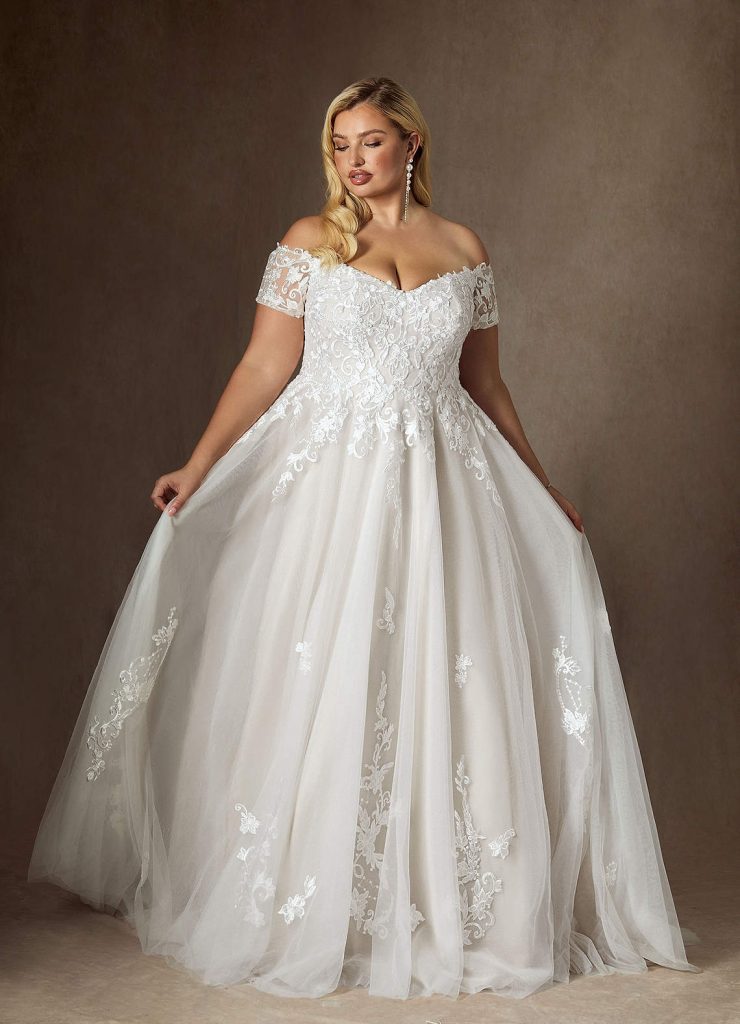
Wedding dresses for plus size brides work best when the silhouette, fabric, and fit strategy are chosen together. The right combination creates a look that is comfortable, flattering, and built to last a full wedding day. A-line and off-the-shoulder styles lead the way for most plus size figures and with custom sizing available in sizes 0–30, finding a precise fit is genuinely achievable.
Best Silhouettes for Plus Size Brides
Every silhouette can work for a plus size bride. The key is knowing what each one does for your specific proportions.
| Silhouette | Best For | Why It Works |
| A-line | Most body types | Defines waist; skims hip and thigh freely |
| Ball gown | Apple, full bust | Full skirt creates balanced hourglass shape |
| Off-the-shoulder | Pear, hourglass | Highlights collarbone; draws the eye upward |
| Sheath (stretch) | Athletic, tall | Clean lines; stretch fabric adds ease |
| Fit-and-flare | Hourglass, pear | Follows curve then flares at knee |
| Empire waist | Full midsection | Sits below the bust; skims the rest of the body |
A-Line: The Most Universally Flattering Choice
The A-line flows away from the waist and skims the hip and thigh naturally. It works for nearly every plus size body type because the skirt does not cling or require precise hip-to-thigh fitting. This is the starting point most bridal stylists recommend for first-time dress shoppers.
Off-the-Shoulder: Elegant and Balancing
Off-the-shoulder styles draw attention to the collarbone and upper body. This neckline visually balances wider hips by adding horizontal interest at the shoulder line. Several styles in Azazie’s plus size wedding dresses collection combine off-the-shoulder styling with A-line or empire waist cuts for a cohesive, flattering look.
Key Measurements for Plus Size Ordering
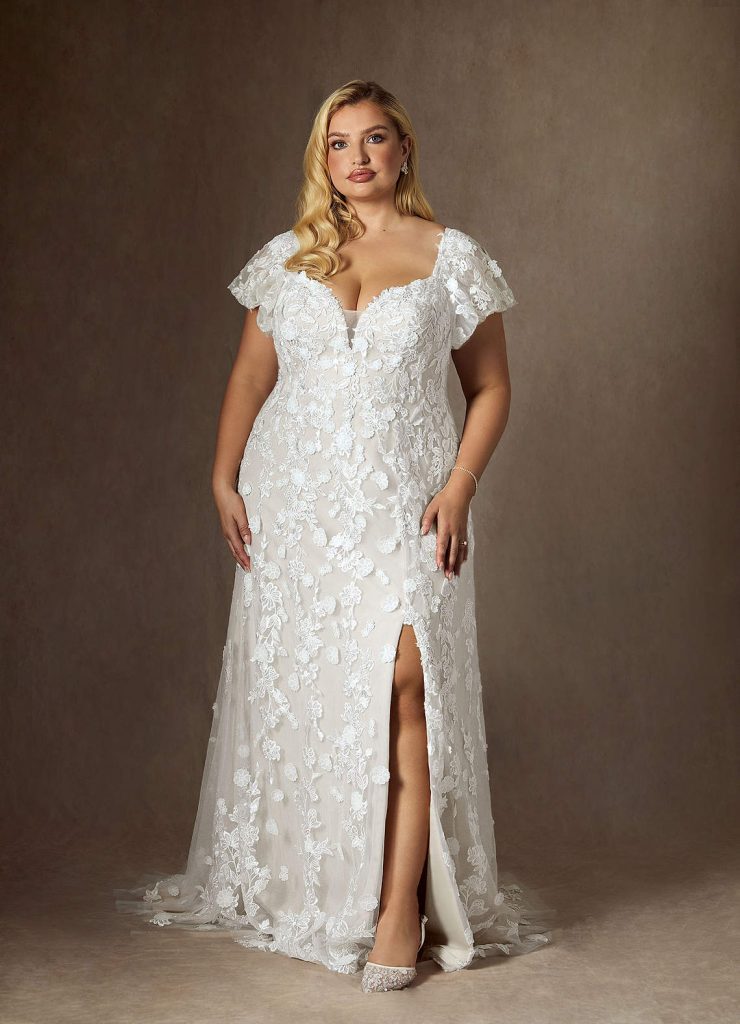
Accurate measurements are the single most important step when ordering online. These five points cover the body areas that affect fit most directly.
- Bust measure around the fullest part of the chest, tape level and parallel to the floor
- Waist measure at the narrowest point of the torso, usually 1 inch above the navel
- Hips measure around the fullest point, typically 7–9 inches below the natural waist
- Hollow to floor from the center collarbone to the floor in bare feet
- High hip measure 3–4 inches below the natural waist; relevant for fitted silhouettes
The Plus Size Ordering Rule
Always size to the largest measurement. If the bust, waist, and hips fall in different size ranges, order the size that matches the largest number. A seamstress can take in areas that are too large adding fabric where there is none is far more difficult and sometimes not possible.
Common Fit Challenges and How to Address Them
https://cdn-1.azazie.com/upimg/h65/f5/53/19d5b71ae7f93590bc4e1de13585f553.jpg.webp
Full Bust vs. Defined Waist
When the bust measurement is significantly larger than the waist, a fixed zipper closure creates a gap or pulling at one point or the other. A corset back solves this directly; it can be laced to different tensions at the bust and waist independently. Look for gowns that include a corset closure or ask your seamstress to convert a zipper back during alterations.
Hip-to-Waist Proportion
For brides with a larger hip-to-waist difference, structured skirts without built-in flare can pull horizontally across the widest point. A-line and ball gown styles with natural flare built into the pattern drape away from the hip instead of pulling. Avoid very straight or narrow column cuts unless the fabric includes significant stretch.
Bodice Sitting Too Low
Standard bodice lengths assume an average torso measurement. Plus size brides with a longer torso sometimes find that the waistline seam hits below the natural waist, disrupting the overall proportion of the gown. Custom sizing adjusts the bodice drop to your exact torso length this is one of the clearest practical benefits of ordering made-to-measure.
Upper Arm Coverage
Many plus size brides prefer coverage through the upper arm. Fitted sleeves in non-stretch fabric can be restrictive and always measure the upper arm circumference when ordering sleeved styles. Wedding dresses with sleeves that use stretch lace or chiffon through the arm accommodate a range of arm sizes more comfortably than rigid fitted sleeves.
Necklines That Flatter Plus Size Figures
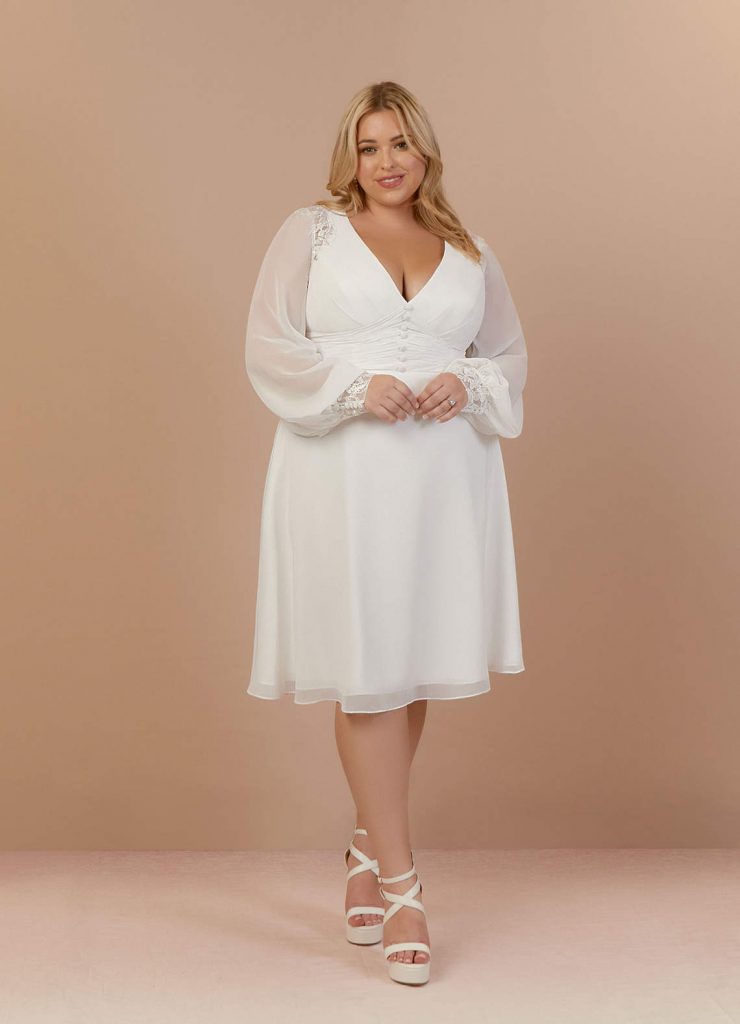
The neckline creates the first visual impression and directs attention upward. These options consistently work well across plus size body types:
- Sweetheart frames the bust; one of the most reviewed and recommended necklines for fuller figures
- V-neck creates a vertical line that elongates the torso and reduces the visual weight of a full bust
- Off-the-shoulder adds width at the shoulder; balances wider hips effectively
- Scoop modest, clean, and universally flattering regardless of bust size
- Portrait or square horizontal line across the collarbone; widens the upper body proportionally
Strapless necklines work for plus size brides when the bodice includes strong boning and a corset back. Without adequate structure, a strapless gown shifts throughout the day especially during active reception moments.
Fabric Choices That Work Best
Some fabrics handle plus size proportions more gracefully than others. The right material makes a significant difference in both fit and comfort across a full wedding day.
| Fabric | Why It Works for Plus Size |
| Stretch crepe | Moves with the body; no pulling at seams |
| Chiffon | Lightweight; flows away from the body |
| Lace over satin | Structured bodice; visual texture draws the eye |
| Tulle | Adds skirt volume without weight |
| Stretch satin | Polished finish with comfortable give |
| Matte satin | Smooth and structured; less glare at curved seams |
Avoid very stiff non-stretch fabrics in fully fitted silhouettes. They resist the body’s natural shape rather than following it, which creates pulling at the hip and bunching at the waist. A soft fabric like chiffon or stretch crepe in an A-line or empire waist silhouette is one of the most comfortable combinations for an active wedding day.
A champagne wedding dress in layered tulle or chiffon photographs warmly and softly a particularly popular combination for plus size brides who want a lighter, more romantic look across a full-length gown.
Supportive Undergarments: A Practical Guide
The right undergarments affect how the dress sits, looks, and feels throughout the day. These are the most useful options for plus size brides:
- Strapless longline bra provides lift and smoothing from the bust through the upper waist
- High-waist smoothing shorts the most important piece; smooths the hip and thigh under A-line and fitted styles
- Built-in boning or cups many gowns include these; verify before purchasing additional undergarments
- Petticoat or crinoline maintains shape in ball gown and A-line skirts through long reception hours
- Seamless briefs appropriate under full skirts where thigh-length shapewear is not needed
- Fashion tape secures neckline edges and prevents shifting during dancing or movement
Always wear your planned undergarments to every fitting the fit of the dress changes meaningfully depending on what is underneath.
Alteration Planning: What to Expect
Most plus size brides need at least two alterations when ordering standard sizing. Planning ahead removes the stress of last-minute fitting concerns.
| Alteration | Complexity | When to Request |
| Bodice taking in | Low to moderate | First fitting |
| Corset back conversion | Moderate | First fitting |
| Hip side seam let out | Moderate | First fitting |
| Bodice drop adjustment | Moderate | First fitting |
| Hem leveling | Low | Second fitting |
| Bustle attachment | Low | Second fitting |
Fitting Schedule
- First fitting 8–10 weeks before the wedding; assess bodice, waist, and hip fit
- Second fitting 4–6 weeks before; confirm all adjustments; check hem in wedding shoes
- Final fitting 1–2 weeks before; wear shoes, undergarments, and any hair accessories for the day
Azazie provides custom sizing across all wedding dresses in sizes 0–30. Custom sizing uses your exact measurements and is particularly valuable for plus size brides with proportions that fall outside standard sizing ratios.
Style Options Beyond the Main Gown
Many plus size brides also explore alternatives to the traditional full-length wedding gown for bridal events, elopements, or second looks.
- Pant styles lace or stretch crepe jumpsuits and two-piece sets offer coverage and movement
- Sheath styles clean and modern; stretch versions are the most comfortable for fuller figures
- A-line tea-length ends below the knee; relaxed and practical for outdoor or informal ceremonies
- Two-piece sets separate top and skirt allow independent sizing for the bust and hip
For bridal showers and pre-wedding events, lighter and less formal styles in stretch chiffon or lace work well. Brides looking for sleeveless wedding dresses in a more relaxed silhouette will find several options that translate naturally from bridal shower to elopement settings.
Comfort Checklist Before Finalizing
Before approving final alterations or confirming your order, run through each of these:
- Can you sit, stand, and walk without pulling across the hip or bust?
- Can you breathe naturally in the bodice when fully laced or zipped?
- Does the waist seam sit at your natural waist not above or below it?
- Is the hem level from front to back when measured in your wedding shoes?
- Are all undergarment edges invisible from every angle?
- Can you move freely for dancing without restriction through the hip or thigh?
- Does the neckline stay in place without shifting when you move or hug?
Frequently Asked Questions
What is the most flattering wedding dress style for a plus size bride?
The A-line is the most consistently recommended silhouette for plus size brides across all body types. It defines the waist while the skirt flows away from the hip and thigh without clinging. Ball gowns are a strong second choice the full skirt creates a balanced, classic bridal proportion for fuller figures.
Should I size up or down when I’m between sizes?
Always size to your largest measurement. If the bust, waist, and hips fall in different size ranges, order the size that matches the largest point. It is significantly easier for a seamstress to take in areas that are too large than to add fabric where there is none.
Can plus size brides wear a mermaid silhouette?
Yes mermaid and trumpet styles look stunning on plus size figures, particularly for hourglass and pear shapes. Choosing a version with stretch fabric such as stretch crepe or stretch satin allows the dress to move with the body rather than pulling across the hip and thigh. Ensure adequate ease through the upper thigh before ordering.
What neckline is most flattering for plus size brides?
Sweetheart and V-neck styles are the most popular necklines for plus size brides. Both frame the bust and draw the eye toward the face and upper body. Off-the-shoulder styles add visual width at the shoulder line, which balances wider hips effectively.
What colors work best for plus size wedding dresses?
Color choice is not limited by size; it is guided by skin tone and venue lighting. Ivory and champagne are the most popular bridal tones across all sizes. An ivory wedding gown in chiffon or lace photographs softly and warmly, which suits both indoor and outdoor venue lighting for plus size brides.
Does Azazie offer custom sizing for plus size brides?
Yes. Azazie offers custom sizing across their full collection in sizes 0–30. Custom sizing is made to your exact measurements and is particularly helpful when the bust, waist, and hip measurements fall in different standard size brackets which is common for plus size figures.
How far in advance should a plus size bride order her wedding dress?
Order at least 4–6 months before the wedding. This allows time for production, delivery, and at least two fitting appointments. If custom sizing is selected or significant alterations are anticipated, add additional lead time. Booking a seamstress at the same time as ordering the dress rather than after it arrives avoids the most common scheduling delays.