
Flattering Wedding Dress Tips for Curvy Brides
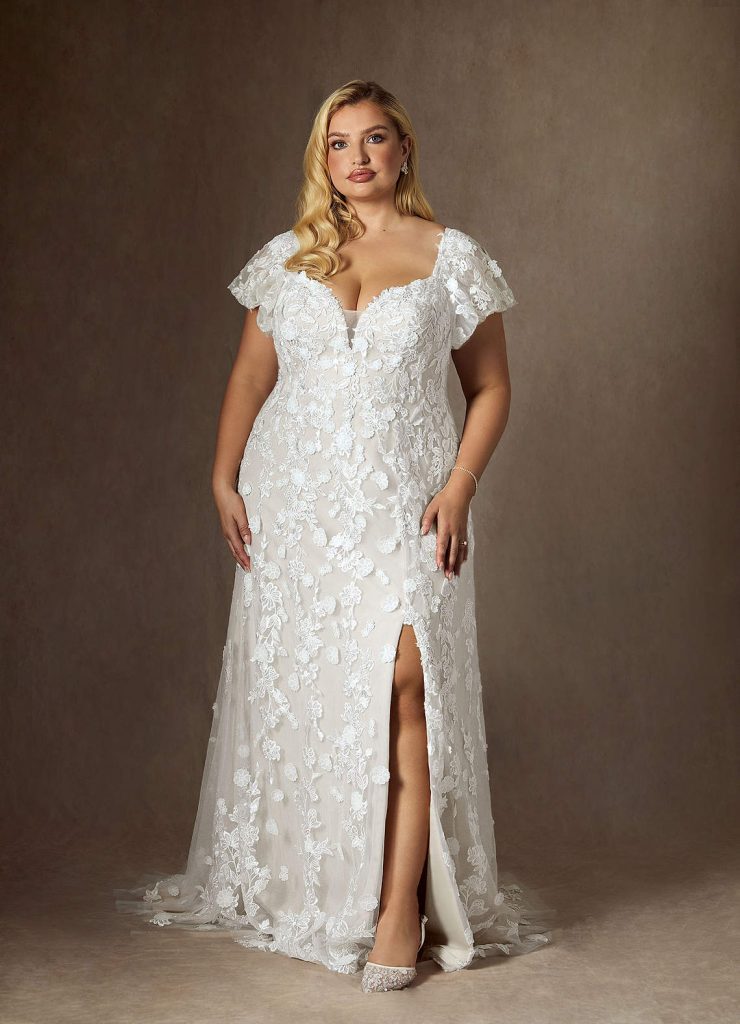
Curvy brides have more options than ever and the right silhouette makes every difference. Wedding dresses for curvy women work best when they are sized to your actual measurements, not a standard tag. This guide walks you through which shapes flatter curves most, how to measure correctly at home, and what to expect from alterations.
Measure First Then Browse
Bridal sizing does not follow everyday clothing sizing. Most curvy brides find their bridal size runs one to three sizes larger than their usual clothing. Always go by measurements, not assumptions.
Key Measurements to Take Before Ordering
| Measurement | Where to Take It |
| Bust | Fullest part of the chest |
| High Bust | Just under the arms, across the chest |
| Waist | Narrowest point of the torso |
| Hips | Fullest part, 7–9 inches below the waist |
| Hollow to Hem | Base of neck to the floor |
- Wear your intended undergarments when you measure.
- Note the difference between your bust and hips if it exceeds 10 inches, flag this before ordering.
- Measure twice and record both numbers before comparing to a size chart.
Azazie offers sizes 0–30 and custom sizing on select styles, which is especially helpful when proportions fall between standard size chart entries.
Best Silhouettes for Curvy Brides
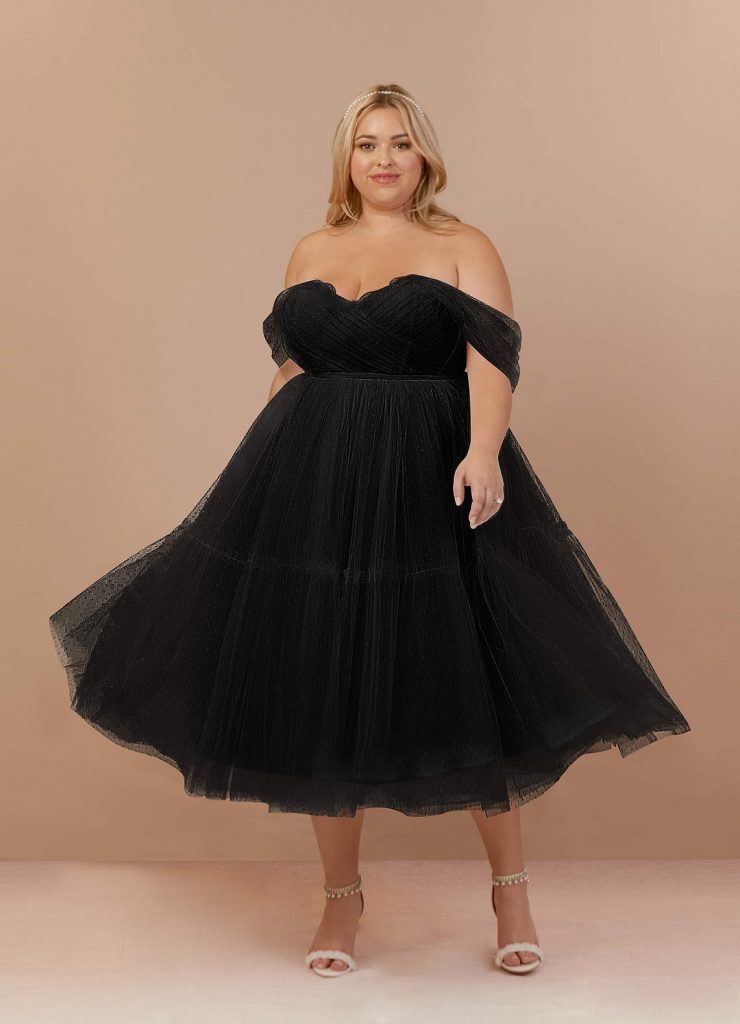
The silhouette determines how the dress moves with your body. For curvy figures, some shapes offer more natural ease, better support, and more flattering visual lines than others.
A-Line: The Universal Go-To
A-line dresses follow the body through the bodice and flare gently from the waist. They add skirt volume below the hip without clinging through the thigh.
- Works across all curvy proportions
- Lace, tulle, sequin, and chiffon all work beautifully in this cut
- Easiest silhouette to alter after arrival
Many of the most highly rated styles in the curvy wedding dress collection are A-line cuts in sequin tulle and lace chiffon both of which photograph well and feel light during long wear.
Ball Gown: Waist Definition and Full Coverage
Ball gowns use boning in the bodice to define the waist and support the bust. The full skirt extends from the waist down, completely covering the hip and thigh.
- Creates an hourglass shape regardless of natural proportions
- Strapless versions pair well with a supportive bustier
- Heavier skirt consider your venue’s flooring and mobility needs
Mermaid and Fit-and-Flare: Curve-Embracing Styles
These silhouettes hug the body from bust to knee before flaring out. Stretch satin and crepe back satin versions provide ease through the hip and thigh that non-stretch fabrics cannot.
- Best for brides comfortable with a body-skimming fit
- Stretch fabric reduces pulling and restriction
- More complex to alter plan for additional fitting time
For curvy brides who love color contrast, a champagne wedding dress in a mermaid or A-line cut adds warmth and visual depth while staying bridal.
Sheath: Sleek and Modern
Sheath dresses skim the body without structured flare. They suit curvy brides who prefer clean, minimal lines.
- Stretch crepe and stretch satin are the most comfortable options
- Undergarment fit is essential for a smooth look
- Hemming is the most frequent alteration for this style
Necklines That Complement Curves
Neckline choice shapes how the upper body reads in photos and in person. These options consistently work well for curvy figures.
| Neckline | Why It Works for Curves |
| Sweetheart | Creates a V-shape that visually narrows the chest |
| V-Neck | Elongates the neck and balances a fuller bust |
| Scoop | Soft curve that avoids harsh horizontal lines |
| Off-the-Shoulder | Frames the collarbone and softens the shoulder |
| Halter | Lifts and supports while adding neck elongation |
- Avoid wide, straight-across necklines that emphasize horizontal width.
- V-neck and sweetheart styles work well in both strapless and supported versions.
- For brides with a fuller bust, look for dresses with built-in boning or underwire cups.
Common Fit Challenges for Curvy Brides
| Fit Challenge | Likely Cause | Best Fix |
| Gaping at back closure | Waist narrower than hip-based size | Add corset or lace-up back |
| Tight through hips or thighs | Sized for bust without hip adjustment | Size up, alter the bodice |
| Bust cups dropping or sagging | Insufficient internal structure | Add boning or underwire cups |
| Pulling across the stomach | Skirt not wide enough for hip volume | Let out side seams or switch silhouette |
| Uneven hemline | Hip curve lifting front hem | Re-hem accounting for hip rise |
These are standard alteration scenarios. Communicating your measurements clearly when ordering reduces how many of these appear after delivery.
Supportive Undergarments Make Everything Fit Better
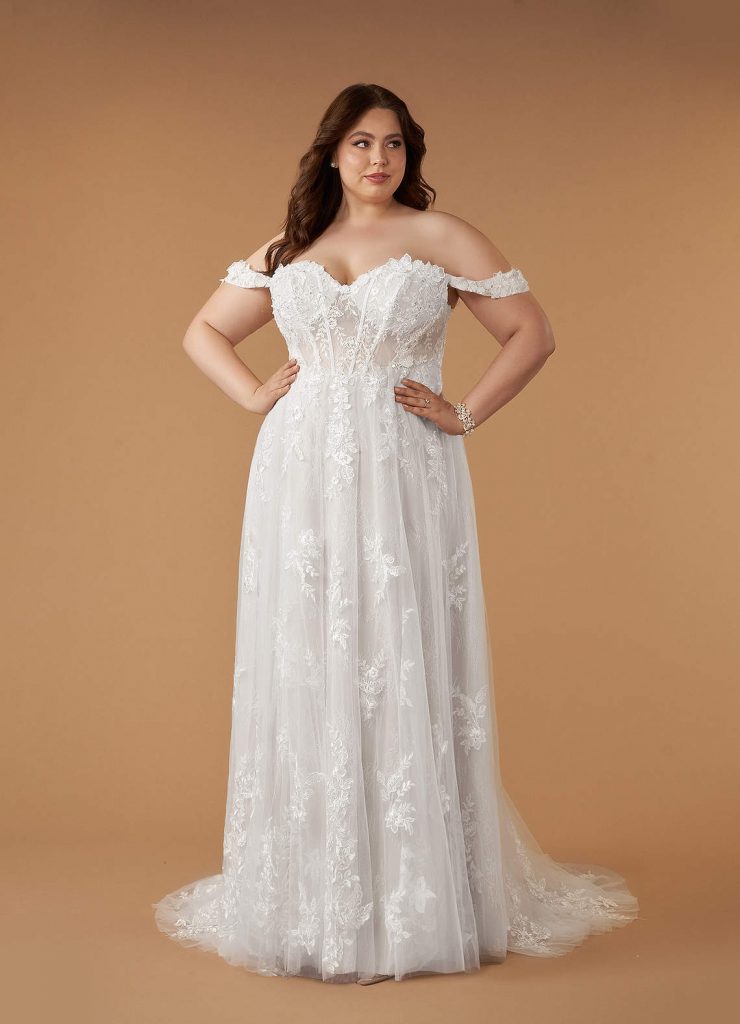
The right undergarments change how every silhouette sits. For curvy brides, this step is not optional.
- Longline bustier or strapless bra supports the bust and smooths the midsection
- High-waist shaping brief reduces bulk through the torso without excessive compression
- Slip shorts essential under A-line and ball gown skirts to prevent riding up
- Adhesive bra cups ideal for low-back, off-the-shoulder, or deep V-neck styles
- Thigh grip bands keep slip shorts in place throughout the day
Bring your planned undergarments to every fitting. Curvy figures change how a dress sits based entirely on what is worn underneath.
Alteration Planning: What Curvy Brides Should Expect
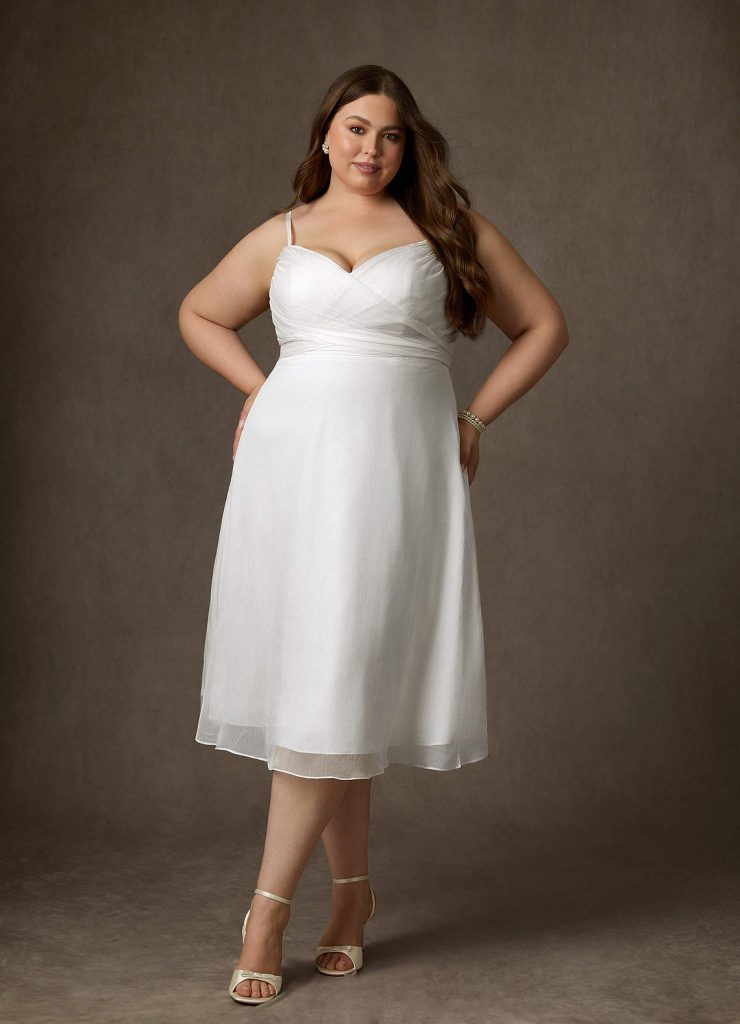
Most wedding dresses need some alteration. For curvy brides, the bodice and back closure are the most frequent adjustment points.
Common Alteration Points
- Corset back addition when standard closure does not close cleanly over hips
- Bodice taking-in when sizing up for hips leaves excess at the waist
- Side seam letting out if the hip area pulls after sizing
- Hem leveling hip curve can cause front hem to rise higher than back
- Strap shortening especially on A-line and ball gown styles
- Cup or boning reinforcement for fuller bust styles needing extra lift
Start alterations 6–8 weeks before your wedding. For made-to-order gowns, factor in production time before alteration appointments can begin.
Brides interested in a white long wedding dress in a mermaid or fit-and-flare cut should ask their seamstress about letting out the hip seam during the first fitting this is the most common adjustment for curvy figures in fitted silhouettes.
Comfort Checklist: Before You Finalize
Go through this before placing your order or confirming a final style.
- Can you sit without pulling at the hips or bodice?
- Is there enough room in the thigh for a full stride?
- Does the bodice stay in place when you raise both arms?
- Does the back closure close without pulling or gaping?
- Are your undergarments fully hidden and comfortable?
- Does the neckline stay in position when you move?
- Can you breathe comfortably after 10 minutes of wear?
If two or more answers are no, revisit the silhouette or request custom sizing before ordering.
Frequently Asked Questions
Should I order by bust, waist, or hip measurement?
Always order based on your largest measurement, then have smaller areas altered. For most curvy brides, the hips are the widest point. Sizing to the hip and taking in the waist is far easier than the reverse.
What fabric is most comfortable for curvy figures?
Stretch satin and stretch crepe move with the body and reduce restriction through the hip and thigh. Chiffon is lightweight and forgiving in movement. Both photograph well and work across multiple silhouettes.
Is a mermaid dress a good choice for curvy brides?
Yes, when chosen in stretch fabric. Mermaid styles in stretch satin or stretch crepe allow ease through the hip and thigh while still creating a sculpted look. Non-stretch versions are less forgiving and harder to alter.
Can I get custom sizing for my measurements?
Yes. Custom sizing is available on select styles and is recommended when your bust, waist, and hip measurements fall in different size categories. This reduces the need for major bodice alterations after the dress arrives.
What undergarment should I wear under a strapless curvy wedding dress?
A longline strapless bustier provides the most support and stays in place best. It smooths the midsection while keeping the bust lifted throughout the day. Avoid underwire bras that do not extend below the bust, as these shift during movement.
How many fittings should I plan for?
Plan for at least two to three fittings, one when the dress arrives, one mid-alteration, and a final check two weeks before the wedding. Curvy figures often need more adjustment points, so building extra time into your schedule is worth it.
Are there styles specifically designed for curvy brides?
Many styles are available in stretch fabrics specifically designed to move with curvy proportions. Look for labels like “Stretch Satin” or “Stretch Crepe” in the product name these versions offer significantly more ease than standard fabric cuts.