
Finding the Perfect Short Wedding Dress for Plus Size Brides
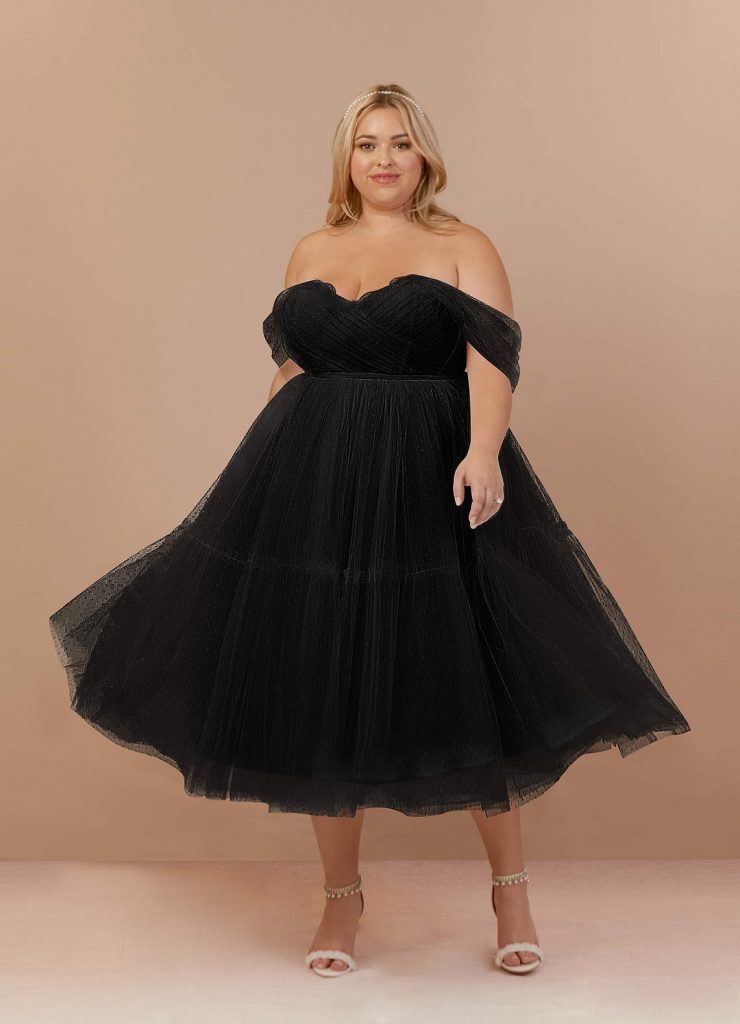
Plus size short wedding dresses are a practical, stylish choice for outdoor ceremonies, casual venues, and warm-weather weddings. Short styles show off your legs and often feel more comfortable throughout a long day. The key is finding the right silhouette and length for your proportions and knowing what to adjust after your dress arrives.
How to Measure for a Short Wedding Dress
Short dresses require a few specific measurements that floor-length gowns do not. Getting these right before ordering saves time and reduces alteration costs.
Measurements to Take Before You Order
| Measurement | Where to Take It |
| Bust | Fullest part of the chest |
| Waist | Narrowest point of the torso |
| Hips | Fullest part, 7–9 inches below the waist |
| Hollow to Hem | Base of neck down to where you want the hem |
| Thigh Circumference | Fullest part of the thigh |
- Wear the undergarments you plan to wear on your wedding day when measuring.
- Decide whether you want the hem above the knee, at the knee, or at mid-calf before ordering.
- For plus size brides, note if your hips measure significantly wider than your waist this affects skirt fullness and fit.
Custom sizing is available on select styles at Azazie, which helps when standard sizing does not account for your proportions accurately.
Silhouette Guide for Plus Size Short Dresses
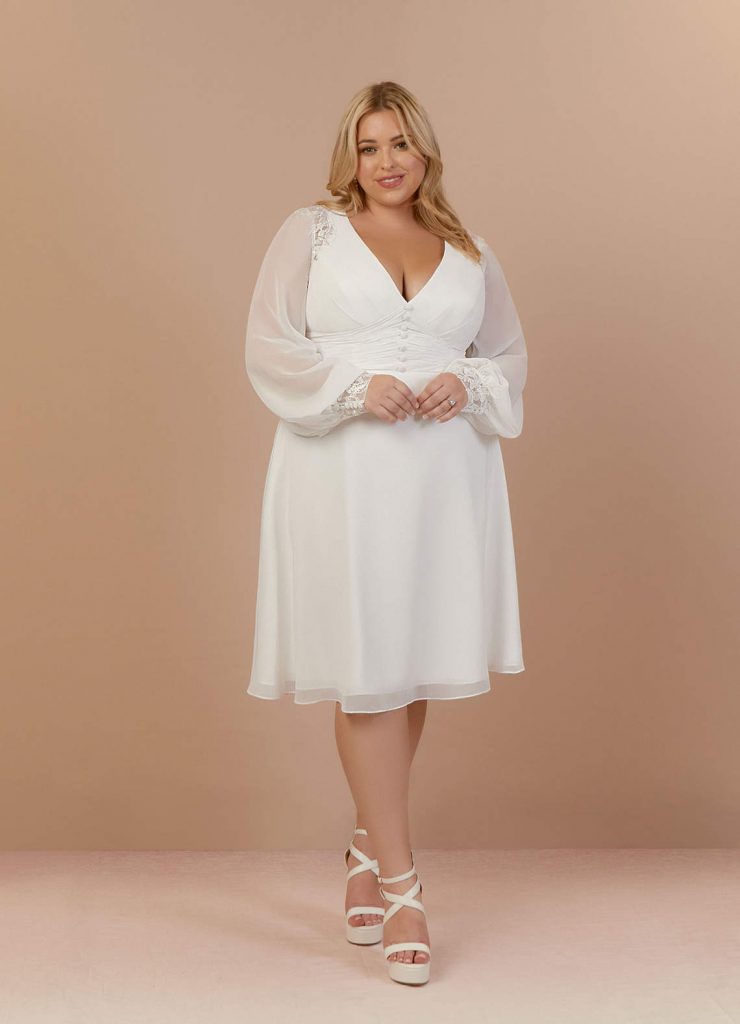
Silhouette determines how the skirt falls and how much ease you have through the hip and thigh. Short styles behave differently from full-length gowns, so silhouette choice matters more at this length.
A-Line: The Most Reliable Fit
A-line short dresses fit through the bodice and flare gently from the waist. The skirt falls away from the body, which adds ease through the hip without excess volume.
- Works for most body types and proportions
- Lace, chiffon, satin, and stretch crepe all work well in this cut
- Easy to alter at the bust, waist, and hem
Several A-line short styles include pockets and beading details through the bodice both practical and flattering features for plus size brides.
Ball Gown (Short): Structured and Playful
Short ball gown styles use a full, puffed skirt and a fitted, boned bodice. This creates strong waist definition and hides the hip area entirely.
- Strapless and off-the-shoulder versions both work at this length
- The full skirt adds volume that balances a heavier upper body
- Requires a crinoline or petticoat underneath for proper shape
Sheath: Sleek and Body-Skimming
Sheath short dresses follow the body’s natural lines with no flare. Stretch satin, stretch crepe, and mesh versions offer the most comfort and ease.
- Best when undergarment fit is precise
- Sweetheart and square neckline versions are especially flattering
- Hemming is the most critical alteration for this silhouette
For brides who want a timeless look, a champagne wedding dress in a short A-line or sheath cut is a soft, elegant alternative to classic white.
Fit-and-Flare: Defined Waist with Flare
Fit-and-flare short dresses hug through the waist and hips, then flare above or at the knee. Stretch satin versions reduce restriction through the thigh.
- Emphasizes the waist and hip curve
- Best in stretch fabrics for comfort at plus size
- Hemline placement is critical too short can feel restrictive when sitting
Common Fit Challenges for Short Plus Size Styles
| Fit Problem | Most Likely Cause | Solution |
| Hem riding up in front | Hip curve lifting the skirt | Adjust hem to account for hip curve |
| Tight through thighs | Ordered by bust or waist only | Size up, alter bodice |
| Bodice gaping at back | Bust-to-back measurement difference | Add corset or lace-up back |
| Skirt too full or flat | Wrong silhouette for hip-to-waist ratio | Switch to A-line or add petticoat |
| Straps slipping | Shoulder slope not accounted for | Shorten or cross straps at back |
Short dresses often need hem adjustment because the length lands differently depending on hip curve. Always have the hem finalized with your shoes on.
Supportive Undergarments for Short Styles
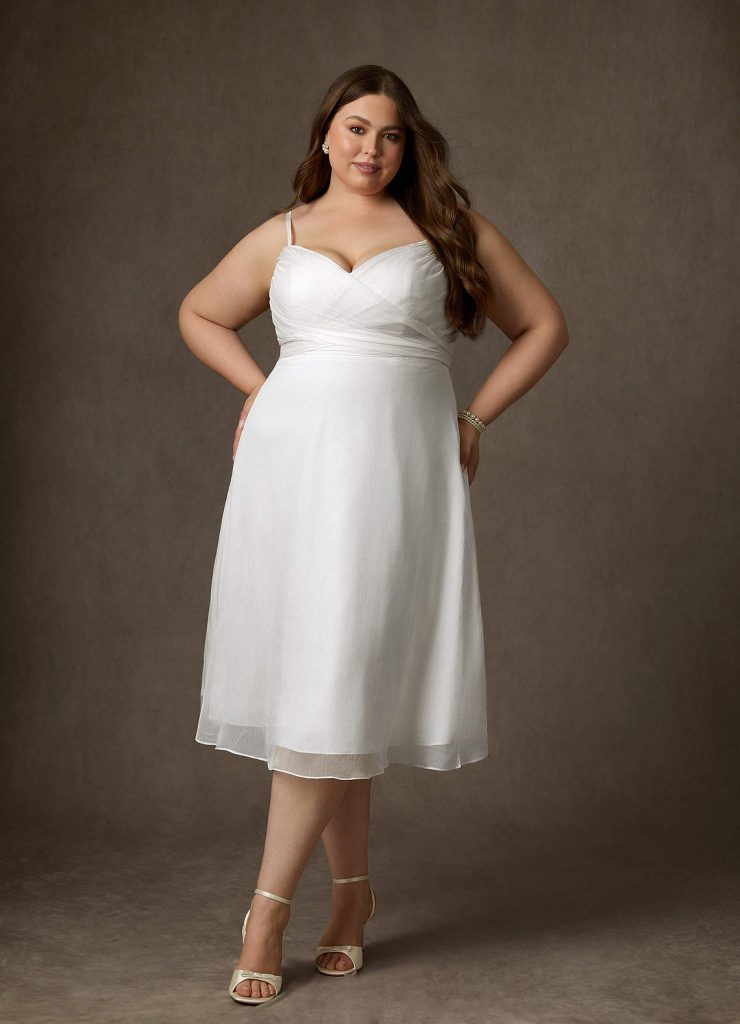
Short wedding dresses require undergarments that work at a shorter hemline. Standard shapewear may peek out if it is not sized for the dress length.
- Strapless bustier works under sweetheart and strapless necklines
- High-waist brief shapewear smooth midsection without extending past the hemline
- Slip shorts essential under A-line and ball gown skirts to prevent riding up
- Adhesive bra cups ideal for low-cut or open-back styles
- Low-grip thigh bands prevent slip shorts from shifting during the day
Try on your undergarments with the dress at your first fitting. Short styles reveal undergarment issues faster than floor-length gowns.
Alteration Planning for Short Wedding Dresses
Short dresses need fewer alterations overall, but hemming is more technical because small changes are more visible at this length.
Common Alteration Points
- Hem leveling critical when hip curve causes the front to ride higher
- Bodice taking-in when sizing up for hips leaves excess at the waist
- Strap adjustment shortening or repositioning for shoulder slope
- Back closure change adding a corset back if the standard closure gaps
- Lining addition some lightweight fabrics benefit from an added slip lining
Allow 4–6 weeks for alterations after your dress arrives. For short styles, the hemline should be finalized while wearing your wedding shoes even a half-inch makes a visible difference.
Brides choosing a sleeveless wedding dress in a short style should confirm that the armhole sits correctly during their first fitting. Sleeveless bodices sometimes need armhole adjustments for plus size brides.
Comfort Checklist Before You Say Yes
Run through this list before committing to your short wedding dress.
- Does the hem fall at the length you want while wearing your shoes?
- Can you sit comfortably without the skirt bunching or pulling?
- Is there enough room through the thigh to walk and climb stairs?
- Does the bodice stay in place when you move your arms?
- Are your slip shorts or shapewear fully hidden at the hemline?
- Does the neckline stay put without constant readjusting?
- Can you dance, hug, and move freely without restriction?
Two or more no answers means revisiting silhouette, size, or undergarment choice before ordering.
Frequently Asked Questions
What length is best for a plus size short wedding dress?
Knee-length is the most universally flattering option for plus size brides. It balances leg visibility with coverage and avoids the hemline issues that come with very short styles. Mid-calf is also a good option for brides who prefer more coverage.
Should I size by bust, waist, or hips for a short dress?
Always size to your largest measurement, then alter smaller areas. For plus size brides, the hips are often the widest point. Sizing to the hips and taking in the bodice is far simpler than the reverse.
Will a short wedding dress look formal enough?
Yes, depending on fabric and detail. Lace, satin, and beaded short styles read as formal. Chiffon and stretch crepe are more casual. Match the fabric to your venue and ceremony style.
How much hemming do short wedding dresses need?
Most short dresses need at least minor hemming. Plus size brides often need the front hem lowered slightly to account for the hip curve lifting the skirt. Always do your hem fitting in your wedding shoes.
Can I wear a petticoat under a short wedding dress?
Yes, and it is encouraged for ball gown and A-line short styles. A crinoline or short petticoat adds shape and keeps the skirt from deflating throughout the day. Make sure the petticoat does not extend past the hemline.
What neckline works best in a short plus size dress?
Sweetheart and V-neck necklines are consistently flattering because they draw the eye upward and create vertical visual lines. Square necklines also work well for brides with fuller busts, providing shape and support.
Do I need a full alteration appointment for a short dress?
Yes. Even short dresses require at least one fitting. Hem leveling, bodice adjustment, and strap shortening are all common and each requires a professional fitting to get right. Plan for two appointments minimum.