
Design Details That Make Plus-Size Formal Dresses with Sleeves Flattering
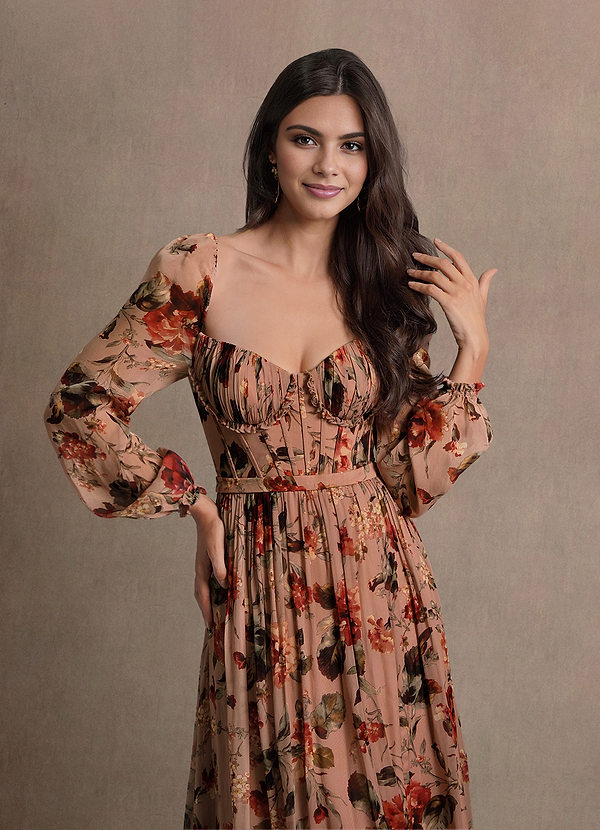
You’ll see ‘three-quarter sleeves are flattering for plus-size arms’ in like every single guide and they’re right but they never say WHY. And the why is pretty simple once you hear it: the sleeve ends at your forearm, which is narrower than your bicep. That’s it. A sleeve draws the eye to wherever it stops — so stopping it at the narrowest part of your arm is the whole trick. Once you know that, every other sleeve choice starts making sense.
Plus size formal dresses with sleeves also do something that strapless dresses genuinely can’t — they create a clean continuous line from your shoulder down your arm, which looks more ‘finished’ in formal photos. And the comfort thing is real too. A strapless bodice holds because it’s tight. A sleeved dress hangs from your shoulder. After six hours at an event, that difference is not subtle.
Why Sleeves Change How a Formal Dress Reads
The shoulder is the widest structural point of your upper body. A sleeve that sits correctly on the shoulder seam creates visual width exactly where it’s most useful for plus-size proportions — at the top, which balances whatever’s happening at the hip. This is why sleeved silhouettes with defined waists keep appearing in every reliable plus-size styling guide. It’s not trend advice. It’s proportional geometry and it keeps working.
And then there’s the practical side. Strapless stays up through compression. Sleeved hangs from the shoulder. For a long event, you feel the difference by hour three.
Sleeve Types — What Each One Does
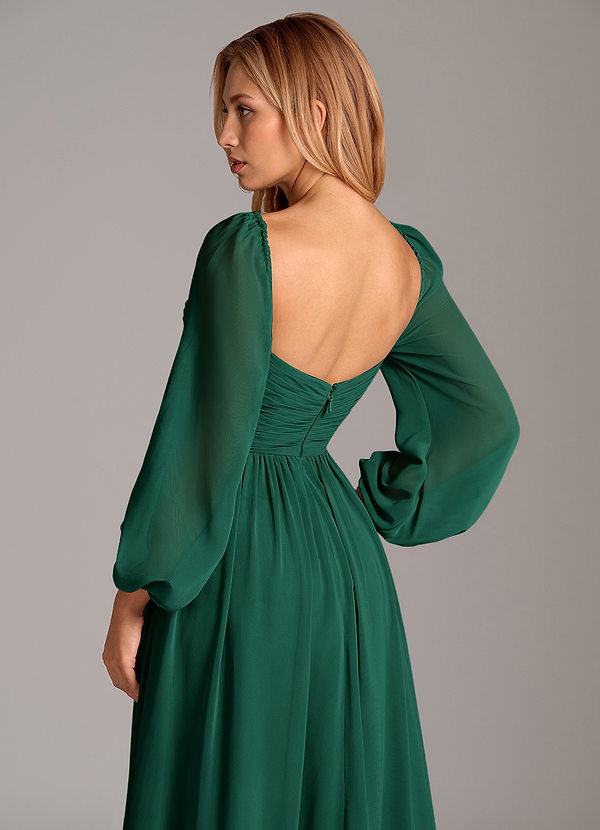
Each sleeve type directs attention to a different part of your arm. The question is which part you want in the photos — or which area you’re most comfortable with drawing attention to.
| Three-Quarter | Flutter | Long Sleeve | Cap Sleeve |
|---|---|---|---|
| Ends at mid-forearm — narrowest arm area. Works for any formal event, any body type. | Loose draped panels — floats over the arm, doesn’t follow its shape. Outdoor/daytime events. | Full wrist-to-shoulder. Best for black-tie, winter formals, conservative venues. | Shoulder only. Minimal coverage, creates shoulder definition. Warm venues. |
Three-Quarter — The Reliable Choice
Ends at your mid-forearm. That’s the narrowest part between your elbow and wrist, and that’s why this keeps coming up in every plus-size styling recommendation. It’s not arbitrary. The sleeve stops where the arm looks its best.
A line formal dresses with three-quarter sleeves are the most consistent combination — A-line balances proportions from the waist down, the sleeve handles the shoulder up. Both working in the same direction. It’s a genuinely good pairing and not complicated.
Flutter — Covers Without Constricting
Flutter sleeves are loose draped fabric at the shoulders that just kind of float. They cover your upper arm without following its shape at all — the fabric moves with you rather than hugging. Good specifically for outdoor weddings and daytime formal events where chiffon flutter reads as graceful rather than overdressed.
The thing I like about flutter is it provides real coverage without feeling like you’re wearing a sleeve at all. Useful if you want the arm covered but not defined.
Long Sleeves — When Formality and Coverage Both Matter
Long-sleeve formal dresses are the right choice for black-tie events, conservative or religious venues, and winter formals where warmth matters. Not a compromise — in those contexts, a long sleeve is more appropriate than a bare arm.
Illusion lace or sheer mesh for the sleeve fabric if you can find it. The transparency reads as elegant rather than heavy, and you get the full visual formality of a long sleeve without the physical bulk of opaque fabric. Much more comfortable at events where the venue isn’t cold.
Cap Sleeve — Minimal, Just the Shoulder
Covers your shoulder and the very top of your arm. Nothing more. It’s the lightest functional sleeve option — creates shoulder definition without arm coverage. Good for warm venues and semi-formal events where you want the shoulder defined but not the whole arm.
Silhouettes That Work Best with Sleeved Plus-Size Formal Dresses

| Silhouette | Best Sleeve Pairing | Why It Works | Best Occasion |
|---|---|---|---|
| A-line | Three-quarter or flutter | Balances proportions above and below the waist simultaneously | Any formal event |
| Empire waist | Long or three-quarter | Waist comfort + coverage — good for winter and conservative venues | Winter, religious events |
| Wrap style | Flutter or three-quarter | Self-adjusting fit handles the waist, sleeve handles the arm | Weddings, receptions |
| Fit-and-flare | Cap or three-quarter | Structured upper body balances the flared lower silhouette | Semi-formal to formal |
The sleeve and the silhouette need to make sense together visually. A dramatic long bell sleeve on a fitted column is a statement look — intentional, but specific. Three-quarter sleeves on an A-line is the more universally workable combination because both elements are pulling toward the same outcome.Empire waist plus long or three-quarter sleeves is the specific combination for winter formals and conservative venues. The empire seam removes waistband pressure — which is genuinely useful over a long seated event — and the sleeves handle the coverage. Both problems solved at once.
Wrap dresses with flutter or three-quarter sleeves are the most reliable fit option when tailoring isn’t available. The wrap closure is self-adjusting at the waist. The sleeve handles the arm. For online orders where you can’t try it on first, this combination gives you the most room for variation without looking wrong.
Best Fabrics for Plus-Size Formal Dresses with Sleeves
The sleeve fabric determines how freely you can actually move your arm — not just how it looks when you’re standing still. If the armhole is too snug or the sleeve fabric doesn’t stretch, raising your arm to hug someone or dance pulls the entire bodice upward. Most people don’t think about this when they’re ordering online and then encounter it in real time at the event.
Stretch and Jersey — Move Without Bunching
Jersey and four-way stretch crepe are the most practical sleeve fabrics for events with dancing or extended activity. The fabric moves with your arm and returns to shape rather than bagging. For three-quarter sleeves specifically, stretch is what keeps the sleeve sitting at your forearm instead of slowly sliding up toward your elbow throughout the night.
Chiffon and Illusion Lace — Formal and Breathable
Chiffon long sleeves are significantly more comfortable at warm events than opaque jersey long sleeves — the loose weave lets air through even when layered. The visual coverage effect is the same. The physical heat retention is much less. Illusion lace does the same thing with a more formal-looking result.
This is an underrated fabric choice for plus-size long-sleeve formal dresses specifically. Full-length visual coverage without the thermal weight. Worth looking for.
Velvet and Satin — Evening and Seasonal
Velvet with long sleeves for fall and winter galas — the combination handles warmth and formality simultaneously. Not a compromise between the two, they genuinely work together in that context. Satin with three-quarter sleeves for evening events if you want the surface sheen of formal wear with sleeve coverage that doesn’t feel heavy.
| Fabric | Best Sleeve Use | Key Property | Season |
|---|---|---|---|
| Stretch crepe/jersey | Three-quarter — stays in place | Moves with arm — doesn’t bag or slide | Year-round |
| Chiffon/georgette | Flutter and long — airy | Breathable — won’t overheat under lights | Spring, summer |
| Illusion lace | Long sleeves — formal look | Visual coverage without physical weight | Year-round |
| Velvet | Long sleeves — cold events | Warm and formal, works together | Fall, winter |
| Satin | Three-quarter — evening | Surface sheen + sleeve coverage balance | Evening, year-round |
Styling Sleeved Plus-Size Formal Dresses for Different Occasions
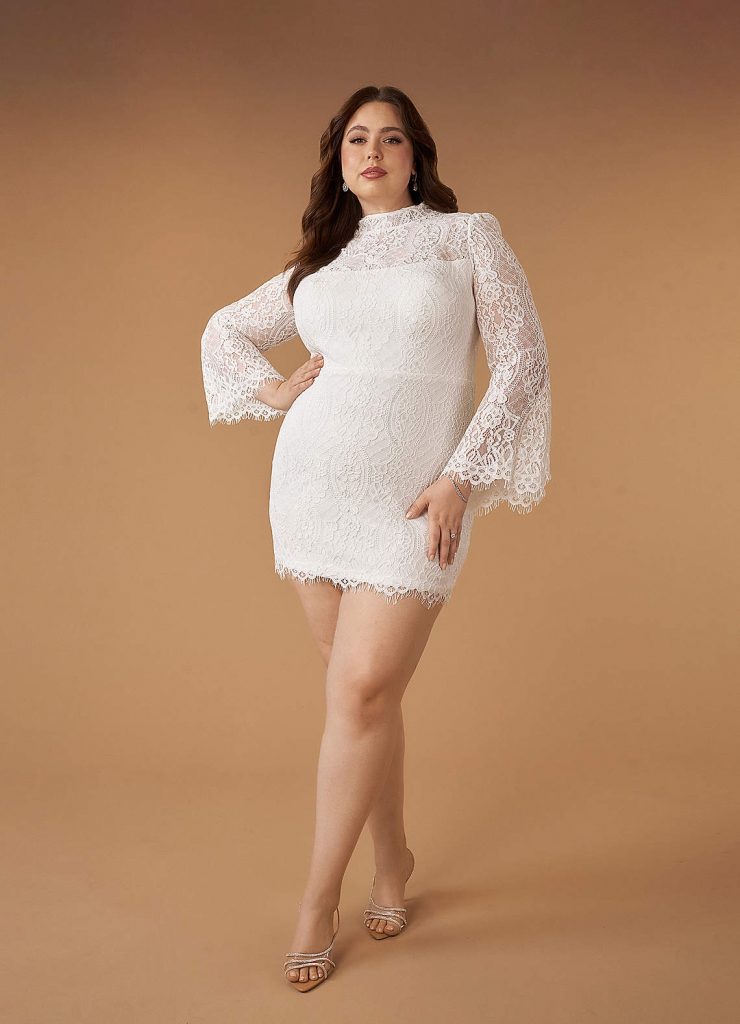
The sleeve type and the event type should be at the same formality level. Long illusion-lace sleeves at a black-tie gala look deliberate. Flutter chiffon at a garden wedding looks proportionate. Three-quarter stretch at a semi-formal work dinner looks polished and practical. When they’re mismatched — flutter at a black-tie, heavy velvet at a summer daytime wedding — the look is off and most people can feel it even if they can’t say exactly why.
| Event | Best Sleeve | Best Fabric | Length |
|---|---|---|---|
| Black-tie / formal gala | Long illusion lace | Heavy satin or crepe | Floor-length |
| Wedding — daytime | Flutter or three-quarter | Chiffon over jersey | Midi or floor |
| Winter formal event | Long sleeve | Velvet or heavy crepe | Floor or midi |
| Semi-formal dinner | Three-quarter | Stretch crepe or jersey | Midi |
| Summer outdoor formal | Flutter or cap | Chiffon or georgette | Midi or floor |
Weddings in particular — sleeved plus-size formal dresses work across a wider range of venue types than strapless or sleeveless. Religious settings, outdoor ceremonies, conservative family venues — all of them accommodate a sleeve. You’re not narrowing your options with a sleeve. If anything you’re opening them.
| Long formal dresses with illusion-lace sleeves at galas photograph with this specific depth under ballroom lighting — the transparency creates a layered quality that reads as intentional and sophisticated rather than just ‘covered up.’ Worth knowing when you’re choosing between opaque and illusion for long sleeves. |
|---|
Common Mistakes When Choosing Plus-Size Formal Dresses with Sleeves
The sleeve ending point one is the big one. A sleeve that ends at your bicep draws attention to the widest part of your upper arm. A sleeve that ends at your forearm draws attention to the most defined part. Most people don’t consciously check where the sleeve ends when they’re browsing, and then they wonder why one dress photos better than another.
The armhole is the other thing to check. If it’s snug and the fabric doesn’t stretch, raising your arm pulls the whole bodice upward. When you’re ordering online, look for armhole measurements in the size chart specifically — not just bust and waist. It’s the fit detail that gets missed most often.
| ✓ Works | ✗ Skip |
|---|---|
| Sleeve ending point at forearm or wrist — narrowest arm area | Sleeve ending at the bicep — draws attention to width |
| Check armhole ease — raise the arm fully before buying | Tight armhole that pulls the bodice when your arm rises |
| Match sleeve formality to the event type | Flutter sleeves at a black-tie gala — reads too casual |
| Scale jewelry inversely to sleeve detail — busy sleeve, quiet jewelry | Detailed lace sleeve plus statement necklace — two competing focal areas |
Hair, Makeup, and Final Styling
The sleeve is already doing visual work on your arm. Everything else — where you wear your hair, which jewelry you choose — should support that rather than compete with it.
Neckline Comes First, Then Hair
V-neck or sweetheart with sleeves: updo or loosely pinned back. The neckline creates the visual frame for your face, and the sleeve defines the arm — both need to be visible for both to read. High-neck or lace collar: hair up, otherwise it obscures the neckline fabric detail. That’s the whole rule — whatever the neckline is doing, don’t block it with your hair.
Jewelry Scales Down When the Sleeve Is Detailed
Detailed illusion-lace long sleeve plus a statement necklace plus chandelier earrings — three competing elements in the same zone. It just looks busy. A detailed sleeve needs simple jewelry: studs, a thin bracelet. A plain three-quarter sleeve can support a statement earring or a pendant. The visual interest should be in one place at a time.
Three-quarter sleeves specifically expose your wrist, which is where a bracelet or delicate watch actually sits right. Long sleeves to the wrist: skip the bracelet. Cap sleeves: jewelry priority moves to ears and neck since your arm is mostly visible anyway.
Foundation Finish for Event Photos
Wedding and gala photography uses flash, outdoor natural light, and warm ambient light — sometimes all three in the same evening. Matte foundation can look flat or chalky under flash specifically. A luminous or satin finish photographs more naturally and gives you some glow under warm ambient light. Warm highlighter at the cheekbone and brow bone reads well in both. Small adjustment, genuinely visible difference in the prints.
Conclusion
Sleeve ending point, sleeve fabric, silhouette balance, neckline combination. Get those four right and the dress looks polished in photos and feels comfortable for a long event. Three-quarter sleeve in stretch or chiffon with an A-line or wrap silhouette is where most of the reliable recommendations land, and there’s a real reason for that.
Azazie has plus size formal dresses in sizes 0–30, made-to-order, with custom sizing available. The range spans three-quarter-sleeve A-lines to long-sleeve floor-length styles. Filter by sleeve type first when browsing — that’s the decision that drives everything else.
Frequently Asked Questions
What is the most flattering sleeve length for plus-size formal dresses?
Three-quarter, almost always — it ends at the forearm, which is narrower than the bicep, so the sleeve stops at your arm’s most defined point. Flutter is the other good option if you want coverage without a defined sleeve line.
What silhouette works best with sleeved plus-size formal dresses?
A-line with three-quarter or flutter sleeves — the A-line balances proportions from the waist down while the sleeve handles the shoulder up, both working in the same direction. Wrap is second most reliable because the self-adjusting waist handles fit variation without alterations.
What fabrics work best for sleeves in plus-size formal dresses?
Stretch crepe or jersey for three-quarter sleeves at events with dancing — the recovery property keeps the sleeve at your forearm rather than sliding up. Chiffon or illusion lace for long sleeves at warm events — you get the coverage visually without the heat retention.
Can I wear a long-sleeved plus-size formal dress to a wedding?
Yes, and at religious, conservative, or outdoor venues it’s genuinely the most appropriate choice. Use illusion lace rather than opaque fabric — the transparency reads as elegant rather than heavy and photographs better under wedding lighting.
What jewelry should I pair with plus-size formal dresses with sleeves?
Scale inversely to sleeve detail — busy lace sleeve needs studs and a simple bracelet, plain sleeve can handle statement earrings. Three-quarter sleeves specifically expose your wrist, which is the natural placement for a delicate bracelet or watch.
How do I make sure a sleeved plus-size formal dress fits correctly?
Check the armhole ease specifically — the armhole should let you raise your arm fully without pulling the bodice upward, which is the fit issue most often missed when ordering online. Size to your largest measurement first, then verify armhole and sleeve length measurements in the size chart.