
White Tie vs. Black Tie: What’s the Difference for Moms?
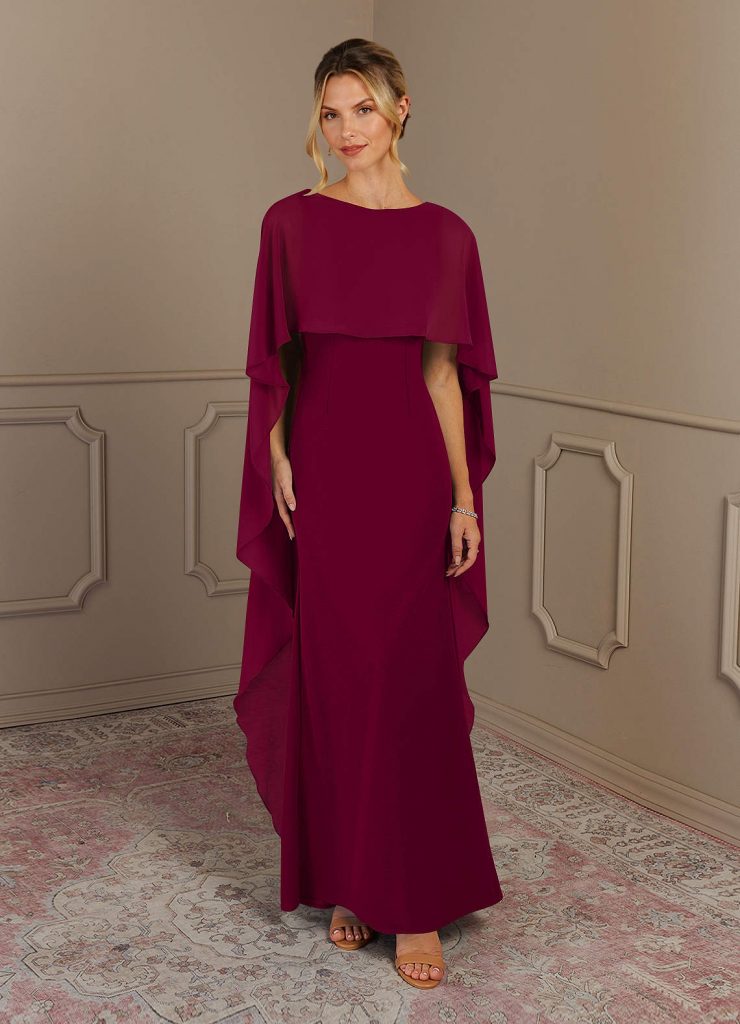
Receiving a wedding invitation marked “white tie” or “black tie” can feel daunting. Both are formal dress codes, but they carry very different expectations for gown length, fabric, and accessories. Understanding the distinction helps the mother of the bride dress with confidence and appropriate elegance for the occasion.
What Do These Dress Codes Actually Mean?
Dress codes exist to set the atmosphere of an event. For the mother of the bride or groom, reading them correctly ensures you feel at ease and look perfectly suited to the celebration.
White Tie
White tie is the highest level of formal dress. It is reserved for the most grand, ceremonial occasions state dinners, opera galas, and very formal ballroom weddings.
For women, white tie traditionally means:
- A full-length ball gown with substantial volume
- Opera-length gloves (above the elbow), especially when the gown is sleeveless
- Fine jewelry diamonds, pearls, or gemstones in precious metals
- Upswept hair or a formal style befitting the occasion
- No casual fabrics chiffon, duchess satin, velvet, or structured lace only
White tie weddings are rare in the United States. When they do occur, they are almost always evening events in grand venues.
Black Tie
Black tie is the more commonly seen formal dress code. It applies to evening weddings in upscale venues ballrooms, hotels, historic estates, and fine dining spaces.
For women, black tie means:
- A floor-length gown as the standard expectation
- Elegant fabrics such as stretch satin, lace, chiffon, or sequined mesh
- Refined accessories heels, a small clutch, and polished jewelry
- Gloves are optional, not required
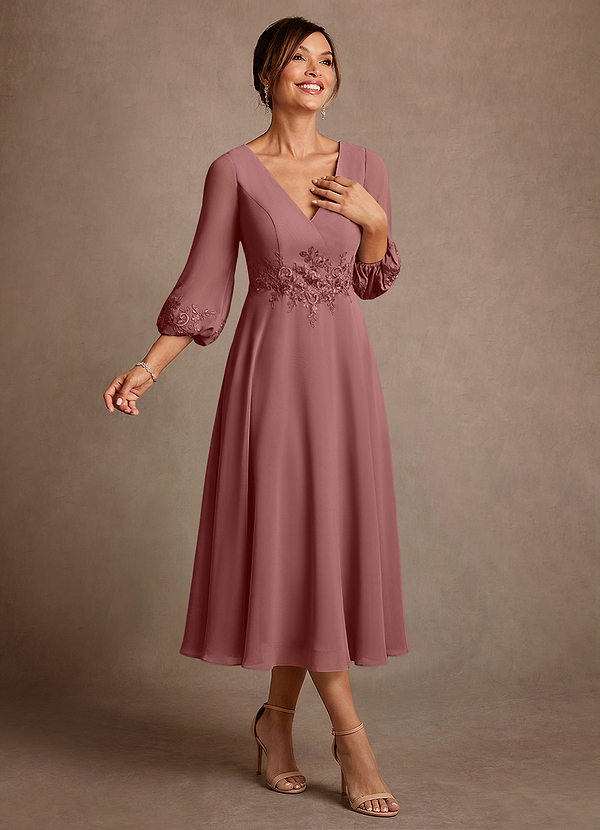
- Tea-length may be acceptable at some black-tie events, but floor-length is always the safer choice
Black tie is elegant but allows more personal expression than white tie. A mother of the bride has genuine latitude in silhouette, neckline, and color within this dress code.
Side-by-Side Comparison for the Mother of the Bride
| Element | White Tie | Black Tie |
| Gown Length | Full-length, with volume | Floor-length standard |
| Silhouette | Ball gown preferred | A-line, mermaid, sheath |
| Fabric | Satin, velvet, structured lace | Satin, chiffon, lace, sequins |
| Gloves | Opera gloves expected | Optional |
| Jewelry | Fine, precious metals | Elegant, flexible |
| Color | Rich, deep, or classic neutrals | Wide range acceptable |
| Hemline Volume | High full skirt preferred | Moderate to fitted |
| Frequency (US) | Rare | Common for evening weddings |
Gown Volume Why It Matters at Each Level
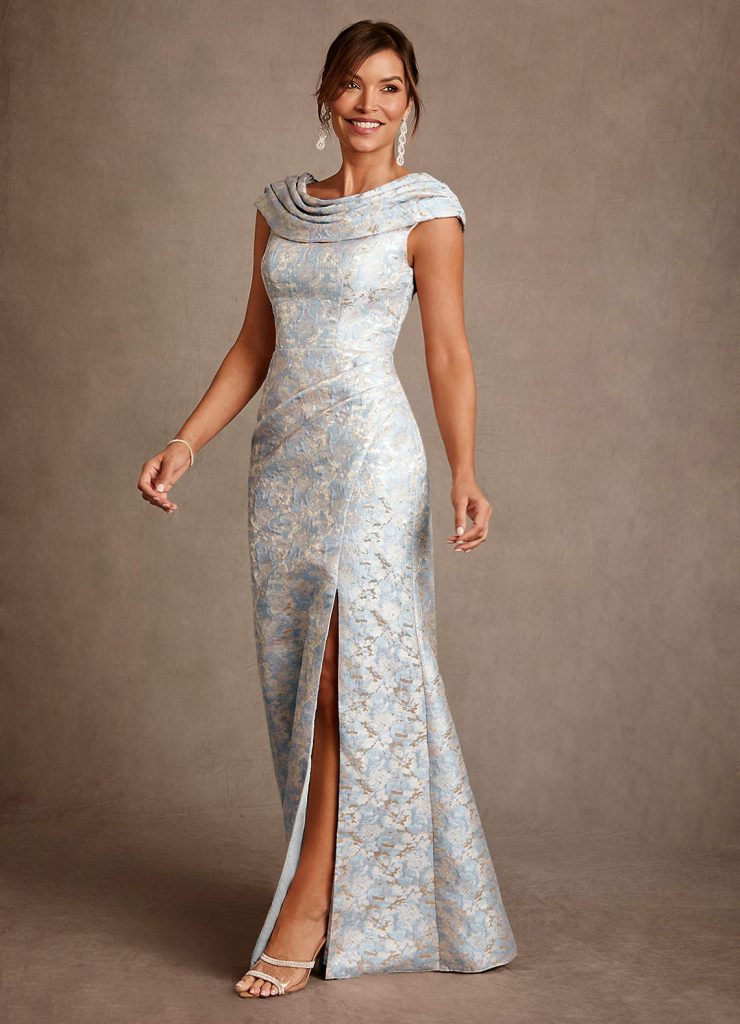
Volume is one of the clearest visual signals of dress code compliance. At a white tie event, a fitted sheath can feel underdressed. At a black tie event, a ball gown is perfectly appropriate but not required.
White Tie and Gown Volume
White tie calls for gowns that make a statement in proportion. A full A-line with structured chiffon, or a classic ball gown silhouette, suits the grandeur of these occasions.
The skirt should be substantial not necessarily a wide crinoline, but clearly full enough to move with presence. Fitted styles without volume feel out of place at this level of formality.
Black Tie and Silhouette Choice
Black tie offers meaningful flexibility. All of the following silhouettes are appropriate:
- A-line balanced, universally flattering, the most reliable choice
- Mermaid sophisticated, fitted through the body with a flared hem
- Sheath sleek and modern, works well in structured fabrics like stretch satin or stretch crepe
- Ball gown appropriate if the venue and personal style support it
For a black-tie evening wedding, formal mother of the bride dresses in stretch satin or lace offer the right balance of structure and elegance across silhouettes.
Glove Etiquette A Clear Guide
Gloves are one of the most misunderstood elements of formal dress for women. The rules are simpler than they appear.
White Tie Glove Rules
At a white tie event, opera gloves extending above the elbow are traditionally expected when wearing a sleeveless or strapless gown. They are part of the visual language of this dress code.
Key points to remember:
- Gloves are removed for dining
- They are not worn over bracelets remove bracelets or wear them on top of gloves briefly, then remove both for the meal
- Gloves should be ivory, white, or a neutral tone that complements the gown
- If the gown has long sleeves, gloves are not needed
Black Tie Glove Rules
At a black tie event, gloves are a personal choice rather than an expectation. Short wrist-length gloves or three-quarter gloves can add polish to a sleeveless gown, but they are entirely optional.
Most mothers of the bride at black-tie weddings skip gloves entirely and focus on refined jewelry and an upswept hairstyle instead.
Color Guidance by Dress Code Level
White Tie Color Choices
White tie calls for rich, classic, or deep colors. Pale pastels or dusty tones feel too casual for this setting.
Appropriate choices include:
- Midnight or dark navy
- Deep burgundy or cabernet
- Black with refined embellishment
- Rich champagne or gold in structured fabric
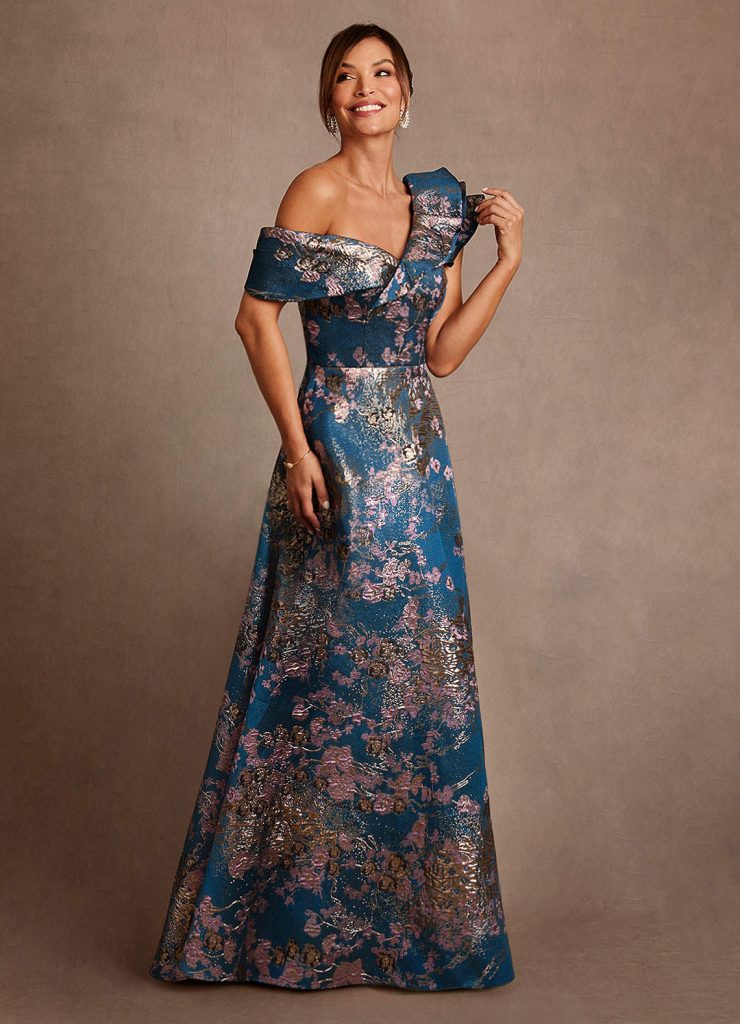
- Deep jewel tones sapphire, emerald, or amethyst
Black Tie Color Choices
Black tie opens the palette considerably. Deep classics work well, but so do elegant neutrals and muted tones.
Appropriate choices include:
- Dark navy in chiffon or lace
- Champagne or gold in satin or burnout
- Dusty blue in A-line or mermaid cuts
- Dusty rose in a formal silhouette
- Black with sequins or lace detail
For mothers who prefer a timeless evening option, black mother of the bride dresses in sequined chiffon or structured lace are consistently appropriate for black-tie dress codes.
Fabric Choices That Match Each Dress Code
Fabric does as much as silhouette to signal formality. The wrong fabric in the right silhouette can still read as underdressed.
Fabrics That Work for White Tie
- Duchess or structured satin holds its shape and photographs with depth
- Velvet rich, formal, ideal for evening
- Structured lace formal and elegant, particularly with full coverage
- Brocade or jacquard woven detail adds the right weight and refinement
Fabrics That Work for Black Tie
- Stretch satin sleek surface, comfortable fit, polished silhouette
- Chiffon flowing and graceful, works well in layered or pleated styles
- Lace romantic and refined, available in many silhouettes
- Sequined mesh or chiffon adds evening shimmer without being costume-like
- Floral burnout textured, formal enough for evening events
Azazie’s collection includes stretch satin, lace, chiffon, and sequined styles all appropriate for black-tie occasions. Many styles are made to order in sizes 0 to 30, ensuring a well-fitted result.
What About Long Sleeves and Jackets?
Coverage is a practical and stylish consideration at any formal event, particularly in air-conditioned venues or cooler seasons.
Long Sleeves at Formal Events
A long-sleeved gown in lace or chiffon is entirely appropriate at both white tie and black tie weddings. It eliminates the need for gloves while still communicating elegance and formality.
Long sleeve mother of the bride dresses in lace or stretch satin are a refined choice for evening ceremonies where full coverage is preferred.
Jackets and Cover-Ups
At a black-tie event, a tailored jacket or elegant cover-up can complement a formal gown without diminishing its dressy quality. The key is fabric a structured lace or satin jacket reads as formal, while a casual cardigan does not.
For mothers who want both warmth and elegance, mother of the bride dresses with jackets offer a complete, polished look suited to formal settings.
Shoes, Jewelry, and Finishing Details
The accessories at a formal wedding should reinforce the dress’s level of formality not undercut it.
Shoes
- White tie: Satin or metallic heels, ideally in a pointed or refined toe
- Black tie: Strappy heels, block heels, or kitten heels in neutral or metallic tones
Comfort matters over a long evening. A block heel provides stability without sacrificing the formal look.
Jewelry
- White tie: Fine jewelry in gold, silver, or platinum pearls, diamonds, or gemstones
- Black tie: Elegant pieces in any metal; statement earrings or a refined necklace both work
Hair and Bag
At either dress code level, an upswept or structured hairstyle reinforces the formal intention. A small clutch in satin, metallic, or beaded fabric completes the look without competing with the gown.
About Azazie’s Formal Collection
Azazie offers a thoughtfully designed collection of mother of the bride dresses suited to formal and black-tie occasions. Styles are available in sizes 0 to 30, with many made to order for a precise, comfortable fit.
Fabrics include stretch satin, lace, sequined chiffon, and floral burnout all appropriate for evening celebrations. Azazie has been featured by the Today Show and CNBC and carries strong customer ratings across its special-occasion range.
Custom sizing is available at no extra charge, which is particularly valuable for formal gowns where fit directly impacts both appearance and comfort throughout the event.
Frequently Asked Questions
What is the difference between white tie and black tie for women?
White tie is the most formal dress code, requiring a full-length ball gown and traditionally opera gloves. Black tie is also formal but allows more flexibility in silhouette, fabric, and accessories. In practice, white tie is rarely seen at US weddings; most “formal” weddings are black tie.
Does the mother of the bride have to wear a ball gown to a black-tie wedding?
No. A floor-length A-line, mermaid, or sheath gown is equally appropriate at a black-tie event. Ball gowns are suitable but not required. The key requirement is floor length and an appropriately formal fabric.
Are gloves required for the mother of the bride at a formal wedding?
Gloves are expected at white-tie events, particularly with sleeveless gowns. At black-tie weddings, they are entirely optional. Most mothers of the bride at black-tie events choose refined jewelry instead of gloves.
Can the mother of the bride wear black to a formal wedding?
Yes. Black is a classic and entirely appropriate choice for black-tie or white-tie weddings. A black gown in sequined chiffon or structured lace photographs beautifully and reads as polished and intentional at evening events.
What fabrics are appropriate for a black-tie mother of the bride dress?
Stretch satin, chiffon, lace, sequined mesh, and floral burnout are all suitable for black-tie occasions. Avoid casual fabrics like cotton, jersey, or flat printed fabrics, which do not carry the visual weight of a formal setting.
Can the mother of the bride wear a tea-length dress to a black-tie wedding?
Floor length is the standard expectation at black-tie events. Tea length may be acceptable at some venues or in warmer seasons, but it is safer to choose a full-length gown to ensure you feel appropriately dressed alongside other guests.
What color should the mother of the bride avoid at a white-tie wedding?
Pale pastels, dusty tones, and casual prints feel too light for white-tie formality. Choose deep, rich, or classic colors dark navy, cabernet, black, champagne in a structured fabric, or deep jewel tones. The color should carry visual weight and presence.