
What’s the Difference Between a Wedding Dress and a Bridal Gown?
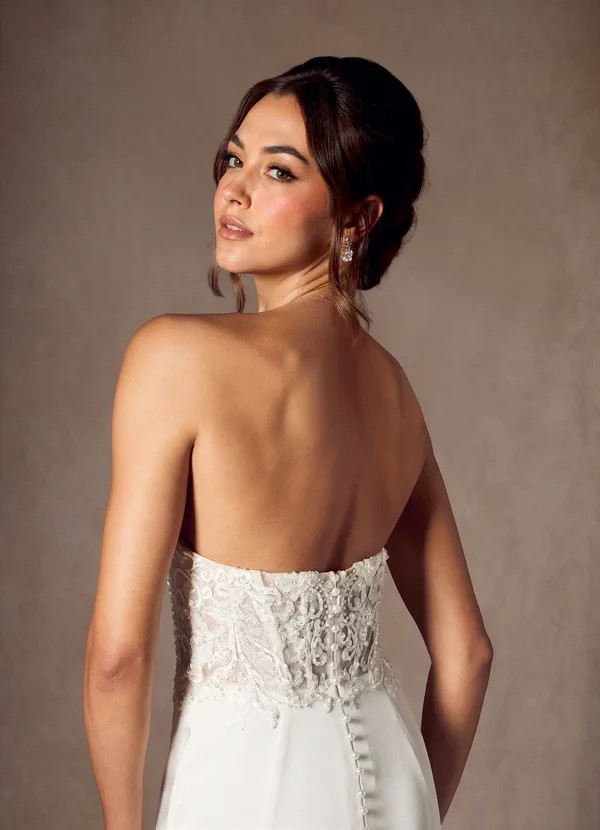
You’ll see both phrases—wedding dress and bridal gown—all over boutiques, magazines, and websites.Do they mean the same thing, or is there a real difference you should know before shopping?Short answer: in everyday use, the two terms are largely interchangeable.
But context, formality, and fashion history give each phrase a slightly different shade of meaning.This guide breaks down the nuances in plain language—so your searches, fittings, and conversations with stylists are easier and more precise.You’ll get side-by-side comparisons, examples, and practical tips for when to say “wedding dress” vs. “bridal gown.”
- Wedding dress is the broad, everyday term for what a bride wears to get married.
- Bridal gown is the more formal, fashion-industry or editorial term that often implies elevated styling, structure, or ceremony scale.
In practice, most boutiques and designers use both.
Choose “wedding dress” for casual searching or conversation; use “bridal gown” when discussing formal silhouettes, couture details, or black-tie venues.
Both are correct—use the one that matches your tone and event formality.
Big-Picture Differences (at a glance)
| Aspect | Wedding Dress | Bridal Gown |
| Tone | Everyday, conversational | Formal, editorial, traditional |
| Typical Use | Shopping chats, online searches, social posts | Magazines, runway, couture, cathedral/ballroom |
| Silhouettes Mentioned | All styles, including minis/tea-length | Often structured A-line, ball gown, cathedral trains |
| Perceived Formality | Any level (casual to black-tie) | Skews formal to ultra-formal |
| Context Clues | “What wedding dress fits a beach venue?” | “Which bridal gown suits a cathedral ceremony?” |
| Related Terms | Reception dress, second look | Couture, atelier, bespoke |
Key takeaway: Same category of garment; “bridal gown” often signals higher formality or fashion-speak.
Why Two Terms Exist (history + language)
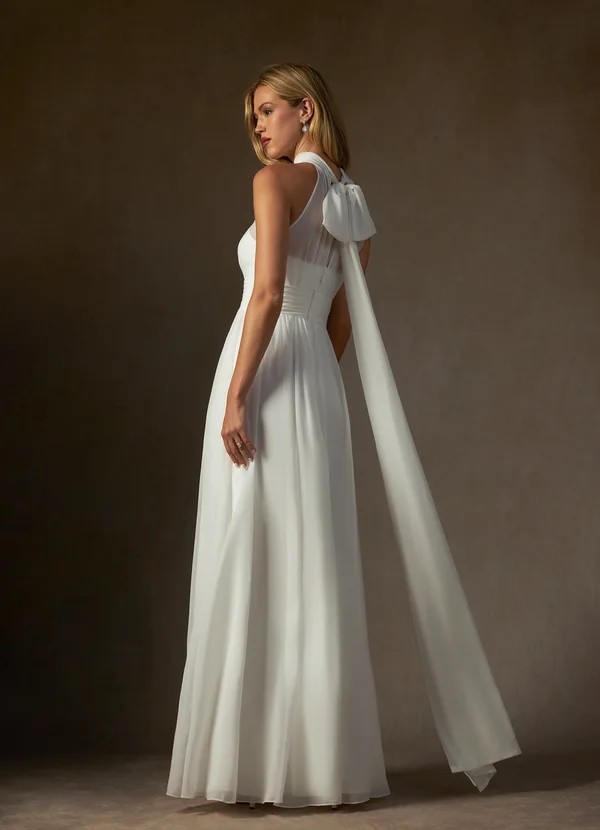
- Dress is a broad English word with everyday roots—any one-piece garment.
- Gown historically referred to long, flowing garments with ceremonial or formal associations (court dress, academic gowns, evening gowns).
- Over time, bridalwear borrowed both:
- Wedding dress became the mainstream phrase across cultures and price points.
- Bridal gown remained popular in editorial, couture, and traditional contexts, especially for church/cathedral settings.
- Regional nuance:
- In North America, both are common; marketing may lean “bridal gown” for high-end lines.
- In parts of Europe, formalwear houses and ateliers say “bridal gown,” while street talk uses “wedding dress.”
- In e-commerce/SEO, “wedding dress” usually has higher search volume, so brands use both to capture shoppers.
Design & Styling Nuances (how the words feel different)
Think of this as stylistic mood, not a hard rule.
Both terms can describe the same garment—but they suggest different vibes.
When people say “wedding dress,” they often mean…
- Any ceremony look, from minimalist crepe sheath to lace A-line to mini reception dress.
- Light, modern, or playful pieces (slits, minis, detachable sleeves, second looks).
- Practical conversations (fit, comfort, venue readiness, travel).
When people say “bridal gown,” they often mean…
- Formally scaled silhouettes: ball gowns, structured A-lines, cathedral trains.
- Couture work: corsetry, hand appliqué, long button runs, heirloom lace, gloves.
- Editorial styling (cathedral veils, opera gloves, capes, dramatic bows).
Reality check: You can call a sleek crepe column a “bridal gown” or a silk mikado ball gown a “wedding dress.”
The garment hasn’t changed—only the tone.
Use the Right Term for the Right Moment
- Use “wedding dress” when you want to:
- Search broadly online (“best wedding dress for beach venue”).
- Talk comfort, fit, climate, movement, or budget splits.
- Discuss reception minis, second looks, or destination-friendly options.
- Use “bridal gown” when you want to:
- Signal black-tie or sacred venue formality (cathedral, grand ballroom).
- Ask about couture construction, bespoke work, or atelier services.
- Communicate a classic, editorial, or heirloom aesthetic.
Try This: Tone Test
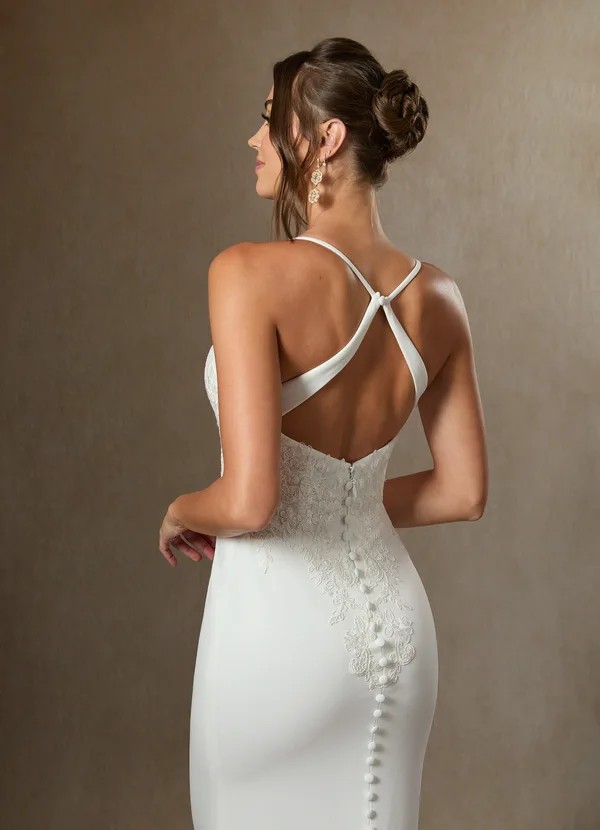
Say each sentence aloud and note how it feels:
- “I’m looking for a wedding dress that’s easy to dance in.”
- “I’m working with a designer on a bridal gown for our cathedral ceremony.”
Both are correct.
The second instantly conveys formality and scale; the first emphasizes practicality and comfort.
Components You’ll Hear with Each Term
| Component | Shows up with “Wedding Dress” | Shows up with “Bridal Gown” |
| Silhouettes | A-line, sheath, mermaid, mini, tea-length | Ball gown, structured A-line, couture sheath |
| Fabrics | Crepe, chiffon, georgette, satin | Mikado, duchesse satin, hand-beaded lace |
| Details | Slit, detachable sleeves, pockets | Cathedral veil, opera gloves, covered buttons to hem |
| Fit Talk | Comfort, breath, arm mobility, bustle ease | Corsetry, boning placement, toile fittings |
| Occasions | Garden, beach, winery, rooftop | Cathedral, palace/estate, black-tie hotel ballroom |
SEO & Shopping Tip (so you find more options)
- Searching “wedding dress + [silhouette/fabric/venue]” returns the widest range.
- Searching “bridal gown + [silhouette/fabric/formality]” can surface editorial or couture options you might miss.
Smart query combos:
- “wedding dress chiffon A-line garden”
- “bridal gown mikado ball gown cathedral veil”
- “wedding dress crepe column square neckline minimalist”
- “bridal gown lace long sleeve couture atelier”
Use both terms in your saved boards to diversify results.
Venue & Formality Matrix (which phrase fits the mood)
| Venue / Dress Code | Phrase That Feels Natural | Why |
| Beach / Casual | Wedding dress | Light, breezy, practical vibes |
| Garden / Semi-formal | Wedding dress (or bridal gown if lace/formal) | Flexes both ways |
| Winery / Rustic-elegant | Wedding dress | Texture + movement lead |
| City hall / Modern loft | Wedding dress | Minimal, architectural lines |
| Hotel ballroom / Black-tie | Bridal gown | Elevated scale, couture details |
| Cathedral / Sacred ceremony | Bridal gown | Traditional formality cues |
How Stylists & Editors Use the Terms
- Boutiques often say “wedding dress” on the floor and “bridal gown” in lookbooks or when highlighting premium lines.
- Editors lean “bridal gown” in headlines for formal shoots; “wedding dress” pops up in practical advice articles (alterations, timelines, comfort).
- Designers/ateliers say “gown” when discussing patternwork, corsetry, and couture fittings.
Examples: Same Silhouette, Two Tones
Example 1: Clean crepe column
- “This wedding dress is perfect for a rooftop ceremony—light, modern, easy to move.”
- “This bridal gown features an architectural square neckline and a chapel train, ideal for an evening museum reception.”
Example 2: Satin ball gown
- “This wedding dress gives you a big-skirt moment without feeling heavy.”
- “This bridal gown in silk mikado with covered buttons and a cathedral veil suits a grand cathedral.”
Same garment, different intent and tone.
Decision Checklist: Which Phrase Should I Use?
- Is the conversation practical (fit, comfort, climate)? → say wedding dress.
- Is it about formality, couture, or ceremony scale? → say bridal gown.
- Am I searching broadly online? → start with wedding dress.
- Am I curating ultra-formal inspiration? → add bridal gown to queries.
- Am I emailing an atelier? → “bridal gown” reads industry-native.
- Am I texting a friend? → “wedding dress” feels natural.
Use both as needed—there’s no penalty for mixing.
Practical Buying & Fitting Questions (whichever term you use)
When you’re in the boutique (or messaging a stylist), ask:
- Fit & structure
- How is the bodice supported (cups, longline, boning)?
- Can we add hidden elastic for off-shoulder mobility?
- Fabric & comfort
- How does this fabric behave in heat/cold/wind?
- Is the lining breathable? Do I need a slip under crepe/charmeuse?
- Movement & bustle
- What bustle type suits this train (American/French/custom)?
- Can I sit, stairs, hug, and raise arms without shifting the neckline?
- Timeline & alterations
- Plan 2–3 fittings over 6–10 weeks; finish 2–4 weeks early.
- Lock shoes + undergarments before fitting #1; late changes cause rework.
These questions apply whether you call it a dress or a gown.
Fit Signals (green/yellow/red) for any “dress/gown”
| Area | Green (Great) | Yellow (Fixable) | Red (Pass/Swap) |
| Neckline | Kisses skin, no gap/bite | Micro-dart/cups needed | Gapes widely or chokes |
| Straps/Sleeves | Stay put, full reach | Shorten/add elastic | Slip or bite hard |
| Bodice | Anchored, you can breathe | Take in/let out | Zipper waves, you brace to inhale |
| Hem | “Kisses” floor in final shoes | Shorten/rebalance | Puddling or toe peek |
| Train/Bustle | Clear, easy points | Add points/label | No workable bustle |
| Fabric | Feels good hour 1–4 | Slip/lining tweak | Shows every line/snags |
Language & Emotion: Say What Feels Like You
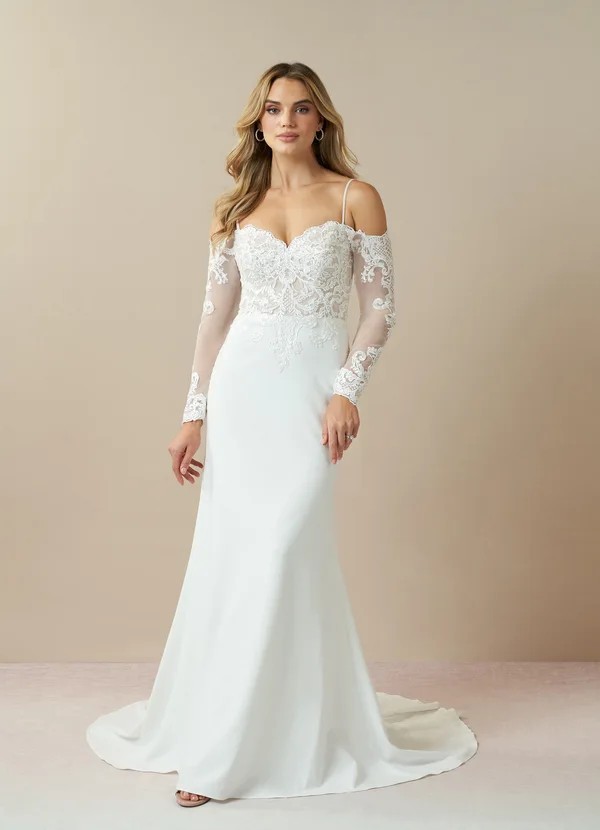
Some brides simply feel more themselves saying “my wedding dress.”
Others light up when they say “my bridal gown.”
- If your style is minimal, modern, or laid-back, “wedding dress” may sound right.
- If your vision is regal, heirloom, or editorial, “bridal gown” may capture the mood.
Neither is more correct; choose the phrase that matches your personality and event.
Destination & Second Looks (term crossover)
- For destination weddings, vendors and airlines tend to say “wedding dress” in logistics: garment bags, steaming, carry-on rules.
- For reception minis or jumpsuits, “wedding dress” is standard; “bridal gown” is rarely used for minis.
- For cathedral veils, coats, and opera gloves, editorial copy will lean “bridal gown,” even if the designer tags read “wedding dress.”
Frequently Asked Questions
Is a bridal gown always more expensive than a wedding dress?
Not automatically.
The term doesn’t set the cost—fabric, construction, embellishment, and brand do. “Bridal gown” often appears in couture contexts, which can be higher-end, but the words themselves don’t fix a price.
Can I call my simple crepe column a bridal gown?
Yes.
If you prefer the formal tone, use it. Stylistically, many would call it a “wedding dress,” but there’s no rule against “gown.”
Do boutiques care which term I use?
Not really.
Use the phrase you like—then be specific about silhouette, fabric, neckline, sleeves, train, and venue. That’s what helps them help you.
Is “bridal gown” more traditional or cultural?
It sounds more traditional because “gown” historically signals ceremony and formality. In multicultural settings, either term can apply; your chosen style and modesty level matter more.
Should my invitations or website say “bridal gown” for formality?
Optional.
If your event is black-tie or cathedral, “bridal gown” matches the tone. For most couples, “wedding dress” is perfectly elegant.
Do designers prefer one term?
It varies.
Atelier and couture houses often say “gown” in collection notes; contemporary brands often say “dress” on product pages. Many use both.
Print-Friendly Cheat Sheet
Say “Wedding Dress” when you’re talking about:
- Comfort, movement, climate, travel, second looks
- Minis, tea-length, reception outfits
- Broad online searches and casual chats
Say “Bridal Gown” when you’re talking about:
- Formal venues (cathedral, black-tie ballrooms)
- Couture construction, bespoke fittings, editorial styling
- Classic heirloom silhouettes, cathedral veils, gloves, capes
But remember: both terms describe the same category of garment.
Your tone and event decide which phrase feels best.
Pro Tips for Any Dress/Gown (so shopping stays easy)
- Bring final-height shoes + undergarments to every fitting.
- Do the five movement checks: breath, sit, hug, arms-up, walk & spin.
- Ask about lining breathability, boning comfort, and bustle engineering.
- Keep one focal detail (veil or sleeves or bow or sparkle) for clean elegance.
- Finish alterations 2–4 weeks before the wedding for a calm buffer.
- Steam in sections (bodice → sleeves → skirt → train), hang high, and assign a bustle buddy.
Final Takeaway
A wedding dress and a bridal gown are fundamentally the same kind of garment.Use “wedding dress” for everyday conversations, practical shopping, and modern looks; reach for “bridal gown” when you want to emphasize formality, couture craft, or cathedral-scale styling.
There’s no penalty for mixing the terms—clarity comes from how you describe silhouette, fabric, neckline, sleeves, train, venue, and comfort.Say the one that feels like you—and spend your energy choosing the piece that lets you breathe, move, and shine all day.