
What Type of Wedding Dress Is Best for a Formal Ceremony?
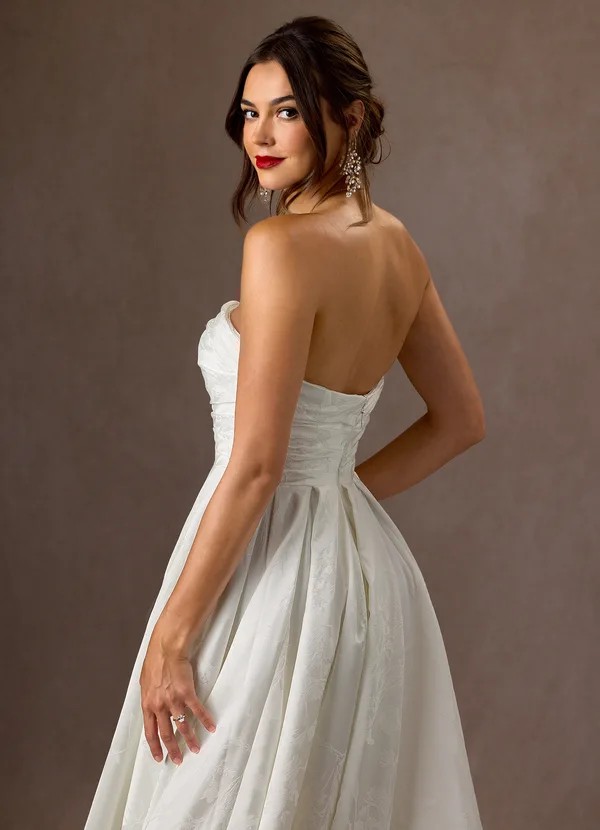
A formal ceremony asks for poise, proportion, and presence. Think wedding dresses with structured silhouettes, luxe fabrics, and refined details that read beautifully from the aisle to the altar. Below is a calm, practical guide to choosing the best wedding dress.
Wedding dress for a formal ceremony—with comparison tables, bullet-point checklists, fitting timelines, etiquette cues, and styling ideas you can copy.Use this to build a short list and glide through try-ons with confidence.
For a formal ceremony, choose structured silhouettes and elevated fabrics:
- Ball gown or A-line with a cathedral train
- Satin, mikado, or crepe with clean seaming
- Off-the-shoulder, square, or bateau necklines
- Long sleeves or tailored illusion sleeves
- Cathedral veil, covered buttons, and tasteful sparkle
Plan 2–3 fittings over 6–10 weeks, lock heel height and undergarments early, and keep one focal detail—like a long veil or sculptural bow—so the look stays elegant, not busy.
The Formal Dress Map: What “Formal” Actually Means
- Silhouette has intent.
Skirts are shaped, seams are deliberate, posture looks supported. - Fabric reads rich in photos.
Satin/mikado reflect light; crepe is matte-elegant; lace adds refined texture. - Details are disciplined.
Covered buttons, tasteful sparkle, architectural bows, balanced sleeves. - Train and veil scale up.
A chapel or cathedral train and a cathedral veil match ceremonial grandeur. - Color stays classic.
Diamond white, ivory, or softly tinted champagne that photographs timelessly.
Best Silhouettes for a Formal Ceremony (Ranked)
| Rank | Silhouette | Why It Fits “Formal” | Great With |
| 1 | Ball Gown | Sculpted bodice + full skirt = aisle presence | Satin/mikado, off-shoulder, cathedral veil |
| 2 | Structured A-Line | Universal flattery; elegant flare from waist | Crepe or satin, long sleeves, lace accents |
| 3 | Fit-and-Flare / Mermaid | Curves with tailored control | Crepe/satin, covered buttons, chapel train |
| 4 | Sheath/Column (Architectural) | Minimalist but formal with the right fabric | Heavy crepe, bateau neck, long gloves |
| 5 | Empire (Refined) | High waist with graceful skirt; classic if tailored | Chiffon over satin base, long veil |
How to choose quickly
- Want maximum ceremony drama? → Ball gown.
- Want timeless, flattering ease? → Structured A-line.
- Want couture lines and polish? → Fit-and-flare in crepe or satin.
- Want modern, editorial formality? → Column with bateau neck.
Formal Fabrics & Finishes (What Photographs Best)
| Fabric | Formal Quality | Look & Feel | Styling Notes |
| Mikado | High | Crisp, structured sheen | Holds bows, basque/drop waist, big skirts |
| Satin | High | Smooth, luminous | Classic formal; resists wrinkles better than chiffon |
| Crepe | Medium-High | Matte, refined drape | Modern minimal; works with long sleeves |
| Beaded Lace over Satin/Crepe | High | Texture + depth | Perfect for sleeves and illusion bodices |
| Organza/Tulle (Layered) | Medium-High | Ethereal volume | Pair with structured bodice for formal balance |
Tip: In candlelit cathedrals and grand ballrooms, satin/mikado create a regal glow; crepe gives quiet, modern formality; lace adds heirloom depth.
Formal Necklines & Sleeves (Fail-Safe Combos)
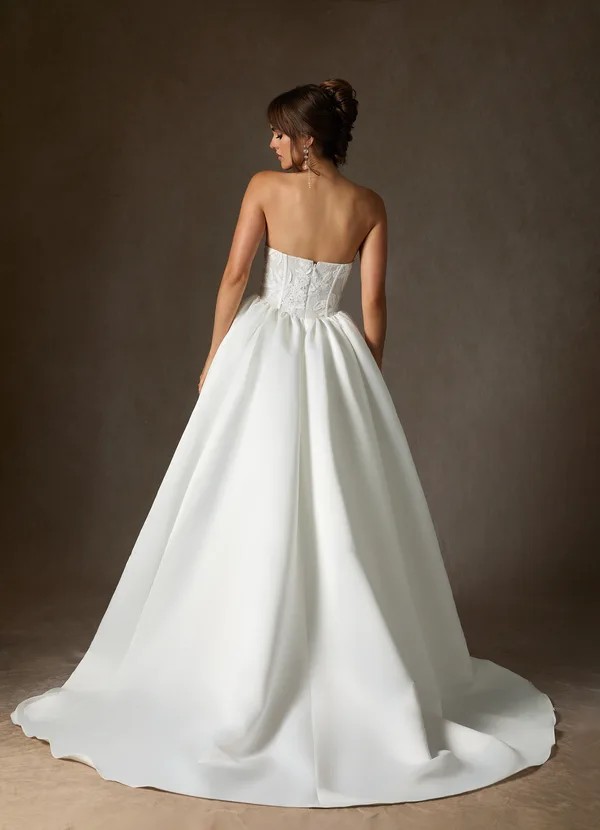
- Necklines
- Off-the-shoulder: frames collarbone; romantic and formal.
- Square: crisp lines; pairs with buttons and bows.
- Bateau/High Illusion: modest, regal, and photograph-friendly.
- Sweetheart (structured): classic when paired with long sleeves or a cathedral veil.
- Sleeves
- Fitted long sleeves in crepe or lace = instant evening/formal energy.
- Illusion sleeves with lace motifs = coverage without heaviness.
- Detachable sleeves = ceremony drama, reception ease.
- Back details
- Covered buttons from neckline to hem feel couture and ceremonial.
- Bow or tails at the back works best in satin/mikado for structure.
Trains & Veils for Formal Scale
| Element | Good | Better | Best |
| Train | Sweep | Chapel | Cathedral |
| Veil | Fingertip | Chapel | Cathedral (plain or lace edge) |
| Bustle | Simple | Custom points | Engineered bustle for heavy skirts |
Guideline: If your aisle and venue are grand, cathedral veil + chapel/cathedral train aligns your look to the scale of the space.
Etiquette Snapshot (Formal)
- Coverage reads formal.
Long sleeves, illusion necklines, or elegant off-shoulder balance style and decorum. - Keep one focal point.
Let either the veil, the train, or the sleeves lead. - Refined sparkle only.
Beading should catch light, not overwhelm. - Timeless accessories.
Pearls, understated diamonds, sleek gloves, or a structured headband.
Fast Style Builder (Copy This Flow)
- Pick your silhouette: Ball gown / Structured A-line / Fit-and-Flare / Column.
- Choose fabric personality: Mikado/Satin (glow) or Crepe (quiet luxury) + optional lace.
- Decide neckline + sleeve: Off-shoulder, square, or bateau with fitted or illusion sleeves.
- Set train + veil scale: Chapel or cathedral; plain cut or lace edge.
- Limit to one hero detail: Buttons, bow, or 3D floral—just one, used well.
Body-Type Notes for Formal Silhouettes
| Body Notes | Best Formal Picks | Why |
| Hourglass | Fit-and-flare; basque/drop waist A-line | Shows curves with control; waist emphasis |
| Pear/Curvy Hips | Ball gown; structured A-line; off-shoulder | Balances hips; frames shoulders and face |
| Athletic/Straight | A-line with basque waist; column with defined seams | Adds curves via seaming and waist focus |
| Petite | Clean A-line or column; avoid very heavy layers | Lengthens line; watch proportion |
| Full Bust | Off-shoulder/square; supportive bodice | Frames neckline; keeps posture open |
Venue & Season Matrix (Formal Edition)
| Venue | Best Formal Looks | Notes |
| Cathedral / Grande Church | Ball gown or satin A-line; long sleeves; cathedral veil | Scale meets architecture |
| Ballroom / Historic Estate | Mikado ball gown; fit-and-flare with chapel train | Candlelight loves satin |
| Luxury Hotel / Museum | Crepe column or fit-and-flare; square or bateau neck | Architectural minimal reads high-end |
| Winter Evening | Mikado or satin; long sleeves; gloves optional | Weight adds warmth and form |
| Formal Garden (Evening) | A-line with lace; chapel train; structured veil | Soft romance with formal edge |
Formal Styling Micro-Tips
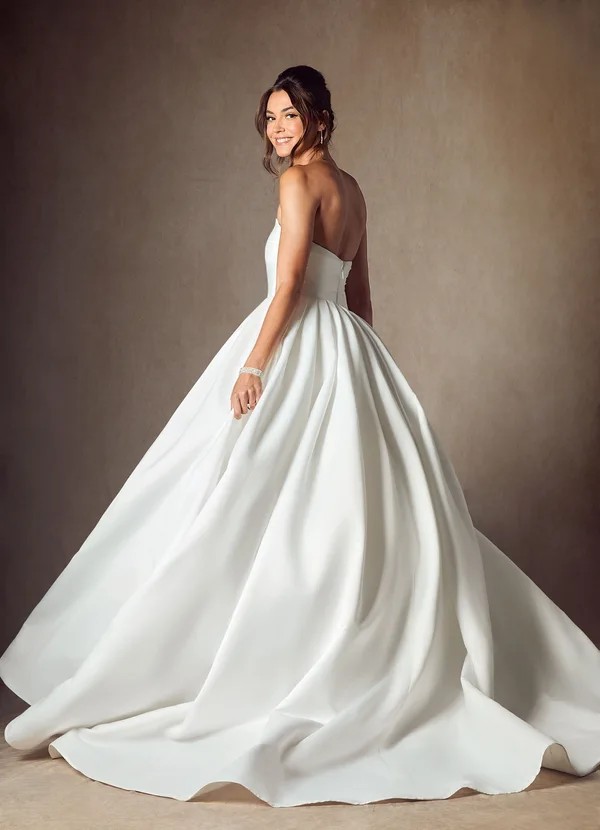
- Buttons = couture signal.
A long row of covered buttons along the back and train screams formal refinement. - Gloves are back.
Wrist-length for subtlety, opera-length for maximal ceremony. - Jewelry anchors the neck.
Off-shoulder loves statement earrings; bateau loves pearl studs and a sleek bun. - Heels + hem planning.
Lock heel height before fitting #1 so hem math is accurate and graceful.
Fittings & Timeline for a Formal Gown
Plan 2–3 fittings over 6–10 weeks, finishing 2–4 weeks before the wedding.
| Fitting | When | What to Bring | Focus |
| First | 8–10 weeks prior | Shoes, undergarments, veil (if chosen) | Global fit; bodice support; mark hem & train |
| Second | 4–6 weeks prior | Same items; accessories test | Sleeve mobility; bustle engineering; seam symmetry |
| Final | 1–2 weeks prior | Full look | Comfort checks; steam & storage plan |
If adding sleeves, bows, or a heavier train: add time. Bring detachable elements to every fitting so attachments stay secure and invisible.
Care, Steaming & Transport for Formal Fabrics
- Steaming order: bodice → sleeves → skirt → train → veil.
- Use a breathable garment bag and hang high to protect the train.
- Satin/mikado: steam on low, avoid iron shine; handle in sections.
- Lace/illusion: keep a cloth between steamer and motifs; avoid saturating mesh.
- Transport tips: lay across a back seat or hang from a hook with room for the skirt; keep veil separate to prevent snagging.
Accessories that Elevate Formal Looks (Without Clutter)
- Veil: cathedral with plain cut or lace edge; chapel for slightly lighter formality.
- Hair: sleek bun, classic chignon, or polished waves; add a structured headband or comb.
- Gloves: pair with bateau or off-shoulder; remove for dinner if desired.
- Belt/Bow: one sculptural accent—either waist bow or back bow, not both.
- Jewelry: pearls, delicate tennis bracelet, or a single statement earring moment.
Quick Comparison Tables
A) Formal Silhouette vs. Fabric
| Silhouette | Best Fabric | Why |
| Ball Gown | Mikado / Satin | Holds shape, reads regal |
| Structured A-line | Crepe / Satin | Balanced movement + polish |
| Fit-and-Flare | Crepe / Satin | Smooth seams, couture lines |
| Column | Heavy Crepe | Architectural minimalism |
B) Formal Neckline vs. Sleeve
| Neckline | Sleeves that Work | Notes |
| Off-Shoulder | Fitted long sleeve, detachable puff | Frames collarbone; very formal |
| Square | Fitted sleeve or clean strapless glove pairing | Architectural, modern |
| Bateau / High | Illusion or fitted sleeves | Modest and regal |
C) Train & Veil Scale
| Setting | Train | Veil |
| Grand church / cathedral | Cathedral | Cathedral |
| Ballroom / estate | Chapel/Cathedral | Chapel/Cathedral |
| Museum / hotel | Chapel | Chapel/Cathedral |
Formal Ceremony Checklist (Print & Use)
- Silhouette chosen: Ball gown / A-line / Fit-and-Flare / Column.
- Fabric decided: Mikado / Satin / Crepe / Lace overlay.
- Neckline & sleeves: Off-shoulder / Square / Bateau + Fitted or Illusion sleeves.
- Train & veil scale: Chapel / Cathedral.
- One focal detail: Buttons / Bow / 3D florals / Beaded lace edge.
- Fittings booked: Dates locked; shoes & undergarments ready.
- Bustle plan: Practice once; record a quick how-to video.
- Steaming & storage: Breathable bag; veil protected separately.
Troubleshooting (Common Formal-Dress Issues)
- “My satin shows every pull.”
Confirm correct undergarments and seam ease; check posture during fittings. - “Off-shoulder shifts when I raise my arms.”
Add hidden elastic, a micro-gusset, or slightly adjust sleeve placement. - “Lace looks busy with the veil.”
Choose a plain-cut cathedral veil so the dress remains the hero. - “Train feels heavy to bustle.”
Increase bustle points; test with your helper until it’s intuitive. - “I feel overwhelmed by volume.”
Switch to a structured A-line in crepe or satin; keep veil long but plain.
Try-On Scenarios You Can Borrow
Scenario A — Cathedral Ceremony, Evening
- Pick: Mikado ball gown, off-shoulder neckline, cathedral train.
- Style: Cathedral veil, covered buttons, pearl studs.
- Why: Scale and sheen match the space and candlelight.
Scenario B — Ballroom with Grand Staircase
- Pick: Satin A-line with long fitted sleeves.
- Style: Chapel veil with lace edge, low bun, gloves.
- Why: Elegant volume, refined coverage, graceful stairs shots.
Scenario C — Museum or Modern Hotel
- Pick: Crepe column with bateau neck.
- Style: Cathedral veil (plain), sleek headband, button back.
- Why: Architectural and formal without excess.
Scenario D — Estate Garden at Dusk (Black-Tie)
- Pick: Fit-and-flare in crepe, square neckline, chapel train.
- Style: Statement earrings, covered buttons, fingertip veil for portraits + cathedral veil for ceremony.
- Why: Curated drama with easy movement across stone paths.
Formal Timeline (No Prices—Just What to Do, When)
- Order: Aim 8–10 months before the wedding (10–12 months if custom size/sleeves).
- Fittings: Book 2–3 over 6–10 weeks.
- Lock accessories: Veil, gloves, jewelry by second fitting.
- Practice bustle: During second or final fitting.
- Final buffer: Keep 2–4 weeks clear for steaming, storage, and calm.
- Pickup: 7–10 days before; try the whole look once more at home.
Frequently Asked Questions
What silhouette looks the most formal?
Ball gown or a structured A-line with a chapel/cathedral train.
Fit-and-flare is also formal when tailored in satin or crepe with refined details.
Do I need sleeves for a formal ceremony?
Not required, but fitted or illusion sleeves instantly elevate the look.
Off-shoulder with a structured bodice is an elegant alternative.
How long should my veil be?
For formal scale, choose chapel or cathedral.
Plain-cut edges read minimal and chic; lace edges add heirloom romance.
Is lace formal enough?
Yes—especially corded or beaded lace over satin/crepe.
Keep motifs harmonious and let buttons or a veil edge be the singular statement.
Can minimal dresses be formal?
Absolutely. A crepe column with a bateau or square neckline, clean seaming, a chapel train, and a cathedral veil is peak modern formality.
What’s one detail that always looks formal?
A long line of covered buttons from back to hem—or a perfectly scaled bow in mikado or satin.
Will a heavy train be hard to manage?
Engineer the bustle at fitting #2 and practice with a helper.
Consider a plain cathedral veil plus a chapel train if you want easier movement.
Final Takeaway
For a formal ceremony, build your look on structure, scale, and restraint:
- Silhouette: Ball gown or structured A-line; fit-and-flare and columns also shine with the right fabric.
- Fabric: Mikado or satin for glow and architecture; crepe for quiet luxury; lace for refined texture.
- Neckline & sleeves: Off-shoulder, square, or bateau with fitted/illusion sleeves.
- Train & veil: Chapel or cathedral; choose one hero detail—buttons, bow, or lace edge.
Plan 2–3 fittings, lock shoes and undergarments early, and keep a 2–4 week buffer.
Do that, and your dress will match the formality of your ceremony—graceful in motion, timeless in photos, and completely you.