
Petite Mother of the Bride Guide: How to Look Taller
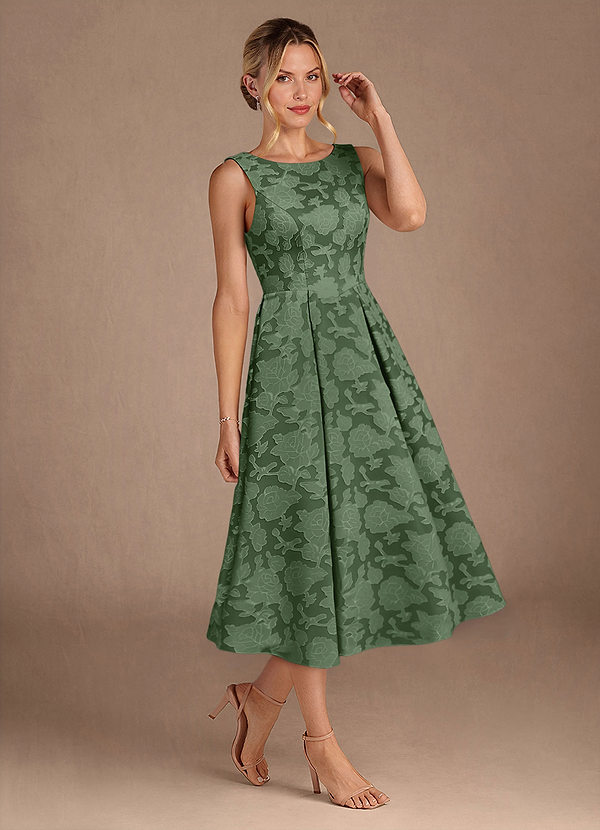
Petite styling requires different considerations than simply shortening standard designs. The most flattering pieces account for proportion relationships between bodice, waist, and skirt rather than just overall length.
Height-enhancing design starts with understanding visual balance. When each dress section relates proportionally to the others, the eye naturally reads the figure as taller and more elongated. This principle applies regardless of actual height measurements.
The Rule of Thirds in Dress Proportions
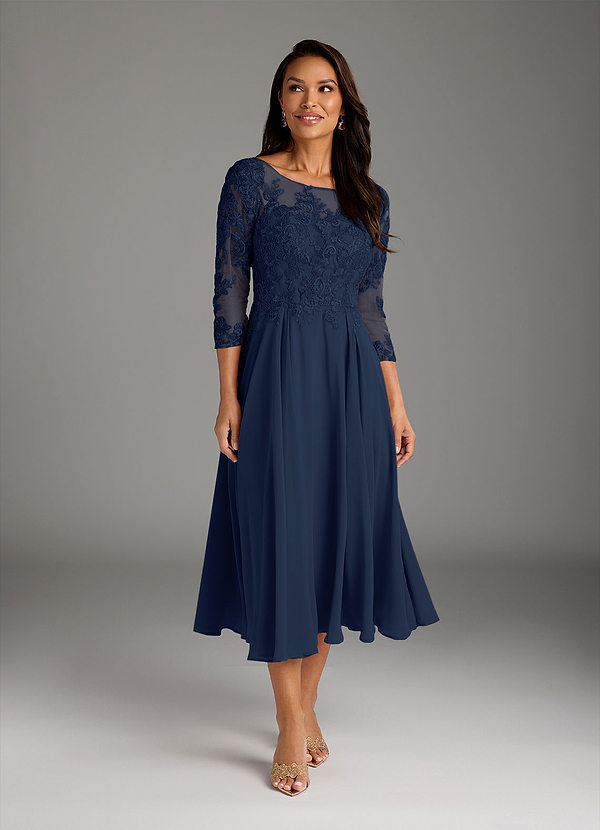
Professional stylists rely on proportion guidelines that create optimal visual balance for petite frames.
Understanding Optimal Balance
The classic rule of thirds divides the body into three equal sections: upper body to waist, waist to mid-thigh, and mid-thigh to floor. For petite figures, the most flattering designs emphasize the longest section while minimizing visual breaks.
Empire waist placement works exceptionally well because it creates a 1:3 ratio, with the shortest section above the bust line and maximum length below. This positioning naturally elongates the lower body while maintaining elegant proportions.
Natural waist emphasis succeeds when paired with floor-length skirts that create a 1:2 ratio. The bodice occupies roughly one-third of total dress length, leaving two-thirds for the flowing skirt portion.
Avoid mid-calf breaks that create a 1:1:1 ratio with equal sections. This visually shortens the leg line and can make petite frames appear smaller than desired.
Proportion Guidelines by Height
| Height Range | Ideal Waist Position | Optimal Skirt Length | Best Ratio |
| Under 5’2″ | Empire or Just Below Bust | Floor-length | 1:3 |
| 5’2″ to 5’4″ | Natural or Slightly Above | Floor or Tea-length | 1:2 or 2:3 |
| 5’4″ to 5’6″ | Natural Waist | Floor-length | 1:2 |
Silhouettes That Elongate Petite Frames
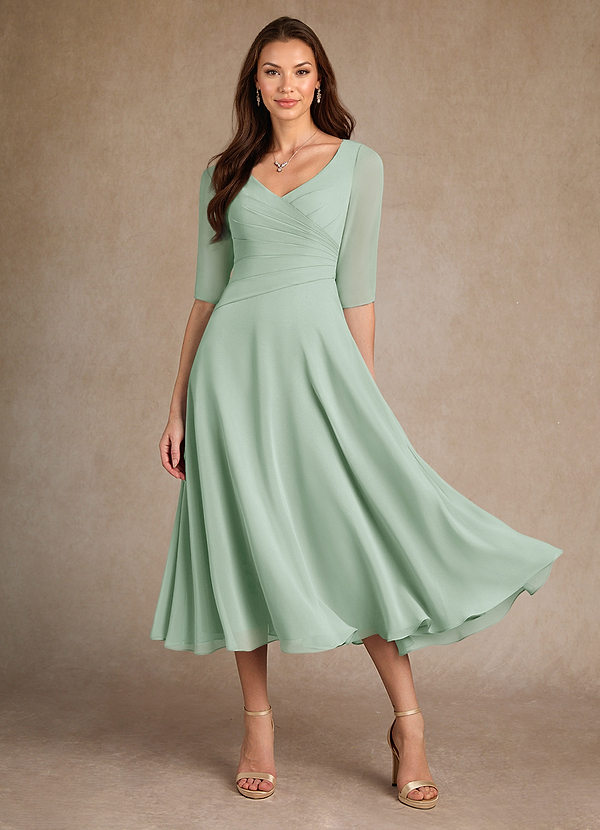
Specific dress shapes create vertical emphasis through their construction and visual flow.
A-line designs work beautifully for petite figures because they avoid adding horizontal volume that visually widens. The gradual flare from shoulder to hem creates a long, unbroken line. Many petite mother of the bride dresses incorporate this flattering silhouette.
Sheath construction provides maximum elongation through its narrow, column-like shape. The straight lines from neckline to hem guide eyes vertically without interruption. Choose fabrics with enough structure to skim rather than cling for most flattering results.
Column dresses offer sophisticated simplicity that naturally lengthens. The unadorned vertical lines create clean elegance while maximizing perceived height. This works especially well in solid colors or subtle vertical textures.
Silhouettes to Approach Carefully
- Ball gowns: Voluminous skirts can overwhelm smaller frames
- Drop waist designs: Lower waist placement shortens leg line visually
- Tiered skirts: Horizontal layers create width rather than height
- Wide belts at natural waist: Break vertical line unnecessarily
Strategic Hemline Selection
The exact point where your dress ends dramatically affects overall proportion and perceived height.
Floor-length gowns create the maximum elongating effect by extending the vertical line completely. The hem should just graze the floor when wearing ceremony shoes, allowing graceful movement without tripping hazards.
Tea-length options work when hitting the narrowest part of the calf, typically 3-4 inches below the knee. Avoid mid-calf lengths that bisect the leg at its widest point. Consider tea length mother of the bride dresses when this length suits your event style.
Knee-length designs should end exactly at the knee or 1-2 inches above for best proportion. This creates a clean break that doesn’t visually shorten the leg.
Hemline Placement Guide
| Dress Length | Ideal Hem Position | Shoe Heel Height | Visual Effect |
| Floor-length | Grazes floor with heels | 2.5-3.5 inches | Maximum elongation |
| Tea-length | 3-4 inches below knee | 2-3 inches | Vintage-inspired, balanced |
| Knee-length | At or 1 inch above knee | 2-3 inches | Modern, clean lines |
| Midi-length | Mid-calf (narrowest point) | 3-4 inches | Requires precise fitting |
Neckline Strategies for Vertical Enhancement
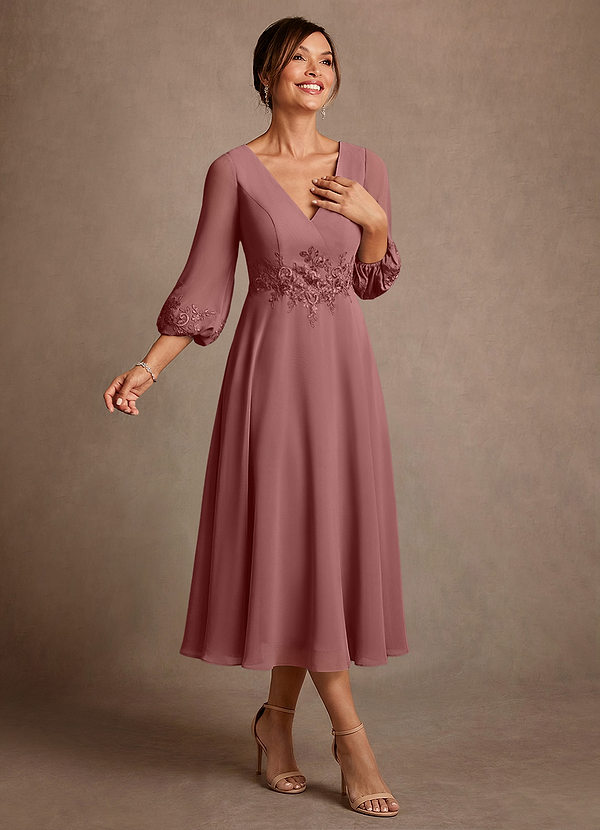
The upper portion of your dress influences how the eye travels across your entire silhouette.
V-necklines create the strongest vertical emphasis by drawing a direct line toward the waist. The deeper the V, the more elongating the effect, though maintain appropriate modesty for formal occasions.
Sweetheart necklines provide feminine elegance while opening the chest area vertically. The curved shape naturally draws attention upward toward the face without horizontal disruption.
Scoop necks work when cut relatively deep, creating a U-shape that maintains vertical flow. Shallow scoops can create horizontal emphasis, so choose deeper versions for maximum height enhancement.
Neckline and Frame Relationship
- Narrow shoulders: V-neck or sweetheart to create width
- Broad shoulders: Deep V or scoop to maintain vertical line
- Short neck: V-neck or open collar to elongate
- Long neck: Boat neck or high collar balances proportions
Color and Pattern Strategies
Visual choices beyond silhouette significantly impact perceived height.
Monochromatic dressing creates the longest possible vertical line by eliminating color breaks. Choose a single color from neckline to hem, including shoes when possible. Dusty blue mother of the bride dresses work beautifully in this approach.
Darker jewel tones naturally recede, making the silhouette appear more streamlined. Navy, burgundy, and forest green provide formal elegance while enhancing height perception.
Vertical patterns including pinstripes, vertical pleating, or lengthwise color-blocking guide the eye up and down. Avoid horizontal stripes, which create width emphasis.
Strategic color placement uses darker tones on sides with lighter centers to create an hourglass while maintaining vertical emphasis. This technique works especially well in champagne mother of the bride dress designs with tonal variations.
Color Selection Strategy
| Color Approach | Height Enhancement | Best For | Styling Tip |
| Solid Dark | Maximum | Evening formal | Match shoes to hem |
| Solid Mid-tone | High | Daytime elegant | Vertical accessories |
| Tonal Ombré | Medium-High | Romantic settings | Lightest at top |
| Small Print | Medium | Garden/outdoor | Vertical pattern direction |
Sleeve Length and Arm Line
Sleeve design affects overall proportion more than many realize.
Three-quarter sleeves ending just below the elbow create excellent balance for petite frames. This length maintains coverage while avoiding the visual shortening that can occur with full-length sleeves.
Cap sleeves work when they sit precisely on the shoulder point without extending down the arm. Poorly placed cap sleeves create horizontal lines that widen rather than lengthen.
Long sleeves can work beautifully if they end exactly at the wrist bone. Sleeves that extend past the hand or bunch at the wrist create shortening visual clutter.
Sleeveless designs provide maximum arm elongation. If choosing this option, ensure the armhole sits at the natural shoulder point rather than extending toward the neck or down the arm.
Heel Height Calculations for Optimal Proportion
Footwear significantly impacts dress proportion and overall height enhancement.
Minimum heel recommendation: 2.5 inches for floor-length gowns ensures proper hemming while adding height without discomfort during extended wear.
Optimal heel range: 2.5-3.5 inches balances height enhancement with stability. This range works well for most formal occasions requiring standing during ceremonies and dancing at receptions.
Maximum comfortable height: 4 inches provides significant height but requires confidence in heel-wearing. Only choose this height if comfortable walking, standing, and dancing throughout entire celebrations.
Heel Height Formula
Ideal dress length = Your height + Heel height – 0.5 inches
(For floor-length gowns that graze the floor)
Example calculation:
- Height: 5’2″ (62 inches)
- Heel height: 3 inches
- Ideal dress length: 62 + 3 – 0.5 = 64.5 inches from shoulder to hem
Frequently Asked Questions
What dress length is most flattering for petite mothers of the bride?
Floor-length gowns create the most elongating effect for petite frames by establishing an unbroken vertical line from shoulder to floor. The hem should just graze the floor when wearing your ceremony heels, typically requiring 2.5-3 inch heel height..
Should petite women avoid wearing tea length mother of the bride dresses?
Petite women can absolutely wear tea-length dresses when the hemline is precisely placed. The hem should fall 3-4 inches below the knee at the slimmest part of the calf, never at mid-calf where the leg is widest.
Do petite mother of the bride dresses require special alterations?
Yes, petite dresses require more than simple hemming. The bodice length needs adjustment to place the waist at the correct position, sleeves must end precisely at the wrist, and shoulder seams should sit at natural shoulder points.
What neckline makes petite mothers look taller?
V-necklines create the strongest elongating effect by drawing a clear vertical line from shoulders toward the waist. Sweetheart necklines also work well by opening the chest area vertically. Deep scoop necks provide similar benefits.
Can petite mothers of the bride wear patterns and prints?
Yes, but choose small-scale prints that don’t overwhelm your frame. Vertical patterns, subtle textures, or tonal designs work best. Large florals, bold geometrics, or horizontal stripes create visual width that shortens the silhouette.
Creating Your Petite-Friendly Ensemble
The journey to finding a dress that enhances your height while maintaining elegant formality combines several strategic elements.
Start with silhouette selection that emphasizes vertical lines through A-line, sheath, or empire waist construction. Ensure the waist placement creates optimal proportion ratios based on your specific height.
Choose hemlines that fall at the most flattering points: floor-length for maximum elongation, or precisely placed tea-length for vintage-inspired elegance. Avoid mid-calf lengths that disrupt leg line.
Select necklines that draw the eye vertically, particularly V-necks and sweetheart shapes. Pair with vertical accessories including drop jewelry and pointed-toe shoes.
Invest in professional alterations that address petite-specific proportion needs beyond simple hemming. Proper bodice length, sleeve placement, and shoulder positioning transform good fit into exceptional fit.