
Navigating Plus-Size Wedding Dresses Online: Fit & Styling Tips
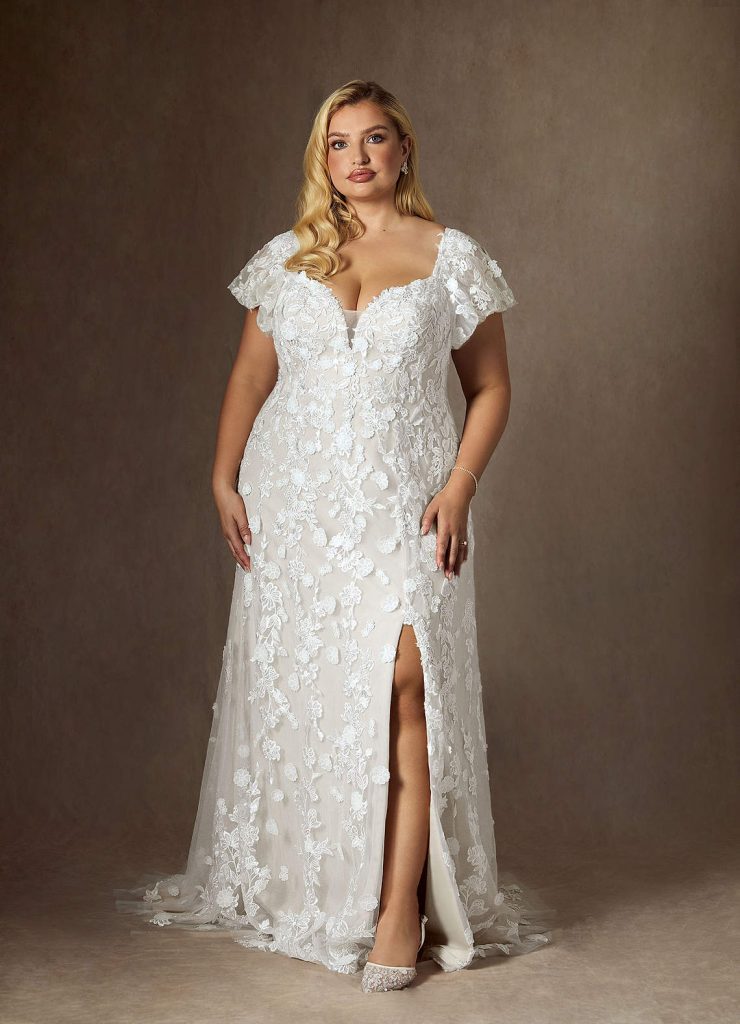
Shopping for plus size wedding dresses online is easier when you know your measurements and understand which silhouettes work for your shape. The right fit starts before you even browse. This guide covers everything from how to measure at home to what to expect from alterations.
Start with Accurate Measurements
Online dress shopping requires precise numbers. Bridal sizing runs larger than everyday clothing, so always size by measurement — not by the tag you normally wear.
The Five Measurements You Need
| Measurement | Where to Take It |
| Bust | Fullest part of your chest |
| Waist | Narrowest point of your torso |
| Hips | Fullest part, 7–9 inches below waist |
| Hollow to Hem | Collarbone base to the floor |
| High Bust | Just under arms, across the chest |
- Wear your wedding-day undergarments when measuring.
- Use a soft measuring tape and measure twice.
- If your hips are significantly wider than your bust, note the difference before choosing a silhouette.
Custom sizing is available at Azazie for select styles, which helps reduce the need for major alterations after delivery.
Silhouette Guide for Plus Size Brides
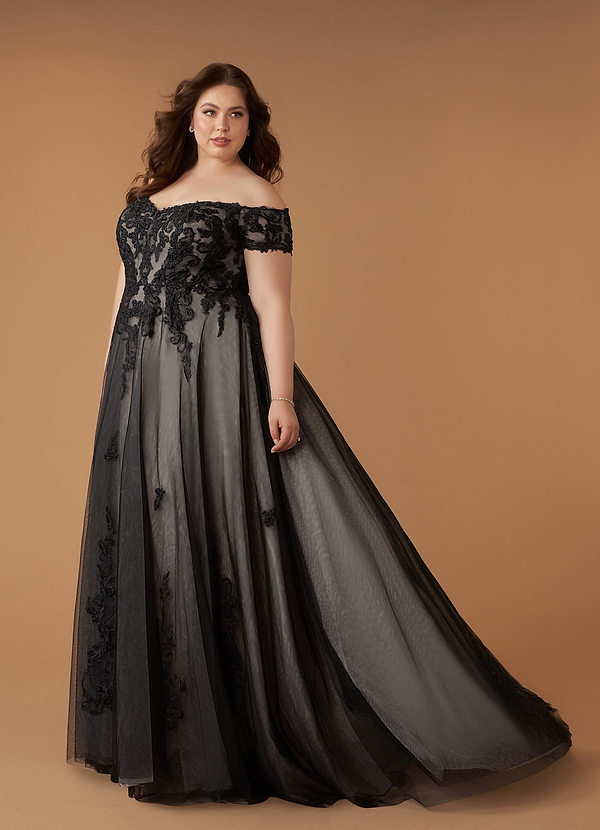
The right silhouette solves most fit problems before alterations begin. Each shape offers different levels of ease and structure.
A-Line: Best All-Around Choice
A-line styles fit through the bodice and flare from the waist down. They work for nearly every body shape and are the easiest to alter.
- Generous through the hip and thigh
- Easy to take in at the waist or bust
- Available in lace, tulle, chiffon, and satin
Many of the most popular styles in the plus size collection — including sequin tulle and lace chiffon options — are A-line cuts. Brides who prefer a softer look often pair these with an ivory wedding shade for a classic feel.
Ball Gown: Structured and Full
Ball gowns use boning in the bodice for built-in bust support. The full skirt adds drama and covers the hip and thigh area completely.
- Ideal for brides who want a defined waist
- Heavier skirt — consider your venue and mobility
- Strapless ball gowns benefit from a bustier underneath
Mermaid and Fit-and-Flare: Curve-Defining Styles
These silhouettes hug the body through the hips and thighs before flaring at the knee. Stretch satin and stretch crepe versions offer added ease.
- Best suited for brides comfortable with a body-skimming look
- Stretch fabrics reduce restriction through the thigh
- Alterations are more complex — allow extra time
Sheath: Sleek and Minimal
Sheath dresses skim the body without much structure or flare. They suit brides who prefer clean, modern lines.
- Less forgiving through the midsection
- Undergarment fit is critical with this silhouette
- Stretch crepe versions are the most comfortable option
Common Fit Challenges and How to Solve Them
| Fit Problem | Most Likely Cause | Recommended Fix |
| Gaping back closure | Bust-to-back measurement difference | Add corset or lace-up back |
| Tight through hips | Sized for bust only | Size up, alter the bodice |
| Sagging bust cups | Lack of internal structure | Add boning or built-in cups |
| Uneven hemline | Height or posture variation | Bustle or custom hemming |
| Slipping straps | Wrong strap length for shoulder slope | Shorten or cross straps |
Most of these problems are straightforward fixes. Plan for at least two fittings after your dress arrives.
Supportive Undergarments Make a Real Difference
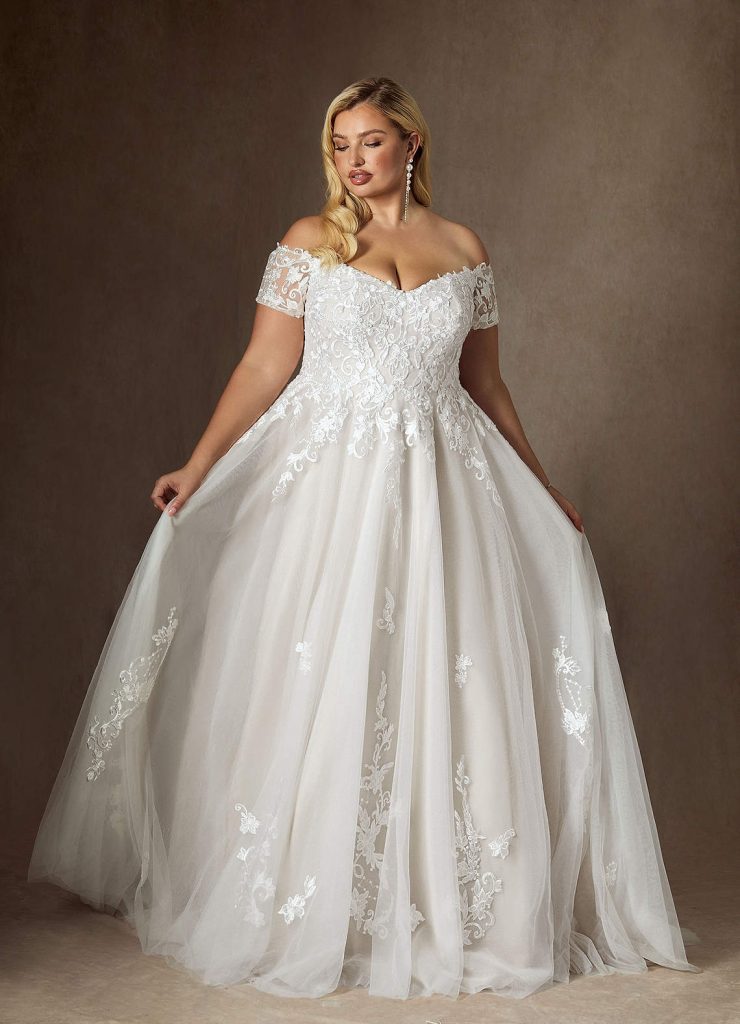
The right undergarments change how a dress sits, how it photographs, and how comfortable you are all day.
- Strapless bustier or bra — works under most necklines and lifts the bust
- High-waist shapewear — smooths without compressing too tightly
- Slip shorts — reduce friction under full or A-line skirts
- Adhesive cups — useful for low backs or plunging necklines
Always bring your planned undergarments to every fitting. Measuring without them gives inaccurate results.
Alteration Planning: What to Budget For
Every wedding dress needs some level of alteration. Knowing what to expect helps you plan time and budget accurately.
Most Common Alteration Points
- Hemming — almost all dresses need length adjusted
- Bodice taking-in — common when sizing up for hips
- Corset back addition — if back gap exists after sizing
- Strap shortening — especially on A-line and ball gown styles
- Bustle installation — for dresses with a train
- Side seam adjustments — for a more tailored waist fit
Start alterations 6–8 weeks before your wedding day. Made-to-order dresses need extra lead time before alterations can even begin.
A satin strapless wedding dress may need additional boning or a grip strip added to the interior hem to prevent slipping — ask your seamstress about this during the first fitting.
Pre-Wedding Comfort Checklist
Go through this list before finalizing your dress choice.
- Can you sit without the bodice pulling or gaping?
- Can you raise both arms fully without restriction?
- Does the dress stay in place when you walk across a room?
- Is there enough room through the hips for a full stride?
- Does your neckline stay put without constant adjusting?
- Are your undergarments compatible with the back closure?
- Can you hug someone without the dress shifting?
If you answer no to two or more of these, revisit the silhouette choice or request custom sizing.
Frequently Asked Questions
Should I order by bust, waist, or hip measurement?
Always order by your largest measurement, then alter smaller areas. If your hips are the widest point, size to your hips. Taking in a bodice is far simpler than letting out a hip seam.
What fabric is most comfortable for plus size brides?
Stretch satin and stretch crepe move with your body and reduce restriction through the thigh and hip. Chiffon is lightweight and forgiving. Both are great choices for all-day comfort.
Can I get custom sizing when ordering online?
Yes, Azazie offers custom sizing on select styles. This option reduces the need for major alterations and gives your measurements direct input into how the dress is made.
How many fittings should I plan for?
Most brides need two to three fittings — one when the dress arrives, one mid-alteration, and a final check about two weeks before the wedding. Build this timeline into your planning.
Is an A-line dress the safest choice for plus size brides?
A-line is the most versatile and forgiving silhouette for a wide range of body shapes. It is also the easiest to alter, which makes it a practical starting point when shopping online.
What neckline works best for a fuller bust?
Sweetheart and V-neck necklines offer the most support and visual balance for a fuller bust. Strapless styles work well when paired with a supportive bustier underneath.
How do I know if a dress will fit my hips before ordering?
Measure your hips at the fullest point and compare to the size chart. If your hip measurement puts you in a larger size than your bust, order to the hip and alter the bodice — not the other way around.