
Modern Wedding Dresses vs. Traditional: Which Style Fits Your Personality?
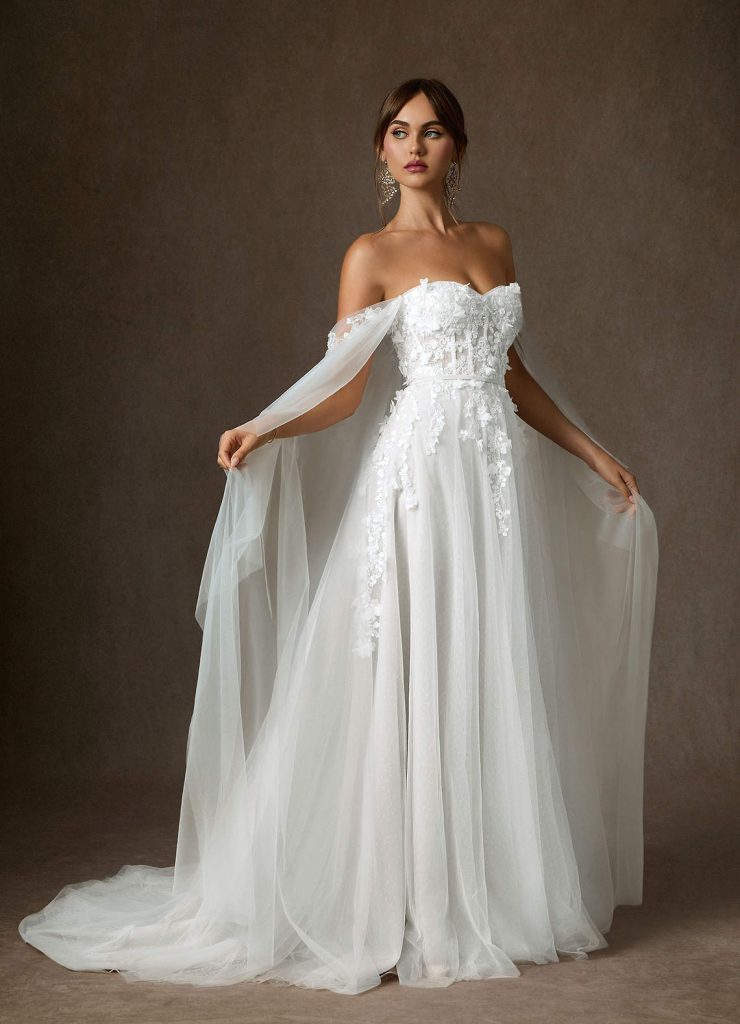
Modern wedding dresses emphasize clean lines, unexpected details, and contemporary silhouettes. Traditional gowns focus on romantic elements like lace, full skirts, and classic necklines.
Your personality, venue, and wedding vision determine which style suits you best. Modern brides often choose sleek crepe or structured satin, while traditional brides favor tulle ball gowns with delicate embellishments.
Defining Modern Wedding Dress Characteristics
https://cdn-1.azazie.com/upimg/s600/de/da/9ab1d442be8016ce7e16adf67c12deda.jpg.webp
Modern bridal design breaks conventional rules while maintaining sophisticated elegance.
Contemporary Silhouettes
Modern gowns feature streamlined shapes that prioritize architectural structure. Sheath dresses hug the body without excessive volume. Column styles create clean vertical lines. Two-piece sets separate crop tops from skirts for personalized combinations. These silhouettes work beautifully for intimate ceremonies and urban venues.
Innovative Fabric Choices
Stretch crepe provides comfort and movement in modern designs. Matte satin offers refined sheen without traditional gloss. Structured jacquard adds texture through woven patterns rather than surface embellishment. The wedding dresses collection includes numerous modern fabric options that photograph beautifully.
Unexpected Design Elements
Modern gowns incorporate asymmetrical necklines and high-low hemlines. Illusion panels create visual interest without heavy decoration. Minimalist back details replace elaborate trains. Sleeveless wedding dresses showcase shoulders while maintaining contemporary sophistication.
Modern style markers:
- Geometric cutouts or panels
- Mixed textures within one gown
- Statement sleeves on otherwise simple designs
- Non-traditional colors like champagne or blush
Understanding Traditional Wedding Gown Elements
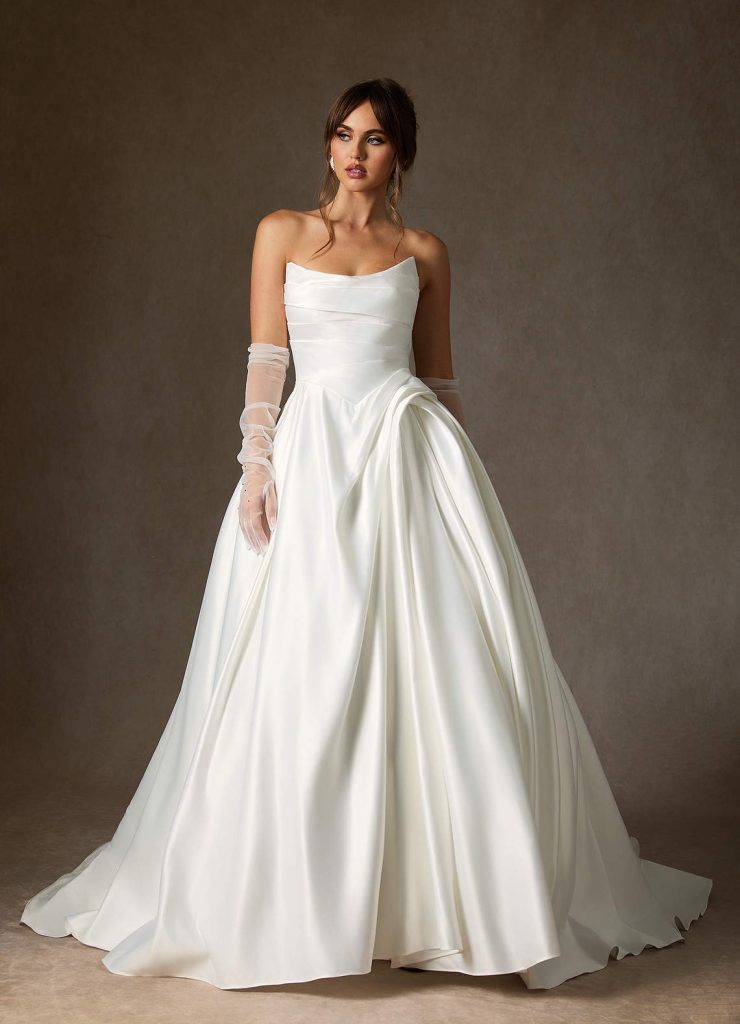
Traditional designs honor bridal heritage through time-tested elements.
Classic Silhouettes
Ball gowns create princess-like volume with fitted bodices and full skirts. A-line dresses provide universally flattering shapes. Mermaid styles emphasize curves before flaring at the knee. These silhouettes suit formal venues and traditional ceremonies.
Romantic Fabric Applications
Lace overlays add delicate texture to traditional gowns. Tulle creates soft, ethereal layers. Satin provides luxurious weight and traditional bridal sheen. A satin strapless wedding dress exemplifies classic bridal elegance.
Timeless Embellishments
Traditional dresses feature beading along bodices and hems. Pearl accents add subtle dimension. Floral appliques create romantic focal points. These details enhance without overwhelming the overall design.
| Design Element | Modern Approach | Traditional Approach |
| Neckline | Asymmetric, high-neck, square | Sweetheart, V-neck, off-shoulder |
| Sleeves | Statement puff, cape, long fitted | Cap sleeve, three-quarter lace |
| Skirt | Slim, high-low, structured | Full tulle, layered, cathedral train |
| Back Detail | Illusion panel, geometric cutout | Covered buttons, lace keyhole |
| Color | Champagne, blush, grey | Diamond white, ivory, cream |
Silhouette Selection by Body Type and Style
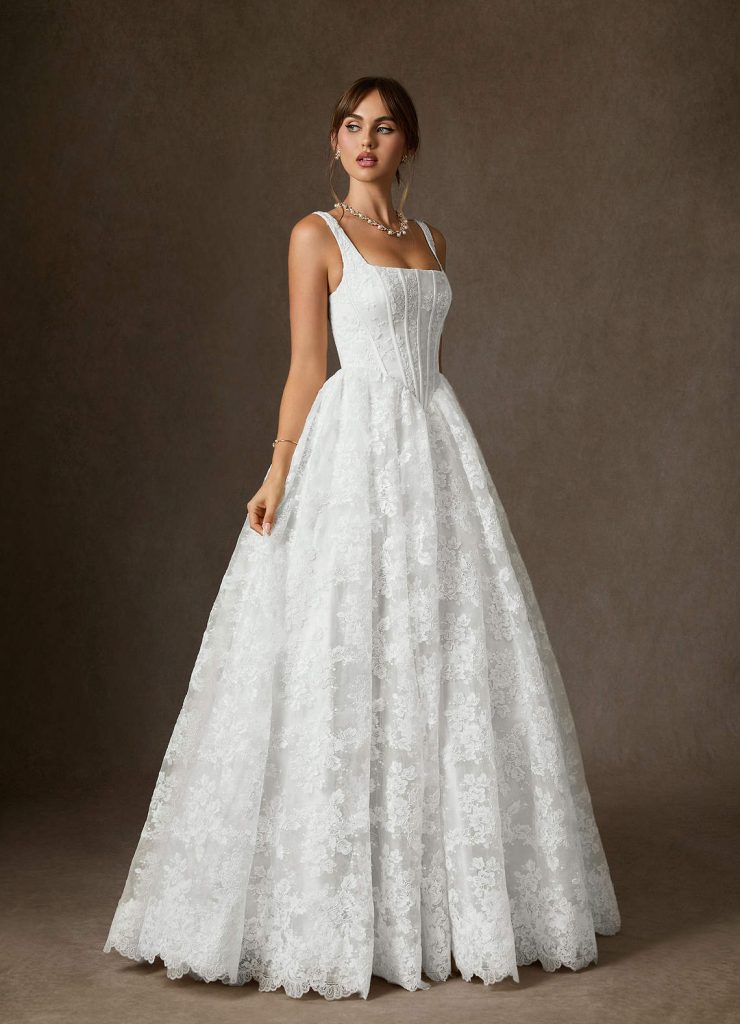
Both modern and traditional options flatter various body types when properly matched.
Modern Silhouettes for Different Frames
Sheath dresses elongate petite brides through unbroken vertical lines. Column gowns suit athletic builds by creating feminine curves. Fit-and-flare styles balance proportions for pear-shaped figures. Spaghetti strap wedding dress designs work across multiple body types in modern styling.
Traditional Shapes for Classic Fit
Ball gowns suit hourglass figures by emphasizing waists. A-line dresses provide comfort for apple-shaped bodies. Mermaid styles showcase curves on rectangular frames. Traditional silhouettes offer proven flattery through decades of bridal fashion.
Hybrid Options
Some gowns blend modern structure with traditional romance. A sleek bodice might transition into a tulle skirt. Clean lines could feature delicate lace sleeves. These combinations suit brides who appreciate both aesthetics.
Fabric Guidance for Modern vs Traditional Looks
Fabric choice significantly impacts your dress category and comfort level.
Modern Fabric Selections
Stretch crepe moves naturally through dancing and photographs. Structured mikado holds architectural shapes without boning. Scuba crepe provides weight and smooth lines. Modern fabrics prioritize comfort alongside visual impact. They resist wrinkles better than traditional materials.
Traditional Fabric Options
Tulle creates soft, romantic layers in ball gowns. Chantilly lace adds delicate texture. Silk taffeta provides body and subtle rustle. A champagne wedding dress in traditional lace offers timeless elegance. These fabrics require careful handling but photograph beautifully.
Climate Considerations
Hot weather brides: Choose lightweight crepe or chiffon in either style Cold weather brides: Select heavier satin or add sleeves Indoor venues: Any fabric works well Outdoor settings: Avoid delicate lace that snags easily
Styling and Accessory Differences
Accessories complete your modern or traditional vision.
Modern Styling Approach
Minimal jewelry lets dress architecture shine. Statement earrings provide single focal points. Sleek updos or loose waves suit modern aesthetics. Geometric bouquets with unexpected flowers enhance contemporary looks. Shoes might feature bold colors or unique textures.
Traditional Styling Elements
Pearl jewelry honors bridal heritage. Romantic updos with soft curls frame faces beautifully. Classic bouquets feature roses and peonies. Veils add traditional ceremony elements. Cathedral-length veils suit ball gowns perfectly.
Hair and Makeup Coordination
Modern makeup: Defined brows, subtle contouring, neutral or bold lips Traditional makeup: Soft romantic eyes, pink tones, natural enhancement Modern hair: Sleek low buns, textured ponytails, side parts Traditional hair: Curled updos, braided details, center parts
Personality Indicators for Style Selection
Your daily style preferences predict bridal dress comfort.
Modern Bride Personality
You favor clean-lined clothing in everyday life. Minimalist jewelry appeals more than ornate pieces. Contemporary home decor reflects your aesthetic. You appreciate fashion-forward trends. Career-focused brides often lean modern in bridal choices.
Traditional Bride Personality
You collect romantic, feminine clothing pieces. Vintage elements appear in your home. Classic jewelry suits your taste better than trendy items. You value heritage and family traditions. The timeless approach feels more authentic to your personality.
Decision-Making Questions
- Do you pin modern fashion editorials or classic bridal portraits?
- Does your home feature contemporary art or traditional decor?
- Do you prefer structured handbags or soft romantic styles?
- Are you drawn to geometric patterns or floral prints?
Your honest answers reveal natural style preferences that guide dress selection.
Budget Considerations Across Both Styles
Both modern and traditional gowns span various price ranges.
Cost Factors in Modern Dresses
Simple construction can reduce production costs. Minimal embellishment lowers material expenses. However, architectural shaping requires expert pattern-making. Quality modern fabrics command fair pricing. Azazie offers budget-friendly modern options through made-to-order production.
Traditional Dress Pricing
Hand-applied lace increases labor costs. Extensive beading adds material expenses. Full tulle skirts require significant fabric. Traditional construction often needs more time. Both categories offer great value when quality matches design.
Getting More for Your Budget
Made-to-order dresses provide custom fit without alteration costs. Sizes 0–30 accommodate diverse bodies from initial construction. This approach reduces waste while ensuring proper fit. Focus budget on dress rather than extensive alterations.
Making Your Final Style Decision
Choose based on authentic personal preference rather than trends.
Trust Your Initial Reaction
Your first impression of dress styles reveals genuine preferences. If you consistently gravitate toward one aesthetic, trust that instinct. Don’t let others pressure you toward choices that feel uncomfortable.
Consider Long-Term Satisfaction
Review wedding photos you’ve admired over the years. Which style appears in your saved inspiration? Your long-term taste indicators predict lasting satisfaction with your choice.
Try Both Categories
Schedule appointments to try modern and traditional gowns. Physical experience often clarifies mental uncertainty. You’ll know which style feels authentically you when wearing it.
Frequently Asked Questions
Can I mix modern and traditional elements in one dress?
Yes, hybrid gowns successfully blend both aesthetics. A modern silhouette might feature traditional lace sleeves. A classic ball gown could include contemporary geometric details. Many current designs intentionally combine elements from both categories. This approach suits brides who appreciate aspects of each style.
Do modern wedding dresses photograph as well as traditional gowns?
Absolutely—modern dresses photograph beautifully with proper styling. Clean lines create striking images in contemporary settings. Architectural details provide visual interest without embellishment. The key lies in matching your dress style to venue aesthetic and photographer approach. Both categories produce stunning wedding photographs.
Which style works better for second weddings?
Personal preference matters more than wedding number. Modern styles appeal to brides seeking departure from traditional first weddings. However, if you love classic ball gowns, your second wedding welcomes that choice. Consider venue formality and celebration size rather than following supposed rules about appropriate styles.
Are traditional wedding dresses more formal than modern styles?
Not necessarily—formality depends on fabric, construction, and styling. A sleek modern gown in luxurious silk appears highly formal. A simple traditional A-line in cotton might read casual. Both categories span formality levels from casual to black-tie. Judge formality by overall presentation rather than style category.
How do I know which style fits my personality better?
Examine your everyday wardrobe and home decor choices. Brides who favor structured clothing and minimal jewelry typically prefer modern gowns. Those who collect romantic pieces and appreciate ornate details often choose traditional styles. Your existing aesthetic preferences predict bridal dress comfort level accurately.
Can modern dresses work for church weddings?
Yes, when chosen with appropriate coverage and formality. Modern gowns with sleeves or higher necklines suit religious venues beautifully. Avoid extremely minimalist or revealing modern styles for traditional ceremony spaces. Many modern designs offer elegant sophistication that respects church settings perfectly.
Do traditional dresses require more alterations than modern styles?
Not always—alteration needs depend on fit rather than style category. Complex traditional construction might need specialized seamstresses. However, modern architectural shaping also requires expert alterations. Made-to-order dresses in either category reduce alteration needs significantly through custom measurements from initial construction.
Conclusion
Modern and traditional wedding dresses each offer distinct beauty and advantages. Modern gowns provide contemporary sophistication through clean lines and innovative details. Traditional dresses honor bridal heritage with romantic elements and classic silhouettes.
Your authentic personality, venue choice, and styling preferences guide you toward the category that feels genuinely you. Trust your instincts and choose the dress that makes you feel confident and beautiful throughout your celebration.