
How Much Should I Budget for a Wedding Dress?
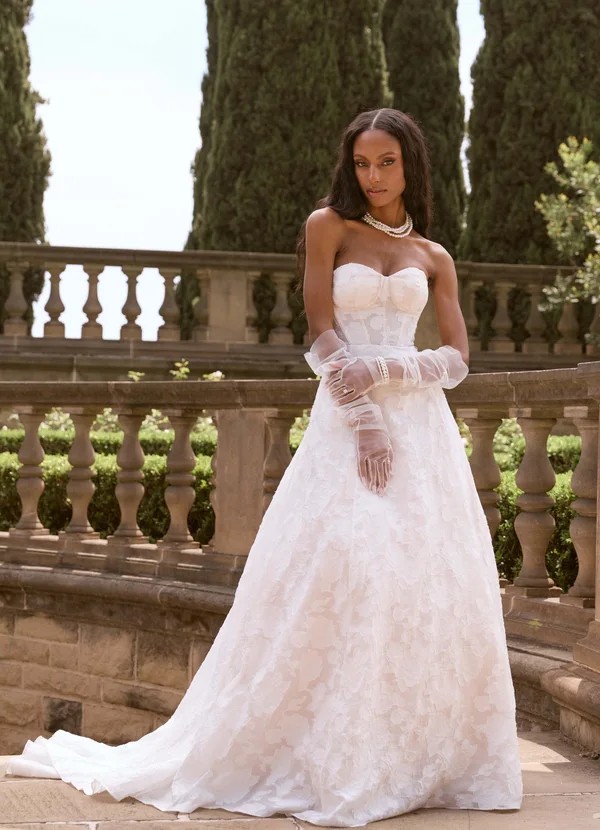
You can build a smart wedding dress budget without quoting a single price.Use percentages, timing, and scope to stay in control from try-on to final fitting.This guide gives you a flexible framework you can adapt to any brand or boutique.You’ll see percentage ranges, planning tables, and checklists that remove guesswork and surprise fees.
Budget for your total look, not just the gown.A practical split is: Dress 60–75%, Alterations 10–20%, Accessories 10–15%, and Care/Preservation 5–10%.
Shift the ranges based on your priorities, season, and customization.Lock shoes and undergarments early so alteration costs and timelines stay predictable.
If you want day-to-night changes, reserve part of the dress share for detachable sleeves, an overskirt, or a veil upgrade.
Budget Map: Core Categories and Percentages
| Category | What’s Included | Baseline % | When to Shift Up/Down |
| Dress | The gown itself (standard or custom size) | 60–75% | Shift up for premium fabrics or couture details; down if you prefer a minimalist silhouette |
| Alterations | Hem, bodice shaping, straps/sleeves, bustle | 10–20% | Shift up for complex silhouettes or beaded lace; down for simple crepe or sheath styles |
| Accessories | Veil, topper/cape, jewelry, hair pieces, belt/bow, shoes, undergarments | 10–15% | Shift up for cathedral veils or fashion jewelry; down if you keep accessories minimal |
| Care & Preservation | Steaming, garment bag, post-wedding cleaning/preservation | 5–10% | Shift up for long trains and heavily embellished fabrics; down for minis or tea-length |
How to use this table.
Start with the baseline, then re-allocate within the same total as your choices evolve.
If your veil or cape is your statement piece, let Accessories borrow from Dress without increasing the total.
Budget Styles You Can Copy (Pick One, Then Tweak)
| Budget Style | Dress | Alterations | Accessories | Care/Preserve | Who It Fits |
| Minimalist Modern | 65% | 12% | 13% | 10% | Clean crepe, square neckline, fingertip veil |
| Classic Romantic | 70% | 15% | 10% | 5% | A-line with lace overlay, standard veil |
| Statement Veil | 60% | 12% | 23% | 5% | Simple gown + dramatic veil or cape |
| Modular Two-Looks | 62% | 16% | 17% | 5% | Overskirt or detachable sleeves for day-to-night |
| Precision Fit Focus | 58% | 22% | 15% | 5% | Mermaid/fit-and-flare with corsetry and exact tailoring |
Tip: “Modular Two-Looks” is efficient.
It gives you ceremony drama and a reception switch without budgeting a second dress.
What Drives Dress Budget Up or Down (Without Prices)
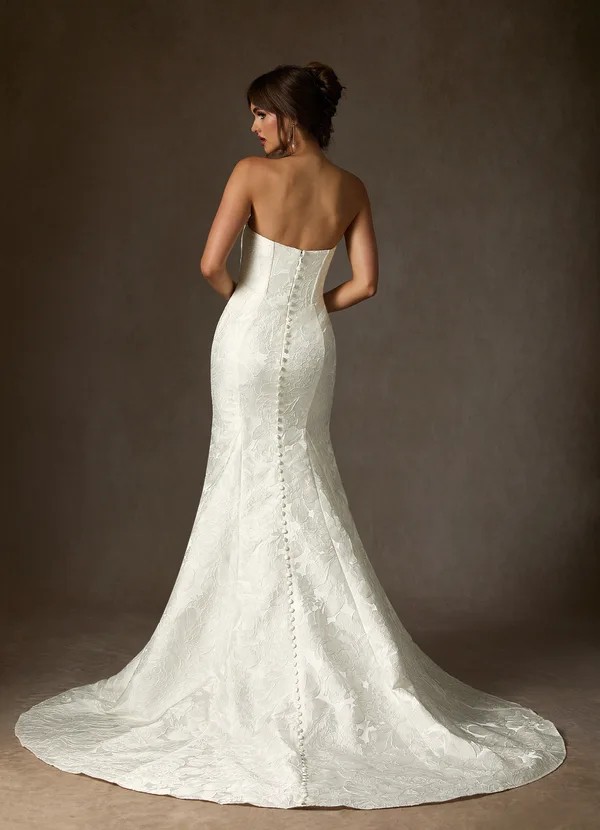
- Fabric & construction complexity
- Satin or mikado with sculptural seams raises the dress share.
- Chiffon and georgette keep it lighter unless layered or hand-finished.
- Silhouette difficulty
- Mermaid/fit-and-flare needs precision shaping through hips and knees.
- A-line and sheath are generally friendlier on alterations and time.
- Handwork & embellishment
- Lace motif matching, 3D florals, pearls, or beading add labor hours.
- Decorative buttons and long bow streamers add finishing steps.
- Customization scope
- New neckline, sleeve set-in, extended train, or corset conversion increases time.
- Detachable pieces are high-impact but still need secure, comfortable attachment.
- Season & schedules
- Spring and fall bring higher demand for slots.
- Rush paths compress schedules and shift more weight to alterations and logistics.
Alterations: What to Expect and How to Budget
Most brides need 2–3 fittings for a polished fit.
Your split depends on silhouette, fabric, and add-ons like bustles or sleeves.
Common alteration items
- Hem calibration with your actual shoe height.
- Bodice shaping at bust, waist, and side seams.
- Strap or sleeve length; sleeve comfort and mobility.
- Bustle engineering for trains (American/French or custom points).
- Select lining tweaks for comfort and coverage.
Planning table: alteration complexity
| Complexity | Typical Reasons | Budget Signal |
| Low | Sheath or soft A-line in crepe or chiffon; standard hem and straps | Keep near the lower end of alteration % |
| Medium | Lace overlay, standard bustle, mild bodice work | Keep in the middle of the range |
| High | Mermaid contouring, multiple layers or heavy beading, sleeve redesign | Favor the upper end of alteration % |
Control the variable: Lock shoes and undergarments before your first fitting.
Changes after pinning often double the work.
Accessories: Design a Look That Fits Your Numbers
Think of accessories as your style lever.
They can shape mood and photos without inflating the gown share.
High-impact accessories to plan for
- Veil choice: fingertip vs. cathedral; lace edge vs. clean cut.
- Topper or cape: coverage at the aisle, switch-off at reception.
- Bows and belts: define waist or dramatize the back.
- Jewelry & hair: pearls, headbands, pins; keep cohesive with neckline.
- Shoes & undergarments: stability and comfort affect the alteration path.
Accessory allocation ideas
| Focus | Where to Add | What You Gain |
| Cinematic aisle moment | Veil length and edging | Scale in photos with minimal gown changes |
| Modern minimal polish | Clean headband, covered buttons | Editorial clarity without heavy embellishment |
| Two-look strategy | Detachable sleeves or overskirt | Ceremony drama and reception mobility |
| Texture story | Lace topper or gloves | Romance without permanent redesign |
Timeline & Cash-Flow Plan (No Prices, Just Milestones)
- 8–10+ months out
- Shortlist silhouettes and fabrics; test movement.
- Reserve try-on appointments and map your budget style split.
- 6–9 months out
- Order your gown (standard or custom size).
- Pencil your alteration window and back-up dates.
- 8–10 weeks before
- First fitting: global fit check; pin bodice and hem.
- Confirm bustle plan and sleeve/strap choices.
- 4–6 weeks before
- Second fitting: refine shaping; verify hem with shoes; practice bustle.
- Align accessories and undergarments with the final fit.
- 1–2 weeks before
- Final fitting: comfort test, walk stairs, sit, dance.
- Steaming and storage plan; confirm pick-up.
- After the wedding
- Cleaning and preservation if desired.
- Store in a breathable garment bag or box per instructions.
Buffer rule: Finish at least 2–4 weeks before the date for calm touch-ups.
Sample Budget Scenarios (Percentage-Only Walkthroughs)
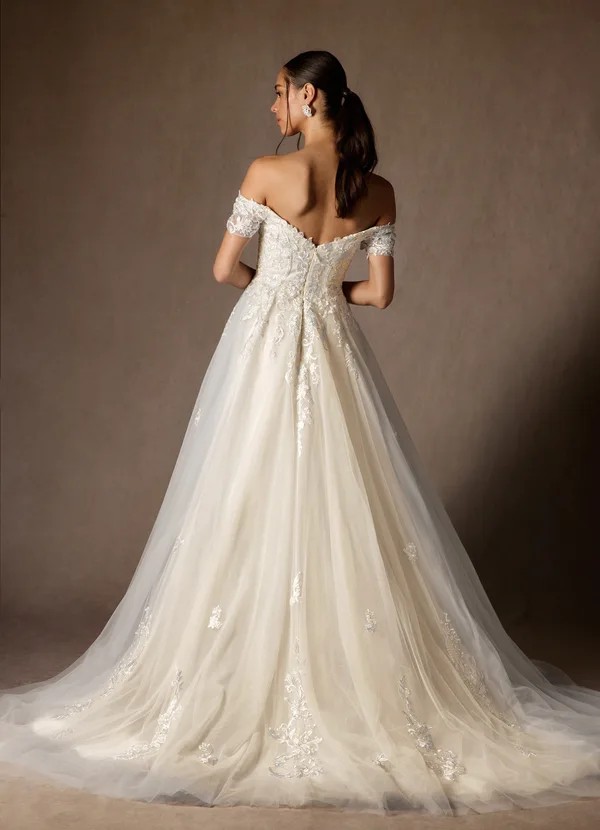
Scenario 1 — Garden, late spring, soft A-line
- Dress 68%: chiffon over crepe lining; lace appliqué bodice.
- Alterations 14%: hem, bodice nip, light bustle; flutter sleeves adjusted.
- Accessories 12%: fingertip veil, pearl headband, simple earrings.
- Care 6%: steaming and breathable storage.
Why it works.
Airy fabrics keep you cool while lace adds texture and photos read romantic.
Alterations stay moderate thanks to a forgiving silhouette.
Scenario 2 — Evening ballroom, mermaid with corsetry
- Dress 58%: structured satin or mikado; visible seaming for sculpture.
- Alterations 22%: contouring through hips and knees; structured bustle; sleeve comfort.
- Accessories 15%: cathedral veil, statement earrings, gloves.
- Care 5%: section-by-section steaming, storage plan.
Why it works.
You invest more in precision tailoring so the lines sit perfectly in candlelight.
Accessories lean formal to match the space.
Scenario 3 — City hall to rooftop dinner, modern minimal
- Dress 65%: clean crepe column; square neckline.
- Alterations 12%: hem and bodice shaping; optional slit added.
- Accessories 18%: bow-back veil, headband, architectural earrings.
- Care 5%: light steam and garment bag.
Why it works.
A simple base gown lets accessories carry the fashion moment from day to night.
Alterations remain focused and efficient.
Scenario 4 — Modular day-to-night with overskirt
- Dress 62%: fitted base gown suitable for dancing.
- Alterations 16%: fine-tuning fit; bustle for base; overskirt attachment check.
- Accessories 17%: overskirt for ceremony, minimalist jewelry, fingertip veil.
- Care 5%: steaming for both pieces; clear labeling for the switch.
Why it works.
You achieve two distinct looks inside one coordinated budget.
Time and labor go to secure, comfortable fastenings.
Venue & Season: Where Your Money Works Hardest
| Setting | Spend Emphasis | Reason |
| Beach / Garden (warm) | Breathable fabrics and smart lining | Comfort first; alterations stay simpler |
| Winery / Barn | Texture story (lace/tulle) and easy bustle | Romance with practical movement |
| Cathedral / Ballroom | Structure, train, veil length | Scale and presence in wide spaces |
| City Hall / Loft | Tailoring and clean accessories | Editorial lines and streamlined changes |
If outdoor: keep the hem just grazing the ground.
This saves alteration rework and photo retouching time.
Save-Smart Moves (Without Cutting Quality)
- Choose a cooperative base fabric.
Crepe and standard satins tailor predictably and reduce refits. - Prioritize one focal point.
Channel your statement into either veil, sleeves, or train—not all three. - Batch decisions early.
Approve neckline, sleeves, and train at the same time to avoid re-work. - Go modular instead of a second dress.
An overskirt, detachable sleeves, or a topper gives you two looks efficiently. - Lock shoes and undergarments.
Every change after pinning echoes through the alteration plan.
Risk Control Checklist
- Hold a timeline buffer of at least two weeks.
- Take photos in two lighting conditions at fittings.
- Practice the bustle and record a short how-to video.
- Carry a mini kit on the day: fashion tape, safety pins, lint brush.
- Assign one friend as “fit captain.”
They’ll bring shoes and undergarments to fittings and learn the bustle.
After the Wedding: Care & Preservation Split
| Path | What It Involves | Budget Signal |
| Clean & Store | Professional cleaning, breathable bag or box | Lower end of care % |
| Clean & Preserve | Specialty cleaning and preservation materials | Upper end of care % |
| Wear Again / Restyle | Hem or dye later; keep fabric notes | Keep a small reserve for a future tailor visit |
Keep your care plan aligned with fabric and embellishment.
Heavier trains, lace motifs, and 3D florals require gentler handling.
One-Page Budget Planner (Print & Fill)
| Step | Action |
| Define your budget style | Minimalist, Classic, Statement Veil, Modular, Precision Fit |
| Allocate baseline % | Dress __% / Alterations __% / Accessories __% / Care __% |
| Lock shoe height & undergarments | Date: __ / Brand/Type: __ |
| Book fittings | F1: __ / F2: __ / Final: __ |
| Choose focal point | Veil / Sleeves / Train / Bow / Buttons |
| List must-haves | 1) __ 2) __ 3) __ |
| Plan post-wedding care | Clean & Store / Clean & Preserve / Restyle |
Frequently Asked Questions
What’s a realistic split if I want a dramatic veil?
Lower your dress share slightly and move those points into accessories.
Keep alterations steady by avoiding heavy redesigns late in the process.
How do I keep alteration spending predictable?
Decide on shoes and undergarments before fitting one.
Choose a cooperative fabric and a silhouette that doesn’t fight your movement.
Will a custom size erase alteration needs?
It helps, but most gowns still need fine-tuning on-body.
Plan at least two fittings for comfort, symmetry, and bustle testing.
I’m between two silhouettes—does that change the split?
Mermaid and fit-and-flare usually nudge more into alterations.
A-line and sheath allow a larger accessory moment at the same total.
How far in advance should I lock my plan?
Aim to finalize your budget split when you order the gown.
Hold a small reserve for last-minute tweaks so you stay stress-free.
Do detachable elements complicate the budget?
They are efficient if planned from the start.
You’ll shift a few points from dress or alterations into accessories for hardware and finishing.
What if my venue changes late?
Re-balance toward comfort if moving outdoors, or toward structure if moving to a grand indoor space.
Keep the total constant—only shuffle the category shares.
Final Takeaway
Budgeting for a wedding dress is easier when you think in percentages and priorities.Start with Dress 60–75%, Alterations 10–20%, Accessories 10–15%, and Care 5–10%, then move points to match your silhouette, venue, and style.
Decide early, keep one clear focal point, and lock shoes and undergarments before your first fitting.With a buffer of two to four weeks, your plan stays calm, your gown fits beautifully, and every detail of your look feels intentional—without ever needing to quote a price.