
How Do I Know If My Wedding Dress Is Too Big or Too Small?

Fit is the foundation of confidence.When your wedding gown is the right size, you breathe easier and move naturally.This guide gives you simple, repeatable tests to diagnose whether your wedding
dress is too big or too small.You’ll also get quick fixes, alteration timelines, and day-of backup strategies to keep you comfortable and secure. A dress is too big if it slides, gaps, or needs constant pulling up. It’s too small if you can’t take a full breath, sit comfortably, or the zipper strains.
Do five checks: breath, sit, hug, arms-up, and walk-and-spin. Look at neckline gaping, strap slip, wrinkled waist, puckered zipper, and hem puddling.Most issues are fixable with 2–3 fittings over 6–10 weeks. Lock shoes and undergarments before your first fitting, and practice your bustle with a helper.
Start Here: The Five Movement Checks
Run these in your home or at the boutique.
Film 10-second videos in daylight and warm indoor light for honest feedback.
- Breath Test
- Take a deep inhale and hold for two seconds.
- If ribs pinch or you brace to breathe, it’s too small in the bodice or waist.
- Sit Test
- Sit on a chair and cross your ankles, then stand.
- If seams dig, skirt locks, or zipper strains, it’s too small through hips/waist or the knee on mermaid styles.
- Hug Test
- Hug someone and reach slightly behind them.
- If straps pop, sleeves bite, or neckline jumps, the top is either too tight (digging) or too big (slipping).
- Arms-Up Test
- Raise both arms overhead like you’re cheering.
- If the bodice lifts off your chest or slides down after, it’s too big; if it bites at underarm/shoulder, it’s too small.
- Walk & Spin Test
- Take ten big steps and a slow turn.
- Snagging, twisting, or short steps signal the skirt is too tight; constant readjusting signals the dress is too big.
Visual Red Flags: Too Big vs Too Small

Use a full-length mirror and a friend’s phone camera.
Check the front, side, and back.
Signs Your Dress Is Too Big
- Neckline gaping: a visible gap between skin and edge when you lean forward or raise arms.
- Strap slip: straps slide off shoulders despite repeated tightening.
- Bodice drift: strapless top creeps down during a short walk.
- Wrinkled waist: horizontal ripples at the waist from excess fabric.
- Loose hip/seat: fabric pools at the back of the skirt.
- Back closure gap: zipper closes easily but you can grab extra fabric at the spine.
Signs Your Dress Is Too Small
- Shallow breath: you can’t inhale fully without bracing.
- Zipper strain: zipper waves, buckles, or resists closing even with help.
- Bulging seams: edges dig, creating spillover at bust, underarm, or hip.
- Restricted stride: you can’t take a natural step or climb three stairs.
- Neckline creep upward: bodice rides up and looks shorter because it’s searching for ease.
- Arm bite: sleeves cut into biceps or underarms when you toast or hug.
Quick Diagnosis Table
| Area | Looks Too Big | Looks Too Small | Likely Fix |
| Neckline | Gaps when leaning/raising arms | Cuts in; rides up under chin | Add darts/cups or take in sides vs. lower/reshape neckline |
| Straps/Sleeves | Slip off shoulders | Dig/limit reach | Shorten/add elastic vs. add micro-gusset/reshape armscye |
| Bodice | Slides down; wrinkles at waist | Can’t breathe; zipper strains | Take in side seams/boning vs. let out seams (if allowance) |
| Waist | Ripples; spins around | Pinches sitting | Taper in darts vs. release waist darts/side seams |
| Hips/Seat | Puddles/folds | Can’t sit; skirt twists | Taper center-back/side seams vs. let out hip seams |
| Mermaid Knee | Flare starts too low; looks limp | Knee lock; tiny steps | Raise flare point vs. add slit/godet/let out seams |
| Hem | Puddles in front | Too short; toes peek always | Shorten front; rebalance train vs. add facing/adjust shoes |
Neckline & Strap Fit: Minute-by-Minute Truths
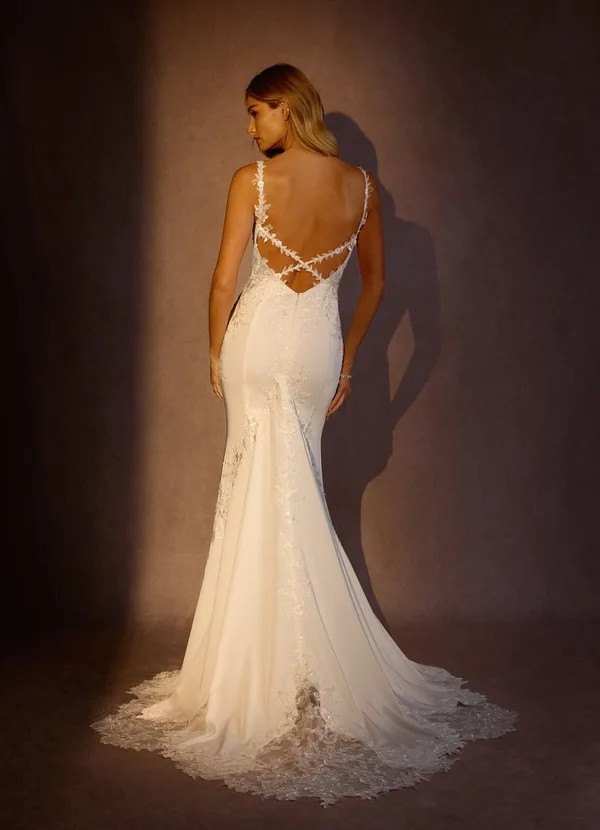
Two small rules decide all-day comfort at the top.
If you fix them, 80% of “fidgeting” disappears.
- Rule 1: No gap, no choke.
The edge should kiss the skin without digging when you breathe or toast. - Rule 2: Straps should “remember” you.
After a hug and arms-up test, they return to place without slipping or biting.
Fast fixes to ask about:
- Micro-darts at the neckline to remove 0.5–1 cm of gap.
- Sewn-in cups to lift and fill the bodice without a bulky bra band.
- Hidden elastic tunnels for off-shoulder sleeves to move without popping.
- Strap relocation inward by 0.5–1 cm for stability on sloped shoulders.
Undergarments Can Fake “Too Big” or “Too Small”
Choose your base layer before any pins go in.
Changing it later changes the fit.
- Longline strapless anchors strapless and off-shoulder gowns at the ribcage, not the bust.
Without it, tops can read “too big” because they slide—even if the bodice is fine. - U-plunge bodysuit or sewn-in cups stabilize deep V necklines.
Using the wrong bra can make the V look too tight or too open. - Bonded-edge thong/brief prevents lines under crepe/charmeuse.
Visible lines can trick you into thinking the dress is too tight. - Light high-waist shorts or an open-bust slip smooth without squeeze.
Over-compression makes a dress feel smaller than it is.
Fabric Behavior: Blame the Cloth (Sometimes)
Some fabrics exaggerate size issues.
Match your diagnosis to what the fiber is doing.
- Crepe (matte, forgiving): shows seams and panty edges; needs smooth underlayers.
Wrinkles at the waist often mean too big—not too tight. - Satin/Mikado (structured): resists wrinkles, but shine reveals strain; “shimmering waves” at the zipper mean too small.
- Chiffon/Georgette (airy): can look loose when lined lightly; add cups or modesty lining to remove “floaty gap.”
- Tulle/Organza (buoyant): volume can hide a slightly big skirt; check bodice fit first.
- Lace over lining: motif placement matters; tight motifs at armholes can cause bite even if size is correct.
Alterations Timeline (So Fixes Stay Calm)
Plan 2–3 fittings over 6–10 weeks.
Finish 2–4 weeks before your date for a buffer.
| Fitting | When | What to Decide | Typical Fixes |
| #1 | 8–10 weeks before | Shoes + undergarments locked | Take-in/let-out at bodice/waist/hips; strap position |
| #2 | 4–6 weeks before | Sleeve/elastic; hem length; bustle | Micro-darts, cup swaps, flare/ slit adjustments |
| Final | 1–2 weeks before | Comfort sign-off; steam plan | Last-millimeter tweaks; button alignment |
Golden rule: Never change shoes or undergarments after fitting #1.
That’s how “perfect” becomes “why is this too big/small again?”
If You’re Short on Time: Fast, Safe Adjustments
When the calendar is tight, prioritize security and mobility.
These quick changes offer big comfort without redesign.
For “too big”
- Tack the neckline/underarm with a tiny hidden stitch (baste) to test before permanent sewing.
- Add cups to fill and lift without altering seams.
- Shorten straps or add a small clear elastic gripper.
- Temporary waist nip with inside ribbon ties (removable).
For “too small”
- Let out seams where allowance exists (side seams, back seams).
- Add a modesty panel behind a zipper for comfort and coverage.
- Raise mermaid flare or add a discreet slit/godet for stride.
- Swap shapewear to lighter compression or different cut for instant ease.
At-Home Diagnostic Checklist (Print & Use)
- Final-height shoes and the exact undergarments on.
- Breath test passed without bracing.
- Sit, hug, arms-up, and stairs tests passed.
- Neckline kisses skin—no gap, no choke.
- Straps/sleeves stay put; no slip or bite.
- Zipper closes smoothly; no waves or strain.
- Front hem kisses the floor; no puddle, no toe peek.
- Walk-and-spin feels natural; skirt doesn’t twist.
- Bustle method tested; helper can do it quickly.
- 10-second videos reviewed in daylight and warm light.
If two boxes fail, book a fitting.
If four or more fail, consider a different size or silhouette.
Body Area Deep-Dive: What’s Really Going On?
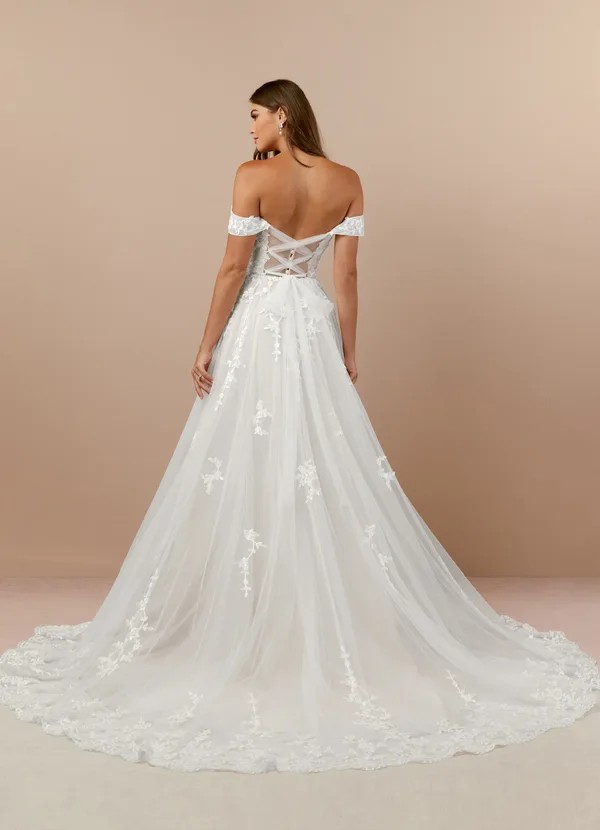
Bust & Neckline
- Too big: top slides or gaps; strapless needs tugging.
Fix: cups, darts, taking in side seams, longline support. - Too small: edge cuts in; “quad-boob” or compressed lace.
Fix: let out seams (if allowance), lower/reshape neckline, change cup style/size.
Waist
- Too big: dress spins; horizontal ripples.
Fix: pinch out at side seams or darts; add interior waist stay ribbon. - Too small: can’t sit; breath feels shallow.
Fix: release waist seams/darts; lighten shapewear; micro-ease 0.5–1 cm.
Hips & Seat
- Too big: puddling at back thigh/seat.
Fix: taper center-back/side seams. - Too small: skirt twists; visible pulling lines from side seams.
Fix: let out hip seams; add godet/slit for stride.
Mermaid Knee
- Too big: flare collapses; silhouette looks limp.
Fix: lower hem weight slightly or refine seam shape. - Too small: “mermaid shuffle,” tiny steps only.
Fix: raise flare point; add slit/godet; release knee seams.
Sleeves & Straps
- Too big: slip off; gape at armhole.
Fix: shorten, move inboard, add elastic tunnel. - Too small: cut into biceps; limited reach.
Fix: add micro-gusset; reshape armscye; lighten layer under arm.
Hem & Train: Where Comfort Meets Safety
- Too long in front → tripping and tension through your core to avoid stepping on it.
Fix: shorten so the front kisses the floor in final shoes. - Too short → constant toe peek and posture strain.
Fix: add a clean facing/band or adjust shoe height if viable. - Train without plan → fatigue by cocktail hour.
Fix: choose a bustle type you can manage, and practice twice with a helper.
Fabric + Lining + Inside Structure (The Comfort Trio)
- Lining: request a smooth, breathable lining to prevent heat and cling.
- Boning: enough to support, not bruise; ask for soft channeling.
- Horsehair braid at hem: use only where needed for shape.
Too much adds weight and changes how the dress “reads” as too big or too stiff.
Venue & Season Effects (Don’t Misread the Signals)
Heat, wind, and surfaces can trick your fit perception.
Adjust your diagnosis to the setting.
| Setting | Feels “Too Small” Because… | Feels “Too Big” Because… | What to Do |
| Summer heat | Swelling; extra compression | Slick sweat makes bodice slide | Lighter shapewear; underarm guards; micro-ease |
| Windy outdoors | Veil/sleeves pull and restrict | Off-shoulder lifts and shifts | Hidden veil pins; sleeve elastic |
| Grass/sand | Shorter stride reads as tight | Hem catches, feels sloppy | Hem kiss test; heel protectors; sweep train |
| Marble floors | Careful steps feel tight | Dress glides and shifts | Nonslip shoe pads; interior waist stay |
Photo Logic: The Camera Never Lies
Two lighting conditions tell the truth: window daylight and warm indoor light.
If a dress looks smooth in one and strained in the other, it’s usually fit + fabric interaction, not just size.
- Satin glare outdoors exaggerates tightness; balance with a plain veil and shoot later in the day.
- Matte crepe indoors can hide looseness; look for waist ripples and bodice drift on video.
Day-Of Backup Plan (Peace of Mind Kit)
- Fashion tape and nipple covers.
- Safety pins, mini sewing kit, clear elastic loop.
- Anti-chafe balm and blot papers.
- Microfiber cloth for makeup smudges.
- Heel pads and nonslip stickers.
- Bustle map printed + 30-second helper video link.
These tiny items turn minor fit surprises into non-events.
Assign a “fit captain” to carry the kit and manage the bustle.
hat If My Size Changes Close to the Wedding?
Bodies shift.
Plan for adaptability.
- Lock fittings as usual, but schedule your final fitting 1–2 weeks before the date.
- If you expect changes, ask for a corset back conversion or modesty panel early.
- Keep undergarments consistent; a different bra or shorts can change fit more than a half-inch in measurements.
- If in doubt, order to your largest measurement—it’s always easier to take in than to let out.
Fix Feasibility by Area (Know What’s Realistic)
| Area | Easy to Fix | Sometimes Fixable | Hard to Fix |
| Neckline gap | Darts, cups | Edge reshape | Major redesign |
| Strap slip | Shorten/move in | Add grippers | Very wide necklines |
| Bodice tight | Let out seams | Add modesty panel | No seam allowance |
| Waist tight | Release darts | Add ease 0.5–1 cm | Fabric shortage |
| Hip tight | Let out seams | Add godet | Full size up |
| Mermaid knee | Raise flare | Add slit/godet | Rebuild skirt |
| Hem long | Shorten | Rebalance train | Add length cleanly |
| Sleeve bite | Micro-gusset | Reshape armscye | Heavy beading |
Sample Notes to Take to Your Fitter
- “Neckline gaps when I raise arms; okay when still. Can we add darts or cups?”
- “Sleeves dig on hug; can we add hidden elastic or a tiny gusset?”
- “Mermaid knee restricts stairs; can we raise the flare 2–3 cm?”
- “Waist pinches when seated; request 0.5–1 cm ease at side seams.”
- “Front hem puddles; please shorten to a ‘kiss’ in final shoes.”
- “Please mark and label bustle points; we’ll practice once.”
Fast Recap: Too Big vs Too Small (at a glance)
- Too Big: sliding, gaping, strap slip, waist ripples, seat puddling, easy zipper with spare fabric to grab.
Fix: take in seams, add cups/darts, shorten/move straps, interior waist stay, hem rebalance. - Too Small: shallow breath, zipper strain, seam bite, restricted stride or sit, neckline riding up, sleeve pinch.
Fix: let out seams, add ease/panel, raise flare or slit, lighten shapewear, micro-gusset/elastic.
Timeline: 2–3 fittings over 6–10 weeks; finish 2–4 weeks pre-wedding.
Non-negotiable: lock shoes and undergarments before fitting #1.
Frequently Asked Questions
My strapless keeps sliding—too big or wrong bra?
Could be both.
Try a longline strapless or sewn-in cups first; if it still slides, you likely need the bodice taken in or darts added.
The zipper waves on satin—what does that mean?
That “ripple” is usually tension.
You’re likely a bit too small at the waist or bust; ask about letting out seams or adding a small modesty panel.
I can walk but can’t climb stairs—fit or design?
Mermaid knee is probably too tight or too low.
Raise the flare point, let out the knee area, or add a discrete slit/godet.
The neckline feels okay until I toast, then it bites.
Slightly too small at the underarm or strap junction.
Add a micro-gusset or hidden elastic tunnel to restore reach.
My hem keeps catching on grass—fit problem?
Likely too long in front for your surface.
Shorten to a kiss and consider heel protectors or an early sweep-train bustle.
Can I fix “too big” last minute?
Often yes with cups, darts, strap tweaks, and basting.
“Too small” is harder without seam allowance—ask about panels or easing.
How do I know when the fit is finally right?
You can breathe, sit, hug, raise arms, walk, and spin without adjusting anything.
The neckline stays put, the zipper lies flat, and your shoulders relax in photos.
Final Takeaway
Your wedding dress is too big if it slides and gaps, and too small if it strains and restricts.Use the five movement checks, the red-flag lists, and the diagnosis tables to pinpoint the issue quickly.
Most problems are solvable with the right undergarments and 2–3 smart fittings.Lock your shoes and base layers early, communicate clearly with your fitter, and practice your bustle so the evening stays effortless. When you can forget about the dress and focus on the moment, the fit is perfect—and so is your day.