
Effortless Elegance: Styling and Caring for Chiffon Wedding Dresses
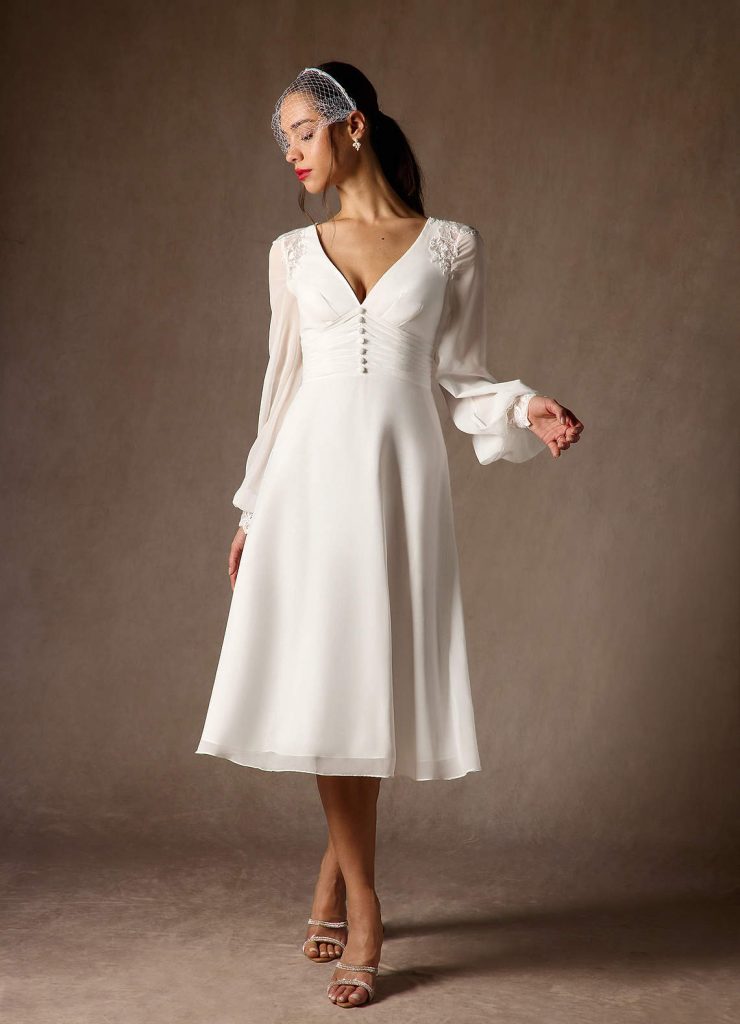
Chiffon wedding dresses are lightweight, airy, and naturally flattering across a wide range of silhouettes. The fabric moves beautifully in photos and stays comfortable through long wedding days. If you want a gown that feels effortless while still looking polished, chiffon is one of the most reliable choices in bridal fashion.
How Chiffon Fabric Actually Behaves
Drape and Structure
Chiffon is a sheer, loosely woven fabric with a soft, floating drape. It does not hold structure on its own; it needs lining, boning, or a structured underlayer to create shape. Here’s how different chiffon types behave in bridal styles:
| Chiffon Type | Drape & Weight | Best Silhouette Use |
| Polyester chiffon | Lightweight, consistent drape | A-line, flowy skirts, overlays |
| Silk chiffon | Softer, warmer, more fluid | Sheath overlays, sleeves, trains |
| Crinkle chiffon | Textured, slightly stiffer | Pleated skirts, boho styles |
| Double chiffon | Two layers, more opacity | Full skirts, modest coverage |
| Lace chiffon blend | Structured top, floaty skirt | A-line with lace bodice |
Multiple chiffon layers are commonly used in bridal skirts to add opacity and gentle volume. Each added layer softens the silhouette while keeping the overall weight low.
Comfort Throughout the Day
Chiffon is one of the most comfortable bridal fabrics for extended wear. Key points to know:
- Weight very lightweight; significantly less tiring than satin or lace-heavy gowns
- Breathability loose weave allows airflow; ideal for warm venues and outdoor settings
- Temperature stays cool in summer; may feel cool in air-conditioned winter venues
- Movement flows freely with walking and dancing; minimal restriction on the body
- Skin feel soft lining is essential; raw chiffon edges can feel scratchy without proper finishing
Brides planning summer, beach, or outdoor ceremonies consistently find chiffon one of the most practical choices for all-day comfort.
How Chiffon Photographs
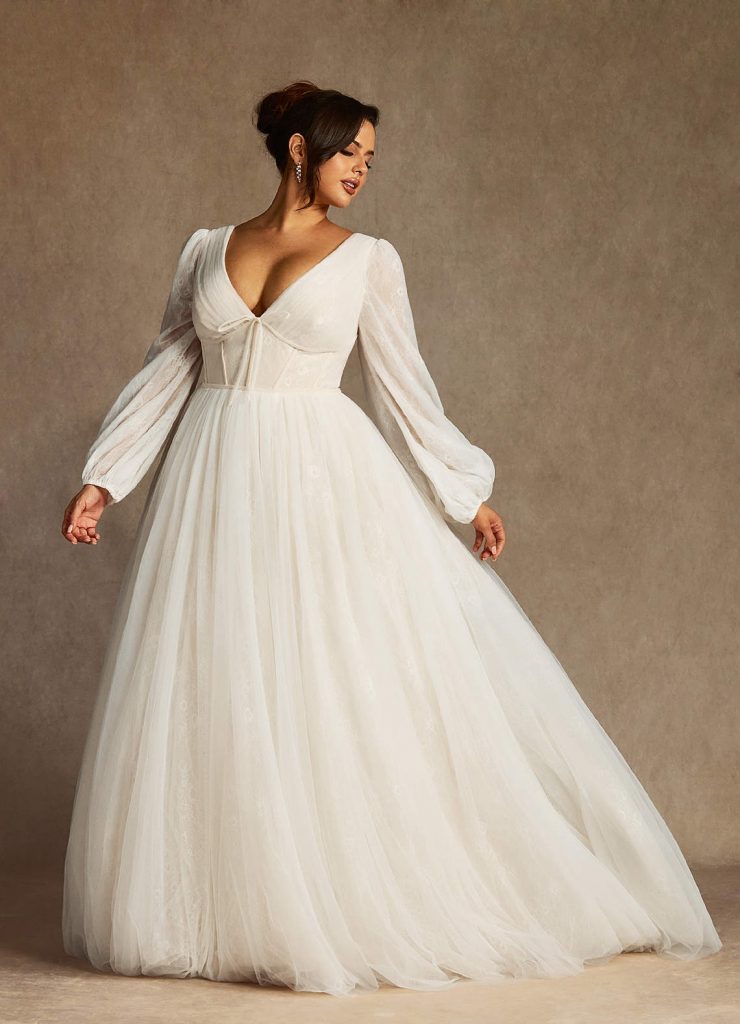
Chiffon behaves differently from satin or lace under various lighting conditions. Understanding this helps you and your photographer plan the best shots.
In natural daylight: Chiffon’s sheer layers diffuse light softly. The fabric glows without harsh reflection. Layered chiffon skirts create a gentle halo effect in bright outdoor light.
In flash photography: Chiffon does not reflect flash the way satin does. It photographs with a softer, more matte appearance. This makes it forgiving in bright or direct lighting conditions.
In low venue lighting: Multiple chiffon layers can look slightly flat in dim indoor settings. Adding sequin or lace detail on the bodice gives the dress visual interest when the skirt fabric fades into the background.
Motion shots: This is where chiffon excels. Walking, spinning, and veil-toss photos show the fabric’s movement at its best. A spaghetti strap wedding dress in chiffon creates especially elegant movement shots in open outdoor settings.
Tips for Photographing Chiffon
- Schedule golden hour or soft overcast outdoor shots to bring out chiffon’s natural glow
- Use motion shots deliberately the fabric’s drape captures movement better than any other bridal material
- Avoid very dark venue backdrops where light chiffon layers may lose definition
- Lace or sequin bodice detailing keeps the overall look visually rich in lower light
Chiffon vs. Other Bridal Fabrics
Brides often compare chiffon to tulle, satin, and crepe before deciding. Here’s a practical side-by-side:
| Factor | Chiffon | Tulle | Satin | Crepe |
| Weight | Very light | Light to medium | Medium to heavy | Medium |
| Drape | Soft, fluid | Stiff, voluminous | Structured, smooth | Soft, controlled |
| Breathability | High | Medium | Low | Medium |
| Best season | Spring, summer | Any | Fall, winter | Any |
| Photo behavior | Soft glow, matte | Catches light well | Strong sheen | Subtle matte finish |
| Best silhouette | A-line, boho, sheath | Ball gown | Ball gown, A-line | Mermaid, sheath |
Chiffon is the most versatile fabric for warm-weather and destination weddings. It is also the most forgiving for brides who want a relaxed, effortless look without sacrificing elegance.
Choosing Quality Chiffon: What to Check
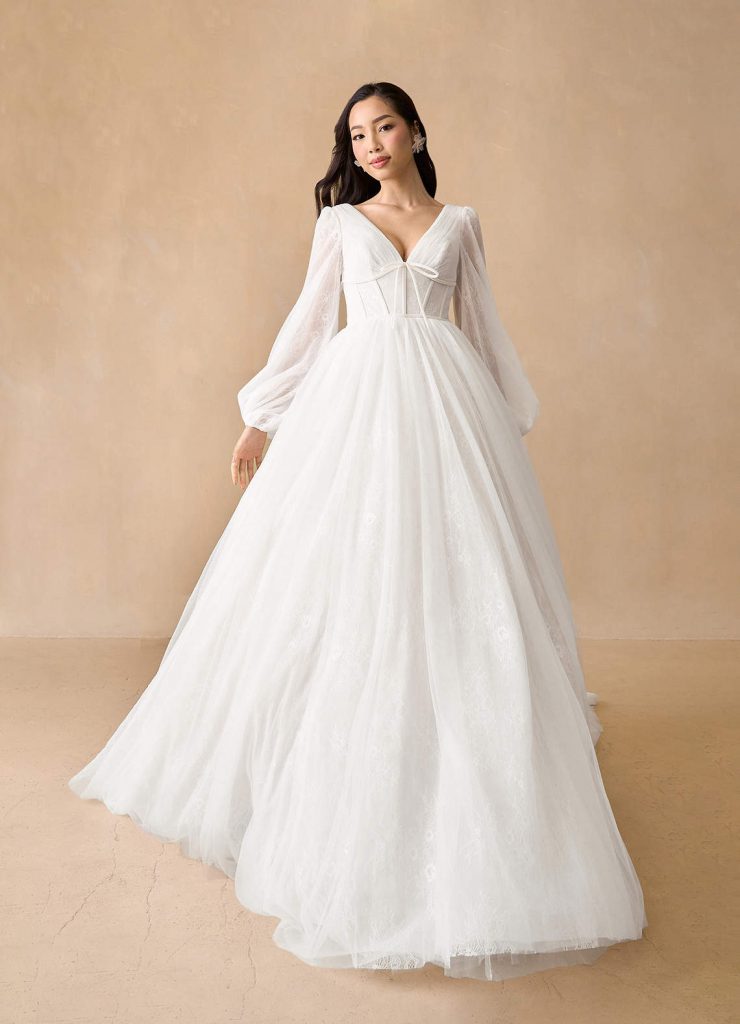
Not all chiffon is constructed equally. These indicators help separate well-made gowns from lower-quality versions before you buy.
The 5-Point Quality Checklist
- Layer count quality chiffon gowns use multiple skirt layers for opacity and movement; single-layer skirts look thin and cheap
- Lining quality a full lining through the bodice and skirt is essential; unlined chiffon is uncomfortable and shows through
- Seam finish rolled hems or French seams on chiffon edges prevent fraying; raw edges indicate poor construction
- Bodice structure boning or interfacing in the bodice keeps the shape without relying on the chiffon itself
- Fabric consistency uniform weave across all panels without visible variation in sheerness or texture
How to Assess Chiffon Quality Online
- Check that product descriptions mention lining and layer count
- Look at customer-submitted photos real lighting reveals sheerness and construction better than studio shots
- Zoom into bodice seams in product images; clean, even stitching at chiffon joins indicates careful workmanship
- Reviews mentioning comfort and movement are a reliable signal of fabric quality
Best Chiffon Styles for Different Venues
Chiffon suits a wide range of settings, but some venue types bring out the fabric’s best qualities.
Garden and Outdoor Weddings
Chiffon is the top fabric choice for outdoor ceremonies. The lightweight layers move naturally in an open-air setting and stay comfortable in warm temperatures. An ivory wedding gown in chiffon photographs softly against natural greenery and open-sky backdrops.
Beach and Destination Weddings
The fabric’s low weight and breathability make it ideal for coastal settings. Simpler silhouettes with minimal embellishment work best; a clean A-line chiffon gown handles sea breeze and humidity better than heavy satin or structured lace.
Boho and Rustic Venues
Crinkle chiffon and lace-chiffon blends suit relaxed, nature-inspired venues naturally. A boho champagne wedding dress in chiffon fits barn and vineyard settings without looking overdressed or too formal.
Formal and Ballroom Settings
Double chiffon layers with a structured lace or sequin bodice can work in formal venues. Choosing a diamond white dress with embellished chiffon keeps the look elevated and reception-ready. A boned bodice with a flowing chiffon skirt balances formality and comfort for long event evenings.
Caring for Chiffon Wedding Dresses
Chiffon is delicate and requires careful handling before and after the wedding.
Before the wedding:
- Store hanging in a breathable garment bag never folded, as chiffon creases are difficult to remove
- Steam gently to release wrinkles; do not iron directly on chiffon without a pressing cloth
- Keep away from sharp jewelry or accessories that can snag the sheer weave
On the wedding day:
- Assign a bridesmaid to manage the train and skirt layers during transitions
- Apply perfume and hairspray before dressing product spray damages chiffon weave over time
- Blot any liquid spills immediately with a dry cloth; never rub chiffon fabric
After the wedding:
- Professional dry cleaning is recommended, particularly for multi-layer chiffon skirts
- Store in acid-free tissue paper inside a breathable preservation box
- Avoid plastic garment bags they trap moisture and cause yellowing in synthetic chiffon over time
For general fabric care guidance, the Dry Cleaning and Laundry Institute provides practical advice on caring for delicate wedding garments.
Frequently Asked Questions
Is chiffon a good fabric for a summer wedding?
Yes, chiffon is one of the best summer bridal fabrics available. Its lightweight weave allows airflow and prevents overheating in warm outdoor or beach settings. Multiple layers provide coverage without adding significant weight or warmth.
Does chiffon show body shape?
Chiffon is softer and more forgiving than satin or crepe. Layered chiffon skirts float away from the body rather than clinging. A structured lining and boned bodice underneath keep the fitted areas polished while the skirt remains relaxed and flattering.
Can I wear a chiffon dress for a winter wedding?
Chiffon can work for winter if the venue is heated and you plan to add a cover-up or wrap between the ceremony and reception. White wedding dresses with sleeves in chiffon provide warmth through the arms while keeping the skirt light. Pairing chiffon with a heavier bodice fabric like lace also adds visual weight for a winter setting.
How many layers should a quality chiffon skirt have?
A well-made chiffon wedding gown typically uses three or more skirt layers. The inner layers provide opacity and the outer layers create the soft, floating effect. Single-layer chiffon skirts tend to look sheer and thin, especially in outdoor light.
Does chiffon wrinkle easily?
Yes, chiffon wrinkles during transport and storage. Steam is the safest way to release creases before the wedding. Most wrinkles release quickly once the dress is steamed and hung properly overnight before the ceremony.
What colors work best in chiffon fabric?
Soft and warm tones translate beautifully through chiffon’s sheer layers. Ivory, champagne, and cream are the most flattering; the layered fabric adds depth to these tones in a way that richer colors sometimes lose. Brides exploring cream colored wedding dresses will find that chiffon brings warmth and softness to this classic bridal shade.
Is chiffon appropriate for a formal venue?
Chiffon can absolutely suit a formal venue when paired with the right details. A structured, embellished bodice lace, sequins, or beading elevates the overall look. Azazie offers over 300 wedding dresses in sizes 0–30, including chiffon styles with formal bodice detailing made to order with custom sizing available.