
Arm Mobility Test: Can You Actually Dance in Off-the-Shoulder Sleeves?
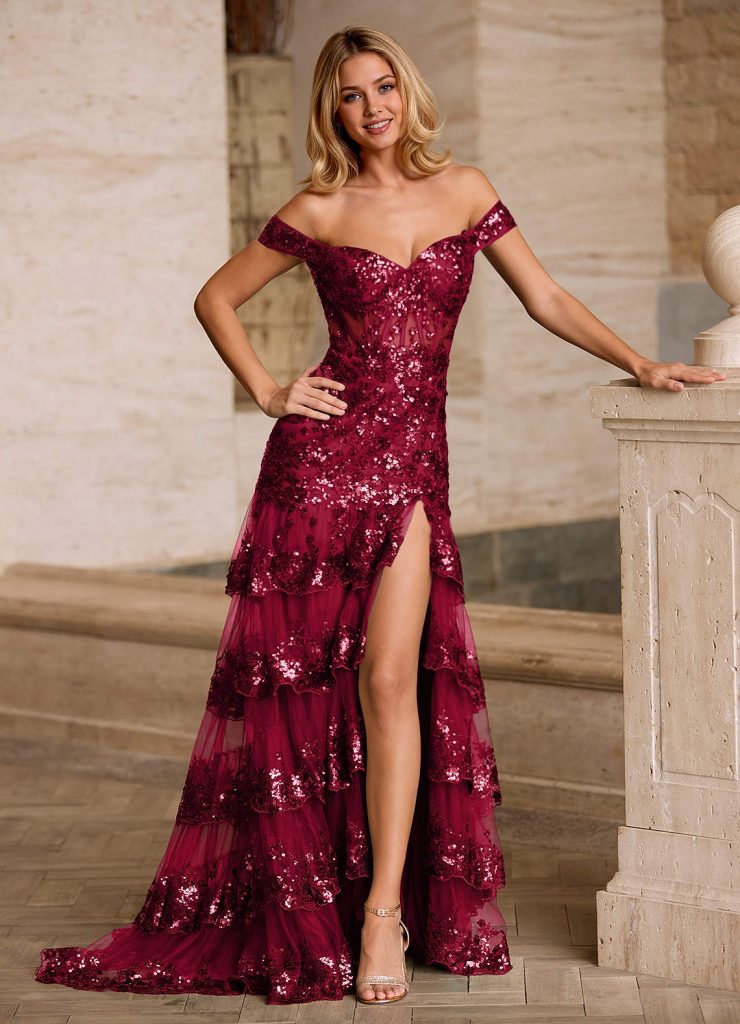
Yes, you can dance freely in an off the shoulder prom dress when it has proper elastic support around the sleeves and a structured bodice that anchors everything in place.
Before buying, perform the arms-up test by raising both arms overhead to confirm the sleeves stay put without sliding or restricting movement. Quality construction with balanced fabric stretch makes all the difference between constant adjustment and carefree dancing.
Essential Construction Features for Movement
Not all off-shoulder designs provide equal mobility and stability. Specific construction elements determine whether you’ll dance comfortably or fight with your dress all night.
Elastic Support Around Sleeves
Quality elastic built into the sleeve edge creates gentle tension that keeps fabric on your shoulders without cutting into your skin.
What good elastic feels like:
- Snug enough to stay in place when you move
- No visible marks on your skin after wearing briefly
- Returns to original position after stretching
- Maintains consistent pressure around your entire arm
Poor elastic warning signs:
- Feels loose even when standing still
- Stretches out and loses shape quickly
- Creates uncomfortable pressure points
- Leaves deep red marks after short wear
The elastic should sit right on your shoulder bone, not below it. Placement too low on your upper arm causes constant slipping. A pink prom dress with off-shoulder sleeves needs this support regardless of color or style.
Structured Bodice as Your Anchor
The bodice provides the foundation that prevents the entire dress from shifting downward when you move your arms.
| Bodice Feature | Purpose | Movement Impact |
| Internal boning | Prevents fabric collapse | Keeps dress stable during dancing |
| Fitted waist | Anchors dress to body | Stops downward sliding |
| Quality lining | Adds structure and grip | Reduces fabric shifting |
| Built-in support | Holds bust securely | Eliminates constant readjustment |
Why bodice structure matters: When you raise your arms, your shoulder muscles flex and change shape. Without a secure bodice anchoring the dress at your waist and ribcage, the off-shoulder sleeves pull the entire garment downward. A well-constructed bodice transfers dress weight to your torso instead of relying solely on shoulder placement.
Corset prom dresses naturally include this supportive structure, making them excellent choices when combined with off-shoulder sleeves.
Sleeve Placement and Width
The sleeve design itself affects how easily you can move and how secure the fit remains.
Optimal sleeve characteristics:
- Wide enough to cover upper arms without bunching
- Positioned on the shoulder bone ridge
- Constructed with slight curve to match arm shape
- Finished edges that don’t fray or stretch out
Problematic sleeve designs:
- Very narrow sleeves that dig into arms
- Placement too far down the upper arm
- Straight-cut fabric that doesn’t curve with body
- Unfinished edges that lose shape quickly
Fabric Selection and Stretch
The material itself plays a major role in both comfort and stability.
Best fabric choices:
- Stretch satin that moves with you but holds shape
- Structured tulle with some give
- Ponte knit for fitted styles
- Jersey with recovery properties
Fabrics that cause issues:
- Very stiff taffeta that restricts movement
- Delicate chiffon without structure
- Heavy brocade that weighs down sleeves
- Slippery charmeuse that slides constantly
A satin prom dress with slight stretch offers the perfect balance for off-shoulder styles.
Complete Movement Testing Sequence
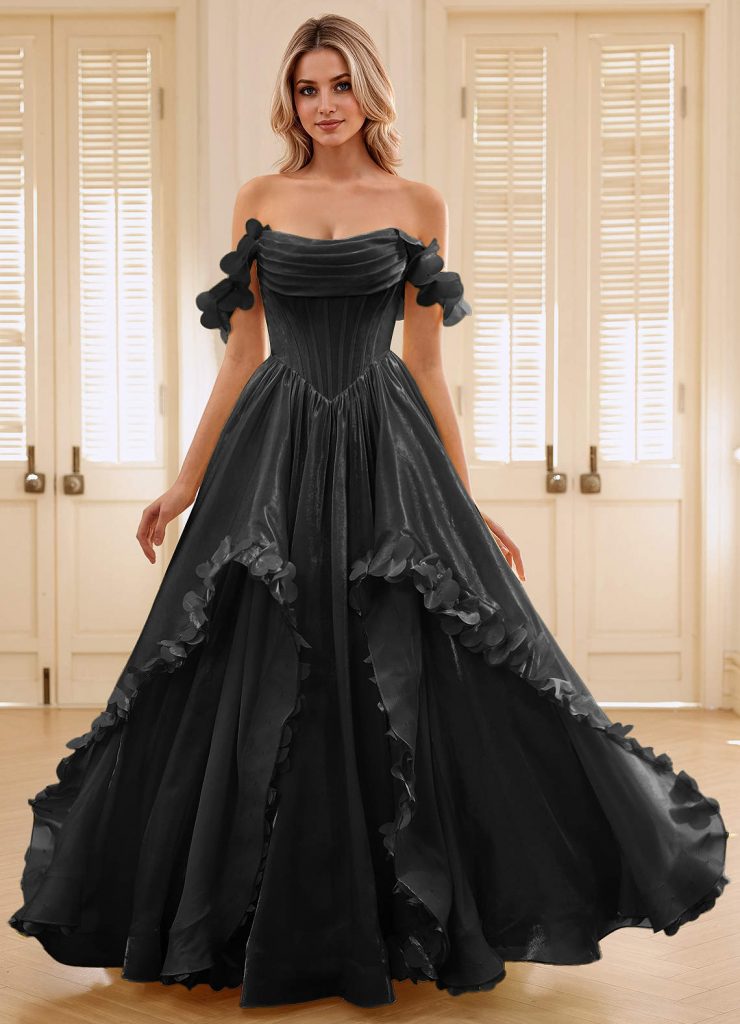
Never purchase an off-shoulder dress without completing these physical tests. They reveal fit issues that aren’t visible when standing still.
The Arms-Up Test
This is the most critical check for off-shoulder mobility.
How to perform it:
- Stand naturally with arms at your sides
- Slowly raise both arms straight overhead
- Hold this position for 10 seconds
- Lower arms and check sleeve position
- Repeat 3-4 times to confirm consistency
Pass indicators:
- Sleeves stay exactly where they started
- No tugging sensation on your shoulders
- Dress doesn’t shift downward at all
- You feel comfortable and unrestricted
- Elastic returns sleeves to proper position
Fail indicators:
- Sleeves slide down your arms
- Dress pulls noticeably at your waist or bust
- You feel the need to tug everything back up
- Elastic doesn’t snap sleeves back into place
- Fabric bunches or wrinkles appear
If the dress fails this test, no amount of adjustment will make it work for dancing. The construction simply isn’t adequate for active movement.
The Hug and Dance Simulation
Real dancing involves rotational movement and arm positions beyond just raising them.
Movements to test:
- Full arm extension: Reach both arms forward as if hugging someone
- Shoulder rotation: Roll shoulders backward and forward
- Side reaches: Extend one arm to the side at shoulder height
- Dancing motions: Sway side to side while moving arms
- Quick movements: Do several fast arm motions to test recovery
What you’re checking:
- Does the dress accommodate all these movements?
- Do sleeves stay in place during rotation?
- Can you move freely without restriction?
- Does anything pinch or bind?
According to style experts at Seventeen Magazine, off-shoulder dresses should feel secure enough that you forget you’re wearing them during active movement.
Sit and Twist Verification
Prom involves sitting for dinner and photos. Your dress needs to work in seated positions too.
Seated position checks:
- Sit down completely in a chair
- Twist your upper body left and right
- Lean forward slightly as if reaching for something
- Cross and uncross your arms
- Stand back up and verify sleeve position
Good fit results:
- Sleeves stay on shoulders while seated
- No uncomfortable pulling when you twist
- Bodice doesn’t ride up when sitting
- Everything returns to proper position when standing
Problem signs:
- Sleeves slip off shoulders when you sit
- Twisting creates painful tension
- Bodice bunches or rolls up
- Standing requires manual readjustment
Breathing and Extended Wear Check
Comfort over several hours matters as much as initial fit.
Wear the dress for 30 minutes minimum while:
- Walking around normally
- Performing all the above movements periodically
- Sitting and standing repeatedly
- Doing normal activities like using your phone
Monitor for:
- Any developing discomfort in shoulders or arms
- Red marks that deepen over time
- Breathing restrictions that worsen
- Overall fatigue from fighting the dress
If issues appear within 30 minutes, they’ll be unbearable after hours at prom.
Support Solutions for Mobility Issues
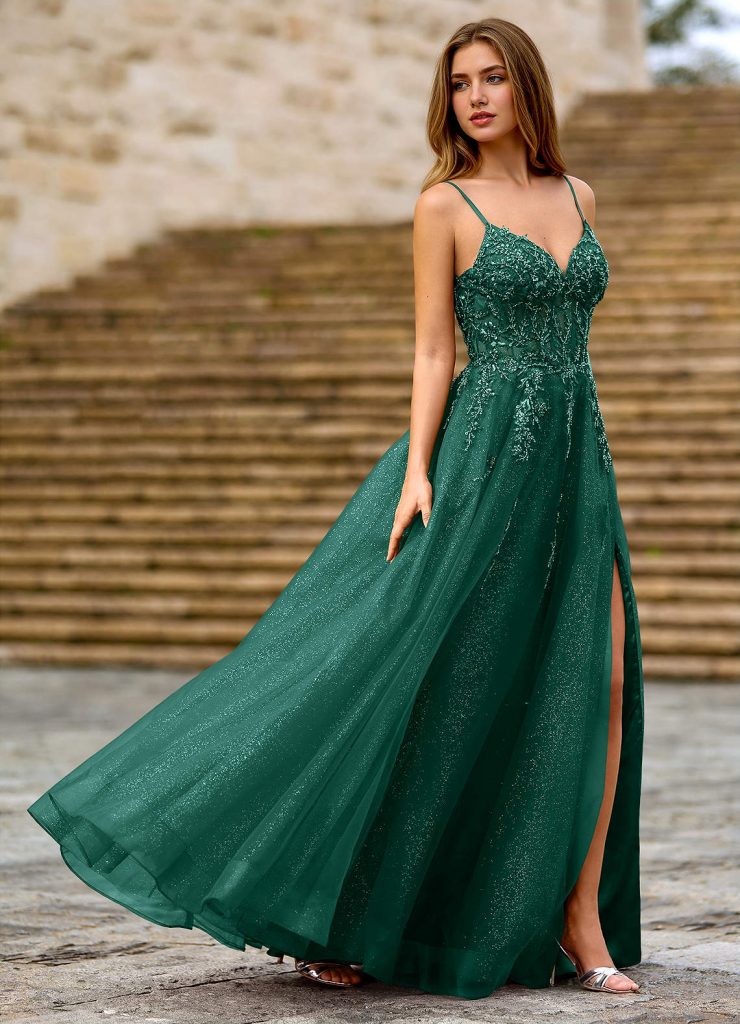
If you love a dress that almost works but needs minor improvements, these fixes can help.
Professional Tailoring Options
A skilled tailor can make targeted adjustments that dramatically improve movement.
Common helpful alterations:
| Alteration | What It Does | Best For |
| Elastic replacement | Upgrades to stronger elastic | Loose sleeves |
| Sleeve repositioning | Moves sleeve placement higher | Low-sitting sleeves |
| Bodice structure addition | Adds boning or stays | Lack of support |
| Sleeve width adjustment | Widens or narrows arm openings | Poor fit |
Cost considerations: These alterations typically represent a reasonable investment for a dress you’ll wear for hours. Discuss options and expectations with your tailor before committing.
Optional Strap Additions
Some off-shoulder dresses include removable clear straps as backup support.
When to use optional straps:
- During very active dancing
- If you want extra security for peace of mind
- When dress code allows strap variations
- For portions of the evening after formal photos
Footwear for Dance Comfort
While shoes aren’t near your shoulders, they affect your overall ability to move comfortably.
Dance-friendly shoe options:
- Block heels for stability
- Kitten heels for elegance with comfort
- Wedges that don’t sink into surfaces
- Ballet flats as backup after formal photos
- Low platforms with ankle support
Frequently Asked Questions
Can you actually dance in off-the-shoulder prom dresses?
Yes, when the dress has proper construction with elastic sleeve support and a structured bodice. Quality off-shoulder designs allow full arm movement including raising arms overhead, hugging, and dancing energetically.
What happens if off-shoulder sleeves keep slipping?
Slipping sleeves indicate inadequate elastic support or poor fit. The sleeves may be positioned too low on your arms rather than on the shoulder bone. Solutions include having a tailor add stronger elastic, repositioning the sleeves higher, or adding silicone grip strips.
Do off-shoulder dresses work for all body types?
Off-shoulder styles flatter most body types by highlighting the collarbone and creating an elegant shoulder line. They work especially well for broader shoulders by balancing proportions. The key is proper fit around the sleeves and adequate bodice support.
Should off-shoulder sleeves feel tight?
Off-shoulder sleeves should feel snug but never painful. They need enough elastic tension to stay in place during movement without cutting into your skin or leaving deep marks. You should be able to slide two fingers comfortably under the sleeve edge.